Executive Overview
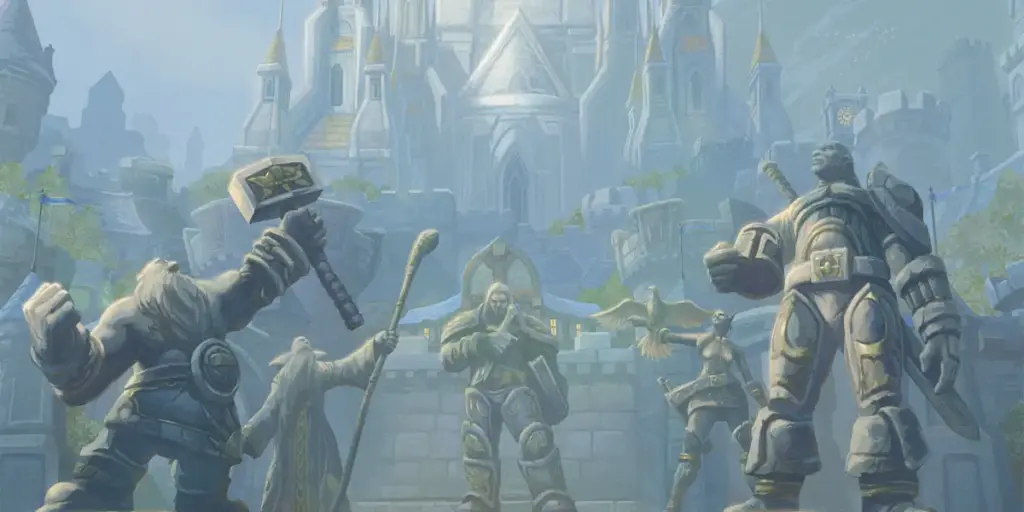
The tabletop roleplaying landscape is poised for a seismic shift. Wizards of the Coast and Blizzard Entertainment are officially bridging two of modern fantasy’s most dominant juggernauts with the upcoming release of the D&D: World of Warcraft gameplay expansion, slated to hit shelves and digital platforms on November 17, 2026. This monumental crossover merges the boundless improvisational mechanics of fifth-edition Dungeons and Dragons with the rich, decades-old lore of Azeroth, promising a campaign setting guide of unprecedented scale.
For Dungeon Masters (DMs) and players alike, the expansion is not merely a thematic skin; it is a comprehensive structural framework designed to translate the massive, lore-dense MMORPG universe into a tabletop-friendly format. At the heart of this upcoming release is a meticulously detailed world guide that outlines the key factions, ancestral inhabitants, and geographical hazards of Azeroth’s major landmasses. Whether planning a localized political thriller in the dense forests of Lordaeron or a globe-trotting, high-stakes epic spanning from the scorching deserts of Kalimdor to the frozen wastes of Northrend, the expansion equips table groups with the tools needed to forge their own legends within Blizzard’s legendary universe.
As the tabletop community counts down to the November launch, recent previews have offered a tantalizing glimpse into the core regions detailed in the upcoming sourcebook. This report examines the geopolitical landscapes, historical foundations, and gameplay opportunities awaiting players in the world of Azeroth, offering an authoritative preview of how the world’s greatest roleplaying game is adapting the ultimate fantasy setting.
Detailed Chronology: The Road to the Ultimate Crossover
The path toward a formalized Dungeons & Dragons and World of Warcraft crossover has been decades in the making, reflecting the intertwined histories of two franchises that essentially defined modern fantasy gaming.
The Genesis of Modern Fantasy (1994–2004)
The roots of this collaboration trace back to the mid-1990s. When Blizzard Entertainment released Warcraft: Orcs & Humans in 1994, the game drew heavy mechanical and thematic inspiration from traditional tabletop roleplaying games—most notably Dungeons & Dragons and Warhammer. Over the next decade, the Warcraft universe evolved from a straightforward strategy game into a sprawling, lore-rich high-fantasy cosmos, culminating in the November 2004 launch of World of Warcraft. As millions of players poured into Azeroth, the setting grew into a living, breathing digital world with complex political factions, cosmic deities, and millions of words of recorded history.
The Tabletop Adaptation Imperative (2020–2025)
While unofficial homebrew adaptations of World of Warcraft have existed on platforms like D&D Beyond and Reddit for years, the demand for an official, polished fifth-edition crossover reached a fever pitch in the 2020s. As Dungeons & Dragons experienced a massive cultural renaissance and Wizards of the Coast expanded its multiverse through partnerships with properties like Magic: The Gathering, Critical Role, and various film franchises, fans increasingly looked toward Azeroth as the ultimate frontier for official adaptation.
The 2026 Announcement and Rollout
Whispers of an official partnership materialized into reality earlier this year, culminating in Wizards of the Coast’s confirmation of the D&D: World of Warcraft gameplay expansion. Set for an official release on November 17, 2026, the campaign setting guide represents one of the most anticipated product rollouts in modern tabletop history. In the months leading up to the release, developers have systematically pulled back the curtain on the book’s contents, providing early regional breakdowns, faction overviews, and mechanical guidelines to help groups prepare for their campaigns ahead of time.
Supporting Context & Metrics: Mapping the World of Azeroth
To fully grasp the scope of the upcoming expansion, DMs must understand the sheer physical and historical scale of Azeroth. The world guide breaks down the planet into four primary geopolitical and geographical zones, each carrying its own distinct atmospheric tone, historical baggage, and narrative potential.
+--------------------------------------------------------------------------+
|                     AZEROTH REGIONAL BREAKDOWN                           |
+-------------------+------------------------------------------------------+
| Kalimdor          | Western remnant of the Great Sundering; wild, primal.|
| Eastern Kingdoms  | Three landmasses; rich in history, empires, & strife.|
| Northrend         | Icy wasteland; titan ruins, Scourge, & undead terror.|
| Islands & Isles   | Oceanic expanse across the Great Sea; uncharted      |
|                   | perils and maritime adventures.                      |
+-------------------+------------------------------------------------------+
1. Kalimdor: The Primal Western Frontier
“The land now known as Kalimdor is the western remnant of a much larger continent destroyed during the Great Sundering.”
For groups looking for campaigns rooted in nature, ancient mysteries, and raw survival, Kalimdor offers an untamed wilderness. As the western fragment of the ancient pre-Sundering supercontinent, Kalimdor is characterized by vast expanses, ancient forests, and rugged mountain ranges. It is a land deeply tied to the elements, druidic magic, and the lingering scars of the Burning Legion’s invasions. DMs utilizing Kalimdor can craft narratives involving tribal politics, ancient night elf sentinel orders, centaur incursions, and the delicate balance between civilization and the wild.
2. The Eastern Kingdoms: Crucible of Empire and Conflict
“The eastern remains of the once-massive continent that included Kalimdor. The Eastern Kingdoms are a close-knit series of three landmasses: Lordaeron, Khaz Modan, and Azeroth, the last of which shares its name with the planet itself. Before the Great Sundering, it was home to the Amani and Gurubashi troll empires.”

Comprising Lordaeron in the north, Khaz Modan in the center, and the kingdom of Azeroth in the south, the Eastern Kingdoms are the historical and political heartland of human, dwarf, and gnome civilization—as well as the haunting grounds of the undead. This region is ideal for campaigns focusing on political intrigue, medieval warfare, chivalric quests, and urban espionage. Furthermore, the deep history etched into the land—dating back to the ancient Amani and Gurubashi troll empires—provides DMs with ancient ruins, forgotten curses, and deep-seated racial tensions to challenge their players.
3. Northrend: The Frozen Crown of Horrors
“The northern part of the former Kalimdor continent, Northrend is an icy wasteland littered with titan ruins. It was here that the Lich King rose up and raised his Scourge to assail the rest of Azeroth.”
For groups seeking high-mortality, dark fantasy survivalism akin to Dungeons & Dragons’ classic Ravenloft or Rime of the Frostmaiden, Northrend is the definitive destination. This frozen wasteland is choked with glaciers, jagged peaks, and the monumental architecture of the enigmatic Titans. Beneath the ice and snow lies the lingering shadow of the Scourge and the chilling legacy of the Lich King. Campaigns set here will naturally gravitate toward themes of existential dread, unyielding endurance, tactical combat against hordes of undead, and the unearthing of lost, world-altering technologies.
4. Islands and Isles: The Perilous Great Sea
“The islands and isles of Azeroth are spread across the Great Sea, a vast tempestuous ocean expanse that sits between the surviving continent remnants, and over what was once the majority of the Kalimdor continent.”
Filling the gaps between the major landmasses, the Great Sea and its countless island chains offer the ultimate sandbox for nautical campaigns, exploration-heavy gameplay, and swashbuckling adventures. Whether navigating uncharted archipelagos, plundering sunken ruins, or running afoul of pirate lords and sea monsters, this region provides DMs with endless opportunities for episodic, high-seas storytelling away from the massive continental conflicts.
Official Statements and Developer Insights
While Wizards of the Coast and Blizzard have kept many mechanical specifics under wraps until the official launch, design leads have emphasized that the primary goal of the expansion is to honor the source material while fully empowering fifth-edition DMs.
"Translating a digital universe as vast and culturally rich as World of Warcraft into a tabletop roleplaying format required a delicate balance," notes a source close to the development team. "We didn’t want to simply retell the video game’s pre-scripted story beats. Instead, we built a comprehensive world guide that hands the keys of Azeroth directly to the Dungeon Master, providing them with the historical context, faction motivations, and regional flavor necessary to run entirely original, player-driven campaigns."
Game designers have also highlighted the flexibility built into the sourcebook’s regional structure. Rather than forcing players into a singular linear narrative, the expansion encourages collaboration between DMs and their tables to determine starting locations that match the desired campaign tone.
"A group might want a gritty, grounded military campaign fighting through the plague-ridden fields of Lordaeron," designers explain. "Another group might prefer a high-magic, archaeological expedition delving into the Titan ruins of Northrend or uncovering the secrets of Kalimdor’s deep forests. The framework accommodates all of these playstyles without breaking the established integrity of the setting."
Future Outlook: Preparing for the November Launch
As the November 17, 2026 release date approaches, anticipation within the tabletop gaming community continues to surge. Local game shops, online communities, and virtual tabletop platforms are gearing up for what is projected to be one of the biggest publishing events of the year.
What Players and DMs Should Do Now
- Coordinate with Your Table: As recommended by early previews, DMs and players should sit down well in advance to discuss the expected tone, lethality, and thematic focus of their upcoming Azeroth campaign.
- Review Regional Lore: Familiarize yourselves with the four major geographic zones—Kalimdor, the Eastern Kingdoms, Northrend, and the Great Sea—to decide where your characters originate and where your adventure will commence.
- Explore Digital and Physical Options: The D&D: World of Warcraft gameplay expansion will be available through local game shops as well as digitally via D&D Beyond, Roll20, and other major online services, ensuring seamless integration into both in-person and online play groups.
Be sure to check back frequently for more breaking news, exclusive previews, and mechanical deep dives as Wizards of the Coast rolls out additional information leading up to the official November launch. Whether you choose to stand alongside the Alliance, fight for the Horde, or forge your own independent path across the fractured world of Azeroth, your next great tabletop adventure is just over the horizon.