Executive Overview
The landscape of reality television has long thrived on high-stakes drama, elaborate set designs, and life-changing cash prizes. Yet, few recent additions to the genre have managed to blend nostalgic childhood wonder with the psychological pressure-cooker mechanics of modern survival competition quite like Wonka’s The Golden Ticket. Shot on location in Australia, this ambitious new series drops twelve pairs of contestants into a meticulously constructed, life-sized replica of Willy Wonka’s legendary chocolate factory.
At stake is an extraordinary grand prize: a six-figure annual "salary" distributed over the course of 30 years, totaling a staggering $3 million. However, the path to financial freedom is paved with psychological manipulation, forced alliances, and high-stakes elimination rounds.
While the series wears its cinematic heritage on its sleeve, utilizing cutting-edge artificial intelligence to resurrect the iconic voice of the late Gene Wilder, critics and viewers alike have noted that beneath the fantastical exterior lies a familiar, ruthlessly strategic social experiment. Marrying the whimsical, sensory-overload aesthetic of 1971’s Willy Wonka and the Chocolate Factory with the cutthroat tactical gameplay of Squid Game: The Challenge and Big Brother, Wonka’s The Golden Ticket has instantly cemented itself as one of the most polarizing and fascinating streaming events of the year. This comprehensive report explores the genesis, mechanics, nostalgic nods, and strategic realities driving Netflix’s newest streaming juggernaut.
Detailed Chronology: Inside the Factory Gates
The journey inside Wonka’s The Golden Ticket begins before the contestants even step foot onto the soundstages in Australia. The foundational premise establishes a dynamic duopoly: twelve primary contestants secure an initial "Golden Ticket," granting them entry into the competition, but each is required to select a partner to bring along for the ride. This choice immediately establishes the psychological baseline of the series—trust, loyalty, and the looming threat of betrayal.
The Opening Gambit and the "Terms and Conditions"
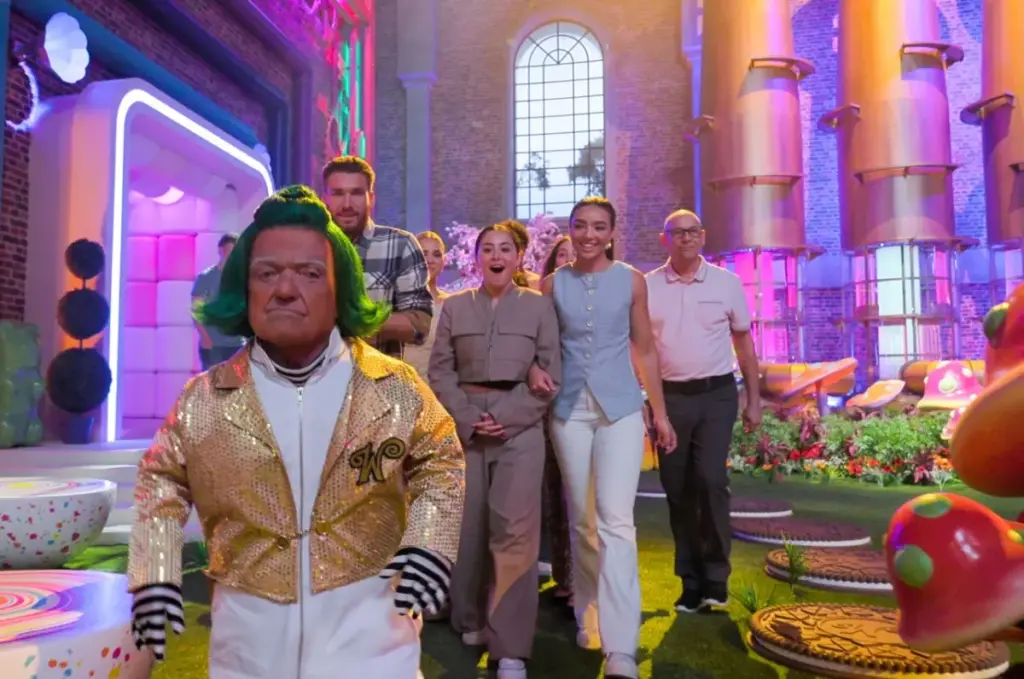
The premiere episode wastes no time plunging the audience—and the exhausted contestants—into the surreal. An eerie, disembodied voice belonging to a digitally recreated Willy Wonka welcomes the participants. As an Oompa Loompa methodically flips the master switches to illuminate the factory, the contestants are introduced to the first hurdle: an impossibly long, rapid-fire "Terms and Conditions" waiver that sets the tone for the bureaucratic absurdities and hidden traps awaiting them inside.
From there, the pairs are funneled into an ever-shrinking hallway—a masterclass in production design meant to induce immediate claustrophobia and panic. The first mechanical challenge requires each contestant to consume a mysterious gumball. The stakes are instantly binary and visceral:
- The Purple Path: If the gumball is purple, the contestant is ushered through a green door into the iconic "Chocolate Room," a breathtaking, fully realized edible garden complete with a churning chocolate river.
- The Golden Trap: If the gumball is golden, the contestant vanishes in a sudden puff of theatrical smoke, instantly separating them from their partner and plunging the remaining teammate into a state of immediate strategic disadvantage.
The Gumball Machine and the Politics of Rescue
Contestants who successfully navigate into the Chocolate Room soon discover the fate of their missing partners: they have been sealed inside a colossal, towering gumball machine acting as a makeshift holding cell. To free their teammates, players must scour the landscape for hidden coins.
This scavenger hunt triggers the show’s first true test of alliance-building. Relocated to plush, candified living quarters that double as a war room, the surviving pairs must quickly determine who they can trust. Friendships are forged over cascades of pastel sugar, while cracks in partnerships begin to show as players weigh the personal cost of rescuing a teammate against the strategic advantage of cutting them loose.
As the premiere episodes progress, the gameplay sheds its Wonka-esque veneer and devolves into classic reality television politics. The climax of the early episodes hinges on a tense, transactional sequence: a pair of brothers must decide whether to insert their hard-earned coins to free the final two contestants trapped in the gumball machine, effectively playing God with their fellow competitors’ survival.
Supporting Context & Metrics: The Anatomy of a Modern Spectacle
To understand the cultural and financial footprint of Wonka’s The Golden Ticket, one must examine the intersection of intellectual property (IP) monetization, AI technology, and high-budget reality television production.
The Financial Stakes: The $3 Million "Salary" Structure
Unlike traditional reality competitions that offer a lump sum—such as the $1 million prizes doled out by legacy network television—Wonka’s The Golden Ticket introduces a unique psychological incentive structure: a six-figure annual salary doled out over three decades.
| Metric | Detail |
|---|---|
| Total Grand Prize | $3,000,000 USD |
| Payout Structure | Six-figure annual salary over 30 years |
| Contestant Pool | 12 pairs (24 total participants) |
| Production Location | Sydney/Melbourne Soundstages, Australia |
| Primary Influences | Willy Wonka and the Chocolate Factory (1971), Squid Game: The Challenge, Big Brother |
By structuring the prize as a long-term annuity, producers inject a distinct psychological element into the game. Contestants are not just playing for a momentary windfall to pay off debts or buy a luxury car; they are fighting for generational financial security. This alters risk assessment during challenges, making players simultaneously more desperate to survive and more conservative when facing high-risk tactical gambles.
The AI Resurrection of Gene Wilder
One of the most heavily debated aspects of the series is the use of artificial intelligence to recreate the voice of Gene Wilder, who portrayed the definitive Willy Wonka in the 1961 cinematic adaptation and passed away in 2016.
With the explicit consent and cooperation of Wilder’s estate, production utilized advanced voice-synthesis models to craft Wonka’s guiding narration throughout the factory. While disclaimers appear in the credits noting the artificial nature of the voice, the inclusion has sparked industry-wide conversations regarding the ethical boundaries of digital posthumous performances. Within the context of the show, however, the eerie, slightly synthetic timbre of Wilder’s synthesized voice adds an intentionally uncanny valley effect, reinforcing the surreal, unpredictable nature of the automated factory.
Production Design as a Character
Budgeted on a scale comparable to scripted dramatic series, the set design serves as the show’s silent protagonist. Bringing the iconic factory to life required months of engineering by top-tier Hollywood art directors. The edible garden features thousands of pounds of sugar-based flora, while the chocolate river utilizes proprietary, non-toxic cosmetic fluids designed to mimic the thick, glossy viscosity of liquid cocoa without spoiling under heavy studio lighting.
This sensory-overload environment functions as a psychological weapon against the contestants. Just as the original fictional children were undone by their vices (gluttony, greed, vanity) within the factory’s walls, modern contestants find their strategic focus shattered by the sheer hypnotic nostalgia of their surroundings.
Official Statements & Industry Reception
The rollout of Wonka’s The Golden Ticket has generated significant buzz across entertainment trades and social media platforms alike. Industry analysts have pointed to the series as a prime example of networks weaponizing nostalgia to capture fragmented streaming audiences.
Speaking on the creative impetus behind the show, executive producers emphasized the desire to move beyond traditional game show formats. "We didn’t just want to build a set; we wanted to build a psychological ecosystem," one producer noted during an early press junket. "The original film explored human temptation and morality through the framing of a children’s book. We wanted to see what happens when you drop everyday adults—with mortgages, student loans, and strategic ambitions—into that exact same moral playground."
Meanwhile, the casting choices have received widespread praise from television critics. The ensemble cast features a carefully curated cross-section of American demographics:
- The Underdogs: Seemingly arrogant wedding DJs who steadily reveal unexpected reservoirs of empathy and loyalty.
- The Dynasties: An ultra-competitive father-daughter duo whose intense drive occasionally strains their familial bond.
- The Matriarchs: A pair of sixtysomething female friends who naturally slip into surrogate grandmother roles, weaponizing warmth and hospitality to build ironclad social safety nets.
Adding a delightful layer of meta-nostalgia to the production is the return of Rusty Goffe, an original Oompa Loompa actor from the 1971 film. Now returning to the franchise over five decades later, Goffe’s presence bridges the gap between cinematic history and modern reality television spectacle, serving as a physical anchor to the source material amidst the sea of high-tech sets and AI-generated narration.
Future Outlook: Will the Golden Ticket Lead to a Franchise?
As Wonka’s The Golden Ticket continues to climb streaming charts worldwide, attention has inevitably turned to the longevity and expansion of the format.
Reality competition series live or die by their ability to maintain audience engagement across multiple seasons, and the "factory" framework offers vast potential for expansion. Future iterations could theoretically introduce entirely new wings of Wonka’s empire—exploring previously unseen rooms, inventing new volatile confections, and testing different permutations of interpersonal dynamics.
However, challenges remain. Critics have noted that once the initial wave of nostalgic awe wears off, the underlying gameplay mechanics—reliant heavily on voting blocs, backroom negotiations, and forced alliances—risk falling into the familiar, predictable traps of shows like Big Brother or The Traitors. To sustain long-term interest, subsequent seasons will need to innovate on the physical and psychological hazards presented to the contestants, ensuring that the factory’s surprises never become routine.
Final Verdict: Stream It or Skip It?
For casual viewers and die-hard fans of the original cinematic classic alike, the critical consensus leans definitively toward STREAM IT.
While the moment-to-moment strategic gameplay occasionally treads familiar territory, the sheer scale of the production design, the intoxicating rush of childhood nostalgia, and the psychological intensity of the challenges elevate Wonka’s The Golden Ticket far above standard reality television fare. Whether you are tuning in to marvel at the engineering feat of the chocolate river, to witness the high-stakes political maneuvering of the contestants, or simply to hear the hauntingly familiar cadence of Gene Wilder’s voice echoing through the halls, Netflix has successfully unlocked a golden opportunity in the streaming wars.