Executive Overview
More than half a century after the release of the cinematic masterpiece Willy Wonka & the Chocolate Factory (1971), the magical, surreal, and occasionally perilous world crafted by Roald Dahl is experiencing a massive, high-stakes resurgence. Netflix—which acquired the comprehensive rights to Roald Dahl’s literary estate five years ago in a landmark deal—has officially launched Wonka’s Golden Ticket, an ambitious nine-episode game show that plunges twelve unsuspecting contestants into a labyrinth of wacky, high-pressure challenges.
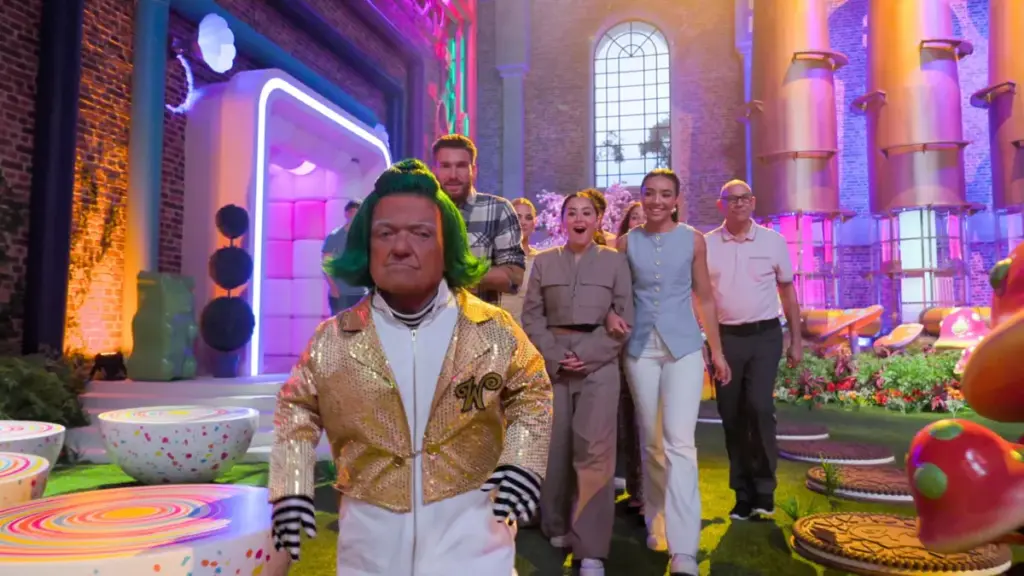
At the center of this sweet revival is none other than Rusty Goffe, the legendary actor who famously portrayed one of the original orange-faced, green-haired Oompa-Loompas opposite the incomparable Gene Wilder. Now 77 years old, Goffe has officially stepped back onto the soundstage, marking what he describes as the bookend to a storied career that began on the iconic 1971 set.
Yet, Wonka’s Golden Ticket is far more than a simple nostalgia trip. The production merges classic cinematic history with cutting-edge modern entertainment. It features a diverse, multi-generational ensemble of Oompa-Loompas—including Goffe’s own son, actor Ben Goffe—and relies on a controversial yet authorized artificial intelligence recreation of Gene Wilder’s iconic voice to guide the proceedings. In an exclusive, wide-ranging interview with Variety, Rusty Goffe opens up about the bizarre reality of returning to the chocolate room, passing the torch to the next generation, and the emotional weight of hearing his late friend and co-star’s voice brought back to life through modern technology.
Detailed Chronology: From 1971 Celluloid to 2026 Streaming
The Genesis of a Masterpiece
The cultural footprint of Willy Wonka & the Chocolate Factory is difficult to overstate. Directed by Mel Stuart and starring Gene Wilder as the enigmatic candy mogul, the 1971 musical adaptation initially enjoyed a modest box office run before transforming into an enduring pop-culture cornerstone through television broadcasts and home video. Central to the film’s uncanny, mesmerizing aesthetic were the Oompa-Loompas: diminutive factory workers who communicated through rhythmic, cautionary musical numbers.
For Rusty Goffe, landing a role as an Oompa-Loompa was the catalyst for a decades-long career in film and television. However, the reality of making cinematic history in the early 1970s was far from glamorous. Goffe recalls the notorious chocolate river scene—where young Augustus Gloop famously falls into the waterway—not as a magical confection, but as a grueling olfactory nightmare. The river was filled with real cream and real sugar, which, under the punishing heat of studio lights, quickly spoiled and melted. Michael Böllner, the actor who played Gloop, has frequently recounted the experience with a thick German accent: "It vas stinky vater!"
Despite the physical discomforts, the film carved out a permanent space in the global consciousness. Decades later, Goffe found himself navigating a global fandom, frequently appearing at fan conventions in the United States where generations of moviegoers recited the iconic lyrics of "Oompa Loompa doompa dee do" back to him.
The Netflix Acquisition and the Birth of a Game Show
When Netflix secured the rights to Roald Dahl’s entire literary catalog, industry insiders anticipated a flurry of adaptations, ranging from animated series to live-action features. Few, however, predicted a high-stakes competition format.
Wonka’s Golden Ticket drops twelve players onto meticulously crafted, Wonka-themed set pieces. Over the course of nine episodes, these contestants navigate psychological and physical hurdles—including the legendary Great Glass Elevator and a modernized iteration of the edible candy room—all in pursuit of a life-changing financial grand prize: an estimated $3 million payout, structured as an annual six-figure salary distributed over thirty years.
When Netflix began conceptualizing the reality-competition hybrid, finding a bridge to the original cinematic universe was paramount. Unsurprisingly, Rusty Goffe was at the very top of their wish list. When his New York agent called to pitch the project, Goffe’s initial reaction was one of gentle disbelief: "Being in ‘Wonka’? That was a long time ago." Yet, assurance quickly followed, and Goffe agreed to step back through the gates of the factory.
Supporting Context & Metrics: Diversity, Casting, and the AI Debate
A New Era of Oompa-Loompas
One of the most notable deviations in Wonka’s Golden Ticket from the 1971 film lies in the casting of its Oompa-Loompa ensemble. While the original movie relied on a specific troupe of actors of short stature to maintain a uniform look, the Netflix series embraces a radically inclusive casting philosophy.
As contestants are reminded during the show, the new generation of Oompa-Loompas "come in all shapes and sizes now." Rusty Goffe notes with pride the sheer variety of the new ensemble, which featured a professional bodybuilder, a tall actor, three women, a small man, and his own 33-year-old son, Ben Goffe.
Ben Goffe, an established actor with credits in major features like Artemis Fowl and extensive classical stage experience including Shakespearean productions, jumped at the opportunity to join his father in the factory. When asked if he offered his son any professional guidance or tips on how to embody the iconic role, Rusty Goffe offered a characteristically pragmatic response: "No. None whatsoever. I was an Oompa-Loompa. You’re the new one. Learn — on the job!"
The AI Gene Wilder Controversy
Perhaps the most talked-about and analytically scrutinized aspect of Wonka’s Golden Ticket is the resurrection of Gene Wilder. Wilder, who passed away in 2016, remains synonymous with the character of Willy Wonka; his manic energy, mercurial temperament, and profound gentleness defined the role for millions.
To bridge the gap between past and present, Netflix utilized artificial intelligence to recreate Wilder’s distinctive vocal cadence to guide the game show. The decision has sparked widespread debate across the entertainment industry regarding the ethics, boundaries, and creative implications of posthumous AI voice generation.
However, the production secured the official blessing of Wilder’s estate, including his widow. For Rusty Goffe, the ethical discourse surrounding the technology melted away in the face of profound personal emotion. Hearing Wilder’s voice echoed through the studio did not feel uncanny or predatory to him; rather, it felt like an intimate reunion with a cherished friend.
"It’s just him standing there," Goffe reflects. "I did shed a tear when I first heard it, because I loved the man so much. But then I thought he wouldn’t want me to do that. He’d want me to be an Oompa-Loompa, get out there, do the job. Yeah, that was Gene. He was a lovely, lovely man."
Official Statements & Industry Perspectives
The release of Wonka’s Golden Ticket has prompted reflection from creators, critics, and legacy cast members alike regarding the enduring commercial and emotional viability of intellectual property rooted in children’s literature.
Industry analysts point out that Netflix’s strategy with the Roald Dahl catalog relies heavily on transmedia storytelling—blending scripted narratives, interactive formats, and unscripted entertainment to capture demographics across generations. By weaponizing nostalgia through physical set replicas—complete with functional chocolate waterfalls and modern interactive displays—the platform successfully isolates the tactile, sensory joy that made the 1971 film a classic.
For the contestants locked inside the game show’s bubble, the stakes are remarkably high. Kept intentionally isolated from the production crew to prevent them from reading facial cues or extracting spoilers, the players navigate challenges designed to test their endurance, wit, and moral compass. Goffe, observing from the sidelines as an active participant in the frame, admits he would never have wanted to trade places with them:
"It was great being the Oompa-Loompa just watching them, because I knew what they were going to win, lose, what’s going to happen if they lost a challenge. Which is not good on some occasions."
Future Outlook: The End of an Era
As Wonka’s Golden Ticket streams to global audiences, it marks a monumental milestone not just for Netflix’s unscripted division, but for Rusty Goffe personally.
In his interview with Variety, Goffe delivered a poignant announcement regarding his professional trajectory. Having launched his career as a fresh-faced youth on the soundstages of Willy Wonka & the Chocolate Factory in 1971, he views his participation in the Netflix game show as the definitive conclusion of his journey through Dahl’s fictional universe.
"I started my career on ‘Willy Wonka & the Chocolate Factory’ and now I am pleased to announce to Variety that I’ve ended my career on ‘Willy Wonka’s The Golden Ticket,’" Goffe states.
The legacy of Roald Dahl’s eccentric confectioner shows no signs of slowing down, bolstered by recent cinematic prequels and now immersive television experiments. Yet, as Hollywood increasingly looks toward artificial intelligence, digital de-aging, and algorithmic reboots to recapture past glories, the heart of the Wonka franchise remains anchored in human connection—in the enduring bond between a father and son sharing an Oompa-Loompa costume, in the fond memories of a gentle actor who defined a generation, and in the timeless wonder of fans who refuse to let the magic fade away.