Executive Overview
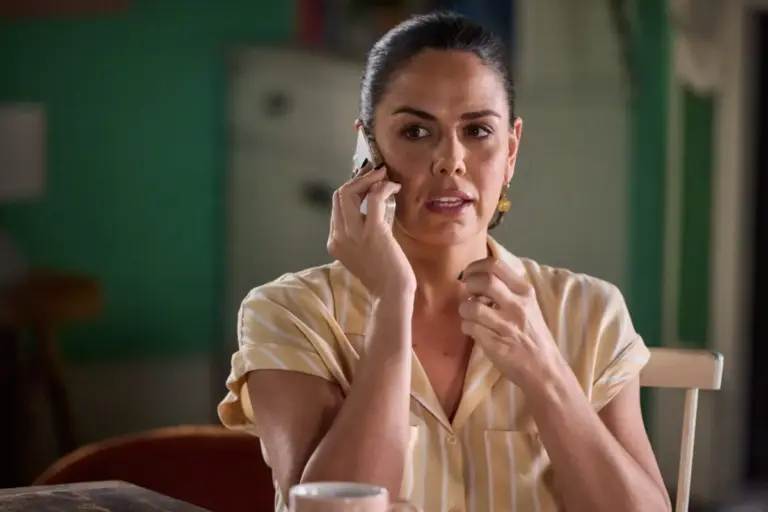
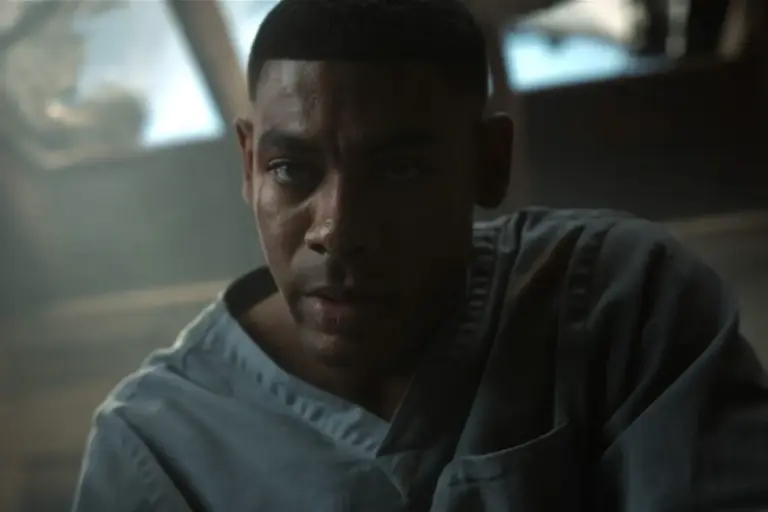
In a dramatic and emotionally charged storyline that has sent shockwaves through Weatherfield, Coronation Street character Kit Green (played by Jacob Roberts) has broken his months-long silence to reveal a devastating stage three cancer diagnosis to his family. The emotional reckoning unfolded during what was supposed to be a routine medical support trip for his mother, Bernie Winter-Alahan (Jane Hazlegrove).
The storyline, which has gripped viewers across the UK, brings a rare and critical focus to male breast cancer and the hereditary risks associated with the BRCA gene mutations. Triggered initially by the passing of the Winter clan’s estranged aunt, Celeste Butterfield (Frances Barber), the narrative explores not only the physical toll of a severe cancer diagnosis but also the complex, often messy ways families handle trauma, guilt, and fear.
As Kit’s inner circle comes to terms with the news, the cobbles are left asking a poignant question: will the family manage to band together in Kit’s hour of need, or will years of emotional barriers and reckless coping mechanisms push them further apart?
Detailed Chronology: How the Secret Unravelled
The Roots of the Crisis
The foundation for this harrowing storyline was laid weeks prior, following the death of Celeste Butterfield. The passing of their estranged aunt forced the Winter family to confront uncomfortable truths about their medical history, specifically the possibility of carrying the familial BRCA gene mutation.
While carrying a harmful BRCA1 or BRCA2 gene mutation—inherited from a parent—significantly increases a person’s lifetime risk of developing certain cancers, many families remain entirely unaware of their status until tragedy strikes. In classic Winter fashion, reactions varied wildly. Bernie Winter-Alahan, ever the optimist when confronted with looming shadows, was firmly convinced that she and her relatives were in the clear.
Little did Bernie know, the genetic ticking time bomb had already detonated for her son, Kit.
Coping in the Shadows
Unbeknownst to his family, Kit had already received his diagnosis prior to the family’s genetic awakening. Rather than leaning on his loved ones, the troubled officer retreated inward, developing a sudden, worrying reliance on alcohol.

His emotional turmoil did not go completely unnoticed. Todd Grimshaw (Gareth Pierce), spotting the sharp shift in Kit’s behavior and his escalating drinking habits, managed to get Kit to confide in him. However, Kit swore Todd to secrecy. Burdened by the weight of his diagnosis, Kit chose to suffer in isolation, paralyzed by the thought of adding to his mother’s emotional load—especially given Bernie’s adamant denial that the gene existed within their lineage.
Reckless Fallout
Kit’s internal pressure cooker was further fueled by chaos in his personal life. Following the complete collapse of his relationship with Sarah Platt (Tina O’Brien)—leaving him emotionally isolated and adrift—Kit engaged in a series of erratic and self-destructive behaviors. In a move that shocked viewers and left the Platt household reeling, Kit crossed a major ethical and personal line by sleeping with Sarah’s daughter, Bethany Platt (Lucy Fallon).
Rather than serving as an escape, these reckless actions only deepened his isolation, setting the stage for the explosive confrontation at the hospital.
The Hospital Waiting Room Boiling Point
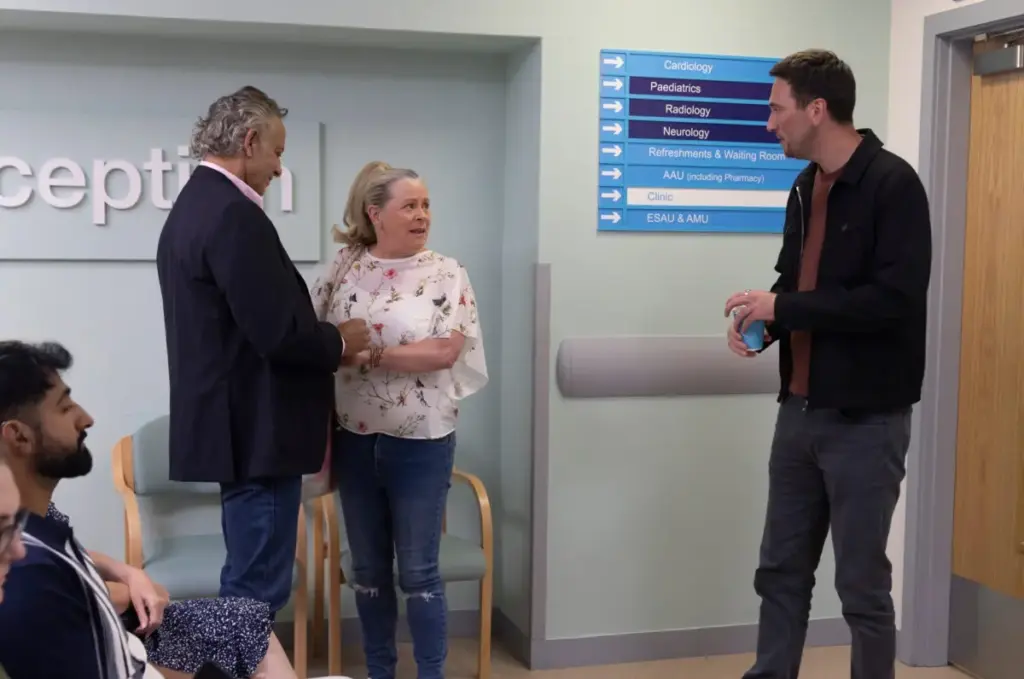
The climax of the secret came to a head when Bernie, accompanied by her husband Dev Alahan (Jimmi Harkishin) and Kit, anxiously attended the hospital to receive clarity on the family’s genetic screening risks. Sitting in the clinical waiting room, Bernie attempted to soothe her own anxieties by enthusiastically reassuring everyone that the tests would undoubtedly come back negative.
For Kit, whose body was already fighting a stage three cancer battle tied to the very same genetic markers, Bernie’s blind optimism was too much to bear. Unable to contain his compounding rage, grief, and terror, Kit lost his temper and abruptly stormed out of the waiting room, abandoning the clinical environment for the corridor.
Sensing that something far deeper than typical family friction was at play, Bernie pursued her son. Confronting him in the corridor, she demanded an explanation for his bitter pessimism and volatile mood swings. She challenged him to drop his defenses and reveal what was truly tearing him apart.
The Confession
Pushed to his absolute limit, the dam broke. Kit looked at his mother and confessed the unthinkable: he didn’t need to guess whether the family carried the gene, because he had already been tested—and he tested positive.

The revelation stunned Bernie, but the floor truly fell out from under her when Kit delivered the final, devastating blow: he was already fighting stage three cancer.
The aftermath at home saw a shattered Bernie break down completely, paralyzed by the agonizing prospect of losing another son. The revelation has redefined the character dynamics on Coronation Street, transforming a domestic mystery into a poignant exploration of mortality and familial endurance.
Supporting Context & Metrics: Understanding BRCA and Male Breast Cancer
While breast cancer and BRCA gene mutations are most commonly associated with women, public health campaigns and soap storylines are increasingly highlighting the risks men face. Understanding the medical realities behind Kit Green’s diagnosis sheds light on why this storyline is resonating so deeply with public health advocates.
What is the BRCA Gene?
BRCA1 and BRCA2 are human genes that produce tumor suppressor proteins. These proteins help repair damaged DNA and play a critical role in ensuring the stability of each cell’s genetic material. When these genes are mutated or altered, the protein products are often non-functional, meaning that DNA damage may not be repaired properly. Consequently, cells are more likely to develop additional genetic alterations that can lead to cancer.
Risks for Men
While male breast cancer is relatively rare—accounting for less than 1% of all breast cancer diagnoses globally—men who inherit a harmful BRCA2 mutation (and to a lesser extent, a BRCA1 mutation) face significantly elevated risks compared to the general male population:
- Male Breast Cancer Risk: While a typical man’s lifetime risk of developing breast cancer is roughly 1 in 833 (0.12%), men carrying a BRCA2 mutation face a lifetime risk of up to 7% to 8%.
- Prostate and Pancreatic Cancer: BRCA mutations in men are also heavily linked to an increased risk of aggressive prostate cancer, as well as elevated risks for pancreatic cancer and melanoma.
- Hereditary Transmission: Men carrying the BRCA gene have a 50% chance of passing the mutation down to each of their children, regardless of gender.
By tackling male breast cancer through a mainstream character like Kit Green, Coronation Street is breaking historical taboos, encouraging male viewership to check themselves for lumps, and normalizing conversations around genetic testing in families with histories of hereditary illness.
Official Statements and Production Insights
The decision to tackle a complex, multi-layered storyline involving male cancer and genetic testing required immense sensitivity from the production team at ITV. Scriptwriters collaborated closely with leading cancer charities and medical professionals to ensure accuracy in depicting both the clinical realities of a stage three diagnosis and the psychological ripple effects it has on a working-class family like the Winters.

Insiders from the ITV Coronation Street production camp noted that Jacob Roberts threw himself into the emotional demands of the plot. Portraying a man whose tough exterior masks a terrifying internal battle required extensive emotional preparation.
"Kit is a character defined by his sharp edges, his guarded nature, and his struggles with vulnerability," a production source shared. "Stripping all of that away to reveal a man terrified of dying—and terrified of burdening his mother—allowed Jacob to showcase a completely different side to the character. It’s raw, it’s uncomfortable, and it reflects the reality of how many men process major health crises: in absolute silence."
Charities supporting breast cancer awareness have praised the soap for using its massive platform to educate viewers, noting that fictional portrayals often prompt real-world medical inquiries and life-saving early screenings.
Future Outlook: What Lies Ahead for the Winter-Alahan Clan?
As the dust settles on Kit’s heartbreaking revelation, the residents of Weatherfield are left to navigate the emotional aftermath. The coming weeks on Coronation Street promise to test the resilience of the Winter-Alahan family unit to its absolute breaking point.
Key Questions for Future Episodes:
- Will Kit Let Guard Down? Having finally admitted his diagnosis, the central question remains whether Kit will accept medical treatment and emotional support from Bernie, Dev, and his wider circle, or if his instinctual urge to isolate will return.
- The Extended Family Impact: With Kit testing positive for the BRCA gene, other members of the Winter family must now face their own screening results with heightened anxiety. How will siblings and extended relatives process their personal risk levels?
- Reconciliation and Regret: Kit’s recent behavioral downward spiral—including his fallout with Sarah Platt and his controversial encounter with Bethany—left a trail of burned bridges across the cobbles. Will his diagnosis prompt him to make amends, or will his personal life remain a casualty of his internal struggle?
Viewers can catch all the dramatic developments as they unfold. Coronation Street airs weeknights at 8:30 PM on ITV1, with episodes available to stream early from 7:00 AM daily on ITVX. As Kit’s battle with stage three cancer takes center stage, Weatherfield is bracing itself for a journey defined by grief, courage, and the unbreakable, if occasionally fractured, bonds of family.