Executive Overview
For millions of adults, the world can suddenly tilt on its axis without warning. Imagine experiencing an internal sense of constant rocking and swaying, the inability to sit or stand steadily with your eyes closed, and an overwhelming, debilitating fear of walking in a straight line. For years, this was the daily reality for individuals diagnosed with vestibular disorders and vestibular migraines—a specialized variant of neurological disruption that triggers profound dizziness. However, recent insights from physical therapists and leading neuromuscular researchers suggest that the specialized exercises designed to rehabilitate these vulnerable balance pathways are not merely medical interventions for the sick. Rather, they are essential, non-negotiable longevity practices for anyone seeking to preserve physical stability, prevent catastrophic injury, and maintain structural autonomy as they age.
Human balance is not a single, isolated function; it is a complex, real-time biological symphony requiring the seamless integration of three distinct physiological systems: the vestibular apparatus located deep within the inner ear, the somatosensory network that governs body awareness and spatial feedback, and visual processing. When any one of these pillars fails—whether due to inner ear pathology, neurological shifts, medication side effects, or the inevitable, degenerative tax of natural aging—the entire structure is compromised.
Recent clinical studies underscore a stark reality: the ability to maintain stability on a single leg diminishes dramatically across the later decades of life, serving as one of the most reliable prognostic indicators of overall biological aging and mortality risk. Protecting these balance mechanisms is no longer a niche wellness trend; it is a primary pillar of preventative medicine. By weaving targeted stability drills into the mundane margins of daily life—such as brushing your teeth or waiting for water to boil—individuals across all age brackets can fortify their neural pathways, protect vulnerable bone density, and drastically reduce their susceptibility to life-altering falls.
Detailed Chronology: Unraveling the Science of Stability
To understand why balance training has emerged as a cornerstone of modern preventative health, it is vital to trace how the medical community’s understanding of spatial orientation has evolved over the past decade.
- The Early Decades of Specialized Care: Historically, balance disorders were treated reactively. Patients presenting with chronic vertigo, unexplained falls, or persistent dizziness were often prescribed suppressive medications that merely masked symptoms, or they were told to avoid physical activity altogether to prevent injury. This sedentary prescription often backfired, accelerating muscle atrophy and worsening the underlying instability.
- The Rise of Vestibular Rehabilitation: In the late 20th and early 21st centuries, physical therapy pioneers recognized that the central nervous system possesses remarkable plasticity. Rather than avoiding movement, patients could systematically retrain their brains to compensate for damaged inner ear signals through targeted gaze stabilization and habituation exercises. This gave birth to vestibular rehabilitation therapy (VRT), establishing that balance systems could be actively strengthened much like skeletal muscle.
- The Longevity Shift (2020–Present): In recent years, researchers expanded the scope of balance science beyond clinical rehabilitation, pivoting toward primary prevention. Landmark epidemiological studies began linking baseline balance metrics—most notably single-leg stance duration—directly to all-cause mortality and functional independence in older adults. This shift reframed balance exercises from a post-injury remedy into a vital anti-aging protocol, catching the attention of longevity researchers, fitness experts, and primary care physicians alike.
Supporting Context & Metrics: The Anatomy of Balance and the Cost of Decline
The Triad of Equilibrium
Human equilibrium relies on a delicate triumvirate managed by the central nervous system:
- The Vestibular System: Housed in the labyrinth of the inner ear, this sensory apparatus detects motion, head position, and spatial orientation relative to gravity.
- The Somatosensory System: Comprising proprioceptors in muscles, joints, and the soles of the feet, this system communicates the body’s physical position relative to the ground and surrounding surfaces.
- The Visual System: Your eyes provide crucial horizon cues and environmental mapping, helping the brain calculate speed, distance, and trajectory.
When these systems function in harmony, physical movement feels effortless. However, internal disruptions—ranging from Meniere’s disease and ototoxicity from medications to viral labyrinthitis—can short-circuit this feedback loop.
The Staggering Stakes of Aging
As humans age, systemic degradation quietly dismantles these protective mechanisms. Bone mineral density steadily declines, particularly in postmenopausal women and aging men. Concurrently, sarcopenia—the age-related loss of muscle mass and function—leads to a sedentary lifestyle that further degrades neuromuscular coordination.
The statistical fallout of this decline is severe. According to clinical data, falls are a leading cause of accidental injury and mortality among older populations. A fracture of the hip or spine resulting from a minor slip often initiates a cascade of surgical intervention, prolonged immobility, and systemic decline that significantly elevates mortality rates within the first year. Furthermore, the psychological toll—often manifested as a paralyzing fear of falling—creates a vicious cycle of voluntary self-restriction, muscle deconditioning, and worsening instability.

Official Statements and Clinical Insights
Leading authorities in physical therapy and vestibular rehabilitation emphasize that protecting one’s balance requires proactive, daily micro-interventions rather than exhaustive, intimidating workout regimens.
Carmen Navarrete, PT, DPT, a senior physical therapist at New York-Presbyterian The One, highlights the interconnected nature of the body’s balancing act: "The vestibular system, the somatosensory system, and vision all play an irreplaceable role in your overall balance. When internal or external factors cause one of these systems to go haywire, the entire structure struggles to compensate."
Addressing the severe physiological consequences of neglect, Madison Oak, PT, DPT, a physical therapist who operates Vestibular Group Fit—a specialized program for individuals navigating vestibular disorders—underscores the urgency of intervention: "As you age, your bone density decreases. If you fall, you have a higher likelihood of a spine or hip fracture, which leads to a higher likelihood of mortality. Additionally, muscle strength tends to take a nosedive, which directly correlates with worsening balance because it increases sedentary tendencies."
Highlighting the diagnostic red flags that necessitate professional evaluation, Jennifer L. Kelly, PT, DPT, administrative director of the Ear Institute at the New York Eye and Ear Infirmary of Mount Sinai, advises vigilance. Patients should immediately consult a medical professional or a specialized physical therapist if they experience:
- Persistent difficulty walking in dim lighting or unlit environments.
- Unexplained dizziness triggered by looking upward or downward.
- A sensation of feeling "drunk" or spatially disoriented while navigating busy public spaces, such as crossing a crowded street or walking through a supermarket aisle.
- Imbalance or disorientation when transitioning into or out of bed.
Future Outlook: The Prescription for Lifelong Stability
Fortunately, maintaining and even improving neural and physical balance requires minimal equipment and can be seamlessly integrated into daily routines. Physical therapy experts emphasize that "balance hygiene" should be treated with the same consistency as brushing one’s teeth. By capitalizing on micro-moments throughout the day—such as waiting for the microwave to beep or water to boil—individuals can systematically challenge their neuromuscular networks.
Below are nine fundamental, evidence-based exercises designed to bulletproof your balance, categorized by progression and complexity. Note: Mild wobbling or swaying during these drills is entirely normal as the brain learns to adapt; however, always position yourself near a sturdy wall, countertop, or heavy chair for safety.
1. Feet Together Stance
- How to perform: Position yourself barefoot on a hard, flat surface near a wall or chair. Place your feet directly next to each other with little to no space between them. Stand unassisted for 60 seconds.
- Progressions: To increase the challenge, perform the stance on a soft, compliant surface such as a yoga mat or folded towel. Once mastered, attempt the stance on a hard surface with your eyes closed, and finally, with your eyes closed on a soft surface. This exercise directly improves your ability to navigate dark environments.
2. Heel-Toe Standing (Tandem Stance)
- How to perform: On a hard, flat surface, place your right foot directly in front of your left foot so that the heel of your right foot touches the toes of your left foot. Hold this unassisted position for 30 to 60 seconds, then switch foot placement and repeat.
- Progressions: Close your eyes, stand on a soft foam pad, or gently turn your head from side to side to train your visual and vestibular systems to remain calm amidst dynamic external stimuli—simulating environments like a bustling grocery store.
3. Tandem Walking
- How to perform: Find a long, open hallway with a firm surface. Barefoot, slowly walk forward by placing one foot directly in front of the other, keeping your heels as close to your toes as possible. Keep your gaze locked onto a fixed point ahead of you for roughly 30 seconds or the length of the hallway.
- Progressions: If confident and stable, carefully try closing your eyes for brief intervals every few paces.
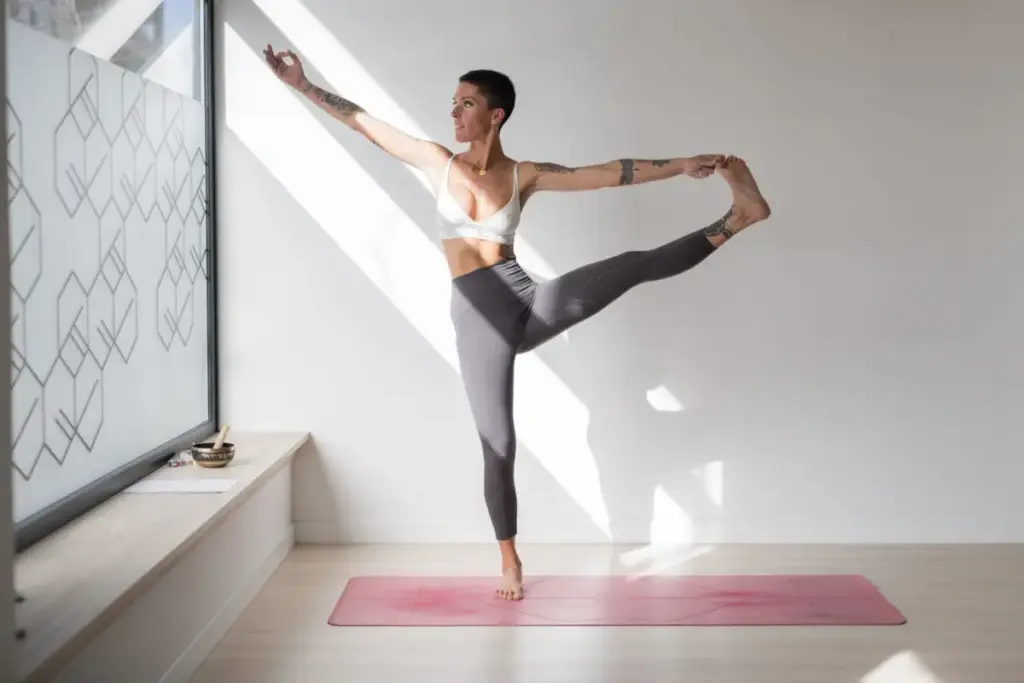
4. Single-Leg Stands
- How to perform: The most accessible variation involves wearing flat-soled shoes or slippers on a hard floor. Lift one leg off the ground and hold the position for 30 to 60 seconds before switching sides.
- Progressions: Progress to standing barefoot, closing your eyes, turning your head side to side, or slightly tilting your torso forward. Dr. Oak notes that even if you can initially maintain this position for only 10 to 15 seconds, you are actively stimulating neuroplasticity, improving structural stability, and reducing your fall risk.
5. Four-Square Step
- How to perform: Stand in an open space free of obstacles. While barefoot, step forward, then to the right, then backward, and finally to the left in a rapid, continuous loop. Repeat this sequence five times without looking down at your feet. This drill trains weight-shifting and rapid directional changes—crucial components of dynamic balance.
6. Unaided Sit-to-Stand
- How to perform: Rising from a seated position without pushing off with your upper extremities or arms is widely recognized as a premier indicator of functional longevity. Perform this movement roughly 10 times daily. Vary the challenge by attempting to rise from a deep, soft couch, a standard dining chair, or directly from the floor.
7. Uneven Surface Walking and Hiking
- How to perform: Outdoor hiking serves as a comprehensive triple-threat exercise, combining cardiovascular conditioning, muscular strength, and involuntary balance training as you navigate roots, rocks, and uneven grades. If a trail is inaccessible, walking for 15 to 30 minutes daily across varied terrain like grass, gravel, or sand provides comparable neuromuscular stimulation.
8. Calf Raises
- How to perform: Ankle strength is foundational to overall equilibrium. Performing repetitive calf raises builds critical lower-leg musculature necessary for micro-adjustments. Incorporate sets of calf raises into routine downtime, such as while brushing your teeth or waiting in line.
9. Maintenance of Multi-Disciplinary Workouts
- How to perform: Do not abandon specialized movement practices like yoga, Pilates, Tai Chi, strength training, or cardiovascular conditioning out of fear of instability. Continual engagement in these modalities counters age-related flexibility and muscle loss, serving as an ongoing insurance policy for your balance systems.
Ultimately, whether you are managing a chronic vestibular disorder or proactively safeguarding your independence against the march of time, treating your balance systems with intentional care yields profound dividends. By integrating these simple, targeted movements into the fabric of daily life, you can reclaim your stability, quiet the internal wobble, and stride confidently into the future.