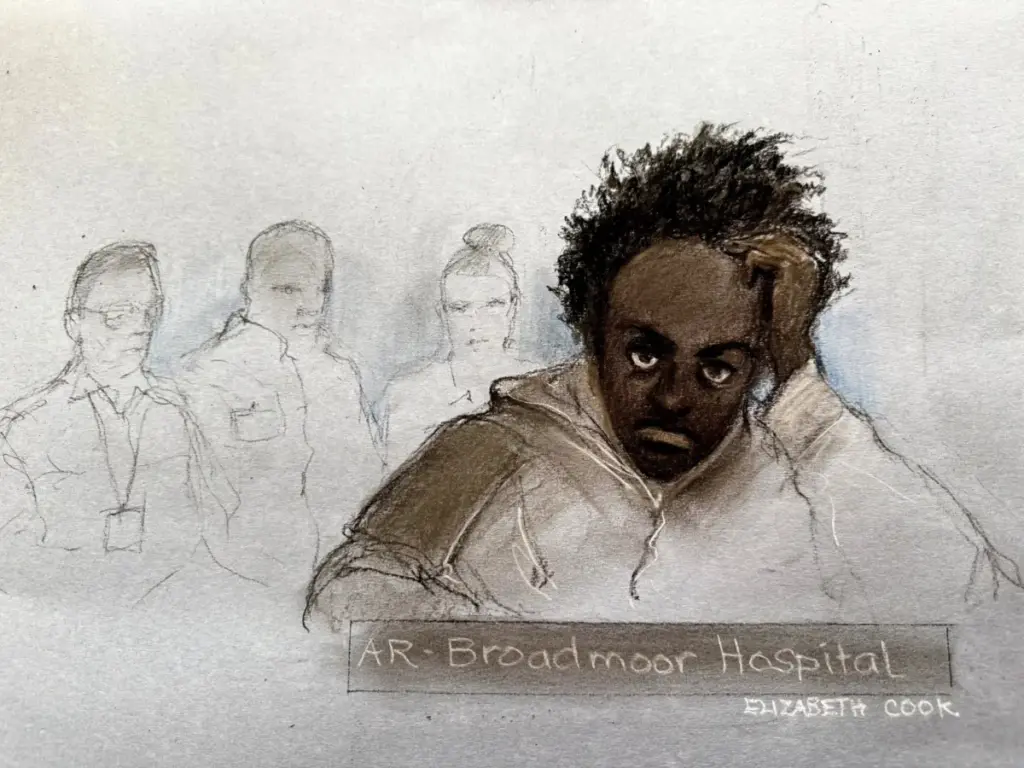
LONDON — Axel Rudakubana, the convicted murderer serving a life sentence for the horrific Southport stabbing attack, has appeared in court to face a new battery of charges. The 20-year-old is accused of a violent escalation behind bars, including throwing boiling water laced with sugar at a prison officer, manufacturing improvised weapons from cell flooring, and assaulting members of staff at the high-security Belmarsh prison.
During a virtual court appearance from the high-security Broadmoor psychiatric hospital, Rudakubana sat quietly, resting his head in his hand, as prosecutors outlined a chilling pattern of institutional violence and volatile behavior. He was not required to enter formal pleas during the brief procedural hearing at Westminster Magistrates’ Court.
The fresh legal proceedings shed light on the intense operational and security challenges prison authorities face when managing high-profile, high-risk offenders within the UK’s penal system. The case has now been elevated to the Central Criminal Court—widely known as the Old Bailey—where Rudakubana is scheduled to appear on October 19.
Executive Overview
The unfolding legal developments compound an already harrowing judicial history for Rudakubana, who is currently serving a mandatory life sentence with a whole-life tariff. His original conviction stemmed from the July 29, 2024, mass stabbing at a Taylor Swift-themed dance party in Southport, Merseyside, which claimed the lives of three young girls and left numerous others with profound physical and psychological injuries.
Following his initial incarceration at HMP Belmarsh—one of the United Kingdom’s most secure men’s prisons—Rudakubana’s behavior deteriorated significantly, culminating in a series of violent incidents directed at corrections personnel. According to details presented by prosecutor Catherine Pattison, these incidents span multiple months and include:
- An alleged attack involving boiling water mixed with sugar thrown through a cell door hatch.
- Threats and the throwing of an unknown liquid at a female staff member after being denied a newspaper.
- A physical altercation involving a male officer attempting to verify medication compliance.
- The creation and concealment of improvised weapons fashioned from cell flooring stones.
Consequently, Rudakubana now faces a slate of severe new criminal counts, including attempted grievous bodily harm (GBH), two counts of assaulting an emergency worker, and possession of an offensive weapon within a custodial institution.
Detailed Chronology of Alleged Custodial Incidents
The prosecution’s case lays out a timeline of institutional defiance, intimidation, and calculated aggression by the inmate between May and October of last year.
May 6: The Newspaper Dispute
The sequence of alleged infractions began just days before a more serious escalation. On May 6, Rudakubana allegedly demanded a newspaper from a female prison officer stationed outside his cell. When the guard refused or failed to immediately hand over the material, the inmate reportedly threatened to "soak" her.
According to the prosecution, Rudakubana followed through on the threat by hurling an "unknown liquid" through the cell aperture. Fortunately, the officer managed to evade the bulk of the substance and sustained no physical injuries. Nevertheless, the incident marked an immediate escalation in aggressive posture toward custodial staff.
May 8: The Boiling Water Attack
Just 48 hours later, on May 8, a far more dangerous assault occurred. Rudakubana allegedly targeted a male prison guard by hurling a mixture of boiling water and sugar through the hatch of his cell door.

In prison environments, mixing sugar with boiling water—colloquially referred to in penal slang as "napalm"—significantly increases the viscosity and heat retention of the liquid, causing it to adhere to the skin and inflict severe, deep-tissue burn injuries. Quick-thinking colleagues and medical responders intervened immediately, providing rapid first aid that the court heard ultimately "prevented lasting injury."
Following this attack, Rudakubana reportedly accused prison officers of attempting to poison his food, an assertion that underscored his growing detachment and hostility toward staff.
June: Improvised Weaponry Discovery
Security sweeps later that summer uncovered further evidence of premeditated violence. In June, prison staff discovered that Rudakubana had systematically prised pieces of stone from the flooring of his cell.
The inmate had allegedly sharpened these fragments into makeshift blades or stabbing implements. The crude weapons were discovered hidden ingeniously on the underside of a shelving unit within his cell. When questioned by staff regarding the contraband, Rudakubana reportedly offered a chilling justification, stating that "he was keeping them for self-defence."
October 28: Confrontation Over Medication
The final incident detailed in the current indictment occurred on October 28. A male prison officer attempted to challenge Rudakubana as the inmate tried to walk past staff who were conducting routine checks to ensure medication compliance.
Rather than complying with instructions, Rudakubana allegedly lashed out, punching the officer in the face. This friction over basic institutional protocols demonstrated a persistent refusal to submit to the routine oversight required within a maximum-security setting.
The Broader Context: Southport and Psychiatric Transfer
To fully understand the gravity of these new charges, the legal proceedings must be viewed against the backdrop of Rudakubana’s original crimes and subsequent institutional placement.
The 2024 Southport Tragedies
Rudakubana was only 17 years old when he carried out the devastating attacks on July 29, 2024. Armed with a knife, he entered a community hall in Southport where children aged between three and eleven were attending a Taylor Swift-themed holiday club and dance workshop.
The horrific rampage resulted in the tragic deaths of three children:
- Alice da Silva Aguiar, 9
- Bebe King, 6
- Elsie Dot Stancombe, 7
In addition to the fatalities, Rudakubana severely injured eight other children and two brave adults who attempted to shield the youngsters from the onslaught. The attack sent shockwaves across the United Kingdom, triggering widespread mourning, community vigils, and subsequent nationwide civil unrest.

Due to the severity of the offenses and his age at the time, Rudakubana’s identity was initially protected by reporting restrictions until a judge lifted them in the interest of open justice, considering the immense public interest and the gravity of the charges. He was subsequently convicted of multiple counts of murder and attempted murder, receiving a whole-life sentence—meaning he will die behind bars.
Transfer to Broadmoor Hospital
Following his initial remand and conviction, the compounding behavioral issues, apparent paranoia regarding his food, and volatile outbursts led medical and penal evaluators to reassess his placement.
Rudakubana was subsequently transferred from HMP Belmarsh to Broadmoor Hospital, a high-security psychiatric hospital in Crowthorne, Berkshire. Broadmoor houses patients with severe mental disorders who pose a high risk of danger to others and require treatment within a secure, therapeutic environment. His appearance at Westminster Magistrates’ Court via video link from Broadmoor underscores that psychiatric assessment and management remain central to his current custody arrangements.
Legal Proceedings and Next Steps
The legal framework surrounding the latest court appearance centers on maintaining the rule of law within the nation’s correctional and mental health facilities. Even individuals serving whole-life sentences for capital offenses are subject to prosecution for crimes committed while incarcerated; the justice system dictates that accountability must extend inside prison walls to protect staff and fellow inmates.
During the hearing overseen by the district judge at Westminster Magistrates’ Court:
- Representation: Prosecutor Catherine Pattison detailed the Crown Prosecution Service’s case, outlining the specific mechanics of the assaults and the discovery of the sharpened stone shards.
- Plea: No formal plea was entered. Given the nature of the charges and the ongoing psychiatric evaluations taking place at Broadmoor, legal teams typically require extensive time to review evidence and assess fitness to plead or any potential psychiatric defenses.
- Remand Status: Rudakubana was formally remanded back into custody under secure conditions.
- Next Hearing: The case has been adjourned and transferred to the Old Bailey, where a preliminary or plea and trial preparation hearing is scheduled for October 19.
Institutional Safety and Future Outlook
The charges against Rudakubana have reignited vital conversations across the UK regarding safety standards within the prison estate, particularly concerning the management of young, highly volatile offenders convicted of mass casualty crimes.
Prison officers unions have repeatedly emphasized the daily dangers faced by frontline staff working within maximum-security facilities like Belmarsh. The alleged use of improvised chemical weapons—such as boiling water mixed with sugar—represents an insidious tactic that transforms everyday canteen items into dangerous projectiles. Similarly, the concealment of sharpened stone fragments highlights the constant necessity for rigorous, intelligence-led cell searches and structural integrity checks in high-security wings.
As the case moves toward the Old Bailey in October, legal analysts anticipate further scrutiny into Rudakubana’s mental state at the time of the alleged offenses, balancing the imperatives of criminal accountability with the clinical realities of his confinement in Broadmoor Hospital. For the families of the victims in Southport and the wider public, the proceedings serve as yet another painful reminder of a tragedy that continues to reverberate deeply through the British justice system.