Executive Overview
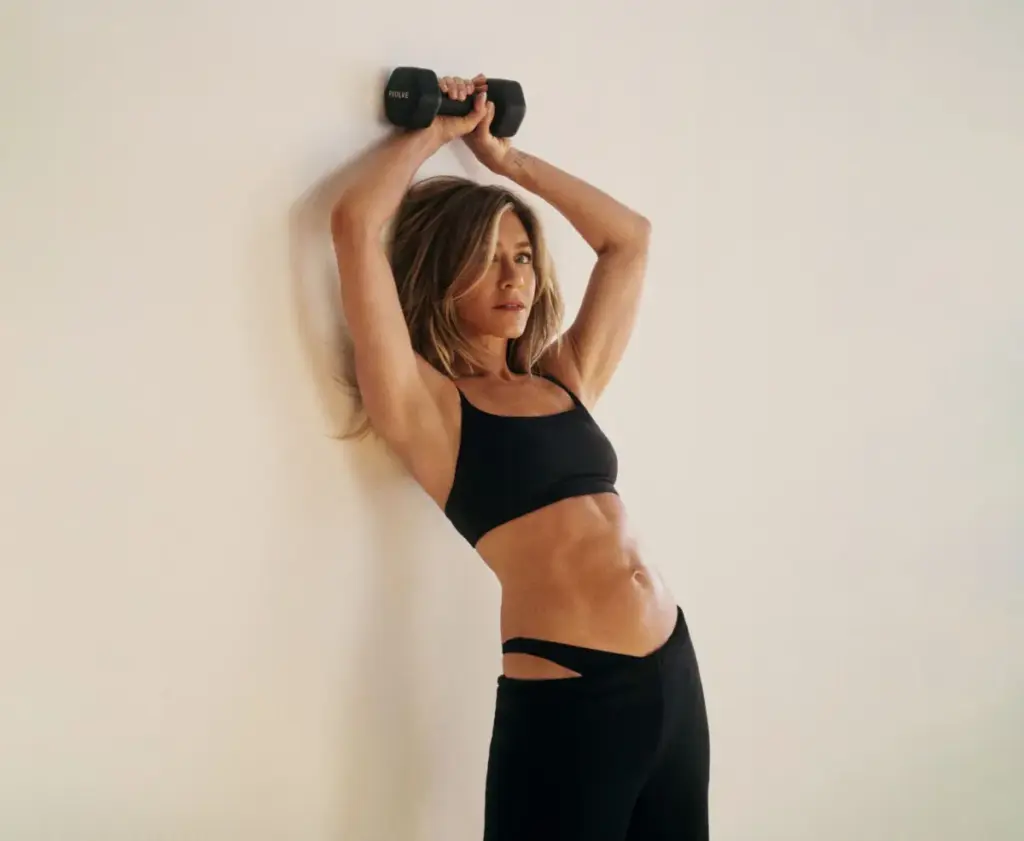
For over three decades, Jennifer Aniston has remained one of Hollywood’s most globally recognizable icons, celebrated not only for her enduring acting career but also for her dedication to physical vitality and holistic well-being. As cultural paradigms surrounding health shift away from punishing, high-impact regimens toward longevity-focused wellness, Aniston has emerged as a prominent advocate for a sustainable approach to fitness. Moving past the grueling, "no pain, no gain" mentalities that defined her earlier decades in the public eye, the Emmy Award-winning actress has embraced functional fitness—specifically the Pvolve method—as the cornerstone of her physical routine.
This comprehensive report examines the physiological and psychological evolution of Aniston’s fitness philosophy. It explores the mechanics of functional resistance training, details the specific arm and abdominal movements she utilizes to maintain her iconic physique, and analyzes the expert insights provided by her personal trainer, Dani Coleman. Furthermore, this feature investigates the broader cultural and physiological shift toward sustainable, low-impact exercise science, highlighting how micro-workouts and intentional movement can transform long-term health outcomes for individuals navigating demanding, modern schedules.
Detailed Chronology: The Evolution of Aniston’s Training Paradigm
To understand Jennifer Aniston’s current relationship with health and wellness, it is necessary to examine how her fitness philosophy has transformed alongside the broader evolution of the fitness industry.
The Era of Exhaustion (1990s–2010s)
During the height of her tenure on Friends and throughout her subsequent cinematic career, Aniston’s workout routines reflected the prevailing fitness dogma of the late 20th and early 21st centuries. This era was characterized by relentless cardiovascular output, long hours on high-incline treadmills, heavy reliance on momentum, and punishing boot-camp-style classes designed to exhaust the body rather than condition it.
Like many high-profile performers under intense media scrutiny, Aniston subscribed to the cultural narrative that physical excellence required suffering. Workouts were viewed through a lens of strict calorie expenditure and endurance testing. While these methods yielded high physical conditioning, they also invited the risk of chronic joint inflammation, burnout, and acute injuries resulting from repetitive, high-impact stress applied without adequate biomechanical support.
The Paradigm Shift and the Discovery of Functional Movement
In recent years, Aniston experienced a significant mental and physical pivot. Facing the natural physiological changes associated with aging and the cumulative wear-and-tear of decades of high-intensity training, she sought a more sustainable modality. This search led her to Pvolve, a science-backed, functional fitness method that emphasizes controlled resistance, dynamic movement across multiple planes, and joint preservation.
Instead of measuring a workout’s success by how depleted she felt afterward, Aniston began evaluating her routines based on how they enhanced her daily life, protected her joints, and supported her overall energy levels. This shift marked a transition from extrinsic motivation—exercising solely for aesthetic outcomes—to intrinsic motivation, where physical movement became a non-negotiable form of self-care and mental preservation.
Supporting Context & Metrics: The Science of Functional Fitness
To fully appreciate the efficacy of Aniston’s current routine, one must analyze the physiological principles that govern functional fitness and low-impact resistance training.
The Mechanics of Pvolve and Multi-Planar Movement
Unlike traditional weightlifting, which often isolates muscles in a single plane of motion (typically sagittal, involving forward and backward movements), functional fitness programs like Pvolve incorporate all three planes of motion:
- Sagittal Plane: Forward and backward movements (e.g., walking, lunging).
- Frontal Plane: Side-to-side movements (e.g., lateral raises, side lunges).
- Transverse Plane: Rotational movements (e.g., core twists, golf swings).
By engaging the body across all three planes, practitioners build comprehensive joint stability, improve neuromuscular coordination, and enhance functional strength that directly translates to activities of daily living (ADLs). According to exercise science literature, training across multiple planes reduces the incidence of asymmetrical muscle development and significantly lowers injury risk by strengthening stabilizing connective tissues.
Progressive Overload and Controlled Resistance
A core tenet of Aniston’s current routine is progressive overload—gradually increasing the stimulus placed on the musculoskeletal system to prompt continuous adaptation. However, unlike traditional bodybuilding where heavy loads are prioritized, Pvolve utilizes precise resistance bands, stability balls, and body weight combined with slow, deliberate tempos.
By eliminating momentum, exercisers increase Time Under Tension (TUT). Physiological studies consistently show that elevated TUT stimulates muscle fiber recruitment and promotes hypertrophy and endurance without requiring excessive external loads that can compromise spinal alignment or stress the joints.
The Core as the Center of Gravity
Aniston frequently emphasizes that for her, "core is everything." Anatomically, the core comprises far more than the superficial rectus abdominis ("six-pack" muscles). It encompasses a complex cylinder of deep stabilization structures, including the transverse abdominis, internal and external obliques, erector spinae, multifidus, and the pelvic floor.
Strengthening this core complex provides a stable foundation for upper and lower limb movement, protects the lumbar spine from excessive shearing forces, and optimizes overall biomechanical efficiency.
Official Statements and Expert Insights
The philosophy behind Jennifer Aniston’s physical vitality is anchored in professional expertise. Dani Coleman, Aniston’s personal trainer and the Vice President of Training at Pvolve, offers profound insights into the mechanics of their collaborative sessions and the broader methodology of functional training.
Dani Coleman on Intentional Strength and Progressive Overload
In an exclusive discussion, Coleman elucidates the precise physiological goals of their upper body and core regimens:
"We build upper body and core strength through progressive overload, resistance, and dynamic movement in all three planes of motion," Coleman tells SELF.
Coleman emphasizes that the elimination of momentum is what separates this style of training from conventional routines. When individuals rush through repetitions, they rely on kinetic energy rather than muscular contraction. By slowing down and focusing exclusively on the targeted muscle groups, practitioners unlock a higher quality of muscular engagement.
"By focusing on the muscles doing the work, you can develop intentional strength that not only improves performance in your workouts, but also helps you look and feel your best in daily life," Coleman notes.
Jennifer Aniston on the Transition to Sustainable Wellness
Reflecting on her decades-long journey through the fitness landscape, Aniston speaks candidly about letting go of toxic wellness narratives and embracing self-compassion:
"I used to look at workouts where it had to be this intense, ‘no pain, no gain’ situation," Aniston shares. "But the main takeaway over all the years of everything I’ve tried is just consistency. Don’t push it and listen to your body."
Aniston notes that the primary driver for her consistency today is not an external aesthetic goal, but rather the immediate psychological and physiological feedback she receives when she moves—or fails to move—her body.
"When I don’t work out, I feel such a difference," Aniston reveals. "My mood dips, I don’t have as much endurance during the day, my clothes fit differently. You just don’t feel good because you’re not being good to yourself."
To combat the friction of busy production schedules and demanding professional obligations, Aniston advocates for radical simplification. Rather than waiting for a mythical, uninterrupted two-hour window to exercise, she scales down her expectations to fit the reality of her day.
"Wake up 15 minutes earlier and get it in. When you simplify it for yourself, it makes it more digestible," she advises.
The Core and Upper Body Routine: Detailed Movement Breakdown
The following five exercises form the backbone of Jennifer Aniston’s favored arms-and-abs routine. Designed to build functional strength, mobility, and stability simultaneously, these movements require minimal equipment—primarily a yoga mat, a stability ball, and a resistance band.
1. Curl Over Ball
- Equipment Needed: Stability ball, yoga mat.
- Execution: Position the lower back securely over the curve of the stability ball, with feet planted firmly on the floor for a base of support. Engage the abdominal wall to perform a controlled spinal curl, lifting the torso upward while maintaining balance on the dynamic surface of the ball.
- Trainer Insight: According to Dani Coleman, "This move strengthens the abs through a fuller range of motion while the ball supports the lower back." This support allows individuals with lumbar sensitivities to achieve deep abdominal contraction without exacerbating lower-back strain.
2. Elevated Deadbug
- Equipment Needed: Yoga mat, optional resistance props.
- Execution: Lie supine on the mat, drawing the arms and knees upward into an elevated position. Keeping the core braced and the lower back pressed firmly into the floor, slowly extend opposing limbs outward while maintaining absolute stillness in the torso.
- Trainer Insight: Coleman describes this as "a powerful core stability move that improves coordination and teaches the body to stay steady while the arms and legs move in tandem." It challenges the central nervous system to prevent unwanted spinal rotation under load.
3. Golf Swing
- Equipment Needed: Resistance band or light cable apparatus.
- Execution: Adopt an athletic, staggered stance with slight knee flexion. Utilizing a resistance band anchored to the side, rotate the torso in a fluid, controlled arc mimicking the motion of a golf swing, driving the movement from the oblique sling systems and outer hips.
- Trainer Insight: "This is a dynamic core exercise that strengthens the obliques while activating the outer hips for improved balance and stability," says Coleman. This movement is exceptionally valuable for rotational power and daily lateral stability.
4. Stability Ball Plank
- Equipment Needed: Stability ball.
- Execution: Assume a standard forearm plank position, but place the forearms atop a stability ball rather than a stationary floor. Maintain a rigid, straight line from the crown of the head to the heels while actively fighting the inherent instability of the ball.
- Trainer Insight: Coleman explains that "this exercise takes the classic plank up a notch by adding instability, forcing the core to work harder to stay controlled." This recruits deep intrinsic stabilizers that are often dormant during static, floor-based planks.
5. Prone Back Extension With Lat Pull
- Equipment Needed: Yoga mat, resistance band.
- Execution: Lie face down (prone) on the mat. Lift the chest slightly off the floor using the muscles of the posterior chain, simultaneously pulling a resistance band downward toward the torso in a lat-pulldown motion to engage the upper back and lats.
- Trainer Insight: Coleman notes that this movement "targets the muscles along the spine to build back strength, support better posture, and counteract the effects of long hours of sitting." Given the sedentary nature of modern desk work and long hours spent traveling or on set, this posterior chain activation is vital for musculoskeletal health.
Future Outlook: The Maturation of Celebrity Wellness
Jennifer Aniston’s embrace of functional fitness signals a broader, highly positive cultural shift in how society approaches aging, physical performance, and self-care. For decades, the media landscape promoted an unsustainable ideal of fitness tied to extreme caloric restriction and brutal physical punishment. Today, figures with global influence like Aniston are redefining vitality through the lens of longevity, mental clarity, and physiological resilience.
As exercise science continues to validate low-impact, multi-planar, and resistance-based functional training, the fitness industry is pivoting toward inclusivity and sustainability. The normalization of micro-workouts—such as waking up 15 minutes early to complete a targeted core and arm circuit—democratizes health, making wellness achievable for individuals regardless of their professional schedules or socioeconomic barriers.
Ultimately, Aniston’s philosophy serves as an authoritative reminder that true physical strength is not forged through self-punishment, but through compassionate consistency. By listening to the body, prioritizing foundational core stability, and embracing intelligent movement patterns, individuals can cultivate physical vitality that sustains them not just for a season, but for a lifetime.