Executive Overview
The intersection of religious authority, domestic control, and the harrowing limits of the legal system forms the grim backbone of Netflix’s latest true-crime docuseries, Death of the Pastor’s Wife. Dropped unexpectedly ahead of a major holiday weekend, the three-part investigative project examines the life, marriage, and tragic final days of 30-year-old Mica Miller.
In April 2024, Mica’s body was discovered in North Carolina’s Lumber River State Park. While local authorities officially ruled her death a suicide stemming from a self-inflicted gunshot wound, the narrative presented by investigators, documentary filmmakers, and—most passionately—Mica’s own friends and family points to a much more complex and disturbing reality. The series pulls back the curtain on an alleged web of psychological, emotional, and physical abuse orchestrated by her husband, John-Paul "JP" Miller, a prominent evangelical pastor in Myrtle Beach, South Carolina.
Far from being a closed case, Mica’s death ignited a nationwide conversation regarding systemic failures to protect victims of domestic stalking and coercive control. The outcry birthed public petitions, intense media scrutiny, and eventually, federal intervention. In December 2025, the U.S. Attorney’s Office indicted JP Miller on federal cyberstalking and false statement charges.
As Death of the Pastor’s Wife climbs streaming charts, audiences are left grappling with haunting questions: How did a young woman deeply embedded in a religious community slip through the cracks of safety systems? What were the psychological mechanisms of her alleged abuse? And where does the pursuit of justice stand today?
Detailed Chronology: From Faith and Foundation to Fatal Estrangement
The Roots of a Relationship
The documentary meticulously traces the timeline of Mica Francis and John-Paul Miller’s relationship, utilizing a trove of personal archives—including text messages, home videos, church footage, and Mica’s deeply intimate journals—alongside firsthand accounts from siblings and close confidants.
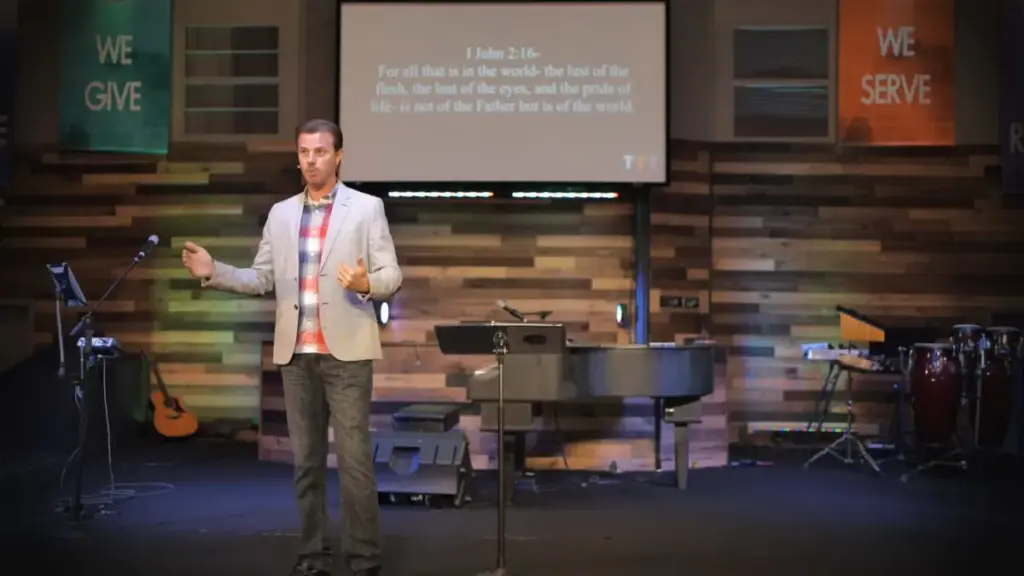
The association began when Mica was just 13 years old. Her family relocated to Myrtle Beach, South Carolina, and quickly became regular attendees of the Solid Rock Church, an evangelical parish where JP served as pastor. At the time, JP was married with five children, and Mica eventually began working as his church assistant.
When Mica turned 18, she married her first husband—a man whose family also frequented Solid Rock Church—in a ceremony officiated by JP. However, the dynamics within the community shifted dramatically in 2015. When Mica was 20 and JP was 38, the pair initiated an extramarital affair. The relationship ultimately dissolved both of their marriages, paving the way for them to tie the knot in 2017.
Years of Coercive Control
According to testimonies featured in the docuseries, red flags were evident almost immediately. Friends and family members described JP as pathologically possessive, noting that he frequently used biblical scriptures to manipulate and dominate his young wife. Executive producer Alana Goldstein summarized the overarching psychological abuse during interviews promoting the series:
"The broad thing that JP was doing was trying to strip away her freedom, her independence, her self-esteem. Not through one single event, but through years and years of continuous micro-events that trapped her in a state of dependence on him."
Survivors and documentary contributors alleged that JP subjected Mica to extreme behavioral restrictions, including denying her sleep unless compliant with sexual demands, alongside engaging in multiple external affairs.

As the marriage deteriorated, Mica resolved to break free from the cycle of control. Her attempts to leave, however, triggered an escalation of retaliatory behavior. As detailed in the series and court documents, JP allegedly engaged in a campaign of intimidation: slashing her vehicle’s tires, posting a nude photograph of her on social media to humiliate her, planting hidden tracking devices on her car, and flooding her phone with countless harassing voice notes and text messages.
The Breaking Point and Final Days
Driven to desperation, Mica documented her ordeal and reached out to law enforcement more than 10 times. In her reports, she expressed that she felt "groomed" and "afraid for her life."
In April 2024, Mica officially filed for divorce. Attached to the filing was a handwritten affidavit that laid bare the harrowing reality of her domestic existence:
"Since the day we became husband and wife, I have been abused in every way I can think of—emotionally, sexually, spiritually, financially, and physically."
Just two days after filing for divorce and completing her legal separation paperwork, Mica left her accommodation for her lunchtime shift at a local café. She was subsequently reported missing.
On April 27, 2024, search teams located her body in Lumber River State Park in Robeson County, North Carolina. Dr. Richard Johnson, the Robeson County medical examiner, later confirmed that she died from a single, self-inflicted gunshot wound, officially ruling the manner of death as suicide.
Crucially, the documentary highlights the tragic final moments captured before her death. Surveillance footage and records show Mica purchasing a firearm at a pawn shop before driving herself to the state park. While sitting in her car, she dialed 911, leaving a heart-wrenching dispatch message indicating her intent: "I’m about to kill myself and I just want my family to know where to find me."
Supporting Context, Public Outcry, and Systemic Metrics
The official ruling of suicide did little to quell the suspicions of those who knew Mica best. Instead, it served as a catalyst for a massive public reckoning.
The Online Advocacy and "Mica’s Law"
Mica’s family and friends swiftly mobilized, launching an online change.org petition that garnered widespread national attention. The petition argued that Mica’s tragic end was heavily influenced by systemic failure—specifically, the inadequacy of local legal structures to protect victims facing severe stalking and harassment.
The petition stated:

"She lost her life due to no one helping her from being harassed and excessively stalked, among other things by her soon-to-be ex-husband she was desperately trying to get away from."
Advocates pointed out that despite more than 10 calls to police reporting obsessive stalking—including instances where she reported being tracked and harassed—insufficient preventative measures were enforced against JP. The public outcry led to calls for stricter anti-stalking legislation in South Carolina, informally dubbed "Mica’s Law," to ensure that protective orders carry heavier enforcement teeth before domestic disputes turn fatal.
Executive Insight and True Crime Impact
The release of Death of the Pastor’s Wife has also renewed industry conversations regarding how true-crime documentaries handle sensitive topics like coercive control and suicide. Rather than serving as a sensationalized exposé, directors and producers have emphasized structural accountability.
By analyzing text message logs, journal entries, and police intervention records, the three-part series serves as an educational case study on how psychological conditioning and systemic isolation can warp a victim’s perception of escape, making even death feel like the only available exit from a relentless abuser.
Official Statements and Legal Posturing
The legal fallout surrounding the case has been marked by starkly contrasting narratives from the defense and federal prosecutors.
The Defense Response
In May 2024, shortly after the initial wave of public grief and media speculation, JP Miller’s defense attorney, Russell B. Long, released a strongly worded statement categorically denying any wrongdoing on behalf of his client:
"Following the untimely death of Mica Miller, unfounded rumours and false accusations began circulating on social media and in various media outlets, suggesting Pastor Miller’s involvement in her demise. This created a buzz, causing local and national media outlets to be proliferating these falsehoods, on a mammoth proportion. Our client refutes any report that suggests he ever abused his wife."
Federal Indictment
Despite the defense’s initial positioning, federal investigators continued digging into JP’s electronic footprint and behavioral patterns prior to Mica’s death.
In December 2025, the U.S. Attorney’s Office formally intervened, indicting John-Paul Miller on two distinct federal counts:
- Cyberstalking: Prosecutors outlined a relentless pattern of digital and physical harassment spanning from November 2022 up until Mica’s death, which included documented instances of calling her up to 50 times in a single day.
- Making False Statements: Federal investigators alleged that JP deliberately lied to federal agents during interviews regarding the vandalism of Mica’s car, specifically denying that he had deflated her tires.
JP pleaded not guilty to both charges. It is critical to note that he has not been criminally charged in connection with Mica’s physical death. However, the federal indictment represents a major legal milestone, acknowledging the severe severity of the stalking and harassment she endured in her final years.

Future Outlook: Trial Delays, Personal Changes, and Where JP Miller Is Now
As Death of the Pastor’s Wife streams to millions globally, the legal and personal life of John-Paul Miller continues to evolve amidst significant controversy.
Trial Continuances and Upcoming Court Dates
JP’s federal trial has faced repeated delays since his initial indictment. The proceedings have been pushed back multiple times, stretching out the legal timeline significantly. Documentary director Michael Gasparro addressed these continuous delays during press junkets, noting:
"It was supposed to happen back in the spring. It got pushed in June, to August, and now it’s October."
Legal analysts attribute the sluggish progression to the massive volume of discovery documents—including extensive phone records, digital forensic extractions, and financial audits—that the defense must comb through. The federal trial is currently scheduled to take place in October 2026. Until then, JP remains free out on bond.
Life After the Tragedy
In his personal life, JP has moved forward despite the cloud of federal charges and public ostracization. In June 2025, he remarried, wedding Suzie Skinner, a fellow member of the Solid Rock Church community.
Professionally, his standing has shifted drastically. The original physical property and grounds of the Solid Rock Church have been sold. However, according to investigative updates featured in the docuseries, JP has not stopped preaching. He continues to hold religious services, gathering followers in informal, pop-up locations scattered around the Myrtle Beach area.
When approached by Netflix production teams to provide a final comment, interview, or rebuttal for inclusion in Death of the Pastor’s Wife, John-Paul Miller officially declined.
As the legal system prepares for the federal trial in late 2026, Death of the Pastor’s Wife stands as a permanent archival warning—documenting not only a personal tragedy, but the urgent, ongoing battle to recognize and penalize coercive control before it reaches its terminal destination.