Executive Overview
For decades, conventional fitness wisdom has implicitly—and sometimes explicitly—dictated that maintaining or improving physical health in advanced age requires significant, often daunting, lifestyle overhauls. Society has long operated under the assumption that past a certain biological milestone, workouts must either transition into aggressive, high-impact routines to yield results or taper off entirely into gentle, passive stretching meant merely to maintain the status quo.
However, a revolutionary new clinical study published in the European Review of Aging and Physical Activity shatters these outdated dogmas. Researchers investigating the physiological capabilities of community-dwelling women aged 85 and older discovered that just six months of a structured, low-intensity exercise program can yield remarkable, measurable improvements in both physical function and metabolic health.
This study challenges the deeply entrenched assumption that advanced chronological age is an insurmountable barrier to physiological adaptation. By demonstrating that meaningful gains in functional independence, muscle strength, and metabolic markers can be achieved without high-intensity workloads, this research opens up entirely new paradigms for geriatric medicine, physical therapy, and healthy aging initiatives.
Detailed Chronology: Inside the Six-Month Clinical Trial
To understand the weight of these findings, it is essential to examine the rigorous methodology behind the trial. Spearheaded by researchers at Pusan National University’s Institute of Physical Education & Sports Science, the study was specifically engineered to observe a demographic that has historically been rendered invisible in clinical exercise science: women aged 85 and older.
Phase 1: Recruitment and Categorization
The research team gathered a cohort of community-dwelling women aged 85 and older, a demographic frequently overlooked in clinical literature due to perceived risks and assumed physiological plateaus. Participants were meticulously screened and then divided into three distinct cohorts:
- A control group (maintaining their standard, baseline daily routines without structured exercise interventions).
- An aerobic exercise intervention group.
- A resistance training intervention group.
Phase 2: The Supervised Implementation (Weeks 1 to 12)
Over a 24-week period, the participants in the two active intervention groups engaged in supervised, structured workouts three times per week. These sessions were conducted at a local public sports center and meticulously overseen by professional exercise instructors to ensure safety, proper form, and adherence.
During the first 12 weeks, the parameters were set intentionally low to accommodate the advanced baseline age and varying fitness levels of the participants:
- The Aerobic Cohort: Focused primarily on treadmill walking, maintaining a target heart rate reserve (HRR) of roughly 30% to 35%.
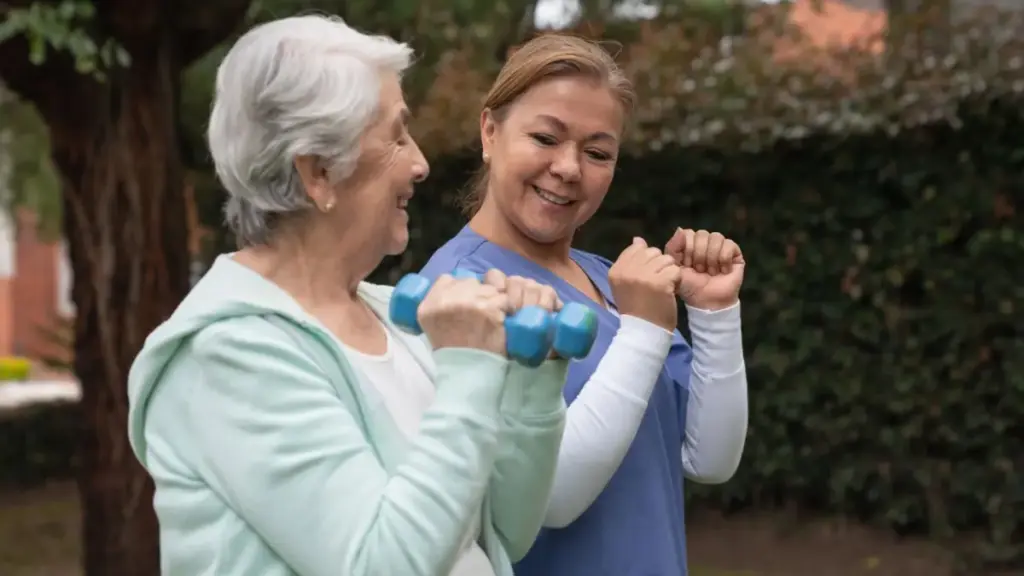
- The Resistance Training Cohort: Utilized a combination of bodyweight movements and light dumbbell exercises, targeting workloads equivalent to 30% to 40% of their individual one-repetition maximum (1RM). Sessions lasted under an hour, punctuated by generous rest periods of two to three minutes between sets to prevent undue cardiovascular or muscular strain.
Phase 3: Progressive Adaptation (Weeks 13 to 24)
Recognizing the remarkable adaptability of the human body—even at 85 years and beyond—the research team introduced a carefully calibrated, progressive overload during the second half of the trial:
- The Aerobic Cohort: Intensity was slightly elevated, shifting the target heart rate reserve to a modest 36% to 39%.
- The Resistance Training Cohort: Weight parameters were adjusted upward, moving to 40% to 49% of their one-rep max.
Throughout the entire six-month duration, the researchers monitored functional performance, strength metrics, and key metabolic biomarkers to track how these octogenarian and nonagenarian bodies responded to gentle, consistent physical stimuli.
Supporting Context & Metrics: The Science of Low-Intensity Gains
The findings of this clinical trial offer profound statistical and physiological encouragement for aging populations. While the sample size was relatively small—necessitating further, larger-scale investigations to cement absolute consensus—the preliminary data points to transformative health shifts.
Functional Fitness and Mobility
The most immediate and practical takeaway for the participants was the dramatic enhancement of their "functional fitness." This term refers to exercises that directly mirror the physical demands of daily life, such as standing up from a chair, carrying groceries, or maintaining balance while walking.
- Sit-to-Stand Performance: Both exercise groups demonstrated statistically significant gains in their ability to repeatedly transition from a seated position to a standing one—a critical metric for maintaining independent living and preventing debilitating falls.
- Upper-Body Endurance: Participants across both active cohorts showed measurable improvements in upper-body endurance, translating to enhanced capability in household tasks and personal care.
Metabolic Markers and Strength Adaptations
While both aerobic and resistance training yielded functional benefits, the resistance training group unlocked specific physiological adaptations that extend far beyond muscle tone:
- Grip Strength: A well-documented indicator of overall health, longevity, and systemic vitality in older adults, grip strength showed marked improvements in the resistance-trained cohort.
- Biomarker Optimization: Key metabolic biomarkers displayed favorable shifts, including improvements in adiponectin (a protein hormone involved in regulating glucose levels and fatty acid breakdown), fasting insulin, and blood glucose regulation.
These metrics prove that low-intensity resistance training does more than build superficial strength; it actively combats the metabolic dysfunctions frequently associated with advanced age, helping to stave off insulin resistance and metabolic syndrome.
Official Statements and Expert Insights
The implications of this research extend far beyond academic circles, offering a philosophical and practical shift in how society views physical decline in later life.
Sung Wook Chang, a co-author of the study and a prominent researcher at Pusan National University’s Institute of Physical Education & Sports Science, emphasizes the groundbreaking nature of the trial’s demographic focus:
"A primary motivation for this trial was that people aged 85-plus remain profoundly underrepresented in clinical exercise literature. We sought to determine whether meaningful physiological adaptations could occur at a very advanced age without relying on moderate or high-intensity workloads."
The answer, according to Chang and her colleagues, is a resounding affirmative. The core message of the study is as liberating as it is scientifically robust: chronological age alone does not dictate a person’s capacity for physiological improvement.
"The core message is that advanced chronological age is not a barrier to meaningful adaptation," Chang notes. "When appropriately designed and consistently supervised, low-intensity exercise is a viable, high-yield strategy for preserving functional independence in women over 85."
However, the researchers offer an essential word of caution regarding the application of these routines outside of a controlled, clinical environment. Chang explicitly warns against treating the study’s protocols as a universal template:
"I would caution readers against viewing this as a one-size-fits-all regimen to attempt independently without considering individual health status, functional baseline, and medical clearance."
Experts universally recommend that older adults—and anyone looking to alter their exercise regimen—consult with a primary care physician or a qualified geriatric health specialist before embarking on a new fitness journey. Furthermore, initiating strength training under the direct supervision of a certified personal trainer ensures that movements are properly scaled, modified, and tailored to the individual’s unique anatomical and physiological realities.
Future Outlook: A New Paradigm for Aging and Fitness
As global demographics shift toward an increasingly aging population, studies like the one published in the European Review of Aging and Physical Activity carry immense societal and economic significance. Healthcare systems worldwide are grappling with the rising costs of age-related frailty, loss of independence, and chronic metabolic diseases.
This research charts a hopeful, highly accessible path forward. By proving that low-intensity, highly manageable exercise programs can yield significant functional and metabolic improvements in individuals aged 85 and older, the study dismantles the myth that staying active in advanced age requires grueling workouts or high-risk physical exertion.
Moving forward, sports scientists and geriatricians hope to see broader implementation of supervised, community-based low-intensity exercise programs tailored for the oldest segments of the population. By integrating these accessible workouts into senior living facilities, community centers, and rehabilitation programs, healthcare providers can empower older adults to reclaim their mobility, protect their metabolic health, and safeguard their independence well into their late eighties, nineties, and beyond.
Ultimately, the science confirms what many wellness advocates have long suspected: it is never too late to move, to adapt, and to thrive.