Executive Overview
As the global fashion capital prepares to command the world stage, anticipation reaches a fever pitch for Vogue World: Milano. Scheduled for next week, this monumental fifth installment of the celebrated Vogue World franchise will transform the historic, glass-vaulted arcades of Milan’s Galleria Vittorio Emanuele II into a high-octane, living theater of style. Following explosive, star-studded presentations in New York, Hollywood, London, and Paris, the Milan iteration arrives with a distinct and timely manifesto: a celebration of "craftsmanship and the human touch" in an era increasingly dominated by algorithms, artificial intelligence, and automated technology.
Conceived as both a tribute to Italy’s rich sartorial heritage and a forward-looking statement on the future of couture, Vogue World: Milano will not merely be an exclusive gathering for the industry elite; it has been engineered as a global cultural event, complete with a live-streamed broadcast designed to immerse millions of viewers worldwide.
In the lead-up to this milestone event, Vogue is peering backward into its storied vaults to examine the profound contributions of Italian supermodels who have shaped the trajectory of modern fashion. From the avant-garde intellectualism of Benedetta Barzini in the 1960s to the cinematic allure of Isabella Rossellini, the effortless elegance of Carla Bruni, the chameleonic runway dominance of Mariacarla Boscono, and the contemporary omnipresence of Vittoria Ceretti, Italian muses have long served as the living embodiments of la dolce vita.
This comprehensive report explores the architectural and conceptual significance of Vogue World: Milano, charts the chronological evolution of Italy’s most legendary fashion icons through the archives of Vogue, analyzes the economic and cultural metrics of Italian luxury craftsmanship, and evaluates the future outlook of an industry balancing high-tech innovation with artisanal preservation.
Detailed Chronology: From the Galleria to the Global Stage
The Genesis of Vogue World
To understand the weight of the upcoming Milanese showcase, one must trace the rapid evolution of the Vogue World concept. Launched as a pandemic-era pivot that morphed into a physical spectacle, Vogue World redefined how fashion interacts with the public.
- September 2022 (New York): A street-fair-meets-fashion-week celebration in the heart of the Meatpacking District, celebrating the start of fashion month.
- September 2023 (London): A theatrical extravaganza at the Theatre Royal Drury Lane, blending West End performing arts with cutting-edge British and international collections.
- September 2024 (Paris): A massive collaborative showcase on the Place Vendôme pairing centuries of French fashion history with elite athletic disciplines, coinciding with the spirit of the Olympic year.
- Next Week (Milan): The narrative shifts to Italy, zeroing in on the heartbeat of luxury manufacturing, tailoring, and leather goods.
Setting the Scene: Galleria Vittorio Emanuele II
The choice of the Galleria Vittorio Emanuele II is far from arbitrary. Built in 1865 and designed by architect Giuseppe Mengoni, this neo-Renaissance landmark—often dubbed il salotto di Milano (Milan’s drawing room)—represents the intersection of commerce, architecture, and civic life. By anchoring Vogue World: Milano within these iron-and-glass arcades, the production highlights the physical spaces where Italian style has historically been lived, breathed, and displayed.
Archival Milestones: The Muses Who Built the Legacy
Before the models of today step onto the Galleria’s mosaic floors, Vogue’s historical retrospectives remind us of the titans who laid the groundwork.
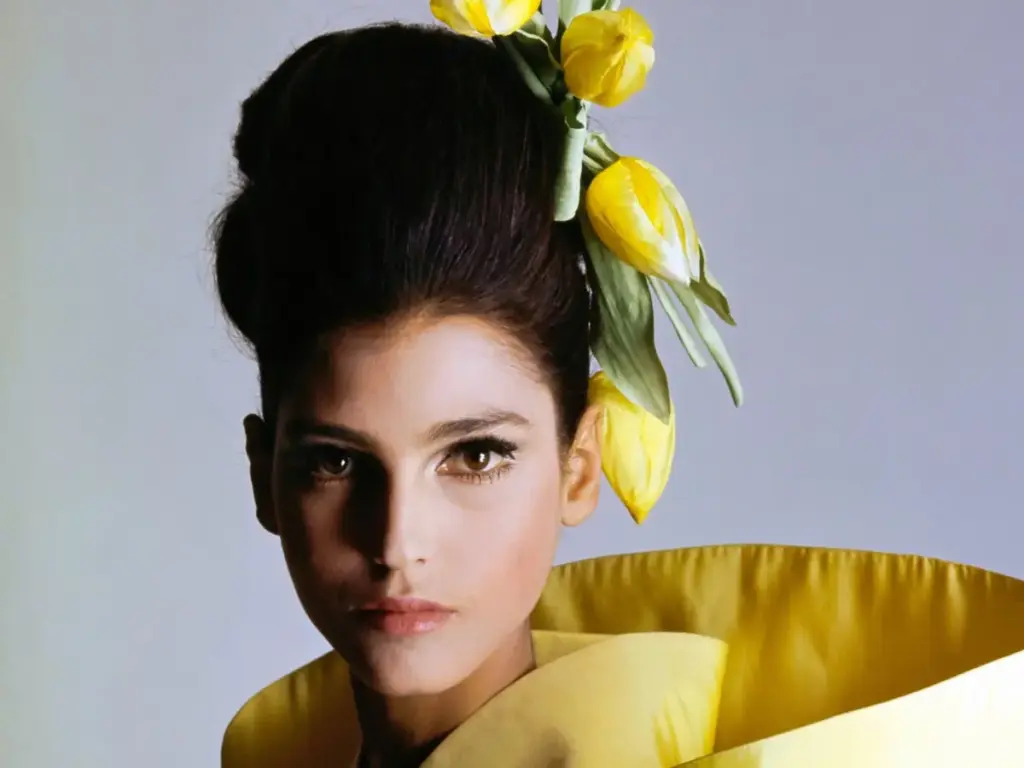
- The Avant-Garde Era (Benedetta Barzini): In the 1960s, Benedetta Barzini broke the mold of the traditional, passive mannequin. Discovered by a Vogue editor in Rome, Barzini became a muse to artists like Andy Warhol and Salvador Dalí, and her photographic collaborations with Irving Penn for Vogue transformed editorial pages into modernist canvases. She possessed an intellectual gravity that shifted how the industry viewed Italian women—not just as symbols of Mediterranean beauty, but as complex, modern thinkers.
- The Cinematic Icon (Isabella Rossellini): Daughter of actress Ingrid Bergman and director Roberto Rossellini, Isabella brought cinematic storytelling to fashion photography. Her striking 1984 portrait shot by the legendary Horst P. Horst for Vogue remains a masterclass in lighting and composition. Rossellini proved that high fashion and film were inextricably linked, paving the way for Italian models to transcend the runway and become global cultural icons.
- The Supermodel Golden Age (Carla Bruni and Monica Bellucci): By the late 1980s and 1990s, Italian beauty dominated the international stage. Carla Bruni’s effortless sophistication made her a favorite of Gianni Versace, Karl Lagerfeld, and Yves Saint Laurent. Meanwhile, Monica Bellucci redefined the intersection of high fashion and classic cinema, famously gracing the Dolce & Gabbana catwalks for decades—most recently commanding attention by opening their Spring 2019 ready-to-wear show.
- Modern Masters (Mariacarla Boscono, Bianca Balti, and Vittoria Ceretti): In the 21st century, the torch was passed to relentless runway chameleons. Mariacarla Boscono, with her dramatic features and theatrical gait, became the ultimate muse for Riccardo Tisci at Givenchy and houses across Milan. Bianca Balti captured the sun-kissed, opulent spirit of Valentino and Dolce & Gabbana, while Vittoria Ceretti—featured prominently on the March 2019 cover of Vogue shot by Angelo Pennetta—stands today as the undisputed queen of the international runways, bridging classical Italian elegance with modern global versatility.
Supporting Context & Metrics: Craftsmanship in the Age of AI
The Economics of Italian Manufacturing (Made in Italy)
While Vogue World: Milano celebrates the intangible "human touch," the economic reality underpinning Italian fashion is staggering. According to data from Confindustria Moda, the Italian fashion and textile sector generates tens of billions of euros annually, serving as the backbone of European luxury supply chains.

| Metric Category | Industry Statistic / Context |
|---|---|
| Global Luxury Share | Italy produces a significant majority of the world’s high-end leather goods, shoes, and luxury textiles. |
| Artisanal Workforce | Over 500,000 skilled craftspeople operate within thousands of small-to-medium enterprises across regions like Veneto, Tuscany, and Lombardy. |
| Technological Integration | Over 65% of Italian luxury houses are actively investing in digital traceability (blockchain) and sustainable material innovations while protecting manual artisanal workshops. |
The Human Touch vs. Automation
The core thematic tension of Vogue World: Milano—craftsmanship versus the age of technology—addresses the anxieties of a modern industry navigating generative AI, digital garments, and automated supply chains. While artificial intelligence can predict micro-trends and virtual showrooms can simulate runway experiences, they cannot replicate the decades of tacit knowledge possessed by a Florentine leather artisan, a Como silk weaver, or a Milanese master tailor.
By staging the event in a historic public arcade rather than a closed studio or a virtual metaverse, Vogue is making a deliberate spatial argument: fashion is fundamentally a human-centric, physical, and communal art form.
Official Statements & Perspectives
Industry leaders and creative directors have increasingly voiced the necessity of balancing digital acceleration with tactile preservation.
"We live in a world where speed and automation threaten to flatten our creative horizons. Vogue World: Milano is our love letter to the hands that actually make fashion possible—the seamstresses, the embroiderers, the shoemakers, and the models whose physical presence breathes life into cloth."
— Spokesperson for Condé Nast / Vogue Editorial Board
Fashion historians and curators note that Italian fashion has always derived its power from narrative depth rather than transient shock value.
"Italian style has never been just about clothes; it is about a philosophy of living. From the neoclassical grandeur of Milan’s architecture to the severe, beautiful portraits shot by Irving Penn and Horst P. Horst, Italy’s contribution to fashion is rooted in permanence and uncompromising quality."
— Dr. Elena Moretti, Textile and Fashion Historian, Università Cattolica del Sacro Cuore
Future Outlook
As the live stream countdown for Vogue World: Milano ticks down, the implications for the future of global fashion are profound. The event signals a shift in how major media properties view live experiences—not merely as marketing activations, but as cultural convergence points that marry heritage with contemporary dialogue.
- The Evolution of the Runway: Expect future fashion weeks to adopt hybrid models where physical architecture (like the Galleria Vittorio Emanuele II) is utilized to create immersive, broadcast-ready spectacles that engage digital-first audiences.
- The Renaissance of Artisanal Labor: Driven by consumer demand for authenticity and sustainability, luxury brands are expected to increasingly spotlight the human artisans behind their collections, potentially inspiring a new generation to enter traditional trade schools.
- The Enduring Italian Baseline: As long as icons like Vittoria Ceretti continue to command the global imagination—and as long as the industry honors pioneers like Barzini, Rossellini, and Boscono—Italy’s role as the emotional and technical heartbeat of global style will remain uncontested.
When the lights go up in Milan next week, viewers tuning in from across the globe will not just be watching a fashion show; they will be witnessing a living manifesto for the preservation of human creativity in a rapidly digitizing world.