In an era defined by hyper-connectivity and the pervasive glow of smartphone screens, the nightly struggle to switch off has become a universal modern affliction. Millions of adults toss and turn, trapped in a cycle of late-night digital doomscrolling followed by hours of anxious rumination. While the wellness industry offers a litany of expensive remedies—ranging from weighted blankets to high-end sleep supplements—experts increasingly point toward behavioral shifts rather than consumer goods to solve insomnia and restless sleep.
Enter bedtime yoga: a gentle, restorative practice designed not to exhaust the body through high-intensity exertion, but to systematically coax the nervous system into a state of profound rest. Unlike dynamic practices such as Vinyasa or Power Yoga, which are engineered to elevate the heart rate and stimulate energy production, bedtime yoga utilizes slow, deliberate movements paired with intentional breathwork.
To explore this accessible antidote to sleeplessness, we consulted Cheryl McColgan, yoga instructor and founder of Heal, Nourish, Grow. McColgan has curated a highly efficient, five-minute evening yoga flow designed to be practiced every night in pajamas—either on the floor or directly on the mattress. By focusing on consistency rather than duration, this routine serves as a physiological and psychological cue, signaling to the brain and body that the waking day has concluded and it is time to yield to sleep.
Detailed Chronology of the Five-Minute Routine
To maximize the efficacy of a brief bedtime practice, structural flow and timing are paramount. McColgan emphasizes that every pose within the routine should feel deeply relaxing, devoid of intense stretches that force the body to brace or tense up. By utilizing a simple timer app, practitioners can effortlessly transition through a carefully curated sequence designed to release the physical accumulation of a sedentary or stressful day.
Below is the chronological breakdown of the five-minute evening sequence, detailing the precise allocation of time, execution notes, and targeted anatomical benefits.
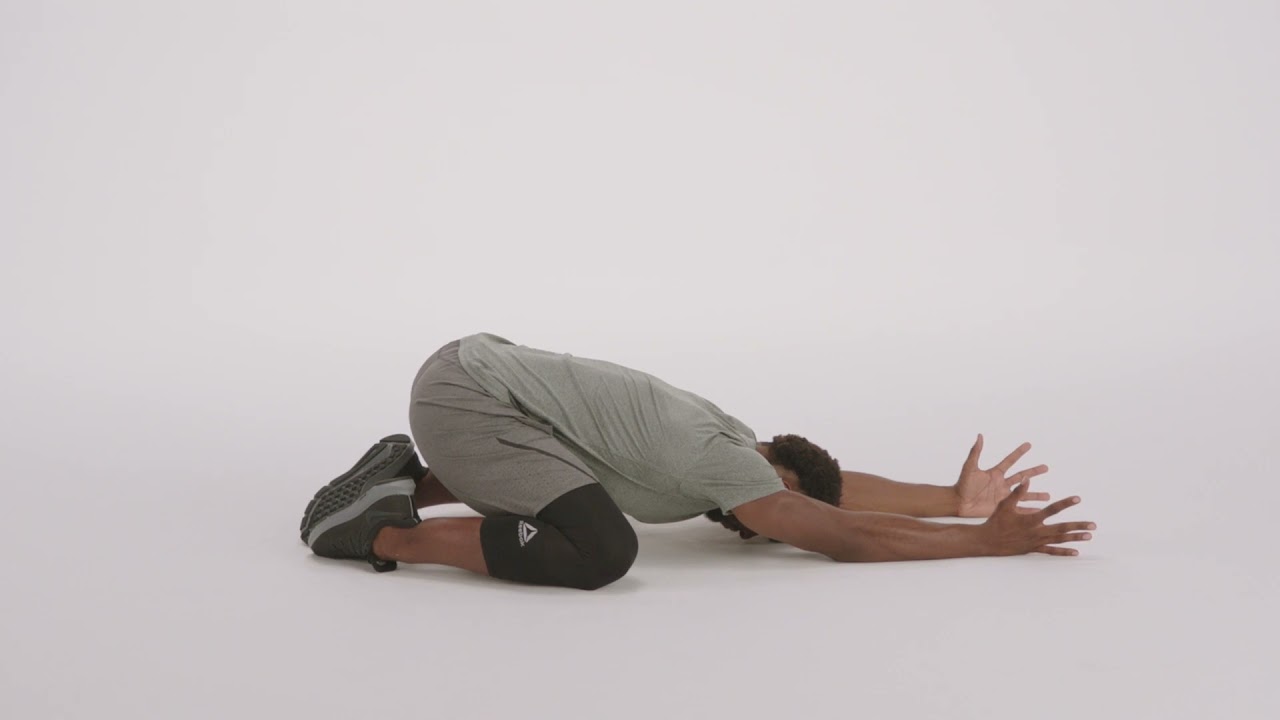
1. Child’s Pose (Balasana)
Duration: 1 minute
Execution & Focus: Begin on your hands and knees, sink your hips back toward your heels, and extend your arms forward while lowering your torso and forehead gently toward the floor or bed. Allow your chest to melt downward with every exhale.
Anatomical & Neurological Benefit: The gentle forward fold serves an immediate calming function for the central nervous system. Simultaneously, it releases chronic tension accumulated in the lower back and hips—areas that notoriously absorb stress and stiffness, particularly for individuals who spend long hours sitting at a desk throughout the day.
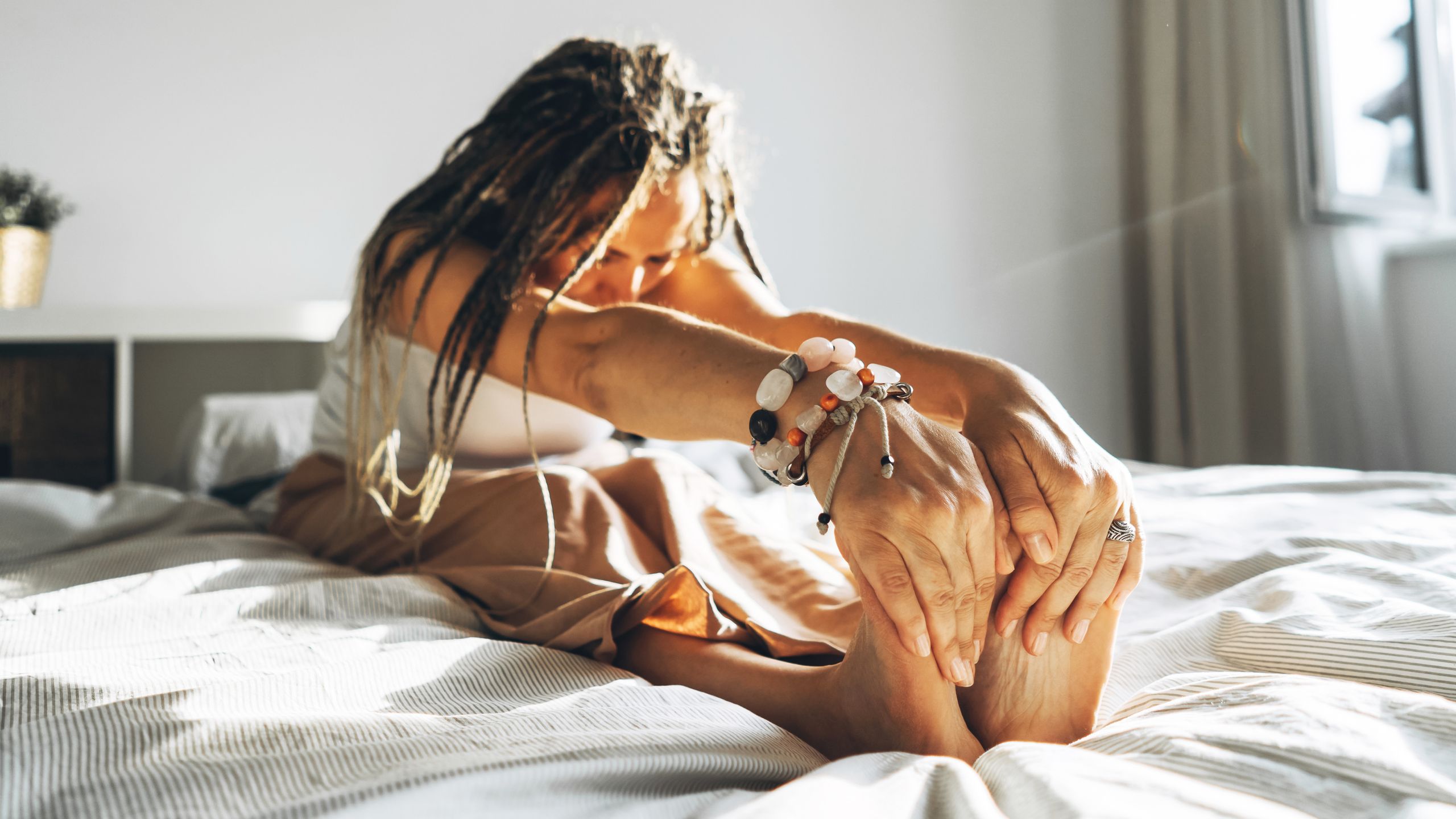
Execution & Focus: Sit tall with your legs extended straight in front of you. On an exhale, hinge gently from the hips, folding your upper body forward toward your shins or feet.
Pro-Tip for Maximum Comfort: If your lower back tends to round excessively during this posture, or if you experience tightness that prevents you from fully extending your legs, modify the pose. Place a folded blanket or a firm pillow underneath your buttocks to tilt the pelvis forward, and tuck another supportive cushion underneath your knees.
Anatomical Benefit: This posture lengthens the hamstrings and the entire posterior chain of the body. Releasing tension along the back line of the body helps dissipate physical restlessness, encouraging a deeper state of physical surrender.
3. Reclined Spinal Twist (Supta Matsyendrasana)
Duration: 30 seconds per side (1 minute total)
Execution & Focus: Lie flat on your back, draw your knees into your chest, and gently drop them over to one side while extending your arms outward into a "T" shape. Gaze softly in the opposite direction of your knees if comfortable, and switch sides midway through the minute.
Anatomical Benefit: This rotational movement targets the mid-back and the space directly between the shoulder blades, where upper-body tension frequently accumulates. It also provides a soothing stretch to the lateral hip muscles, unlocking areas of hidden stiffness.
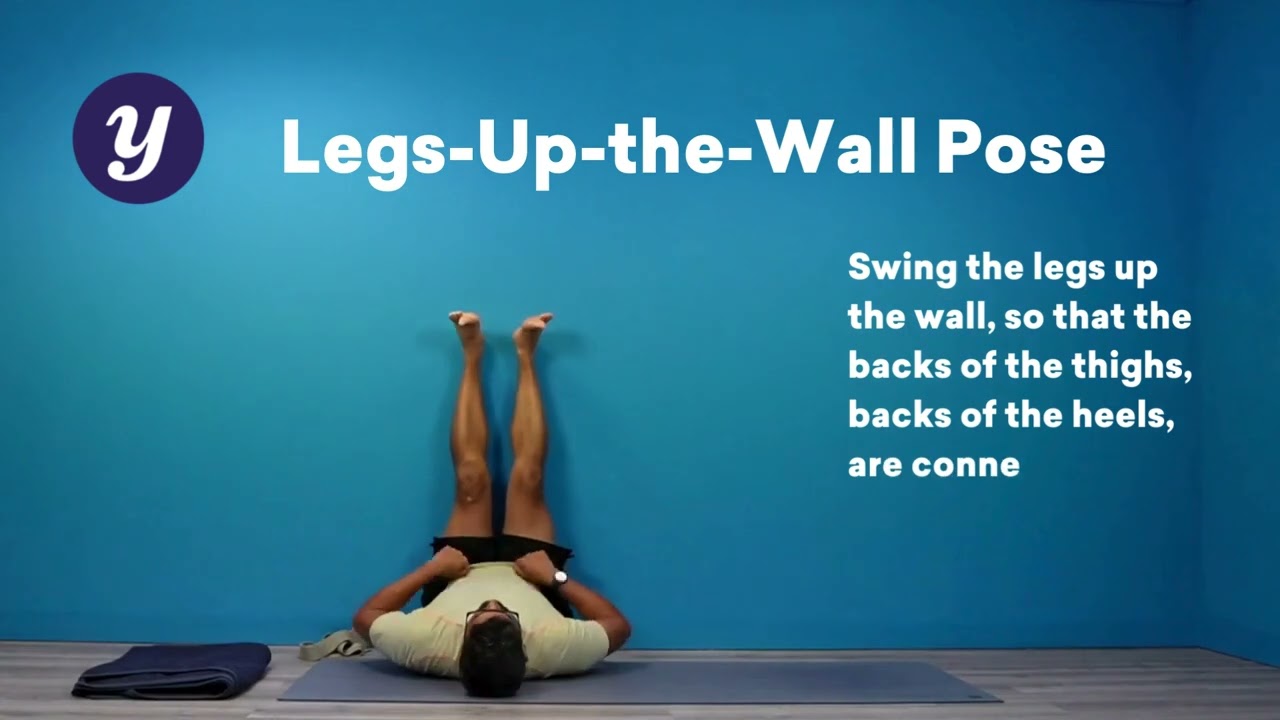
4. Legs Up the Wall (Viparita Karani)
Duration: 1 minute
Execution & Focus: Scoot your hips directly against a wall (or the headboard of your bed if practicing there) and swing your legs straight up vertically against the vertical surface. Let your arms rest comfortably by your sides, palms facing upward, and close your eyes.
Anatomical Benefit: As a classic restorative inversion, this posture leverages gravity to relieve tired, heavy legs. It gently encourages accumulated lymphatic fluid and venous blood to migrate out of the ankles and feet, significantly reducing lower-extremity swelling and calming an overactive pulse.
5. Savasana with Extended Exhale
Duration: 1 minute
Execution & Focus: Extend your legs long and let your feet softly splay open. Rest your arms a few inches away from your torso with your palms facing the ceiling. As you lie here, consciously lengthen your exhales—making each out-breath noticeably longer than your in-breath.
Anatomical & Neurological Benefit: Serving as the grand finale of the practice, this posture allows the nervous system to fully and unconditionally settle. By intentionally extending the exhale, you trigger a physiological relaxation response that drops both your heart rate and your breathing frequency, paving the way for undisturbed sleep.
Supporting Context & Metrics: The Science of Rest
To understand why a five-minute movement practice can drastically improve sleep quality, one must examine the autonomic nervous system, which governs involuntary physiological functions. The system is split into two primary, competing branches:
The Sympathetic Nervous System (SNS): Commonly known as the "fight or flight" response. In modern society, chronic work stress, financial pressures, and endless late-night digital stimulation trap individuals in a perpetual state of sympathetic activation. Elevated cortisol levels, rapid heart rates, and hyper-vigilance are hallmarks of this state, making deep, restorative sleep an physiological impossibility.
The Parasympathetic Nervous System (PNS): Commonly referred to as the "rest and digest" state. This is the physiological environment required for the human body to repair tissues, consolidate memory, and transition smoothly into the deeper stages of sleep.
According to McColgan, slow-paced, breath-guided movement acts as a direct bridge between these two states. "Slow movement paired with intentional breathing shifts your body out of the fight-or-flight sympathetic state and into the rest-and-digest parasympathetic state that you need to be in to fall asleep," she notes.
Why Duration Matters Less Than Consistency
Many individuals abandon wellness habits because they believe routines must be lengthy—requiring 30 to 60 minutes of uninterrupted commitment—to be effective. However, neuroscientists and habit-formation experts emphasize that the human nervous system thrives on predictable patterns.
By keeping the routine exceptionally brief at just five minutes, practitioners remove the psychological barrier to entry. This makes daily consistency realistic. Over time, the repetition of moving through these five specific postures transforms the sequence into a powerful neurological cue. The body learns the pattern: movement equates to safety, safety equates to relaxation, and relaxation equates to sleep.
Official Insights: Expert Perspectives on Bedtime Routines
The transition from wakefulness to sleep is rarely instantaneous. For chronic overthinkers and high-stress professionals, abruptly moving from a bright office or a glowing computer screen directly into a dark bedroom often results in "corridor insomnia"—lying awake while the mind races through unresolved tasks.
Yoga teachers and holistic health advocates emphasize that sleep hygiene is not merely about what you avoid (such as caffeine or late-night emails), but what you actively cultivate.
"Yoga for sleep helps by relaxing your body and mind, not by tiring you out," explains Cheryl McColgan.
This distinction is crucial. Many people attempt to combat sleeplessness through intense physical fatigue—such as late-night gym sessions or exhausting runs—which can actually spike adrenaline and core body temperature, rendering sleep even more elusive. Bedtime yoga respects the body’s natural circadian descent by using gentle traction, mild compression, and parasympathetic breathing to encourage surrender rather than exhaustion.
To maintain accountability and keep the practice free from the temptation of checking smartphones (which risk re-exposing the eyes to blue light), McColgan recommends utilizing minimalist timing tools. For instance, practitioners can set a gentle gong timer using free ambient apps like Insight Timer, allowing them to surrender to the poses without constantly staring at a clock.
Future Outlook: The Evolution of Accessible Sleep Hygiene
As sleep deprivation continues to be recognized as a public health crisis—linked to everything from cognitive decline and weakened immune function to cardiovascular disease—the demand for accessible, non-pharmacological interventions is skyrocketing.
The future of sleep wellness is shifting away from complex, high-friction interventions and moving toward micro-habits: small, highly sustainable behavioral adjustments that integrate seamlessly into existing lifestyles. A five-minute bedtime yoga flow represents the pinnacle of this philosophy. Requiring no specialized equipment, no expansive studio space, and no financial investment, it democratizes wellness, placing the power of nervous system regulation directly into the hands of the individual.
As more clinical research validates the profound connection between somatic movement, vagal nerve stimulation, and sleep architecture, routines like McColgan’s are poised to become standard recommendations in holistic medicine. For anyone currently trapped in the exhausting cycle of late-night scrolling and restless tossing, trading five minutes of screen time for five minutes of intentional, breath-led movement may well be the most transformative lifestyle adjustment they make this year.