Executive Overview
The traditional fashion calendar has long operated on a predictable, albeit sluggish, cadence. Designers showcase their collections months in advance, buyers deliberate over line sheets, and consumers wait patiently for garments to hit retail floors half a year later. However, the modern intersection of celebrity influence, digital immediacy, and hyper-agile PR teams has completely shattered this timeline. Today, the ultimate status symbol for a celebrity or style icon is no longer just wearing a bespoke piece—it is winning the grueling rat race of pulling looks straight from the runway to high-profile events mere hours, or even minutes, after the final model leaves the catwalk.
This high-stakes phenomenon was on brilliant display during the recent New York Fashion Week (NYFW) for the Spring/Summer 2027 season. While the tents were still packing up and industry critics were barely halfway through dissecting the overarching trends, a vanguard of stylish tastemakers bypassed the traditional seasonal lag altogether. Leading the charge are Kaia Gerber and Hannah Einbinder, two distinct forces in entertainment and fashion who have firmly established themselves as the elite pioneers of the SS27 look. By stepping out in pristine, freshly debuted garments before the digital ink on the runway reviews had even dried, Gerber and Einbinder have redefined what it means to be truly "first" in fashion.
This deep dive explores the mechanics of this rapid-fire styling trend, examines the standout looks worn by Gerber and Einbinder, evaluates the shifting paradigm of celebrity wardrobe logistics, and looks ahead to what the rest of Fashion Month holds as stars increasingly blur the lines between runway spectatorship and immediate red-carpet wear.
Detailed Chronology: A Timeline of Instantaneous Style
The velocity with which contemporary fashion moves from the runway to the flashbulbs requires military-grade coordination among designers, stylists, publicists, and celebrity clients. To understand just how rapidly these SS27 looks transitioned from conceptual design to public spectacle, one must examine the precise timeline of events that captivated the fashion world in mid-September.
The Emmy Awards and Calvin Klein’s Sleek Precision
The high-speed styling race kicked off amidst the bustling award season energy in Los Angeles. On September 14, 2026—even as models were still executing complex choreography across diverse runway locations in New York, from Queens to Chelsea—actress and comedian Hannah Einbinder stepped onto the red carpet as a nominee for the final season of the critically acclaimed series Hacks.
Instead of opting for an archival piece or a heavily embellished custom gown that required months of fittings, Einbinder made a striking statement in minimalism. She arrived draped in a pristine, three-day-old Calvin Klein Collection ensemble: a liquid-satin top paired with a sharply tailored column skirt. The outfit immediately resonated with fashion critics and editors alike, securing top spots on major best-dressed lists. The brilliance of Einbinder’s look lay in its calculated ease. It communicated modern sophistication without appearing overly labored, proving that timing and editorial clarity can outweigh avant-garde extravagance. The look was a masterclass in swift execution, utilizing Calvin Klein’s renewed minimalist prowess to capture the zeitgeist of the emerging SS27 season before the New York shows had even officially concluded.
The Specs Launch Keynote and Proenza Schouler’s Cosmopolitan Edge
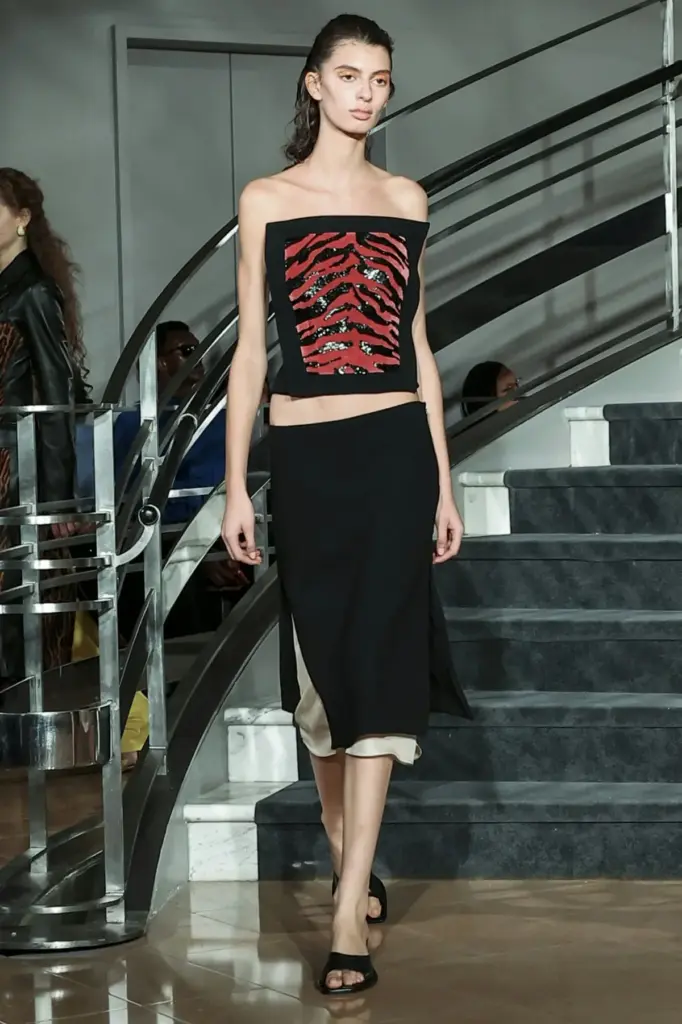
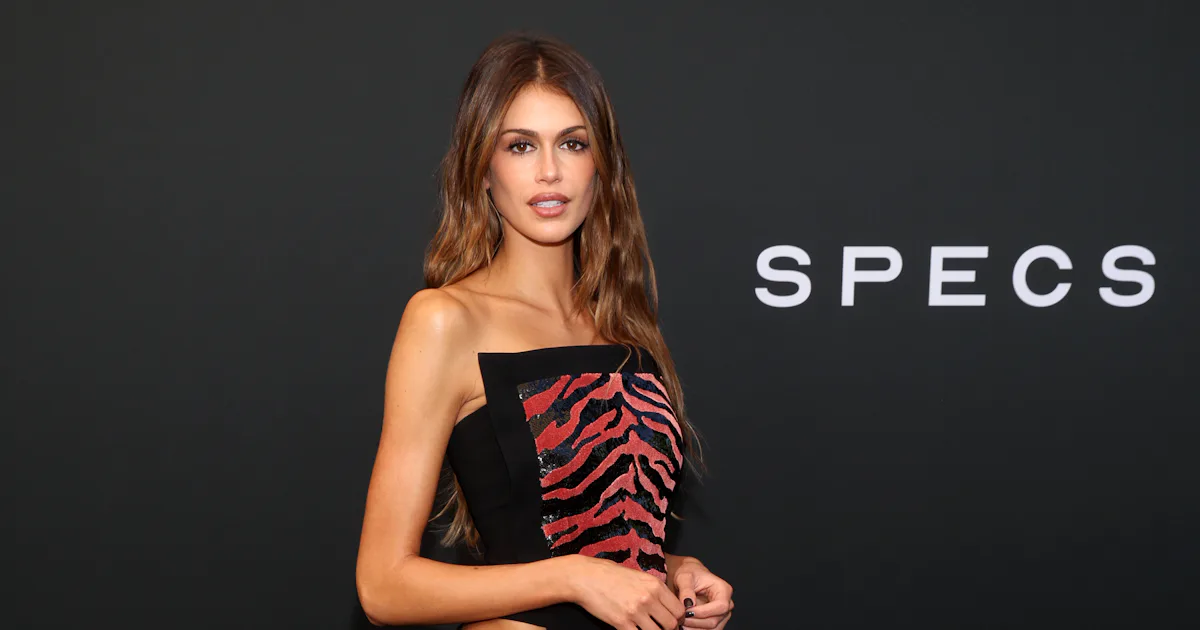
Just days after Einbinder’s Emmy appearance, the baton was passed to supermodel and style icon Kaia Gerber. On September 16, Gerber emerged at the Specs Launch Keynote in Beverly Hills, California, wearing a standout look from Proenza Schouler’s newly minted Spring/Summer 2027 collection.
The ensemble—a masterwork of modern tailoring, sensual lines, and cosmopolitan polish—had been bookmarked by fashion insiders as an immediate must-have the moment it debuted on the New York runway. The pairing of the collection’s statement skirt with razor-sharp styling created an instantaneous cultural moment. Rather than waiting for the garment to be manufactured for wholesale delivery next spring, Gerber’s styling team coordinated a direct-from-runway transfer, executing a seamless transition from the catwalk to the West Coast photocall. It was a testament to Gerber’s unique positioning in the industry, where she transitions effortlessly from walking the world’s most prestigious runways to serving as the first civilian to wear the season’s most coveted pieces.
Supporting Context & Metrics: The Mechanics of the Runway-to-Red-Carpet Pipeline
The phenomenon of instant runway translation is not merely a byproduct of spontaneous celebrity desire; it is the result of a highly calculated, data-driven logistical apparatus. Understanding the shift requires looking at the broader economic and cultural metrics governing luxury fashion and celebrity endorsement today.
The Compression of the Fashion Lifecycle
Historically, the fashion industry operated on a six-month "see-now, buy-later" model. However, the rise of digital media, live-streamed runway shows, and social media platforms has drastically compressed consumer attention spans. According to industry trend analyses, audience engagement with a specific collection peaks within 48 hours of its runway debut.
| Era | Average Runway-to-Red-Carpet Delay | Primary Driver |
|---|---|---|
| Traditional (Pre-2015) | 3 to 6 Months | Wholesale production schedules and magazine editorial cycles |
| Transition (2015–2022) | 2 to 4 Weeks | Early influencer seeding and digital lookbooks |
| Modern Instant (2023–Present) | 24 to 72 Hours | Live-stream urgency, real-time social media validation, and high-stakes PR logistics |
When celebrities like Kaia Gerber and Hannah Einbinder wear an outfit days—or even hours—after its debut, they capitalize on this peak attention window. Brands that successfully execute these rapid placements experience an immediate spike in digital earned media value (EMV), search queries, and social media mentions.
The Logistics of the "Sample Pull"
Executing a runway pull within 72 hours requires an extraordinary level of cooperation. Runway samples are typically produced in very limited quantities—often just one sample size per look, tailored specifically to the proportions of the runway models.
When a celebrity stylist requests a look straight off the runway, the process involves:
- Immediate Triage: Post-show, PR houses and design studios evaluate high-priority celebrity requests against the physical condition of the runway samples.
- Rapid Tailoring Adjustments: Because runway models are notoriously tall and slender, samples frequently require emergency alterations by specialized tailors stationed in the fashion capitals.
- High-Priority Courier Transport: Garments are often rushed via overnight international or cross-country courier services, accompanied by brand handlers or trusted stylists to ensure the clothes arrive wrinkle-free and camera-ready.
- The "Zendaya Effect": As demonstrated by high-profile style icons like Zendaya—who famously completed a quick-change into a fresh Louis Vuitton look mere minutes after a runway show concluded—the physical proximity of the celebrity to the show venue dictates the speed of the transition. For NYFW shows, bicoastal coordination is required to get New York runway looks onto Los Angeles red carpets within days.
Official Statements and Industry Perspective
The shift toward instantaneous fashion has transformed how designers approach their collections and how publicists pitch their clients. Industry leaders have increasingly embraced this real-time marketing loop as a core component of brand strategy.
In a recent industry roundtable discussing the democratization and acceleration of runway fashion, prominent designers noted that the lines between presentation and commercial viability are blurring. While heritage houses once guarded their samples jealously behind closed showroom doors, modern design collectives recognize that seeing a garment worn by a tastemaker in the wild immediately validates its commercial potential.
"The runway is no longer just a theatrical presentation for the elite few; it is the opening gun of a global marketing sprint," notes an insider within the Council of Fashion Designers of America (CFDA). "When someone like Kaia Gerber or Hannah Einbinder wears a look days after it debuts, they aren’t just wearing clothes—they are participating in real-time cultural curation. They are telling the consumer what matters right now, bypassing months of editorial mediation."
Stylists, too, find themselves working at a breakneck pace. The modern celebrity stylist functions part-time as a logistical dispatcher, tracking runway livestreams with lookbooks in hand, ready to fire off text messages to brand directors before the final applause has even faded. This competitive drive has created an inner circle of elite trendsetters who are granted first right of refusal on the season’s most striking silhouettes.
Future Outlook: What Lies Ahead for the Rest of Fashion Month
As the New York chapter of the Spring/Summer 2027 season closes, the global fashion caravan moves inexorably toward London, Milan, and Paris. Each of these capitals brings its own distinct aesthetic, but the overarching theme for the remainder of Fashion Month remains uniform: speed, agility, and unprecedented integration between the runway and the red carpet.
The Escalation of Global Style Races
With European fashion weeks historically known for high drama, heritage craftsmanship, and massive star-studded front rows, the opportunities for instant runway-to-red-carpet moments are bound to multiply. Industry analysts predict several key trends for the remainder of the SS27 season:
- Increased Bicoastal and Transatlantic Logistics: As global events, premieres, and brand activations continue concurrently with fashion weeks, styling teams will increasingly rely on private air couriers to move delicate runway samples across oceans within 24-hour windows.
- The Rise of the "Instant Archive": Designers are beginning to design specific "hero looks" with the explicit intention of immediate red-carpet placement, ensuring that samples are constructed with slightly more forgiving fits or accompanied by modular pieces that can be easily adjusted for diverse celebrity body types.
- Heightened Consumer Expectations: As audiences grow accustomed to seeing runway looks instantly translated to public figures, the lag time between a collection’s debut and its cultural saturation will continue to shrink, permanently altering consumer demand cycles.
Conclusion
The rapid-fire styling displayed by Hannah Einbinder at the Emmys and Kaia Gerber at the Specs Launch Keynote highlights a fundamental evolution in contemporary style. Fashion is no longer a spectator sport where the audience waits quietly in the bleachers for the future to arrive. Thanks to the logistical wizardry of modern stylists and the cultural appetite of today’s leading icons, the future of fashion is being worn on the red carpet before the runway lights have even cooled. As the fashion month calendar pushes forward into its European legs, one thing is certain: the race to be first has only just begun, and the standard for modern chic has been permanently accelerated.