Executive Overview
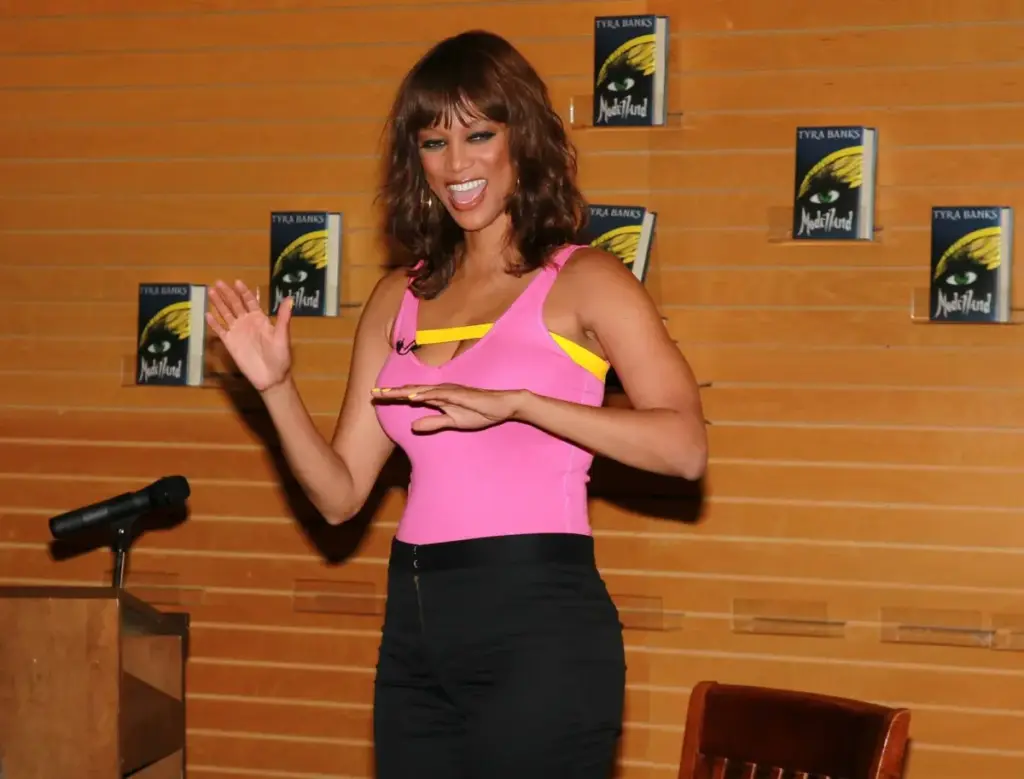
Fifteen years after its initial publication, Tyra Banks’ debut young-adult dystopian novel, Modelland, has experienced an uncharacteristic, viral renaissance across social media. Sparked by the unexpected internet resuscitation of its avant-garde, proto-hyperpop promotional theme song—featuring the now-infamous, existential refrain, "Can you, can you, can you, can you survive Modelland?"—digital communities have plunged headfirst back into the baffling, fever-dream architecture of the supermodel mogul’s literary universe.
Originally released in 2011 with a massive promotional blitz that included a dedicated America’s Next Top Model (ANTM) Cycle 17 tie-in, a Google+ presence, an ominous cinematic trailer, and plans for a physical theme park, Modelland quickly faded into commercial obscurity. It became a relic of early-2010s multimedia excess, sitting quietly in the deepest archives of public libraries.
However, the recent online rediscovery of the text has forced a new generation of readers to confront its staggering length, dizzying world-building, and utterly singular syntax. Spanning nearly 600 pages—putting it in direct comparison with literary heavyweights like John Steinbeck’s East of Eden—Modelland is not merely a novel; it is an endurance test.
This investigative report examines the chronology of the book’s sudden cultural resurgence, breaks down its chaotic plot mechanics, reviews its critical reception, and explores the enduring legacy of Tyra Banks’ most ambitious and perplexing commercial endeavor.
Detailed Chronology: From 2011 Release to Viral Renaissance
To understand the cultural footprint of Modelland, one must first trace its erratic trajectory from a heavily hyped publishing event to an internet meme of monumental proportions.
Phase One: The 2011 Rollout
In the fall of 2011, supermodel, television producer, and entrepreneur Tyra Banks set her sights on the young-adult dystopian market—a genre then dominated by hits like The Hunger Games. Co-written with ghostwriter Michael Salort, Modelland was positioned as the first in a planned trilogy.
The promotional campaign was staggering in its scope. Banks appeared across morning talk shows, launched a dedicated Google+ page, and integrated the book deeply into Cycle 17 of America’s Next Top Model. Contestants were subjected to a bizarre editorial photoshoot where they were forced to embody the book’s protagonist and hold election buttons reading "VOTE FOR LOVE"—a narrative plot point within the novel itself. Furthermore, whispers of a physical Modelland theme park floated through industry trades. Despite this aggressive multi-platform push, the book failed to capture mainstream literary acclaim, quickly slipping out of print and into the bargain bins of cultural memory.
Phase Two: The 2026 Social Media Resurgence
More than a decade later, the digital underground of X (formerly Twitter) unearthed the crown jewel of the Modelland campaign: its modular, avant-garde theme song. Following an initial, overlooked post comparing the track unfavorably to contemporary pop releases, user @sourkrowt shared the video alongside the central lyrical inquiry: "Can you, can you, can you, can you survive Modelland?"
The post acted as an immediate catalyst. Within hours, thousands of users were dissecting the song’s bizarre cadence, its rejection of "this wasteland" (our reality), and the ominous promise of Modelland itself. The discourse quickly pivoted from the musical artifact to the source material: the physical book. Readers rushed to find physical copies, emptying local library holdings and driving second-hand market prices upward, setting the stage for a collective, masochistic literary reckoning.
Supporting Context & Metrics: Inside the World of Tookie De La Crème
For the brave souls who manage to track down a physical copy—such as the two solitary volumes housed within the Los Angeles Public Library system—Modelland presents an immediate cognitive challenge.
The Protagonist and Setting
The narrative centers on Tookie De La Crème, a self-described "Forgetta-Girl" residing in the factory district of Peppertown within the broader land of Metopia. Tookie’s daily routine includes attending school—or, more accurately, performing a "SPLD" (Silent Protest by Lying Down, pronounced "spilled") on the cold hallway floor while consuming canned whipped cream. She is on her thirty-ninth SPLD, dangerously close to an undocumented world record.
Tookie’s domestic life is equally surreal. Her mother insists on being addressed exclusively as "Creamy" by her children, which include Tookie and her younger sister, Myrracle. Myrracle suffers from a specific cognitive impairment resulting in unique phonetic shifts, such as pronouncing "DNA" as "dee-nay-nay."
The Lore of Modelland
Modelland itself is an imposing mountain looming over the world, crowned by an all-seeing green eye. The society is governed by a rigid hierarchy related to the modeling profession:
- The Day of Discovery (T-DOD): The pivotal societal event where the clouds above the mountain part and Scouts descend to select girls to become "Bellas."
- The Intoxibellas: A chosen class of seven elite models (the 7Seven Intoxibellas) who hold supreme status, contrasting sharply with those relegated to servitude or, worst of all, actresses.
- SMIZEs: Magical yellow bubbles originating from the water supply that pop into gold talismans. Worn on the forehead with fierce yellow eyeshadow, these talismans grant a precisely 91% chance of being "Discovered" at T-DOD.
Tookie’s world is further complicated by her fluency in 28 languages, which she writes exclusively into her "T-Mail Jail" journal, selecting her pen color to dictate the linguistic medium. Her romantic aspirations are fixed on class president Theophilus Love, whose perpetual re-election campaign buttons ("VOTE FOR LOVE") accidentally lose a letter to become "T O O K E," a typographic accident she interprets as a cosmic prophecy.
Official Statements & Industry Reception
When Modelland was first published in 2011, critical reception was a mixture of bewildered fascination and polite dismissal. Traditional literary critics struggled to categorize a young-adult dystopian fantasy penned by a television personality that relied so heavily on high-fashion vernacular.
Tyra Banks defended the project vigorously during its press tour, maintaining that the novel was designed to empower young women by redefining traditional standards of beauty and instilling a sense of inner fierce autonomy. In contemporary interviews surrounding the book’s release, Banks emphasized that Modelland was not just a physical destination in the book, but a metaphor for self-actualization:
"Modelland is about finding your inner light, stripping away the societal expectations of what beauty is, and stepping into your power with a fierce SMIZE. It is a world where being different is your ultimate currency."
However, contemporary literary analysts reviewing the text post-revival offer a starkly different interpretation. Modern readers frequently describe the act of reading Modelland as an exercise in psychological endurance—comparing its dense, looping internal logic to an avant-garde performance art piece rather than a traditional narrative structure. The book’s bizarre inclusion of transformers-style shapeshifting scouts, LeGizzärds that consume Colorian sweetbreads, and convoluted subplots involving demonic possession in tree-bound mattresses have cemented its status as a fascinating anomaly in celebrity publishing history.
Future Outlook: The Enduring Legacy of Tyra Banks’ Universe
As the digital dust settles on the 2026 viral wave, the question remains: what is the ultimate legacy of Modelland?
While plans for sequels and the physical theme park were quietly shelved following the soft commercial performance of the original release, the novel’s recent second life suggests that cultural artifacts of absolute, unbridled ambition rarely die—they merely hibernate.
The resurgence proves that contemporary internet culture possesses an insatiable appetite for earnest, maximalist sincerity. In an era dominated by algorithmically optimized content and hyper-curated media, Modelland stands as a monolithic monument to a time when a major celebrity could pour every eccentric, unfiltered creative impulse into a 600-page hardcover without corporate guardrails.
Whether future editions will see an official digital re-release or whether physical copies will continue to command legendary status in library archives remains to be seen. But one thing is certain: the central question posed by Tyra Banks’ haunting refrain will continue to echo across social platforms for years to come.
Can you, can you, can you, can you survive Modelland? For those who have braved its pages, the answer is a hard-fought, bewildered yes.