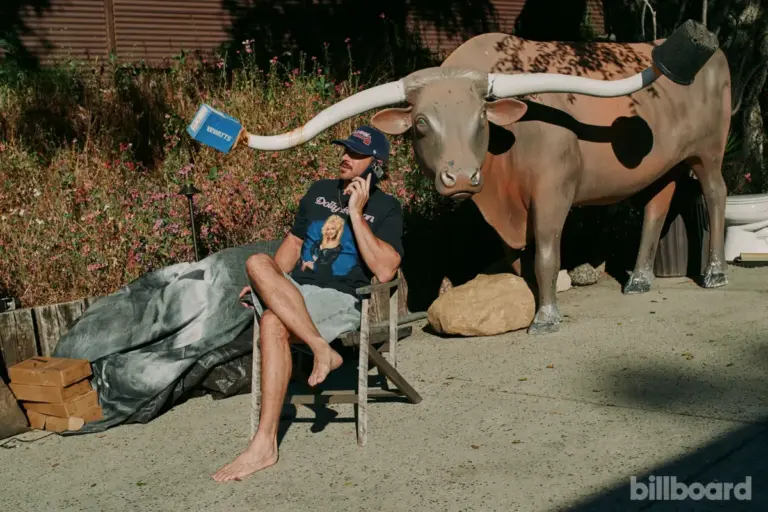
Executive Overview
The modern landscape of rock and alternative music is experiencing an unprecedented cultural recalibration, fueled in large part by artists willing to shatter traditional genre boundaries. At the vanguard of this movement is Dexter and the Moonrocks, a self-described collective of "four dumbasses from West Texas" who have successfully captured the public imagination with their idiosyncratic blend of gritty hard-rock instrumentation, confessional country lyricism, and towering 1990s-style melodies. Their self-coined genre, "Western space grunge," has transcended internet novelty to become a legitimate commercial force on the Billboard charts.
Following a steady ascent that began with a breakthrough on alternative radio formats in 2024, the band cemented their status as heavyweights earlier this year. Their runaway smash hit, "Freakin’ Out," dominated the Alternative Airplay chart for an impressive five consecutive weeks, crossed over into Pop Airplay, and made a historic debut on the Billboard Hot 100 at No. 33.
Now, the quartet is poised to capitalize on this hard-won momentum with the release of their highly anticipated, fourteen-track debut full-length album, Friends That I Don’t Like, slated for an October 2 release via Big Loud. In an exclusive reveal to Billboard, the band has shared the complete tracklist for the album, which features high-profile collaborations with genre-fluid peers Treaty Oak Revival and Avery Anna. As they prepare to embark on an extensive, multi-continent headlining tour spanning theaters and major music festivals through February 2027, Dexter and the Moonrocks are not merely participating in the current rock revival—they are actively drafting its blueprint for the foreseeable future.
Detailed Chronology: From West Texas Roots to Mainstream Domination
The trajectory of Dexter and the Moonrocks is a classic study in organic audience cultivation meeting modern multi-platform virality. Hailing from the rugged landscapes of West Texas, the band members—frontman and vocalist James Tuffs, drummer Ryan "Fox" Fox, and their supporting instrumentalists—initially forged their identity away from the hyper-curated environments of major music industry hubs like Los Angeles or Nashville. Instead, they built their sound in the crucible of regional touring and regional radio, fusing the stark storytelling traditions of country music with the down-tuned, visceral aggression of alternative rock and grunge.
By 2024, the music industry took notice as the band achieved its first major alternative radio breakthrough. Their unique sonic architecture—marked by soaring guitar distortion paired with melancholic, rural-inflected narratives—resonated deeply with listeners fatigued by hyper-polished pop formulas. However, the true inflection point arrived earlier this year when "Freakin’ Out" caught fire across streaming algorithms and terrestrial radio alike.
The track’s meteoric rise was historic for an independent-leaning rock act in the modern era. Spending five weeks at No. 1 on the Alternative Airplay chart, "Freakin’ Out" proved that heavy guitar-driven music could still capture mainstream, cross-format attention. Its crossover success on Pop Airplay and its subsequent entry onto the Billboard Hot 100 at No. 33 signaled to industry insiders that Dexter and the Moonrocks were not a flash in the pan, but a foundational pillar of a broader cultural shift.
The culmination of this multi-year buildup is Friends That I Don’t Like. Serving as a comprehensive statement of intent, the fourteen-song collection gathers their proven chart-toppers alongside a sequence of meticulously crafted deep cuts designed to expand the sonic parameters of "Western space grunge."
Supporting Context & Metrics: Decoding the "Western Space Grunge" Phenomenon
To understand the commercial and cultural impact of Dexter and the Moonrocks, one must examine the metrics driving their ascent and the specific cultural zeitgeist they occupy. The term "Western space grunge" might initially read as a tongue-in-cheek descriptor, but structurally, it is an accurate map of their sonic coordinates. The rhythm section and guitar tones pull heavily from the Seattle sound of the early-to-mid 1990s—evoking the moody atmospherics of Alice in Chains and the heavy grooves of Soundgarden—while the vocal cadence and lyrical themes carry the raw, confessional honesty characteristic of modern outlaw country and Americana.
The charts reflect an eager audience hungry for this hybridization. When "Freakin’ Out" locked down the top spot on Alternative Airplay for over a month, it demonstrated a resurgence in listener demand for organic instrumentation and authentic rock production. Furthermore, the band’s cross-genre appeal has allowed them to bridge gaps that historically segregated country and rock audiences.
This crossover appeal is amplified by strategic collaborations on Friends That I Don’t Like. Track 8, "12 Steps," features Treaty Oak Revival, an act that shares Dexter and the Moonrocks’ affinity for blending country-rock energy with youthful rebellion. Meanwhile, Track 4, "Why Don’t You Say So," pairs James Tuffs’ magnetic vocals with rising country star Avery Anna, creating a high-voltage dynamic that marries modern Nashville sensibilities with the crunchy aesthetics of turn-of-the-century rock.

Official Statements & Industry Perspectives
The creative philosophy behind Dexter and the Moonrocks centers on a deliberate subversion of traditional genre boundaries. Speaking candidly about their artistic mission, drummer Ryan Fox expressed a sense of shared purpose between the band and their contemporaries in reshaping the modern musical landscape.
Reflecting on how the collaboration with Avery Anna materialized, Fox detailed a remarkably fast-paced creative turnaround. After noticing that Anna was already engaging with their music on social media—having posted TikTok videos utilizing "Freakin’ Out"—a digital dialogue quickly blossomed.
"I started talking to her and she was like, ‘Oh, I love dad rock, I love Limp Bizkit, all these bands,’ and I was like, ‘Man, I love this idea that we’re [both] almost corrupting the country space,’" Fox recalled in a recent interview with Billboard.
Within 72 hours of extending the invitation, the collaboration "Why Don’t You Say So" was recorded and locked into the album sequence. Fox expressed immense enthusiasm for Anna’s performance on the track, praising her ability to channel legendary alternative vocalists:
"To me she sounds like Hayley Williams, like Seether meets Evanescence meets Paramore."
The band’s internal humor remains a vital component of their public persona. When teasing the release of the Anna collaboration on Instagram, the members promised fans that the track would single-handedly "bring back the 2000s divorced dad rock era." Yet, beneath the self-deprecating wit lies an unshakeable confidence in their cultural footprint. As Fox asserted ahead of the album’s rollout:
"We get to set the tone of what this culture is going to be, what rock music is going to be, for the next three to five years."
Future Outlook: Tour Dates and Friends That I Don’t Like Tracklist
As anticipation reaches a fever pitch ahead of the October 2 release of Friends That I Don’t Like, Dexter and the Moonrocks are translating their studio ambitions into a grueling, high-energy live itinerary. Beginning September 24, the band will launch an extensive international tour traversing theaters and major festival stages across the United States, Canada, and Australia, with routing locked in through February 2027. This rigorous schedule is designed to solidify their reputation as an elite live act capable of converting casual streaming listeners into lifelong devotees.
Below is the official, complete tracklist for Friends That I Don’t Like, revealing the narrative and sonic journey the band has mapped out for their debut full-length offering:
Friends That I Don’t Like Official Tracklist:
- Don’t Wanna Be High
- Mull It Over
- Said What I Said
- Why Don’t You Say So (feat. Avery Anna)
- It’s A Lot
- Complacent
- Let It Hurt
- 12 Steps (feat. Treaty Oak Revival)
- Under The Weather
- Space Invader
- If You Could Talk
- Freakin’ Out
- Embarrassing
- Outro (Is DeMar DeRozan Dexter?)
With a genre-bending aesthetic that defies easy categorization, a burgeoning catalog of chart-topping hits, and a relentless touring schedule, Dexter and the Moonrocks are positioned to command the rock and alternative conversation for years to come. Friends That I Don’t Like stands as their definitive opening statement—an aggressive, melodic, and deeply authentic milestone for the architects of "Western space grunge."