
Executive Overview
The convergence of Hollywood celebrity culture, sports technology, and gender optics reached a flashpoint following the release of a controversial promotional campaign starring actress Sydney Sweeney for the sports trading app Novig. The commercial, which relies heavily on hyper-sexualized imagery involving sports equipment and nude aesthetics, immediately provoked widespread public debate. While Sweeney’s team and fans framed the ad as an extension of her established Hollywood image as a modern sex symbol, the campaign triggered intense backlash from an unexpected quarter: elite female athletes.
From Olympic gold medalists to NCAA collegiate champions, high-profile female sports figures publicly condemned the commercial. Athletes including Australian swimmer Ariarne Titmus, world champion boxer Skye Nicolson, former UCLA gymnast Gracie Kramer, track sprinter Bree Rizzo, and water polo star Tilly Kearns argued that the campaign reduced women’s involvement in sports to an objectified fantasy. The situation intensified when Sweeney responded to the criticism by sharing archival covers from ESPN Magazine’s "Body Issue"—a defense that prompt athletic stars to point out key differences between celebrating athletic physiques and using explicit sexualization to market sports betting applications to a predominantly male audience.
This report examines the chronological progression of the controversy, analyzes the broader commercial mechanics driving sports-tech marketing, breaks down the key arguments presented by primary industry figures, and evaluates the long-term implications for celebrity-driven ad campaigns in sports media.
Detailed Chronology of Events
[Campaign Launch]
   └─ Novig releases ad featuring highly sexualized imagery of Sydney Sweeney with sports props.
      │
[Initial Athlete Response]
   └─ UCLA gymnast Gracie Kramer posts counter-video ("This is what a woman in sports looks like").
      │
[Mainstream Olympic Backlash]
   ├─ Ariarne Titmus, Bree Rizzo, and Tilly Kearns condemn the commercial on social media.
   └─ Industry figures highlight the distinction between athletic achievement and objectification.
      │
[Sweeney's Counter-Defense]
   └─ Sweeney shares historical covers of ESPN's "Body Issue" (Serena Williams, Megan Rapinoe).
      │
[Rebuttal & Refinement]
   └─ World Champion boxer Skye Nicolson details the contextual difference between
      athletic nude portraiture and sex-appeal marketing.
1. The Campaign Launch
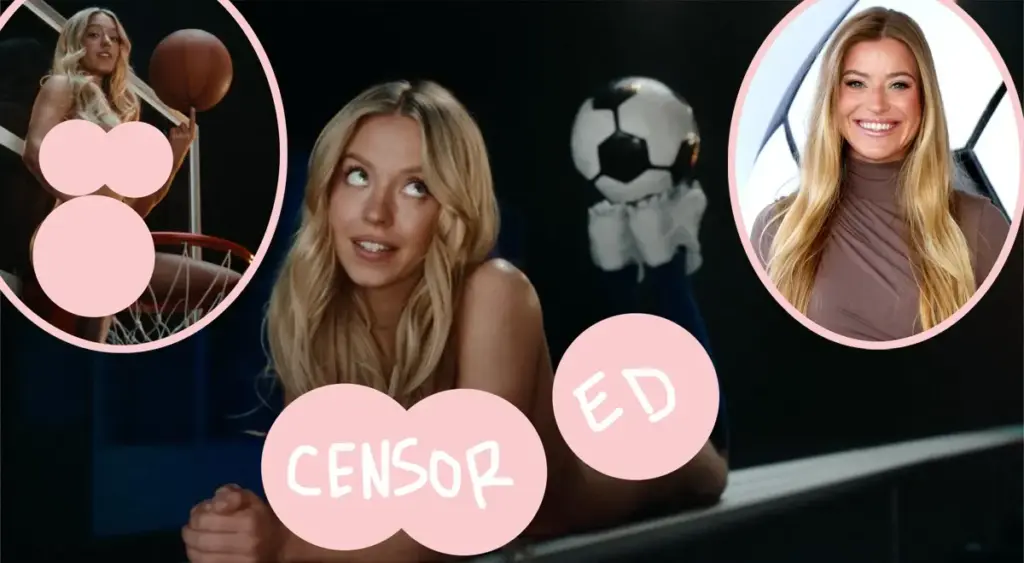
In early September, financial technology and sports trading startup Novig released a high-budget video ad campaign starring Euphoria and Anyone But You actress Sydney Sweeney. Social media platforms carried the video alongside the caption, "Confirmed: Sydney Sweeney knows ball."
However, rather than showcasing an understanding or passion for athletic competition, the commercial leaned entirely on provocative visual framing:
- Scenes featured Sweeney posing entirely unclothed atop a basketball hoop while the camera pulled in for close-up angles.
- Multiple shots displayed the actress concealing her body behind oversized footballs, explicitly highlighting her physique and abdominal muscles.
- Additional imagery depicted her reclining on the ground in suggestive positions with minimal coverage.
The ad sought to leverage Sweeney’s status as one of Hollywood’s prominent young figures to capture the attention of Novig’s primary user base—young, male sports enthusiasts and micro-traders.
2. The Initial Spark: Collegiate Athletes Reclaim the Narrative
Reactions to the commercial escalated rapidly. Former UCLA gymnast Gracie Kramer posted a direct critique on Instagram. Kramer shared a video compilation of her real-world, high-impact gymnastics performances, contrasting her grueling training routines against the stylized pin-up aesthetic of the Novig ad. She captioned her post:
"Idk what Sydney Sweeney was doing, but this is what a woman in sports looks like."
The post went viral within hours, garnering support from creators and public figures across industries. Actress and content creator Shanda Lee Munson commented under Kramer’s post, offering a generational critique on the long-standing struggles female professionals face in male-dominated spaces:
"As a female of a much older generation, she has no idea of the kind of rooms we’ve had to fight to get in. Especially in male dominated worlds. Two things can be true. You can be beautiful and proud of your body. And you can also unnecessarily use it for no other reason than to be sexualized."
3. Escalation Across the International Olympic Circuit
As Kramer’s video gained traction, world-class Olympic athletes added their voices to the movement, arguing that the ad undermined decades of institutional progress in women’s sports media.
American Olympic track sprinter Bree Rizzo posted her own video citing Kramer as the inspiration for her commentary, addressing the cultural impact on younger audiences:
"Respectfully Sydney Sweeney… There’s so much more to women in sport than how they look. It’s about their strength, skill, dedication, resilience, confidence and everything they’re capable of achieving. I want young girls watching women in sport to see what their bodies can do, how powerful they are and everything they can achieve!!"
Simultaneously, Australian multi-time Olympic gold medalist swimmer Ariarne Titmus used her platform to express deep frustration over the commercial’s thematic direction:
"I wasn’t going to share this as I didn’t want to give this any more attention. But, I can’t keep my mouth shut. I can’t describe how infuriated I feel when I watch this. Not only is it a kick in the face to every woman who has dedicated her life to perfecting her craft, but every woman who enjoys sports for what it really is — teamwork, friendship, dedication, excellence, unity. How do we live in a world where monetising a woman’s body and sexualising women’s sport is still a thing?"
Adding to the collective critique, Australian water polo star Tilly Kearns posted a concise rejection of the campaign strategy, stating plainly:
"I absolutely fking hate Sydney Sweeney’s new sports ad."
4. Sweeney’s Defense and the Subsequent Rebuttal
In response to the growing wave of criticism, Sweeney shared several historic covers from ESPN Magazine’s celebrated "Body Issue" on her Instagram Stories. The images featured legendary female athletes posing nude or semi-nude, including tennis icon Serena Williams and soccer star Megan Rapinoe. The implicit message of Sweeney’s post was that artistic nudity has a long, accepted history within mainstream sports media.
However, female athletes quickly dismantled this defense, pointing out a critical contextual flaw in the comparison. Professional boxer and world champion Skye Nicolson addressed Sweeney’s story posts directly, clarifying the structural difference between athletic portraiture and commercial male-gaze advertising:
"There’s a big difference between looking ‘sexy’ because you do sport compared to using sex to sell ‘sport’. There is nothing wrong with looking good and doing sport and there’s nothing wrong with embracing your femininity while also being a badass athlete."
Supporting Context & Industry Dynamics
The Male Gaze vs. Modern Sports Tech Marketing
The controversy surrounding Novig’s ad campaign highlights a persistent tension within sports marketing. As sports betting platforms and peer-to-peer trading apps compete in a crowded market, customer acquisition strategies often rely on traditional "male-gaze" playbooks. By pairing a high-profile Hollywood actress with provocative visuals, agencies aim to maximize clicks and user registration among male demographics aged 18 to 34.
However, this traditional approach runs counter to current media trends in women’s athletics. Over the past decade, female sports leagues (such as the WNBA, NWSL, and NCAA Women’s Basketball) have achieved record viewership, driven largely by campaigns that prioritize raw athleticism, elite skill, and competitive storytelling over sex appeal.
                    TRADITIONAL vs. MODERN REPRESENTATION
┌─────────────────────────────────────────┬────────────────────────────────────────┐
│      Outdated Marketing Model           │      Modern Athletic Representation    │
├─────────────────────────────────────────┼────────────────────────────────────────┤
│ • Uses female body purely as a backdrop │ • Highlights physical mastery & skill  │
│ • Aimed primarily at male gaze          │ • Builds broad, authentic fanbases     │
│ • Focuses on visual titillation         │ • Focuses on performance & dedication  │
│ • Disconnects subject from actual sport │ • Integrates true athletic narrative   │
└─────────────────────────────────────────┴────────────────────────────────────────┘
The "ESPN Body Issue" Argument: A Contextual Analysis
Sweeney’s reference to ESPN Magazine’s "Body Issue" touches on a complex media legacy, but industry analysts emphasize key differences between the two forms of media:
- Focus on Function vs. Form: The ESPN Body Issue was designed to examine human anatomy through the lens of physical training. Photographers highlighted specialized muscular development—showing how an athlete’s body adapts specifically to throw a javelin, swim miles in open water, or absorb impacts in a ring.
- Authenticity of Subject: The athletes featured in the ESPN issues were elite performers celebrating their own physical accomplishments. In contrast, critics view the Novig commercial as utilizing sports props (footballs, basketball hoops) purely as decorative censorship tools to deliver conventional pin-up imagery without any actual connection to athletic discipline.
Official Statements & Key Arguments
The following table summarizes the core arguments made by prominent figures throughout the controversy:
| Contributor | Role / Background | Primary Argument / Core Message |
|---|---|---|
| Gracie Kramer | Former NCAA Gymnast (UCLA) | Real women in sports are defined by physical exertion and technical skill, not passive pin-up aesthetic poses. |
| Ariarne Titmus | Multi-time Olympic Gold Medalist | Monetizing and sexualizing women’s bodies under the banner of sports diminishes the sacrifices made by career athletes. |
| Skye Nicolson | Professional Boxing Champion | There is a fundamental difference between celebrating a body shaped by athletic performance and using sex appeal to market a commercial product. |
| Bree Rizzo | Olympic Track Sprinter | Marketing surrounding women in sports directly impacts young girls; media should emphasize strength, power, and capability over visual objectification. |
| Shanda Lee Munson | Actress / Digital Creator | Older generations fought hard to earn professional respect in male-dominated athletic spaces; unnecessary sexualization undermines that progress. |
Future Outlook and Broader Implications
The widespread reaction to Novig’s commercial marks a significant shift in how sports-related media is consumed and evaluated by the public.
Implications for Celebrity Brand Partnerships
For figures like Sydney Sweeney, who openly lean into traditional glamour, entering the sports media space requires navigating distinct cultural expectations. While provocative branding remains common in fashion and luxury marketing, applying those same tropes to sports tech can spark pushback from an athletic community focused on long-overdue respect and serious coverage.
Evolution of Sports-Tech Marketing
Startups and sports betting companies are facing pressure to modernize their advertising strategies. Continuing to rely on mid-2000s style visual tropes risks alienating female sports fans—one of the fastest-growing demographics in the industry—and drawing negative coverage that could overshadow product launches.
The Power of the Athlete-Led Counter-Narrative
This controversy demonstrates the growing influence of modern female athletes as media commentators. Through social media platforms, athletes no longer rely on traditional media outlets to air grievances or push back against legacy marketing tropes. By collectively organizing their response, figures like Titmus, Nicolson, and Kramer successfully redirected the public discourse away from a commercial campaign and toward a broader conversation about how women in sports deserve to be represented.