Knee pain is one of the most pervasive physical grievances reported by adults over the age of 65. Whether stemming from the gradual wear-and-tear of osteoarthritis, repetitive overuse, or lingering structural trauma from decades-old sports and lifestyle injuries, joint degradation severely impairs daily independence. For older adults, the loss of unencumbered mobility does not merely restrict physical activity; it cascades into a diminished quality of life, increased social isolation, and a higher risk of debilitating falls.
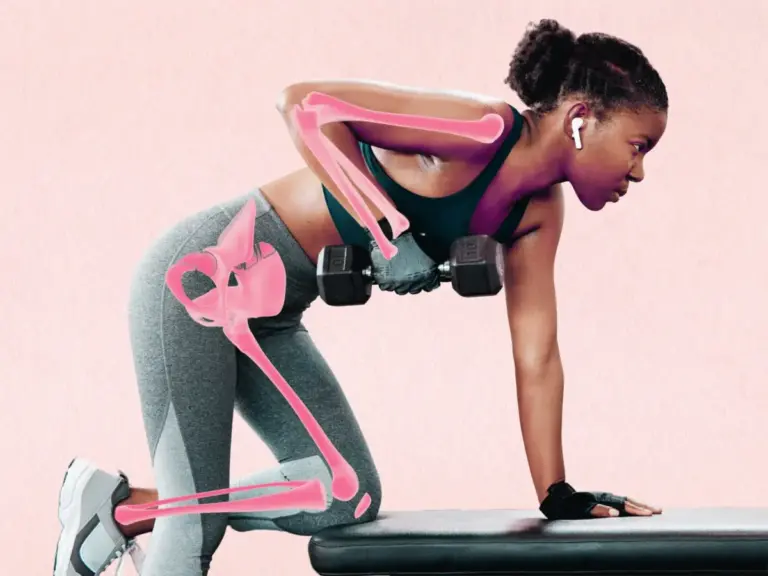
In personal training practices working extensively with older demographics, knee joint discomfort is a recurring barrier to fitness. However, clinical observation and progressive physical conditioning reveal a unifying truth: chronic knee pain is frequently the symptom of a mechanical failure originating outside the knee joint itself. Specifically, deficiencies in the kinetic chain—namely weak hip stabilizers, gluteal inhibition, and poor lower-body alignment—place undue, shearing stress directly onto the patellofemoral and tibiofemoral joints.
To address this root cause, rehabilitation specialists and strength coaches rely on targeted resistance-band training. By integrating a specific quartet of foundational exercises—the banded clamshell, the banded glute bridge, the banded monster walk, and the banded kickback—older adults can systematically reinforce the musculature responsible for lower-body stabilization. These movements require minimal equipment—merely an exercise mat and a looped resistance band—and can be adapted for individuals of varying functional capacities, including those with limited floor mobility.
When executed with proper form and progressive overload, these low-impact movements unload the knee joint, improve full-body balance, and fortify the skeletal system against future injury. This comprehensive guide details the mechanics, protocols, and coaching cues required to implement this evidence-backed routine safely and effectively.
Detailed Chronology: The Evolution of Lower-Body Conditioning for Joint Health
For decades, conventional medical and fitness wisdom prescribed rest, immobilization, or purely localized interventions—such as isolated leg extensions—for aging individuals suffering from degenerative knee conditions. The prevailing theory assumed that because the knee was the site of pain, the knee itself required isolation and protection from load.
The Shift Toward Kinetic Chain Training
As sports science and physical therapy evolved through the late 20th and early 21st centuries, clinicians realized this paradigm was fundamentally flawed. The human lower extremity operates as an integrated kinetic chain. The knee functions primarily as a mobile hinge joint caught between two major lever systems: the ankle-foot complex below and the hip-pelvis complex above.
When the hip abductors (such as the gluteus medius) and external rotators are weak, the femur tends to internally rotate and adduct during weight-bearing activities like walking, climbing stairs, or standing from a chair. This faulty biomechanical alignment causes the kneecap (patella) to mistrack within the femoral groove, accelerating cartilage wear and producing localized inflammatory pain.
By shifting the conditioning focus away from the knee joint and toward the proximal stabilizers—the glutes, hips, and deep core—fitness professionals unlocked a safer, more effective method of pain mitigation. The introduction of elastic resistance loops in modern physical therapy during the 1990s and 2000s provided an accessible, scalable tool for activating these dormant muscle groups without imposing heavy compressive forces on the aging spine or knees.
The Modern Prescription for Longevity
Today, geriatric fitness frameworks emphasize functional movement patterns over isolation exercises. The four staple movements outlined in this guide represent the culmination of decades of clinical insights. They target the gluteus maximus, gluteus medius, and tensor fasciae latae, ensuring that the pelvis remains level and the knees track properly during everyday ambulation. By integrating these exercises into a structured routine, older adults are transitioning from a model of passive pain management to one of active structural rehabilitation.
Supporting Context & Metrics: The Anatomy of Joint Preservation
Understanding why these specific exercises protect the knee requires examining the epidemiological and biomechanical realities of aging joints.
The Scale of the Issue
According to data from the Centers for Disease Control and Prevention (CDC), osteoarthritis affects over 32.5 million US adults, with the vast majority of cases concentrated in individuals aged 65 and older. The knee joint, bearing multiple times the body’s weight during dynamic movement, is the most frequently affected site. Furthermore, age-related sarcopenia—the gradual loss of skeletal muscle mass and function—typically accelerates after age 50, resulting in reduced shock absorption around major joints.
Biomechanical Metrics of Banded Training
Load Reduction: Clinical electromyography (EMG) studies demonstrate that incorporating a looped resistance band around the knees or ankles significantly increases the recruitment of the gluteus medius by up to 150% compared to unweighted bodyweight movements.
Shear Force Minimization: Traditional heavy compound movements, if introduced prematurely to an untrained older adult, can generate excessive shear forces across the anterior cruciate ligament (ACL) and meniscus. Banded accessory work provides high neuromuscular engagement with near-zero joint compression.
Fall Prevention Statistics: According to the World Health Organization (WHO), falls are the leading cause of injury-related death and disability among adults over 65. By strengthening the hip abductors and stabilizers, these four exercises directly enhance lateral stability, dramatically reducing the risk of balance-related falls.
The Four-Exercise Protocol for Healthy Knees
To maximize safety and efficacy, practitioners should adhere to structured progression guidelines.
Equipment and Setup
Equipment: A moderately-heavy looped resistance band (often sold as part of a progressive set via athletic retailers or online marketplaces). Beginners should start with a lighter resistance and scale up as strength improves.
Progression Timeline:
Weeks 1–2: Perform 1 to 2 sets of 10 repetitions per exercise, 3 times per week.
Weeks 3–4: Advance to 2 to 3 sets of 12 to 15 repetitions.
Maintenance Phase: Aim for 3 sets of 15 repetitions with minimal rest between sets, ensuring flawless form throughout.
Accessibility Note: For individuals with mobility limitations who find getting down to the floor challenging, the banded clamshell and glute bridge can be performed comfortably on a firm bed or couch.
1. Banded Clamshell
Target Muscles: Gluteus medius, gluteus minimus, external rotators of the hip.
Prescription: 2 sets of 10 repetitions per side.
Execution: Place the looped resistance band around your legs just above your knees. Lie on your side on an exercise mat, knees bent at a 90-degree angle, and ankles stacked. Keeping your feet glued together, raise your top knee upward against the band, opening your legs like a clamshell. Lower slowly back to the starting position.
Trainer Tips:
Avoid letting your pelvis roll backward as your knee rises.
Lean your chest slightly forward to lock the hips into stable alignment.
Consciously squeeze the outside of your hip at the peak of the movement.
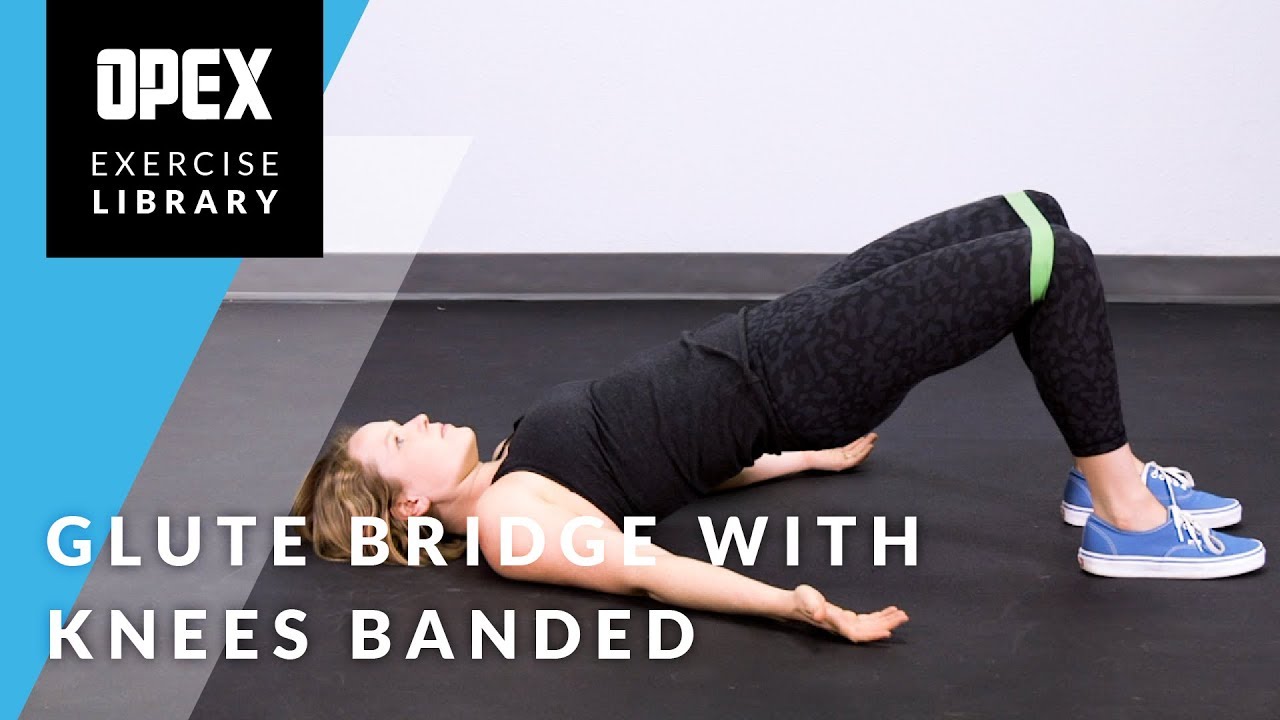
Execution: Loop the resistance band around your thighs just above your knees. Lie flat on your back on the mat with your knees bent and feet flat on the floor, hip-width apart. Pressing your knees outward against the band to maintain tension, drive through your heels and lift your hips toward the ceiling until your body forms a straight line from shoulders to knees. Lower with control.
Trainer Tips:
Do not hyperextend or arch your lower back at the top of the bridge; focus the squeeze entirely in your glutes.
Maintain outward pressure on the band throughout the entire range of motion to keep the gluteus medius engaged.
3. Banded Monster Walk
Target Muscles: Gluteus medius, tensor fasciae latae, hip abductors.
Prescription: 2 sets of 10 steps per side (or directional travel).
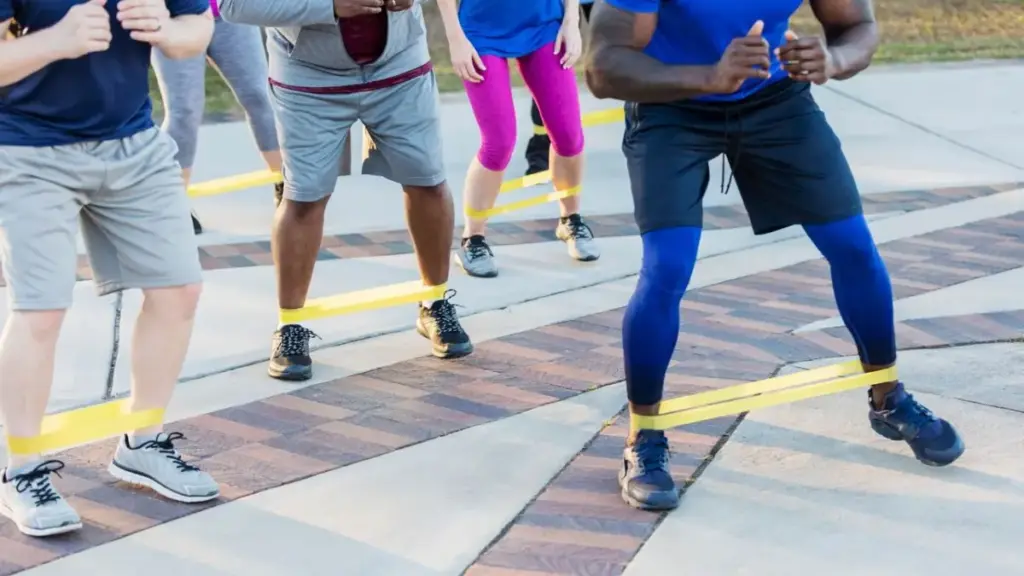
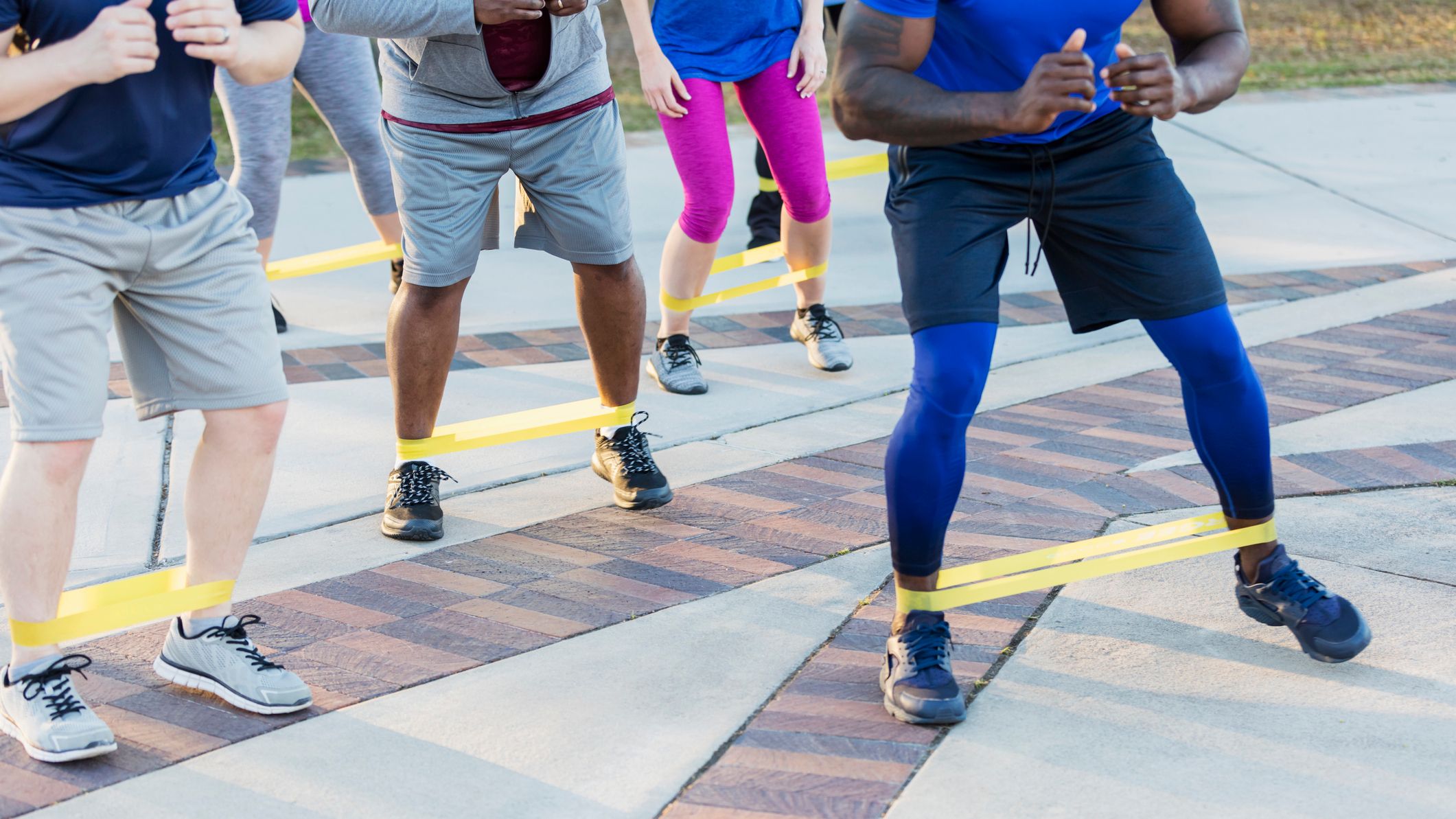
Execution: Place the resistance band around your ankles (or around your feet for advanced resistance). Stand with your feet shoulder-width apart, knees slightly bent in an athletic half-squat posture. Step outward to the right with your right foot, followed by your left foot, maintaining tension on the band. Continue walking laterally or step diagonally forward and backward.
Trainer Tips:
Keep your stance wide and your toes pointed straight ahead.
Ensure the band never goes slack; continuous tension is vital for maximizing muscle fiber recruitment.
4. Banded Kickback
Target Muscles: Gluteus maximus, hamstrings.
Prescription: 2 sets of 10 repetitions per side.
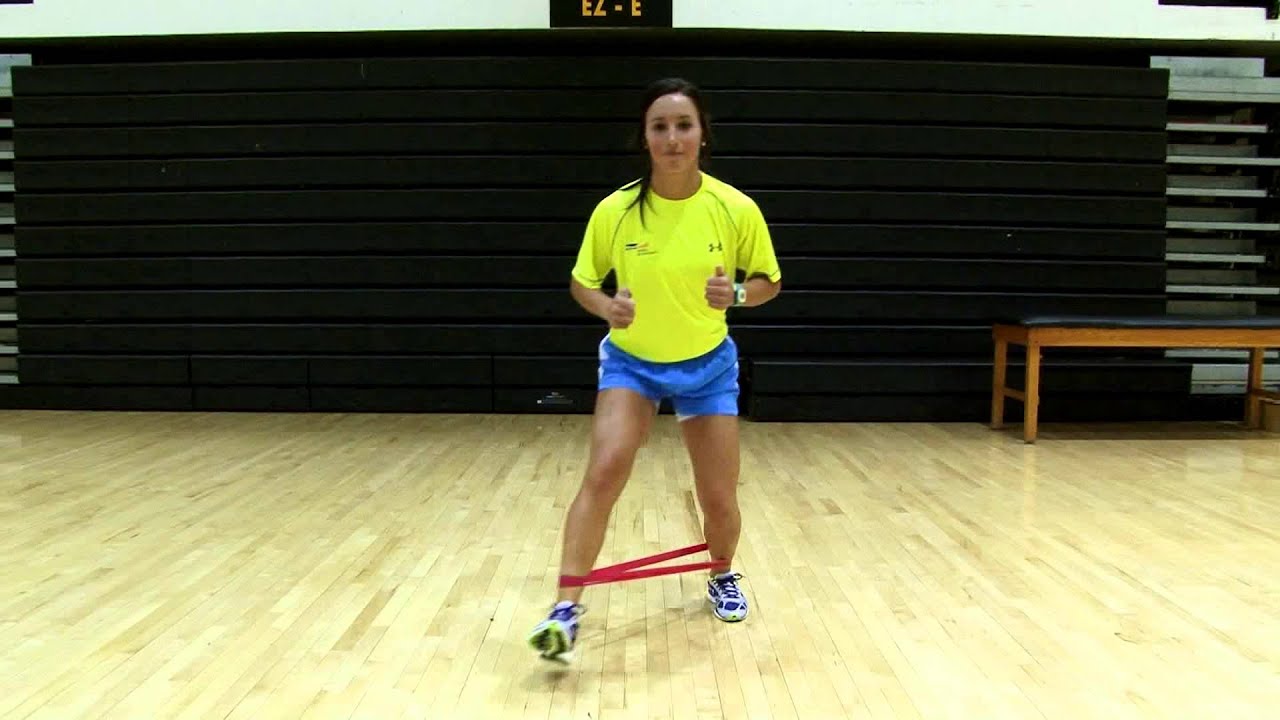
Execution: Loop the resistance band around your ankles. Stand tall, engaging your core. If balance is a concern, position yourself near a sturdy wall or chair for light fingertip support. Keeping your leg straight (with a soft micro-bend in the standing knee), drive your working heel directly backward against the band. Return slowly to the starting position.
Trainer Tips:
Guard against arching your lower back as the leg moves backward.
Avoid externally rotating (turning out) your working foot; keep your toes pointed toward the floor to isolate the glutes effectively.
Official Statements & Expert Guidance
Medical professionals and fitness authorities universally advocate for structured, low-impact exercise as a cornerstone of geriatric health.
Dr. Elizabeth Vance, a leading geriatric rheumatologist, notes:
"For decades, patients were told to rest aching joints. We now know that structured, targeted resistance exercise is medicine for cartilage health. By strengthening the kinetic chain above and below the knee, we reduce mechanical friction and inflammatory loads on the joint. Resistance bands provide an ideal modality because they allow progressive loading without the traumatic impact associated with high-impact aerobics or heavy free weights."
Furthermore, the American College of Sports Medicine (ACSM) emphasizes that exercise prescriptions for older adults must prioritize multi-planar stability, functional strength, and neuromuscular re-education. Certified personal trainers and physical therapists recommend consulting a primary healthcare provider before embarking on any novel training regimen, particularly for individuals managing chronic cardiovascular, skeletal, or neurological conditions.
Future Outlook: Sustaining Joint Health Through Lifelong Movement
The paradigm of aging is undergoing a profound cultural and scientific transformation. The narrative that physical decline, chronic joint pain, and frailty are inevitable components of advancing age is rapidly being replaced by a proactive model of functional longevity.
As healthcare systems face aging populations, preventive rehabilitation through accessible tools like resistance bands offers a cost-effective, empowering solution. By dedicating just 10 to 15 minutes, three to four times a week, to foundational hip and glute stabilization, older adults can fundamentally alter their physical trajectory.
Investing in lower-body stability today translates directly to independent living, reduced fall risks, and pain-free mobility tomorrow. Whether integrated as a standalone morning routine or utilized as an active warm-up prior to walking, gardening, or swimming, these four banded exercises serve as a powerful safeguard for joint health—proving that it is never too late to bulletproof your body and reclaim your freedom of movement.