Executive Overview
The contemporary beauty landscape is witnessing a structural migration. For decades, the hierarchy of the cosmetic, skincare, and hair-care industries was maintained by corporate conglomerates sitting at the apex, employing master craftspeople—makeup artists, dermatologists, and hairstylists—as creative mercenaries behind the scenes. These specialists formulated signature techniques, shaped editorial standards, and validated luxury efficacy, yet rarely captured the direct equity generated by their intellectual labor.
That paradigm has shattered.
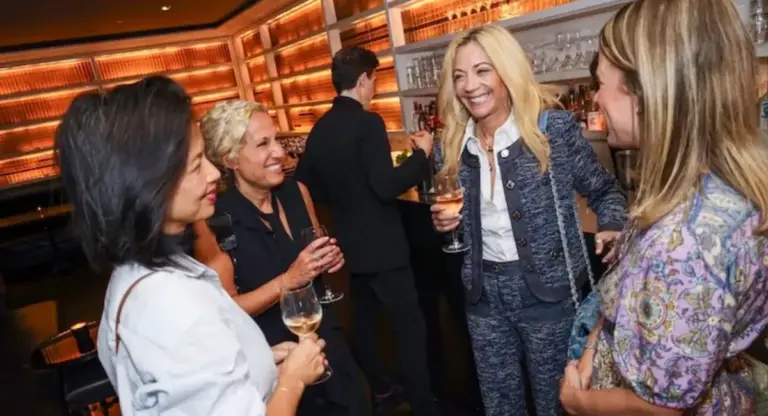
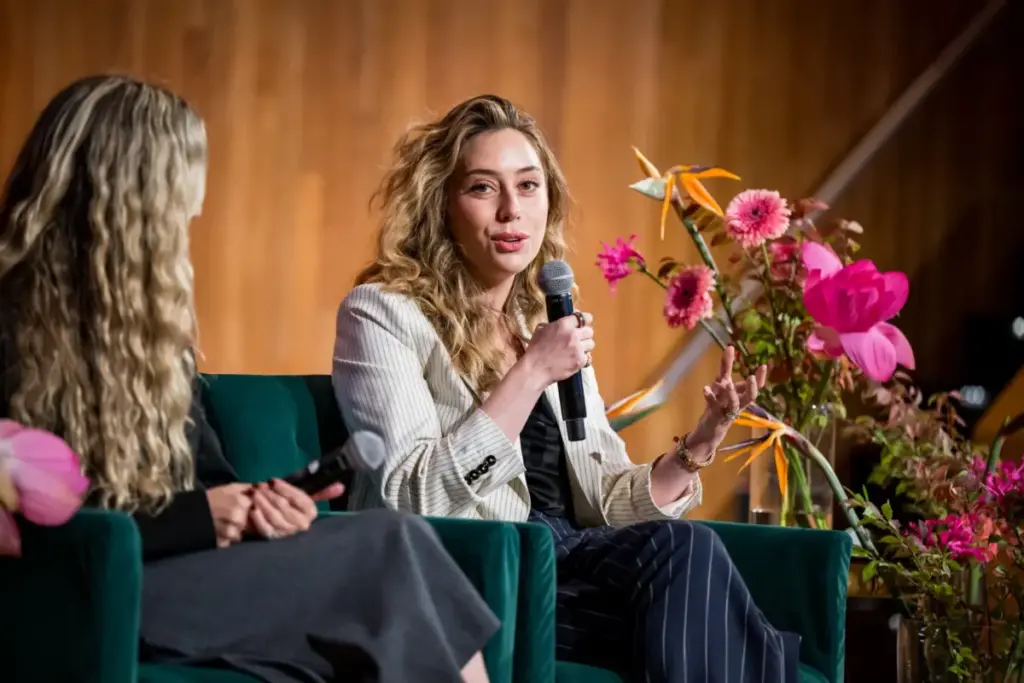
Driven by the democratization of digital media, short-form video virality, and shifting consumer trust toward authentic practitioner-led authority, a new wave of beauty founders is scaling independent operations from the ground up. At a recent live panel hosted by Glossy at Glossy POP NYC, held at the Fashion Institute of Technology (FIT), three of the industry’s most formidable practitioners detailed the mechanics of this transition.
- Mary Phillips, the legendary makeup artist whose red-carpet client roster spans from Penélope Cruz to Hailey Bieber, translated her viral "underpainting" technique into her independent brand, M.ph Beauty, officially launching in 2025.
- Dr. Shereene Idriss, board-certified dermatologist and founder of the clinical skincare empire Dr. Idriss, leveraged digital education and diagnostic transparency to build a cult-favorite powerhouse.
- Mara Roszak, celebrated celebrity hairstylist and founder of Rōz Hair, proved that decades of hands-on salon tenure can be successfully converted into a high-performance, direct-to-consumer hair-care brand built entirely without early institutional co-founders.
Simultaneously, the broader beauty economy is undergoing rapid physical and corporate reconfiguration. From Maison Crivelli planting its flag on Paris’s prestigious Rue Saint-Honoré to the Caudalie Group executing its maiden major corporate acquisition, and Sephora cementing its cultural footprint as the inaugural beauty retail partner of the U.S. Open, the industry’s macro indicators point to aggressive, experiential expansion.
This report examines the strategic blueprints of these pioneering founders, analyzes the operational mechanics of building a beauty brand in an over-saturated market, and decodes the metrics driving retail, experiential, and wellness investments across the global landscape.
Detailed Chronology: From Behind-the-Chair Mastery to Founder-Led Equity
The Digital Catalyst: Mary Phillips and M.ph Beauty
For years, Mary Phillips operated at the absolute pinnacle of luxury makeup artistry. Her hands brushed the faces of Hollywood’s elite, sculpting bone structures through a proprietary technique known as "underpainting"—a method wherein contour and highlighting products are applied beneath foundation to create a seamless, lit-from-within dimension. Yet, despite her elite status, Phillips remained an invisible architect to the mainstream consumer.
That anonymity dissolved abruptly in 2023. Content creator Tara Sigari published a digital tutorial outlining Phillips’s exact underpainting protocol. The video detonated across social media platforms, accumulating millions of views and triggering a cultural obsession with the technique.
Rather than letting the momentum dissipate into the ether of algorithmic trends, Phillips captured the lightning in a bottle. "I was just getting, like, thousands and thousands of videos, and I knew that was the moment," Phillips recalled during her FIT panel conversation.
In 2025, Phillips solidified her transition from artist to entrepreneur with the launch of M.ph Beauty. Eschewing a scattershot product catalog, the brand debuted with targeted precision: lip liners, lip-care essentials, and, crucially, the proprietary underpainting contour and highlighting palette that catalyzed her digital renaissance. Her trajectory illustrates a modern truth of beauty incubation: the modern practitioner must be ready to operationalize sudden viral ubiquity into a permanent supply chain.
The Silent Incubation: Dr. Shereene Idriss and the Art of the Quiet Launch
While viral moments can accelerate a brand’s public arrival, the administrative and infrastructural runway required to sustain a cosmetic line demands rigorous, unglamorous discipline. Dr. Shereene Idriss approached the launch of her eponymous skincare line with the calculated patience of a clinician.
In an era where brands feel pressured to announce concepts prematurely to capture venture capital interest, Dr. Idriss spent over two and a half years quietly developing her formulations. She describes this incubation period as a "silent pregnancy."
"The best stage is before you launch, because nobody knows you’re launching," Dr. Idriss explained. "So take your time… It just felt like a silent pregnancy. It’s actually the best time, because that’s the time you can really take your time. Once you’re out of gates, you don’t really have that luxury so much, and so really enjoy that quiet time."
This philosophy runs counter to contemporary venture-backed hyper-scaling, where founders are often pushed to publicize early iterations, iterate publicly, and burn through capital on customer acquisition before product-market fit is genuinely secured. By prioritizing chemical integrity, clinical testing, and supply chain resilience behind closed doors, Dr. Idriss engineered a market entry that commanded immediate institutional and consumer trust upon arrival.
Navigating Solopreneurship: Mara Roszak and Rōz Hair
For Mara Roszak, entering the beauty product space required overcoming a psychological barrier common among creative professionals: the belief that artistic mastery cannot be divorced from corporate operational expertise.
Spending two decades working as a master hairstylist at the highest levels of entertainment and editorial meant Roszak’s understanding of product performance, hair textures, and consumer pain points was absolute. However, the mechanics of scaling a business—logistics, regulatory compliance, capital allocation, and supply chain management—were entirely foreign.
"I had 20 years as a hairstylist as background. So again, product [was] locked," Roszak noted. "But how to build a business? Not a clue."
Faced with this knowledge gap, Roszak initially assumed she needed to secure an institutional co-founder with a traditional corporate or financial background to bridge the divide. When that partnership failed to materialize, she made the daring decision to forge ahead independently.
"I did end up doing it more on my own. I never found the co-founder. And I feel like that was such a great lesson," Roszak reflected. Her advice to emerging entrepreneurs is direct: "When you think you can’t, you can. Just talk to anyone that will pick up the phone that can teach you something."
Supporting Context & Metrics
The transformation of these individual founders occurs against a backdrop of sweeping structural evolution within the global beauty, fragrance, and wellness sectors. Strategic maneuvers by heritage brands and agile independents alike are redefining how market share is captured.
Retail Evolution: Sephora at the U.S. Open
Experiential retail has officially crossed the threshold from traditional shopping centers into mainstream cultural and athletic institutions. During the U.S. Open Finals Fan Fan Fest weekend, more than 2,000 attendees flooded the Sephora booth, marking the LVMH-owned beauty retail giant’s debut as the official and inaugural beauty retail partner of the New York City tennis tournament.
This move signals a broader convergence between elite athletics, lifestyle culture, and beauty consumption. While brands like Dove and Mecca have previously staked claims in the sports marketing arena, Sephora’s high-touch activation at Flushing Meadows highlights the necessity for mass-prestige retailers to meet consumers where they gather culturally, transforming spectator events into immersive brand interaction zones.
[Traditional Retail] ──> [Experiential Pop-Ups] ──> [Cultural & Athletic Integration]
      (Brick & Mortar)      (NYFW / Pop-Ups)          (U.S. Open / Fan Fests)
Fragrance and Wellness Consolidation
The indie fragrance and wellness landscapes are undergoing aggressive capital deployment to cut through consumer saturation.
- Dedcool recently made headlines by deploying a $1-million New York Fashion Week pop-up and Out-of-Home (OOH) marketing blitz designed to punch through the deafening noise of the contemporary fragrance market.
- Ulta Beauty doubled down on its strategic expansion into holistic healthcare by partnering with Midi Health, anchoring its retail footprint deeper into midlife women’s wellness.
- Maison Crivelli joined the burgeoning "perfume row" along Paris’s iconic Rue Saint-Honoré, cementing the physical retail renaissance of high-end niche perfumery.
- Meanwhile, the Caudalie Group completed its first-ever major corporate acquisition, signaling that heritage skincare brands are increasingly utilizing their balance sheets to consolidate market power and diversify their portfolio assets.
Official Statements and Industry Insights
The dialogue between Phillips, Dr. Idriss, and Roszak at Glossy POP NYC revealed the psychological shifts required to transition from service provider to product manufacturer.
A recurring theme was the dismantling of proprietary isolation. For decades, beauty practitioners operated in silos, guarding their application methods as trade secrets. Mary Phillips noted how the pre-internet and pre-social-media eras created an artificial barrier between creative disciplines.
"I was kind of hoarding my techniques for so long," Phillips confessed. "My clients, when I would do underpainting on them, would be like, ‘Oh my gosh, I’ve never had anyone do this before.’ And I was like, ‘Really?’ We don’t see what other artists do. I see what other hair stylists do. I never get to see the makeup artists in action. So, before—I’m aging myself right now, but before Instagram and the internet, I didn’t really know what other people were doing."
The digital revolution forced this knowledge out into the open. By converting previously hoarded tactical insights into educational content, these founders built massive, pre-qualified audiences of consumers who were no longer looking for anonymous corporate formulations, but rather for the exact endorsement of the expert who wielded the tools.
Complementing these insights, industry leadership continues to target aggressive financial milestones. On a recent episode of the Glossy Beauty Podcast, Milani Cosmetics CEO Mary van Praag sat down with host Lexy Lebsack to discuss the brand’s blueprint for doubling annual sales from its current baseline to $500 million within the next three years, relying on disciplined retail partnerships and omnichannel scaling strategies.
Future Outlook: The Next Era of Practitioner-Led Brands
As the beauty industry looks toward the horizon, several definitive trends are shaping the trajectory of independent and practitioner-led brands:
- The Rise of the "Credible Creator": Consumers are increasingly rejecting celebrity-backed vanity brands that lack authentic operational involvement. The future belongs to practitioners—dermatologists, trichologists, makeup artists, and estheticians—whose technical credentials provide built-in regulatory and efficacy credibility.
- Deliberate, Capital-Efficient Incubation: The era of rushing half-baked products to market to satisfy early venture capital milestones is yielding to the "silent pregnancy" model championed by Dr. Idriss. Long-term brand equity requires rigorous formulation timelines that protect product integrity prior to public exposure.
- Physical-Digital Omnipresence: Whether through Dedcool’s million-dollar New York Fashion Week experiential blitz, Sephora’s integration into the U.S. Open, or Westman Atelier and ShopMy taking affiliate shopping into real life (IRL), digital discovery must be immediately anchored by tangible, physical touchpoints to sustain long-term brand loyalty.
- Strategic M&A and Consolidation: As heritage houses like Caudalie execute their first major acquisitions and indie brands cross critical revenue thresholds, the middle market will see increased consolidation. Emerging founders must build with an eye toward sustainable profitability and supply-chain resilience if they wish to remain competitive against aggressive corporate portfolios.
Ultimately, the blueprint established by Phillips, Dr. Idriss, and Roszak serves as a masterclass for the modern beauty economy. By honoring their craft, respecting the runway of product development, and leaning courageously into independent execution, these founders have redefined what it means to build a modern, authoritative beauty brand from the ground up.