The 83rd Venice International Film Festival, which officially commenced on September 2, 2026, has firmly re-established the historic Lido as the definitive intersection of cinematic grandeur and unmatched high fashion. While the opening days have delivered an abundance of major film premieres, culturally resonant moments, and high-profile arrivals—ranging from Amal and George Clooney’s cinematic water taxi entrance evoking an Ocean’s 14 sequence to the Gallagher brothers bringing "Madchester" swagger to the premiere of Oasis: Don’t Look Back In Anger—the true runaway star of the early festival narrative is the extraordinary caliber of historic, museum-worthy high jewelry gracing the red carpet.
In an era where red-carpet styling often leans heavily toward modern minimalism or predictable couture repetition, the 2026 Venice Film Festival has injected a sense of archival reverence, daring individuality, and multi-million-dollar provenance back into the global fashion dialogue. From imperial Russian heirlooms and iconic mid-century American heiress troves to subversive punk-adjacent accessories and structural contemporary statement pieces, the jewelry on display this year has outshone even the blinding Venetian lagoon sun. This report provides a comprehensive examination of the premier high jewelry moments, the cultural context of the festival’s shifting fashion paradigms, and the enduring intersection of cinema, heritage, and ultra-high-net-worth collecting.
Detailed Chronology: The Opening Days and the Rise of Archival Jewels
Day One: Setting the Stage on the Lagoon
The festival opened under a cloudless Venetian sky, with a fleet of iconic wooden water taxis cutting through the lagoon, carrying Hollywood’s elite straight to the Palazzo del Cinema. George and Amal Clooney captured immediate headlines—and set an impossibly high sartorial bar—with George in a razor-sharp tailored suit and Amal dripping in Giorgio Armani couture complemented by archival-grade gold and diamond accessories.
Yet, as the sun began to set over the Grand Canal, the focus swiftly shifted from the tailoring to the gemstone treasury illuminating the red carpet.
The Nicola Peltz-Beckham Phenomenon: A Legacy in Emeralds
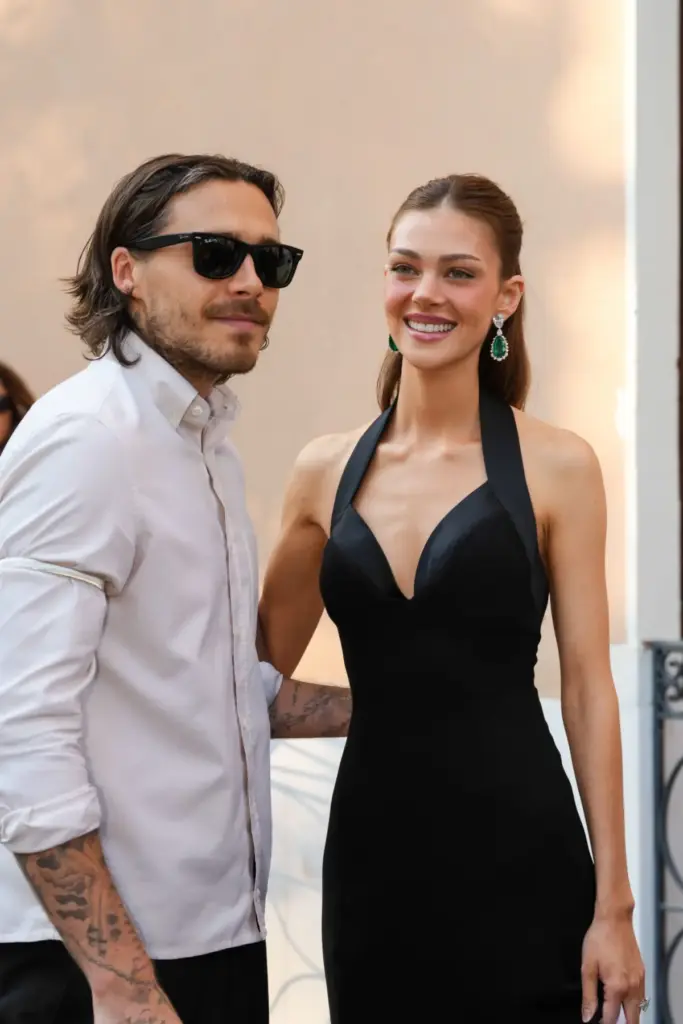
Undoubtedly the most talked-about jewelry sighting of the festival’s opening phase belongs to Nicola Peltz-Beckham. Stepping onto the red carpet alongside Brooklyn Peltz-Beckham, Nicola commanded instant attention with a pair of staggering, drop-cut emerald earrings that carried an almost mythical provenance.
Gemological experts and archival historians quickly identified the stones as having once belonged to two legendary figures in global history and high society: a Romanov Grand Duchess of Imperial Russia and, later, the notorious Woolworth department store heiress and preeminent jewelry collector Barbara Hutton. The earrings—possessing a deep, forest-green saturation and an immaculate crystallization characteristic of historic Muzo mines—represent tens of millions of dollars in cultural and material value. Their pairing with a minimalist, modern silhouette allowed the century-old stones to tell a narrative of displaced imperial luxury and mid-century jet-set glamour, instantly elevating Peltz-Beckham’s red-carpet appearance to historical status.
Subversive Elegance and Modern Mastery
While historical provenance dominated the chatter around Peltz-Beckham, other attendees leveraged contemporary high jewelry to challenge traditional red-carpet tropes.
Chase Sui Wonders captivated onlookers with a playful yet profoundly sophisticated styling choice: Jean Schlumberger’s legendary Bird on a Rock brooch by Tiffany & Co., remarkably perched atop a delicate silk ribbon necklace. The whimsical creature, forged in platinum and gold with diamond plumage perched upon a vibrant gemstone, brought an organic, mid-century kinetic energy to the modern Lido.
Maggie Gyllenhaal, who earlier made waves by discarding traditional stiletto rules in favor of sleek Celine jazz shoes for the opening ceremony, continued her convention-defying streak with Bulgari’s iconic Serpenti high jewelry collection. The writhing, diamond-encrusted serpent coiled fluidly around her wrist and neck, symbolizing transformation, eternal rebirth, and intellectual edge—a fitting signature for an auteur who consistently subverts expectations.
Claire Foy, meanwhile, leaned into architectural minimalism, sporting sculptural Swarovski ear cuffs that climbed the contours of her ears like futuristic metallic cartilage. The piece demonstrated how accessible luxury houses and avant-garde design are increasingly holding their own against centuries-old heritage ateliers on the world’s most photographed stages.
Supporting Context & Metrics: The Economics and Aesthetics of Festival Adornment
The High Jewelry Market at Film Festivals
The pairing of international film festivals with elite high jewelry houses is no longer a matter of serendipitous styling; it is a meticulously orchestrated multi-billion-dollar marketing and diplomatic ballet. Events like Venice, Cannes, and the Oscars serve as the primary global runway for houses such as Cartier, Van Cleef & Arpels, Bulgari, Tiffany & Co., and Harry Winston.
According to luxury market analysts, the presence of archival and high-complexity statement pieces at festivals like Venice directly correlates with surging global demand for ultra-high-net-worth investment pieces. Colored gemstones—particularly Colombian emeralds with historic provenances, mirroring those worn by Peltz-Beckham—have seen a compound annual growth rate (CAGR) of over 8% in private auction markets over the past five years. When these pieces are worn by prominent cultural figures in front of millions of global viewers, they act as tangible liquidity advertisements, reaffirming the timeless status of hard assets.
Celebrity / Figure
Jewelry House / Provenance
Key Piece Description
Cultural & Stylistic Impact
Nicola Peltz-Beckham
Archival / Romanov & Barbara Hutton Collection
Staggering drop-cut Muzo emerald earrings
Blends imperial Russian history with mid-century heiress glamour; the premier historical statement of Venice 2026.
Chase Sui Wonders
Tiffany & Co. (Jean Schlumberger)
Bird on a Rock brooch mounted on a silk ribbon
Reimagines a mid-century classic through whimsical, contemporary neckwear styling.
Maggie Gyllenhaal
Bulgari High Jewelry
Serpenti diamond coil suite
Reinforces an intellectual, rule-breaking red-carpet persona through kinetic serpentine design.
Claire Foy
Swarovski
Sculptural metallic ear cuffs
Showcases the power of architectural, avant-garde contemporary design alongside heritage stones.
The Shift Toward Personal Narrative in Red-Carpet Styling
Stylists operating in the 2026 landscape note a distinct philosophical pivot among A-list talent. The era of simply pulling a matching necklace-and-earring suite straight from a brand’s lookbook is rapidly giving way to "narrative styling." Celebrities are increasingly acting as curators, sourcing pieces with deep personal resonance or historical weight.
In Peltz-Beckham’s case, utilizing imperial Russian and Gilded Age American heirloom stones speaks to a broader fascination with slow luxury, heirloom preservation, and tangible history in an increasingly digital, ephemeral world. Similarly, Gyllenhaal’s choice of the Serpenti aligns with her directorial and artistic ethos—bold, coiled, and perpetually shedding old skin.
Official Statements and Industry Reactions
As the festival unfolds, industry insiders, curators, and fashion historians have weighed in on the significance of the 2026 jewelry landscape.
Elena Vance, Senior Curator of Historic Decorative Arts at the European Institute of Jewelry, remarked:
"What we are witnessing on the Venice red carpet this year is a profound hunger for permanence. When an individual wears a stone that survived the fall of the Romanov dynasty and the extravagant parties of Barbara Hutton, they are not merely wearing an accessory; they are wearing a portable museum. It transforms the red carpet from a transient advertising billboard into a living archive of human artistry and turbulent history."
Renowned celebrity stylist Marcus Thorne noted the collaborative nature of modern festival curation:
"The pressure on the Lido is unique. You have the romantic, decaying grandeur of Venice—the water taxis, the palazzos, the dramatic lighting—which demands jewelry with immense scale and personality. A delicate, whispering diamond won’t cut it against the backdrop of the Adriatic Sea and historic architecture. We are seeing clients demand pieces that can hold their own against the scenery, whether that’s through colossal historical emeralds or razor-sharp contemporary sculpture."
Future Outlook: The Legacy of Venice 2026
As the 83rd Venice Film Festival progresses toward its closing weekend and the coveted Golden Lion awards ceremony, the benchmark set by the opening days’ jewelry displays will undoubtedly shape the remainder of the awards season circuit.
The profound success of archival storytelling in high jewelry suggests that stylists and actors will continue to dig deeper into private vaults and historical collections for upcoming major red-carpet events, including the Toronto International Film Festival, the Golden Globes, and the Academy Awards. Furthermore, the seamless integration of whimsical pieces—such as Schlumberger’s perched birds—with avant-garde ear architecture proves that modern consumers and red-carpet trendsetters are rejecting monolithic elegance in favor of eclectic, highly personal statements.
Ultimately, the 2026 Venice Film Festival has proven that while cinema remains the nominal reason the world’s attention is fixed upon the Lido, the symbiotic relationship between moving images and enduring material history continues to forge unforgettable cultural moments. Long after the red carpet is rolled up and the gondolas depart, the glitter of Romanov emeralds and golden serpents under the Venetian moon will remain etched in the annals of fashion history.