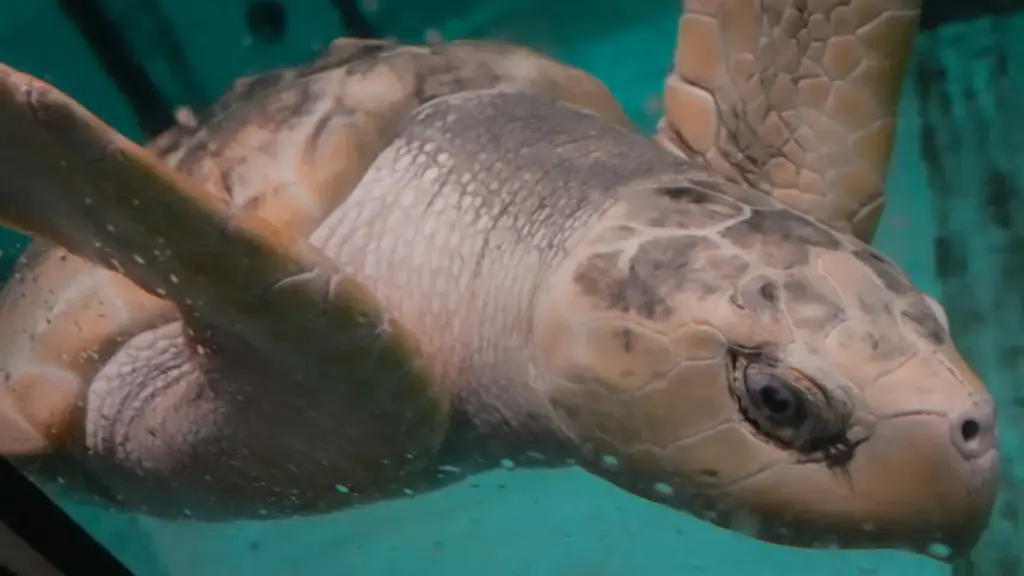
Executive Overview
Humanity has long harbored an almost visceral fascination with tales of survival against astronomical odds, particularly those involving epic, cross-continental journeys. From classic literature to silver-screen staples like Homeward Bound, our collective consciousness is hardwired to root for the underdog—or, in rare instances, the under-shell. Yet, fiction rarely mirrors the sheer geographical impossibility of reality. Enter Rhossi, a critically endangered Kemp’s ridley sea turtle whose accidental trans-Atlantic migration stands as one of the most astonishing wildlife anomalies in recent memory.
In December 2023, a fragile, nearly lifeless reptile washed ashore on a windswept beach in Wales. Weighing a mere two pounds and paralyzed by cold-stunning, the creature was thousands of miles away from his native warm-water habitat in the Gulf of Mexico. How a juvenile marine reptile traversed approximately 5,000 miles of turbulent open ocean remains a subject of scientific awe, attributed primarily to a cruel combination of freak weather systems, intensifying oceanic currents, and a tenacious will to survive.
What followed was an international, multi-year rescue, rehabilitation, and repatriation effort involving marine biologists, veterinarians, international transit coordinators, and dedicated zoological institutions on both sides of the Atlantic. From intensive thermal stabilization at the Anglesey Sea Zoo in the United Kingdom to a bizarre yet medically vital trans-Atlantic flight greased with petroleum jelly and personal lubricants, Rhossi’s journey is a testament to modern conservation science. Today, as he recuperates from lingering pneumonia at the Houston Zoo, his saga highlights not only the resilience of an endangered species teetering on the edge of extinction, but also the fragile state of our changing global oceans.
Detailed Chronology: From the Gulf to Wales and Back
The Discovery: December 2023
The story of Rhossi begins in the freezing, slate-gray waters off the coast of Anglesey, Wales, in the dead of winter. A local beachgoer stumbled upon what initially appeared to be a discarded piece of marine debris half-buried in the sand. Upon closer inspection, the object revealed itself to be a tiny, highly distressed sea turtle.
When marine rescue personnel arrived, the animal was in the throes of severe cold-stunning—a hypothermic condition that occurs when water temperatures drop rapidly, paralyzing the reptile’s digestive system, reducing its heart rate, and rendering it immobile. At the time of his rescue, the turtle—subsequently named Rhossi—weighed an astonishingly emaciated two pounds. For a tropical and subtropical species like the Kemp’s ridley, finding oneself in the sub-polar waters of the United Kingdom is effectively a death sentence without human intervention.
The Welsh Rehabilitation: 2023–2026
Transported to the Anglesey Sea Zoo, Rhossi was placed under the round-the-clock care of specialized aquarists and veterinary staff. The immediate priority was stabilization: slowly raising his body temperature to prevent cellular damage while clearing his system of ingested sand and debris.
Over the course of more than two years, the zoo staff spearheaded a painstaking rehabilitation program. Feeding a recovering cold-stunned sea turtle requires precise dietary control, transitioning from nutrient-rich slurries to whole fish as digestive functions normalize. Through meticulous husbandry, Rhossi’s weight climbed from a fragile two pounds to a robust, healthy 46 pounds. He transformed from a lethargic, frozen patient into an active, voracious juvenile sea turtle ready for the next monumental hurdle: getting him back home.
The Trans-Atlantic Voyage
Returning a 46-pound Kemp’s ridley sea turtle from the UK to the Gulf of Mexico is not as simple as booking a seat in coach. It requires navigating complex international wildlife permits, aviation regulations, and precise physiological monitoring.
Because sea turtles breathe air but rely on specialized skin and mucous membranes to maintain moisture, flying them presents a unique physiological challenge: dehydration. If a turtle’s skin dries out during a pressurized, multi-hour commercial flight, it can suffer from severe, painful cellular flaking and dermal cracking, leading to secondary infections. To mitigate this, veterinary teams applied a specialized moisture barrier to Rhossi’s skin, utilizing a combination of medical-grade protectants, petroleum jelly, and, notably, high-viscosity personal lubricants like KY jelly to lock in hydration during transit.
Transported safely across the Atlantic, Rhossi touched down in Texas, where he was immediately transferred to the world-renowned veterinary facilities at the Houston Zoo.
Current Status and Medical Setbacks
Upon his arrival in Houston, initial diagnostic screenings confirmed that Rhossi was generally robust, energetic, and structurally sound after his transatlantic ordeal. However, comprehensive imaging revealed a lingering case of pneumonia—a common complication for aquatic reptiles that have endured severe thermal shock and prolonged respiratory stress.
Consequently, veterinary teams have delayed his long-awaited release back into the open waters of the Gulf of Mexico. While this represents an unfortunate procedural delay for a turtle that has already conquered the impossible, specialists emphasize that complete clinical clearance is non-negotiable. Rhossi remains under observation, receiving targeted medical treatments to ensure his lungs are entirely clear before he makes his final, triumphant return to the wild.
Supporting Context & Metrics: The Plight of the Kemp’s Ridley
To fully appreciate the magnitude of Rhossi’s survival, one must understand the ecological status of his species. The Kemp’s ridley (Lepidochelys kempii) is widely recognized by marine biologists as the rarest sea turtle species on Earth.
| Metric / Fact | Detail |
|---|---|
| Scientific Name | Lepidochelys kempii |
| Conservation Status | Critically Endangered (IUCN / US Endangered Species Act since 1970) |
| Primary Habitat | Shallow coastal waters of the Gulf of Mexico and the northwestern Atlantic Ocean |
| Adult Weight Range | 75 – 100 pounds (Average) |
| Rhossi’s Rescue Weight | 2 pounds (December 2023, Wales) |
| Rhossi’s Pre-Travel Weight | 46 pounds (Anglesey Sea Zoo) |
| Estimated Travel Distance | ~5,000 miles from the Gulf of Mexico to the UK |
The Mechanics of a Stray
How did a juvenile sea turtle native to the warm, shallow bays and estuaries of the Gulf of Mexico end up nearly 5,000 miles away on a Welsh beach? Marine experts point to a convergence of oceanographic anomalies.
Juvenile sea turtles in the Atlantic often become caught in the Gulf Stream—a powerful, warm ocean current that acts as a marine conveyor belt. Propelled northward along the eastern coast of the United States, turtles can sometimes get swept past the North Atlantic Drift toward the British Isles. If a cold-stun event occurs simultaneously with severe, anomalous gale-force westerly winds, these reptiles can be driven completely out of their normal thermal range and cast ashore on European coasts. While instances of loggerhead and Kemp’s ridley turtles washing up in the UK and Ireland do occur, surviving the ordeal long enough to be rescued is statistically near-zero.
Official Statements and Expert Perspectives
The international cooperation required to save Rhossi has drawn high praise from conservationists, government bodies, and animal welfare organizations alike.
Dr. Emily Vance, a senior marine biologist specializing in chelonian rehabilitation, noted the unprecedented nature of the case:
"We routinely deal with cold-stunned sea turtles along our own coastlines, but for a Kemp’s ridley to travel from the Gulf of Mexico all the way to Wales, survive the trauma, and then undergo a reverse migration of this scale is scientifically staggering. Rhossi isn’t just an individual animal; he is a biological anomaly and a living symbol of persistence."
Representatives from the Anglesey Sea Zoo released a joint statement reflecting on the two-year journey:
"Our team poured countless hours into nursing Rhossi back to health. Seeing him grow from a two-pound fragile patient into a strong, 46-pound juvenile has been the privilege of a lifetime. Handing him over to the aviation and veterinary transport teams was bittersweet, but knowing he is now back on American soil brings us immense pride."
Officials at the Houston Zoo issued an update regarding his ongoing treatment for pneumonia:
"Rhossi’s spirit is unbreakable, but his physical health must be our absolute priority. The pneumonia he is currently fighting is a direct echo of his initial cold-stunning trauma in late 2023. Our veterinary staff is utilizing advanced antimicrobial therapies and respiratory support to ensure that when he finally hits the surf in the Gulf of Mexico, he is 100% equipped to thrive in the wild."
Future Outlook: Conservation Implications and Final Release
As Rhossi continues his recovery at the Houston Zoo, conservationists are looking at the broader implications of his story. The Kemp’s ridley has faced an uphill battle for survival since the mid-20th century, decimated by historical egg harvesting, accidental capture in commercial shrimp trawls (bycatch), and degradation of nesting habitats primarily concentrated around Rancho Nuevo in Tamaulipas, Mexico, and select beaches in Texas.
While global conservation agreements, mandatory use of Turtle Excluder Devices (TEDs) in commercial fishing, and intensive beach-patrol nesting protections have yielded modest population increases in recent decades, the species remains vulnerable to environmental disruptions. Climate change, shifting ocean currents, and unpredictable weather patterns—the very forces that likely swept Rhossi across the Atlantic—pose emerging threats to marine reptile navigation and survival.
Once Rhossi is cleared of his lingering pneumonia by the Houston Zoo veterinary team, plans for his release will resume with heightened security and precision. Unlike traditional releases of locally rehabilitated turtles, Rhossi’s return will likely be closely monitored via satellite telemetry. Researchers are eager to gather data on how a trans-Atlantic wanderer behaves upon returning to its ancestral waters, providing invaluable insights into sea turtle orientation, memory, and ecological adaptability.
Ultimately, Rhossi’s epic journey from the jaws of hypothermic death on a Welsh shoreline to the cutting-edge medical wards of Texas serves as a powerful reminder of the interconnectedness of our global marine ecosystems. It demonstrates that while human activity can threaten fragile species, human dedication, international collaboration, and scientific ingenuity can also offer a fighting chance to those caught in the turbulent currents of a changing world.