Executive Overview
In a devastating act of domestic violence that has sent shockwaves through the local community and the nation, eight people—including four children—were killed during a Sunday family dinner in Billings. Investigators confirmed that the suspected gunman, identified as 44-year-old Alan Smith, turned the weapon on himself after carrying out the massacre, later dying from a self-inflicted gunshot wound.
The incident, which unfolded on Sunday, August 23, culminated in a catastrophic fire that completely leveled the residential property, reducing it to its foundation and severely complicating the ensuing forensic investigation. Among the dead were members of an extended family gathered for a routine weekly meal. The victims include Megan Ghekiere, the shooter’s former sister-in-law (referred to in initial reports via former relationships), and several children ranging from early adolescence to pre-teens.
As local authorities, forensic experts, and fire investigators sift through the charred remains of the home, grieving relatives and neighbors have come forward to share harrowing details of the event. Amid the devastation, stories of incredible bravery have emerged—most notably that of 12-year-old Charlotte Ghekiere, who managed to contact emergency services in a desperate attempt to save her family.
This comprehensive report examines the chronology of the Billings tragedy, the background of the suspect, the heroic actions of the victims, official statements from law enforcement, and the broader societal conversations surrounding domestic violence, missed red flags, and community support.
Detailed Chronology
The Gathering and the Conflict
The events of Sunday, August 23, began as a typical domestic gathering. Families often come together for weekend meals, but this particular dinner was reportedly scheduled unusually. According to statements from Adam Ghekiere, whose family members were among the victims, the weekly family dinner was traditionally held on Fridays. However, for reasons dictated by scheduling, the dinner took place on Sunday.
Investigators and family members have noted that the suspect, Alan Smith, had recently been asked by his parents to move out of the family residence due to mounting tensions and behavioral concerns. Smith, described by acquaintances as reclusive and largely confined to his bedroom, returned to the property on Sunday while the family was gathered.
The Response and the Flames
At approximately the time of the shooting, local law enforcement received emergency calls regarding gunfire at the residence on the West End of Billings. Responding officers arrived at the scene to find the home partially engulfed in flames, with active gunshots audible from the rear of the property.
Among those responding to the chaos was Adam Ghekiere, an airport employee in Billings who was on duty at the time. Ghekiere reportedly overheard dispatch radio communications regarding an active shooting in the city. Recognizing the potential proximity to his loved ones, he frantically attempted to contact family members via phone. Receiving no response, he abandoned his post and rushed across town to the address.
Upon arrival, Ghekiere found the residence already ablaze. It took approximately two hours of agonizing uncertainty before authorities and emergency responders confirmed the worst: his wife and children had perished in the massacre. Speaking subsequently about the timeline, Ghekiere expressed belief that the shooter had not anticipated his children being present due to the schedule change.
The Escalation to Arson
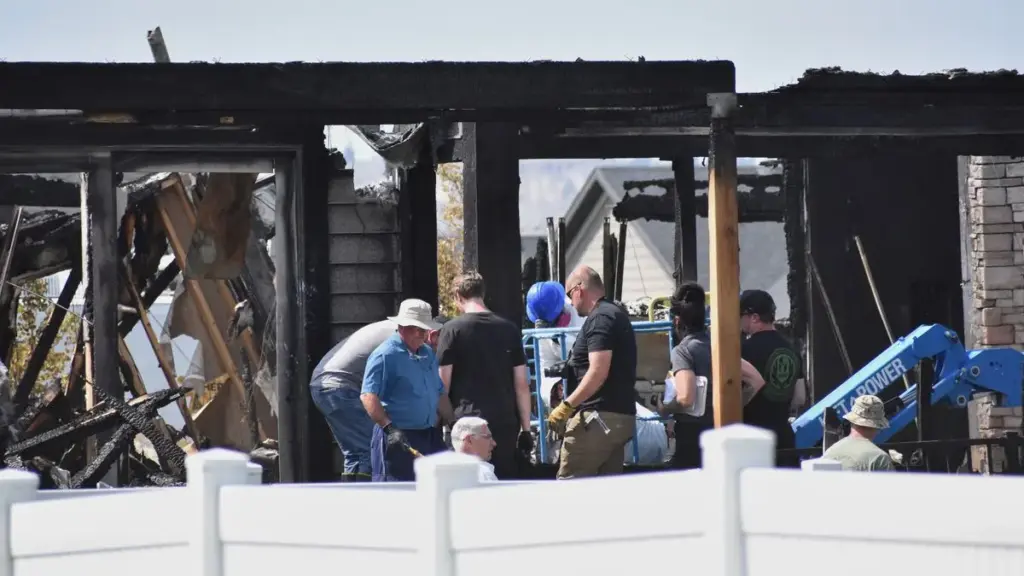
As police and firefighters attempted to secure the perimeter and suppress the flames, the structure sustained catastrophic damage. The fire burned so intensely that it reduced the house entirely to its foundation, destroying crucial physical evidence and creating severe structural hazards for recovery teams.
Inside the burning home, investigators would later discover the bodies of eight victims, along with the mortally wounded suspect, Alan Smith, who had succumbed to a self-inflicted gunshot wound. The dual nature of the crime—a mass shooting followed immediately by structural arson—has made the crime scene one of the most complex and devastating in the modern history of Billings.
Victim Profiles and Heroism
Identifying the Lost
The human cost of the August 23 tragedy is immeasurable, spanning multiple generations of a single extended family. Authorities and grieving relatives have released the identities of those who lost their lives in the inferno:
- Megan Ghekiere: Former wife and relative of the extended household network.
- Owen Ireland: 13-year-old child of Megan Ghekiere.
- Chloe Ireland: 7-year-old child of Megan Ghekiere.
- Landon Ghekiere: 15-year-old stepchild within the household.
- Charlotte Ghekiere: 12-year-old stepchild within the household.
- Alan Smith’s Parents: The senior homeowners who had reportedly asked the suspect to vacate the premises.
- Additional Family Members: Bringing the total death toll to eight victims.
An Act of Unthinkable Courage
Despite the overwhelming horror of the attack, extraordinary bravery was displayed in the final moments of the victims’ lives. Neighbor Jennifer Mercer spoke on behalf of the grieving family to highlight the actions of 12-year-old Charlotte Ghekiere.
"The one thing we do know is that Charlotte was the hero," Mercer stated. "Charlotte called 911 and she tried to save her family. And that’s something the family does want out there."
Charlotte’s quick thinking in contacting emergency services underscores the sheer terror of the moments before the house was consumed by fire. Her bravery stands as a poignant testament to the resilience and selflessness of the young victims caught in the crossfire of domestic tragedy.
Supporting Context & Metrics
The Spectrum of Domestic Violence and Mass Shootings
Criminologists and sociologists tracking domestic violence trends note that mass casualty events occurring within residential properties—often categorized as familicides—frequently share specific behavioral precursors. According to data compiled by organizations tracking domestic violence and gun safety, a significant percentage of mass shooting incidents in the United States occur within domestic settings and involve estranged family members or cohabitants.
In Billings, the tragedy has cast a harsh light on the warning signs that often precede such violence. Family members have come forward to point out systemic failures in addressing behavioral volatility. Ben, a relative of those affected, noted:
"There were many red flags and many people spoke out. No one listened."
The Profile of the Suspect
Descriptions of Alan Smith paint a picture of severe social isolation. Described by relatives as a "hermit," the 44-year-old reportedly spent his days isolated in his room, absorbed in computer activities. Brad Ireland, whose former wife and two children were among the dead, remarked on the opaque nature of Smith’s daily existence:
"No one knew what he did in there 24/7."
This extreme withdrawal, coupled with friction arising from his parents’ request for him to move out, created a volatile environment. Mental health professionals frequently emphasize that social isolation combined with grievance, entitlement, and access to firearms represents a lethal combination, though predicting the exact tipping point remains an ongoing challenge for law enforcement and family intervention networks.
Official Statements and Investigation Challenges
Law Enforcement Response
The Billings Police Department has exercised caution in releasing granular details regarding the ongoing investigation. In a formal statement, Sgt. Jeff Stovall extended deep condolences on behalf of the department:
"To everyone affected by this awful tragedy, our hearts go out to you. We are intentionally limiting details about the case to protect the integrity of the ongoing investigation."
Sgt. Stovall also addressed the unique forensic hurdles facing investigators. Because the fire burned the residence down to its foundation, the structural integrity of the site has been severely compromised. Forensic anthropologists, arson investigators, and homicide detectives must navigate dangerous rubble and unstable debris to piece together the exact sequence of gunshots, fire spread, and the shooter’s movements.
Community Solidarity and Support
In the wake of the catastrophe, the Billings community has rallied to support the surviving family members. Friends and colleagues have established verified fundraising platforms to assist those left behind.
Adam Ghekiere, whose life was upended while he was on duty at the Billings airport, has become a focal point of community support. Two GoFundMe campaigns have been established to help cover memorial costs, emergency expenses, and long-term recovery for the families of the victims, including specific memorial funds for Landon and Charlotte Ghekiere. Local organizations have also mobilized counseling resources for school districts and community groups impacted by the loss of the four children.
Future Outlook
Long-Term Community Healing
As the physical debris of the Billings West End home is cleared, the psychological and emotional recovery for the community has only just begun. Schools attended by the young victims, local workplaces, and extended family networks face a lengthy healing process. Mental health advocates in the region are calling for increased awareness of domestic tension, improved access to crisis intervention services, and better mechanisms for reporting and acting upon "red flags" before they culminate in violence.
Policy and Preventative Measures
The tragedy is expected to reignite local and regional discussions regarding:
- Early Intervention: Establishing clearer pathways for families to seek professional assistance when a cohabitant exhibits extreme reclusive behavior, mental health crises, or threats of violence.
- Firearm Safety and Domestic Disputes: Reviewing protocols for intervention when domestic tensions escalate to the point where eviction or separation is demanded.
- Support Systems for Surviving Relatives: Ensuring that victims of mass domestic trauma receive sustained, comprehensive psychological and financial support from both state and community resources.
For now, the residents of Billings mourn a family extinguished in an instant—remembering the innocence of the children, the bravery of young Charlotte, and the urgent need to listen when warning signs are first voiced.