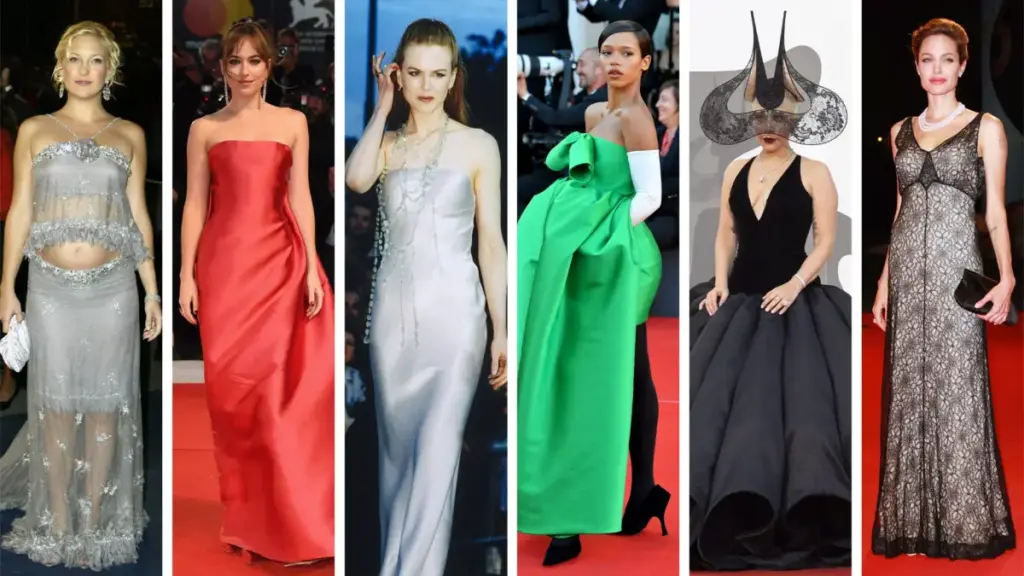
For over eight decades, the Venice International Film Festival has stood as a monumental pillar in the global intersection of cinema and haute couture. As the oldest film festival in the world—inaugurated in 1932 on the picturesque shores of the Lido di Venezia—it carries a unique historical weight. While the cinematic screenings compete for the coveted Golden Lion, a parallel phenomenon captures the collective imagination of the global audience: the Venice Film Festival red carpet.
Over recent years, this legendary stretch of red-carpeted pavement has evolved far beyond a traditional cinematic photo-call. It has transformed into one of the most significant high-fashion runways on the international calendar. From the breathtaking sartorial statements of modern style icons like Cate Blanchett, Zendaya, and Lady Gaga to the timeless elegance of veterans such as Nicole Kidman and Isabelle Huppert, the Lido functions as an incubator for defining fashion trends.
This comprehensive retrospective examines the evolution of Venice red-carpet fashion from 2018 through 2025. By analyzing standout designer collaborations, cultural shifts in celebrity styling, and the architectural interplay between Venetian romance and avant-garde design, we explore how the festival cemented its status as fashion’s ultimate autumnal destination.
Detailed Chronology: A Year-by-Year Fashion Retrospective
The 2018 Festival: Cinematic Romance and Dramatic Silhouettes
The 75th Venice International Film Festival set a high benchmark for theatrical fashion, most notably defined by the premiere of A Star Is Born.
Lady Gaga: Signaling her transition into major cinematic leading-lady status, Gaga arrived in a dramatic, feather-trimmed pale pink Valentino Haute Couture gown that commanded immediate attention and set a tone of unapologetic grandeur.
Dakota Johnson: Embracing a starkly different yet equally mesmerizing aesthetic, Johnson captivated onlookers in a shimmering, deep-red Dior gown featuring a plunging neckline and intricate star embroidery, perfectly balancing classic Hollywood glamour with gothic romanticism.
Irina Shayk & Claire Foy: Shayk leaned into high-octane metallic glamour with a gold, liquid-like Versace gown, while Foy showcased understated British elegance in a structured, patterned Erdem dress during the premiere of First Man.
The 2019 Festival: Youthful Rebellion and Editorial Edge
As the festival entered its 76th edition, a younger cohort of actors began redefining the boundaries of red-carpet expectations, moving away from conventional ballgowns toward daring, editorially driven choices.
Lily-Rose Depp: Emerging as a definitive Chanel muse, Depp graced the Lido in a floral-printed, corseted chiffon dress from the French fashion house. The look bridged vintage romance with contemporary youthful rebellion, instantly becoming one of the most-talked-about ensembles of the year.
The 2021 Festival: Post-Lockdown Renaissance and High-Drama Returns
Following the pandemic disruptions, the 78th Venice Film Festival erupted with a palpable hunger for high fashion, resulting in some of the most iconic style moments in modern festival history.
Zendaya: Working alongside visionary stylist Law Roach, Zendaya delivered an absolute masterclass in red-carpet dressing. Her custom leather Balmain wet-look gown, paired with a striking emerald Bulgari serpenti necklace, instantly went viral, cementing her status as a generation-defining fashion icon.
Dakota Johnson: Continuing her strong relationship with Gucci, Johnson wore a crystal-encrusted, sheer Gucci slip dress layered over a matching bodysuit, epitomizing modern red-carpet transparency and sparkle.
Jessica Chastain: Radiating old-world cinematic royalty, Chastain chose a custom ruby-red, off-the-shoulder tulle gown by Atelier Versace, glittering with cascading gemstone embroidery.
The 2022 Festival: Sculptural Avant-Garde and Bold Color Palettes
The 79th edition pushed structural boundaries, with designers and stylists utilizing the Venetian canals as a backdrop for architectural masterpieces.
Jodie Turner-Smith: Known for her fearless approach to fashion, Turner-Smith made waves in a vibrant, multi-layered Christopher John Rogers geometric-print gown, followed by several other equally striking ensembles that celebrated Black designers and bold color blocking.
Taylor Russell: Wearing a dramatic, halter-neck green Balenciaga gown paired with opera gloves, Russell brought a haunting, theatrical elegance to the premiere of Bones and All.
Gemma Chan: Chan stunned in a whimsical, structured Louis Vuitton gown featuring a futuristic silver bodice and an ethereal patterned skirt.
The 2023 Festival: Subversive Sophistication and Intellectual Chic
During the 80th edition, amid industry-wide shifts, fashion adopted a tone of refined sophistication, blending classic tailoring with subversive contemporary elements.
Emma Corrin: Embracing gender-fluid styling, Corrin made headlines in a micro-cardigan and matching knit briefs by Miu Miu, subverting traditional red-carpet expectations with playful, high-fashion intellectualism.
Isabelle Huppert: The epitome of French chic, Huppert chose a sheer, chainmail-inspired Balenciaga gown that married futuristic texture with classic Hollywood silhouette work.
The 2024 Festival: Theatrical Spectacle and Timeless Icons
The 81st Venice Film Festival was a masterclass in duality—pairing hyper-theatrical premieres with classic, enduring elegance.
Lady Gaga: Returning to the Lido for Joker: Folie à Deux, Gaga delivered another historic fashion moment. She wore a dramatic black Dior gown paired with an avant-garde, sculptural Philip Treacy headpiece that paid homage to classic theatrical millinery.
Amal and George Clooney: Representing the pinnacle of effortless power-couple styling, Amal Clooney floated down the red carpet in a sunny yellow vintage-inspired gown, reaffirming her status as a global fashion reference.
The 2025 Festival: Modern Minimalism Meets Avant-Garde Heritage
The most recent iterations of the festival have witnessed a sophisticated pivot toward clean architectural lines, sustainable luxury, and archival revivals.
Cate Blanchett: A perennial fixture of Lido elegance, Blanchett utilized her platform to champion sustainable fashion, repeatedly wearing archival and intelligently repurposed garments that proved high style and environmental consciousness can coexist seamlessly.
Greta Lee & Chloë Sevigny: Lee leaned into effortless Loewe minimalism with architectural draping, while Sevigny showcased downtown cool-girl aesthetics mixed with high-end European tailoring, continuing her legacy as an eternal style icon.
Supporting Context & Metrics: The Economic and Cultural Impact
The transformation of the Venice Film Festival red carpet from a simple press event into a multi-million-dollar global marketing machine is supported by substantial industry metrics. According to recent fashion analytics reports, top-tier luxury houses—including Chanel, Dior, Gucci, Armani, and Valentino—allocate significant portions of their annual celebrity-endorsement budgets specifically to high-profile autumn film festivals like Venice and Cannes.
Digital Earned Media Value (EMV)
In the digital age, red-carpet success is quantified through Earned Media Value (EMV). A single viral moment on the Venice red carpet—such as Zendaya’s 2021 Balmain appearance or Lady Gaga’s 2024 Philip Treacy headpiece—can generate upwards of $10 million to $15 million in digital EMV for a brand within 48 hours. Social media algorithms heavily favor the dramatic, water-taxi arrivals unique to Venice, where celebrities step off iconic wooden Riva boats directly onto the pier, providing endless cinematic angles for photography and short-form video content.
The Rise of Dedicated Stylists
The era of actors styling themselves for major international film festivals has officially drawn to a close. The modern Venice red carpet is orchestrated by an elite cadre of powerhouse celebrity stylists—such as Law Roach, Elizabeth Saltzman, Ryan Hastings, and Andrew Mukamal. These stylists treat the Lido not merely as a place to promote a movie, but as a critical narrative canvas where an actor’s brand is meticulously curated over a multi-day press tour.
Official Statements and Industry Perspectives
The symbiotic relationship between high fashion and the cinematic arts in Venice has frequently been addressed by industry leaders, designers, and cultural commentators.
Alberto Barbera, the Artistic Director of the Venice Film Festival, has often noted the intentional embrace of fashion as a complementary art form:
"Cinema is a visual medium that has always been deeply intertwined with style and costume design. When we see international designers collaborating with actors on the Lido, it extends the artistic expression of the films themselves into the public square. Venice has always been a city of performance, masquerade, and visual splendor; our red carpet is a natural extension of that historical identity."
Renowned stylist Law Roach reflected on the distinct atmosphere of Venice compared to other global awards platforms:
"Venice is different from the Oscars or the Met Gala. There is an inherent romance, a moody, old-world European romanticism that allows you to take bigger risks. When you put someone in a gown and step off a boat into the golden hour light of the lagoon, the clothes do something magical that they simply cannot do anywhere else in the world."
Future Outlook: Where Venice Fashion is Headed
As the Venice International Film Festival looks toward its upcoming editions, several distinct trends are reshaping the future of its red carpet:
Sustainability and Archival Fashion: With growing global scrutiny on the environmental impact of the fashion industry, actors and stylists are increasingly turning to vintage and archival pieces. The repetition of iconic garments and the prioritization of houses with strict sustainable manufacturing processes are projected to become baseline expectations rather than notable exceptions.
Gender-Fluid and Boundary-Pushing Tailoring: As demonstrated by figures like Emma Corrin and Timothée Chalamet in recent festival cycles, traditional sartorial binaries on the red carpet are rapidly dissolving. The future of Venice menswear and womenswear points toward a fluid middle ground characterized by corsetry, draping, and non-traditional formal wear.
Immersive Digital Integration: With augmented reality (AR) and real-time digital shopping integrations expanding rapidly, future red carpets will likely feature immediate "shop-the-look" digital ecosystems, allowing consumers to interact with and purchase bespoke or runway-adjacent items moments after a celebrity steps onto the Lido pavement.
Ultimately, the Venice Film Festival red carpet remains an irreplaceable cultural institution. It is a space where history meets high-wire modernity, capturing the fleeting, brilliant intersection where cinema immortalizes stories and fashion immortalizes style.