Executive Overview
Gloria Steinem, the indomitable journalist, author, grassroots organizer, and foundational architect of second-wave feminism in the United States, passed away peacefully on September 2, 2025, at the age of 92. According to an official statement released by her foundation via social media, Steinem died at her historic home in New York City, surrounded by close loved ones. A formal cause of death has not been publicly confirmed.
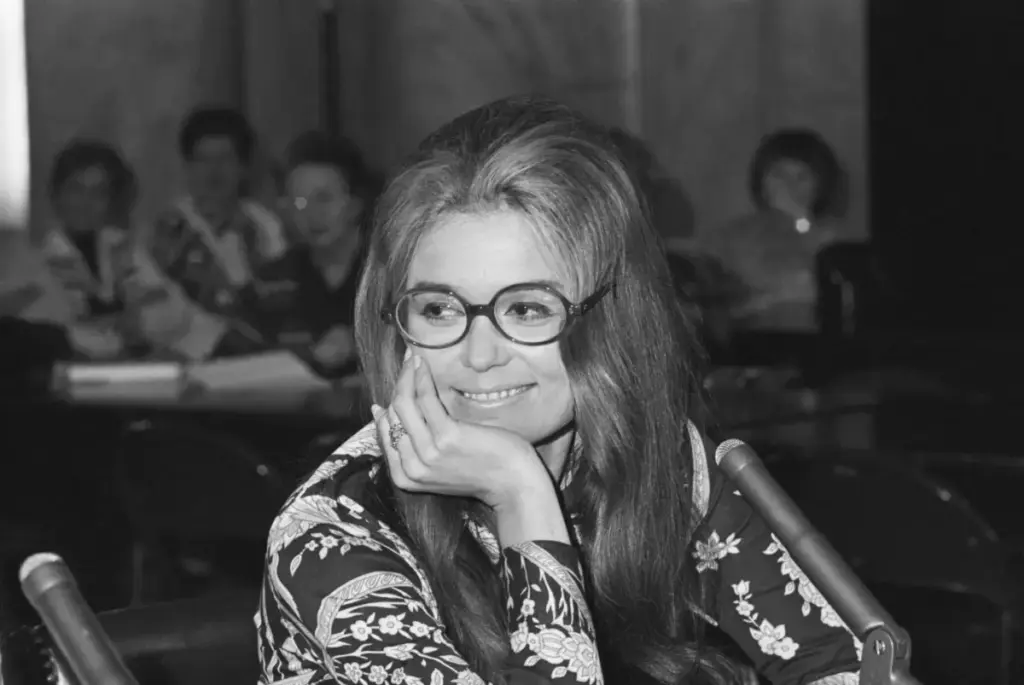
Steinem’s near-century on earth redefined the socio-political architecture of the Western world. Rising to prominence during the turbulent social revolutions of the 1960s and 1970s, she emerged as the most recognizable and enduring face of the women’s liberation movement. With her trademark aviator glasses, effortless style, and incisive intellect, she bridged the gap between academic theory and accessible journalism, translating complex systemic inequalities into urgent calls for action.
From her groundbreaking undercover reporting at the Playboy Club to her foundational role in establishing Ms. magazine, the National Women’s Political Caucus, and the Women’s Media Center, Steinem spent more than half a century dismantling patriarchal structures. Yet, rather than positioning herself as a singular matriarch of the movement, she viewed her life’s work as a catalytic exercise in empowerment. As she famously remarked, "I’m not giving up my torch, but using it to light the torches of others, because if we each have a torch, there’s a lot more light."
Her passing marks the end of an era, but her legacy remains deeply embedded in contemporary political discourse, grassroots activism, and the ongoing global fight for gender equity.
Detailed Chronology: A Life of Unyielding Purpose
Early Years and the Shaping of a Radical Mind
Born on March 25, 1934, in Toledo, Ohio, Gloria Marie Steinem experienced a nomadic and unconventional childhood. Her father, Leo Steinem, was an itinerant antique dealer, and her mother, Ruth Steinem, suffered a severe psychological breakdown when Gloria was still young. Following her parents’ divorce, a young Steinem assumed the role of primary caregiver for her mother while trying to finish her education. This formative, high-pressure environment instilled in her a profound empathy for the vulnerable and a lifelong aversion to institutional neglect.
Despite these early hardships, Steinem excelled academically. She attended Smith College, where she majored in government, developing a rigorous analytical framework that would later inform her sociopolitical commentaries. After graduating, she spent time in India on a Chester Dale Fellowship, an experience that deepened her understanding of global anti-colonial movements and grassroots organizing before she ultimately settled in New York City to pursue journalism.
Entering the Fray: Journalism as Activism
Steinem’s professional career began in the vibrant, male-dominated New York media scene of the 1960s. She quickly gained a reputation for sharp, fearless reporting. In 1963, she achieved national renown—and a dose of notoriety—when she went undercover as a "Playboy Bunny" at Hugh Hefner’s New York Playboy Club. Her blistering exposé, detailing the exploitative labor conditions, meager wages, and degrading surveillance endured by the club’s servers, instantly catapulted her to the forefront of investigative journalism.
Throughout the decade, Steinem wrote for high-profile publications including Vogue—penning a famous dispatch on Truman Capote’s legendary Black and White Ball in 1966—and New York magazine, where she served as a founding editor in 1968. Her journalistic output was never purely observational; it consistently probed the fault lines of American culture, exposing systemic sexism, domestic violence, workplace discrimination, and reproductive oppression.

Coalescing Second-Wave Feminism and Ms. Magazine
By the late 1960s and early 1970s, Steinem had transitioned from a chronicler of the cultural zeitgeist to its primary architect. In 1971, she made her most enduring institutional contribution by co-founding Ms. magazine, initially launched as an insert within New York before breaking out as an independent, reader-supported publication.
As an editor and driving force behind Ms. for the next 15 years, Steinem transformed the media landscape. The magazine broke radical ground by refusing to run advertisements that infantilized women, pioneering pro-choice advocacy, and explicitly addressing domestic violence and date rape—issues that had previously been relegated to the private shame of victims. Under her leadership, the pages of Ms. championed intersectionality long before the term entered the mainstream lexicon, featuring diverse, powerful voices such as Maya Angelou, Angela Davis, and Alice Walker.
Supporting Context & Metrics: Milestones of a Movement
Steinem’s influence extended far beyond the printed page. She was a master institutional builder, co-founding organizations that fundamentally altered the political participation of women in the United States.
- National Women’s Political Caucus (1972): Alongside luminaries such as Bella Abzug, Shirley Chisholm, and Betty Friedan, Steinem co-founded the NWPC to recruit, train, and support pro-equality women running for public office across the political spectrum.
- Take Our Daughters to Work Day: Created under her cultural purview, this initiative revolutionized how young girls envisioned their professional futures, shifting institutional paradigms from the corporate boardrooms down to elementary school classrooms.
- Women’s Media Center (2004): Co-founded alongside Jane Fonda and Robin Morgan, this progressive advocacy organization works to amplify the visibility and power of women in media through systemic research, media monitoring, and leadership training.
Cultural Iconography and Personal Resilience
Unlike traditional political figures of her era, Steinem embraced pop-culture visibility and personal expression as political acts. With her iconic blonde-highlighted, center-parted hair, oversized gradient aviator glasses, and signature blend of denim and tailored jackets, she subverted patriarchal expectations of how a female intellectual or political leader should look.
"Fashion in the past meant conforming and losing oneself," Steinem observed. "Fashion in the present means being unique and finding oneself."
Behind the public persona, Steinem faced personal battles with characteristic resilience. At age 52, she was diagnosed with breast cancer. Fortunately, the disease was caught in its earliest stages, and following successful treatment, she returned immediately to the front lines of activism and writing.
Official Statements and Tributes
The global outpouring of grief following Steinem’s death reflected her profound, multi-generational impact. Tributes poured in from international leaders, grassroots organizers, artists, and writers whose lives she had touched.
The official statement shared via her foundation’s Instagram account captured the warmth and humility that defined her personal interactions:

"Gloria’s near-century on earth were years well-lived, and she continued working for equality until the very end. Gloria’s greatest gift was her ability to listen to others, to make others feel seen and heard. Her words, actions, and example gave people permission to be their truest selves. Gloria lived true to her independent spirit, always with curiosity and a great sense of humor."
The statement highlighted that Steinem’s final years were dedicated to community and writing—the two things she loved most. Up until her final weeks, she continued to host "talking circles" within her historic Upper East Side brownstone. Rooted in ancient indigenous and grassroots traditions, these circles served as intimate spaces for dialogue and social organizing—a tradition her foundation has vowed to preserve.
In lieu of flowers, her estate and foundation urged mourners to light candles in a "global and celestial community circle" and to direct financial contributions toward her namesake foundation.
Future Outlook: Preserving a Legacy
Though Gloria Steinem has left us, her institutional and philosophical footprint remains firmly secured. Her final memoir, An Unexpected Life—slated for publication later this month by Penguin Random House—offers a deeply personal retrospective spanning her childhood in Ohio to her later years as an elder stateswoman of the feminist movement. In the book, she reflects on the historic brownstone that served as her sanctuary for over half a century:
"I have now lived for more than fifty years in this brownstone, in rooms that have witnessed lives before mine, and will know others after I am gone."
Those rooms will indeed see new life. Through Gloria’s Foundation, her three-story Manhattan home and comprehensive personal archives are slated to be permanently preserved as a vibrant hub for feminist organizing, research, and leadership development.
Gloria Steinem leaves behind a world utterly transformed by her courage, intellect, and empathy. As movements for social justice face renewed challenges across the globe, the foundational truths she spent her life championing remain as urgent as ever: equality is not built from the top down, but from the bottom up, one small, reverberating pebble at a time.