Executive Overview
The passing of Gloria Steinem at the age of 92 marks the conclusion of one of the most defining chapters in modern social history. As the undisputed face and voice of the second-wave feminist movement, Steinem radically transformed the socio-political landscape of the United States and the broader world. For decades, her name was synonymous with tireless advocacy for women’s liberation, reproductive freedom, workplace equity, and the systemic dismantling of gender stereotypes. Yet, while her intellectual and activist contributions were monumental, her cultural footprint extended far beyond the podium and the printed page into a realm she viewed with characteristic nuance: personal presentation.
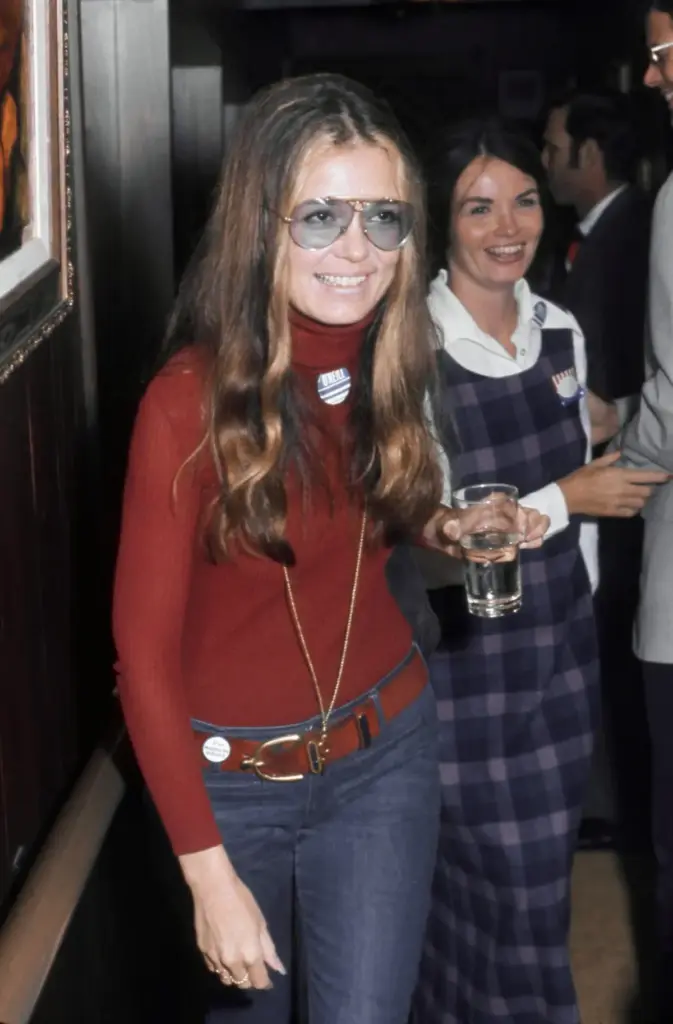
Steinem’s signature look—long, blonde-streaked hair, aviator glasses, flared trousers, and statement accessories like concha belts and layered beads—became an enduring visual shorthand for the liberated woman of the 1970s. Long before the concept of personal branding became ubiquitous, Steinem navigated a complex paradox. As a trailblazing female journalist operating in a deeply entrenched "man’s world," she was constantly scrutinized by male colleagues who attempted to diminish her intellectual rigor by reducing her to her appearance.
Rather than abandoning her glamour or conforming to drab, masculinized expectations of professional success, Steinem weaponized her aesthetic. She redefined style not as a compulsory adherence to seasonal fashion trends dictated by an industry catering to the male gaze, but as an autonomous form of self-expression. Alongside contemporaries like Dolly Parton—who similarly subverted hyper-feminine tropes with calculated agency—Steinem proved that political seriousness and personal flair were not mutually exclusive. This comprehensive retrospective examines Steinem’s enduring legacy, exploring the intersection of her groundbreaking journalism, her complex relationship with fashion, and the indelible blueprint she left for generations of women fighting for bodily and creative autonomy.
Detailed Chronology: From Nomadic Roots to the Frontlines of Liberation
To understand Gloria Steinem’s fierce independence and unique approach to self-presentation, one must examine her unconventional formative years. Born in Toledo, Ohio, in 1934, Steinem experienced a nomadic childhood. Her father, a traveling antiques salesman, packed the family into a trailer, moving constantly across the American landscape. Consequently, Steinem did not receive a formal, consistent education until she was twelve years old. This transient upbringing instilled in her an acute sense of self-reliance, insulating her from the rigid societal expectations placed on traditional mid-century girls.
After graduating from Smith College and spending time in India on a fellowship, Steinem moved to New York City in the late 1950s to pursue a career in journalism. Entering the workforce during the height of Madison Avenue’s "Mad Men" era, she encountered a professional media landscape explicitly hostile to women. Female journalists were routinely pigeonholed into covering "soft" topics: homemaking, child-rearing, fashion, and beauty.
Steinem pushed against these boundaries, culminating in her explosive 1963 undercover exposé for Show magazine, where she worked as a Playboy Bunny at the New York Playboy Club. The piece exposed the grueling working conditions, meager wages, and systemic humiliation endured by the women, instantly thrusting Steinem into the national spotlight. However, the media’s fascination with her physical attractiveness often overshadowed her reporting. As she later recounted in her 2015 memoir, My Life on the Road, male writers like Gay Talese dismissed her in 1964 with the reductive trope: "You know how every year there’s a pretty girl who comes to New York and pretends to be a writer? Well, Gloria is this year’s pretty girl."

Undeterred, Steinem’s activism coalesced into organized institutional power at the turn of the 1970s. She became a prominent participant in the Women’s Strike for Equality in 1970, articulating the core tenets of the emerging feminist movement with unmatched eloquence. Recognizing that mainstream women’s magazines failed to address the systemic realities of female subjugation, Steinem co-founded Ms. magazine in 1972—a publication named deliberately to challenge marital status titles like "Miss" or "Mrs."
Ms. became a revolutionary megaphone. Under Steinem’s editorial leadership, the magazine tackled taboo subjects head-on: domestic violence, sexual harassment, legal abortion, systemic workplace discrimination, and female sexuality. Throughout the 1970s, ’80s, and beyond, Steinem maintained an exhausting travel schedule, delivering speeches, organizing rallies, and building coalitions across racial, economic, and geographic divides. Her activism never slowed; she remained a visible, vocal champion of human rights well into her later decades, cementing her status as a global elder stateswoman of progressive social change.
Supporting Context & Metrics: The Anatomy of an Icon’s Style
While Steinem’s political resume is exhaustively documented, the mechanics of her public image offer a fascinating lens through which to view the evolution of feminist self-expression. In a 2015 interview for Lena Dunham’s defunct newsletter Lenny, Steinem was asked what she wore to feel powerful—to feel like "the queen of business and a rad bitch." Her response was characteristically direct: "Boots, pants, a sweater or a T-shirt. A concha belt."
This uniform was more than aesthetic convenience; it was a carefully curated armor. Steinem viewed mainstream fashion with a degree of healthy skepticism. In a 1971 interview with Harper’s Bazaar, she famously compared the fashion industry’s seasonal churn to snowmobiling—a niche hobby that women should never feel pressured to participate in simply to appease societal expectations. Yet, she maintained a sharp distinction between fashion—the external dictates of designers and market trends—and style, which she defined as an individual’s unique internal voice made visible.
Her physical appearance was frequently analyzed, often weaponized by critics on both sides of the political spectrum. Traditionalists viewed her glamour as proof that she wasn’t a "serious" intellectual, while orthodox purists within early feminist circles occasionally eyed fashionable presentation with suspicion. Steinem, however, refused to submit to either binary.
Her signature aviator glasses and voluminous, blonde-streaked hair were rooted in deep psychological realities. Nearsighted from childhood, Steinem developed severe self-consciousness due to schoolyard bullies who mocked her round face and cheeks. Speaking to Teen Vogue in 2011, she reflected on her early look: "I think that was a way of looking at the world without the world looking at me." Over time, as she grew into her public role, those protective barriers evolved into iconic trademarks.

Her aesthetic influences were equally deliberate. In the 2011 HBO documentary Gloria: In Her Own Words, Steinem cited Holly Golightly from Breakfast at Tiffany’s as an unlikely style icon. Beyond the cinematic imagery of Audrey Hepburn in a Givenchy little black dress, Steinem connected with Golightly’s backstory: a young woman who clawed her way out of rural poverty. Furthermore, the subtle, defiant streaks in Golightly’s hair mirrored Steinem’s own rebellious spirit against conventional feminine norms.
This intellectual approach to aesthetics bridged the gap between Steinem and other cultural icons of her time. In 1987, Ms. magazine named Dolly Parton—who passed away recently just weeks before Steinem—as one of its Women of the Year. Steinem recognized a kindred spirit in Parton, writing in her editorial tribute:
"She has taken all the ridiculed modern symbols of femininity, from makeup and platform shoes to wigs and false eyelashes, and infused them with humor and a conscious power."
While Parton embraced hyper-feminine extremes as a form of theatrical empowerment, Steinem championed a relaxed, effortless bohemian glamour. Both women, however, arrived at the exact same conclusion: true liberation means total autonomy over one’s own body and image.
Official Statements and Global Tributes
The global outpouring of grief following Steinem’s passing reflected the monumental breadth of her impact across generations, political spheres, and cultural industries. Leaders, activists, writers, and artists united in mourning the loss of a foundational pillar of modern human rights.
The White House issued an official presidential statement highlighting Steinem’s indelible mark on American democracy:

"Gloria Steinem did not merely observe history; she wrote it, shaped it, and propelled it forward. For over half a century, she was the moral conscience of our nation’s journey toward true equality. Gloria taught us that democracy is incomplete so long as half the population is denied full autonomy over their bodies, their work, and their destinies. Her legacy lives on in every courtroom, boardroom, classroom, and march where women stand unapologetically in their power."
The Ms. Foundation for Women, an organization co-founded by Steinem in 1973, released a heartfelt commemorative address:
"Today, the feminist movement mourns the loss of our guiding light, our co-founder, and our dearest sister. Gloria was a revolutionary thinker who possessed the rare gift of making complex systemic injustices understandable and actionable for everyday people. She listened as much as she spoke; she lifted up grassroots organizers with the same grace she brought to international stages. While our hearts are heavy, her life’s work remains our marching orders. We will continue the fight for justice, dignity, and equity in her honor."
Literary and artistic figures also took to public platforms to share personal reflections. Renowned author and activist Alice Walker stated:
"Gloria was a fierce warrior wrapped in profound kindness. She looked at a broken world and refused to accept its limitations. Her friendship was a sanctuary, and her courage was an education. She showed us that revolution could be joyful, collective, and unyielding."
Future Outlook: Sustaining the Flame of Liberation
As historians, cultural analysts, and the global feminist community process the loss of Gloria Steinem alongside the recent passing of contemporaries like Dolly Parton, attention inevitably shifts to the future of the movement they helped build. Steinem’s death does not represent the end of her influence, but rather a catalyst for a new era of stewardship.

The socio-political climate of the mid-2020s faces complex, compounding challenges: the rolling back of hard-won reproductive rights, persistent gender wage gaps, escalating domestic violence statistics, and the pervasive commodification of female bodies in digital spaces. In this volatile environment, Steinem’s core philosophies offer a vital roadmap.
Her insistence that feminism must be intersectional—encompassing race, class, sexuality, and global human rights—remains more urgent than ever. Modern activist networks are increasingly adopting Steinem’s decentralized, listening-first methodology, empowering young organizers to lead local battles that feed into global change. Furthermore, her nuanced understanding of personal style and bodily autonomy serves as a critical counterweight to contemporary digital pressures, reminding new generations that self-presentation can remain a tool of personal sovereignty rather than external compliance.
Universities, archival institutions, and cultural foundations are already planning comprehensive retrospectives, academic chairs, and permanent exhibits dedicated to preserving Steinem’s extensive papers and oral histories. Yet, the most enduring monument to her life will not be found in museums, but in the continued resistance and resilience of women and allies worldwide who refuse to relinquish the ground she fought so tirelessly to secure.
Gloria Steinem leaves behind a world fundamentally altered by her courage, sharp intellect, and unwavering belief in human equality. As the torch passes to new generations, her foundational question remains etched into the collective conscience of modern social justice: If not us, who? If not now, when?