Executive Overview
The global intimate apparel market has undergone a quiet yet profound revolution over the last decade. Once defined by rigid corsetry, uncomfortable underwires, and an uncompromising pursuit of an idealized silhouette at the expense of bodily ease, the modern shapewear industry prioritizes a delicate balance between structural support and everyday wearability. At the epicenter of this evolution sits tummy-control underwear—a versatile category of hybrid undergarments designed to smooth, contour, and support without sacrificing the comfort required for modern, dynamic lifestyles.
Recent consumer testing and market analyses reveal that shoppers are no longer willing to tolerate undergarments that pinch, roll down, or cause physical discomfort after a few hours of wear. Instead, the modern consumer demands intelligent textiles, adaptive sizing, and targeted compression levels tailored to specific outfits and occasions. From soft cotton briefs offering gentle, all-day smoothing to high-compression, structured shapewear engineered for formal attire, the options are vast and technologically advanced.
This report provides an in-depth examination of the top-performing tummy-control undergarments currently on the market, analyzes the underlying mechanics of modern compression technology, details rigorous testing methodologies employed by industry experts, and offers authoritative guidance on how consumers can navigate sizing, materials, and support levels to make informed purchasing decisions.
Detailed Chronology of Shapewear Evolution
To understand where the shapewear industry stands today, it is essential to trace how intimate apparel engineering has adapted to changing societal attitudes toward body image and comfort.
The Shift from Rigidity to Flexibility (Pre-2010s)
Historically, foundational garments were engineered to radically alter the human form. From Victorian whalebone corsets to mid-century heavy girdles featuring metal boning and thick, inflexible latex, the primary objective was maximum structural reduction. These garments frequently compromised physiological well-being, restricting respiration, impeding digestion, and causing chronic discomfort.
The Synthetic Boom and Seamless Innovation (2010–2018)
The advent of advanced synthetic microfibers, including high-grade nylon, spandex, and elastane blends, initiated the first major shift. Brands began utilizing circular knitting technology to produce seamless shapewear. This eliminated abrasive side seams and allowed garments to stretch symmetrically in multiple directions. While these innovations improved comfort, high-compression models still frequently suffered from structural migration—meaning they would roll down from the waist or dig into the thighs during extended wear.
The Contemporary Era: Tailored Compression and Inclusive Sizing (2019–Present)
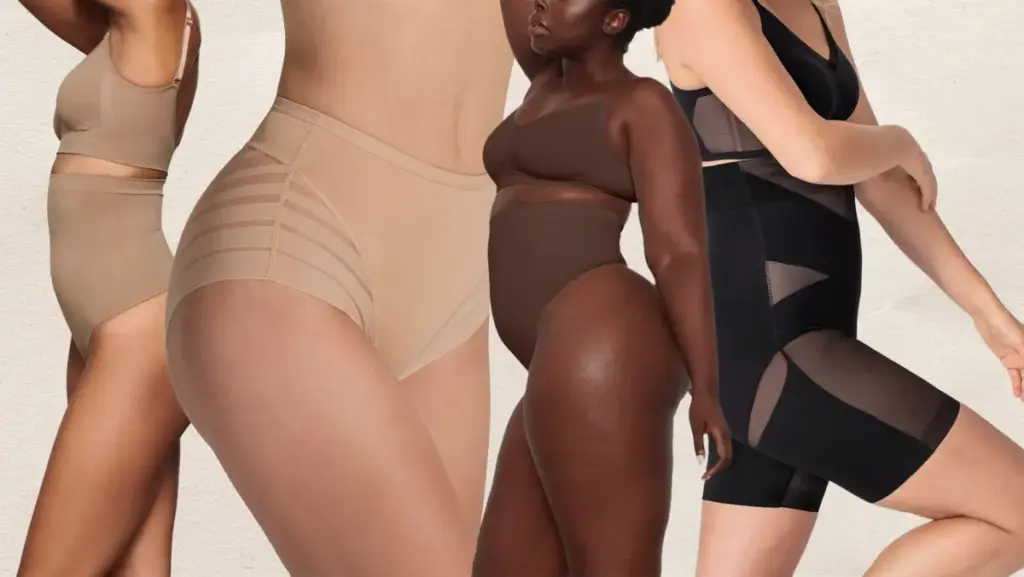
Today, the shapewear market is characterized by data-driven design, radical inclusivity, and specialized compression zoning. Manufacturers utilize anatomical mapping to apply varying levels of pressure across different regions of the garment—offering firmer control across the lower abdomen while maintaining lighter, more flexible tension around the hips and glutes. Furthermore, brands have expanded their size ranges significantly, moving far beyond standard retail sizing to accommodate diverse body shapes and proportions. Consumer feedback mechanisms and rigorous field-testing protocols have become standard practice, ensuring that products perform not just on static mannequins, but during active, real-world usage.
Supporting Context & Metrics: Product Analysis and Comparative Performance
Navigating the crowded shapewear market requires a granular understanding of specific product capabilities, price points, and functional trade-offs. Based on extensive, multi-week evaluations conducted by style editors and product testers, three distinct tummy-control products illustrate the range of options available to consumers today.
1. Wirarpa High-Waist Panties ($20)
- Design & Materials: Constructed primarily from soft, breathable cotton, these briefs are engineered for consumers prioritizing fabric softness and skin sensitivity over aggressive structural transformation. They feature a wide, double-layered waistband that delivers gentle, uniform compression across the midsection.
- Size Range & Inclusivity: One of the standout attributes of this product is its exceptionally broad size range, catering to a diverse spectrum of body types.
- Performance & Tester Feedback: Testers noted that the panties offer a comfortable, supportive baseline suitable for all-day wear. Because they rely on soft cotton rather than heavy-duty synthetic panels, they do not provide the high-level shaping or intensive cinching characteristic of traditional shapewear. Instead, they excel as a comfortable, smoothing base layer for everyday casual wear.
2. Miraclesuit Instant Tummy Tuck Extra-Firm Briefs ($53)
- Design & Materials: Positioned at the higher end of the pricing and performance spectrum, these briefs utilize advanced textile engineering—specifically double front panels and intricate crisscross seaming—to deliver targeted, extra-firm compression.
- Performance & Tester Feedback: Testers identified this model as one of the firmest styles evaluated. The shaping effect is immediate and pronounced, making it particularly effective when worn beneath structured workwear or form-fitting denim. However, the trade-off for such high-level structural control is material rigidity; testers observed that the thicker fabric construction and stiff leg openings can become less comfortable during prolonged, multi-hour wear.
3. Shapermint Essentials All Day Every Day High-Waist Shaper Thong ($23)
- Design & Materials: This ultra-high-rise thong is designed to smooth the entire midsection while eliminating visible panty lines (VPLs) entirely. The high-rise cut extends upward toward the bra line to prevent the dreaded "muffin top" effect often caused by standard mid-rise garments.
- Performance & Tester Feedback: The thong successfully contours the waist and smooths the upper and lower abdomen. However, testers noted specific ergonomic challenges: the garment requires notable physical effort to pull on due to its high-tension weave. Additionally, on individuals with shorter torsos, the ultra-high waistband may extend too far up, occasionally meeting or overlapping with the bra band.
Official Statements and Industry Insights
To contextualize the mechanical and psychological functions of modern shapewear, leading industry executives and brand directors have shared authoritative insights regarding design philosophy and consumer application.
Understanding the Mechanics of Tummy Control
According to Gabrielle Richards, brand director at Shapermint, the fundamental purpose of contemporary tummy-control underwear extends far beyond simple constriction.
"Depending on the style, tummy-control underwear can contour and support the booty, plus shape and smooth the waist and tummy areas of the body," explains Richards.
This multi-directional engineering ensures that garments enhance natural contours rather than artificially flattening the wearer’s silhouette.
The Role of Light Control in Daily Wardrobe
Jane Newman, Chief Design Officer for Hanes Brands, emphasizes that not all shapewear is designed for dramatic transformation. Lighter-control undergarments serve a distinct, highly practical purpose in everyday dressing:
"Lighter-control undies are excellent at acting as a base layer for clothes to seamlessly glide over for a more streamlined appearance."
Newman contrasts this with heavy-duty alternatives, noting that "[s]tyles with ultrafirm control flatten the waist under clingier, more tightly fitted clothing. Your basic undies can do none of these things."
Comprehensive Buying Guide: What to Look For
Choosing the right tummy-control undergarment requires evaluating personal lifestyle needs, wardrobe requirements, and physiological comfort thresholds. Industry experts categorize compression into three distinct tiers:
1. Low Compression (Smoothing)
- Best For: Everyday wear, long workdays, and casual outings.
- Characteristics: Light-control briefs and thongs gently smooth the stomach and hips. They prioritize breathability and flexibility, ensuring seamless integration beneath jeans, leggings, and fluid fabrics without causing fatigue.
2. Medium Compression (Shape-Enhancing)
- Best For: Social events, business-formal attire, and transitional wear.
- Characteristics: This intermediate tier offers noticeable contouring and abdominal support while retaining enough elasticity to allow for comfortable movement over extended periods.
3. High Compression (Sculpting)
- Best For: Structured special-occasion looks, tailored evening wear, and tightly fitted outfits.
- Characteristics: Firmer styles provide maximum waist and stomach shaping. Common configurations include high-waist briefs, shaping shorts, thongs, and full-body bodysuits engineered with multi-panel construction.
Sizing Strategy: Avoiding Common Pitfalls
A widespread misconception among consumers is that sizing down will yield superior shaping results. Industry professionals strongly advise against this practice. Tummy-control underwear should feel snug and supportive—never restrictive, painful, or suffocating.
Shoppers should begin with their standard underwear or pants size, carefully consult the manufacturer’s specific sizing chart, and take precise measurements of their waist and hips. Selecting a garment that is too small drastically increases the likelihood of pinching, fabric bunching, rolling down, and severe physical discomfort over time.
Future Outlook
As material science and textile engineering continue to advance, the future of the shapewear industry points toward hyper-personalization, ecological sustainability, and enhanced physiological adaptability.
Smart Textiles and Thermal Regulation
Future iterations of tummy-control undergarments are expected to incorporate phase-change materials (PCMs) and moisture-wicking smart yarns capable of regulating body temperature. This will eliminate the traditional discomfort associated with synthetic shapewear retention of body heat, making high-compression garments viable for warm-weather climates and active wear.
Sustainable and Biodegradable Fibers
With environmental scrutiny mounting across the fashion and textile sectors, manufacturers are heavily investing in biodegradable elastane alternatives and recycled nylon blends. The next generation of intimate apparel will seek to maintain high tensile strength and compression memory while significantly reducing the carbon footprint associated with petroleum-based synthetic production.
Inclusivity and Anatomical Customization
The industry standard is shifting away from generalized body-shaping molds toward anatomically diverse sizing matrices. Future product development will increasingly utilize 3D body-scanning data to engineer shapewear that accommodates a wider array of human proportions, ensuring that support, comfort, and aesthetic confidence are universally accessible to all consumers.