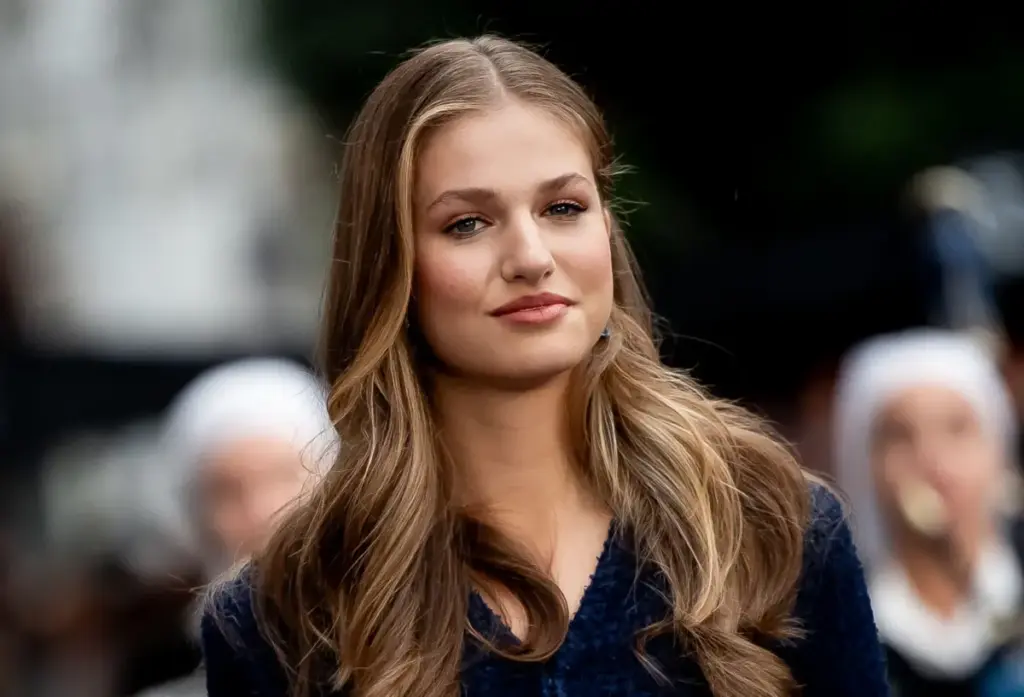
In an era where modern monarchies continuously navigate the delicate balance between ancient traditions and contemporary relevance, few figures command as much global fascination as Princess Leonor of Spain. Born on October 31, 2005—a Halloween baby in Madrid—Leonor de Borbón y Ortiz represents a monumental shift for the Spanish Crown. As the elder daughter of King Felipe VI and Queen Letizia, the 20-year-old crown princess is poised to become Spain’s first reigning queen since Isabella II ruled in the 19th century.
Leonor’s journey to the throne is a study in calculated preparation. From her rigorous, multi-branch military training across Spain’s armed forces to her education at the famed United World College of the Atlantic in Wales—affectionately dubbed "Hippie Hogwarts"—the princess is being sculpted into a modern head of state. Yet, her ascent is not merely a personal milestone; it is a historic anomaly. Spain remains one of the last European monarchies to retain male-preference primogeniture, making Leonor’s very position a subject of deep constitutional interest. This comprehensive report breaks down the lineage, the political landscape, the historic titles, and the rigorous preparation shaping the future Queen of Spain.
Detailed Chronology: From Birth to Heir Apparent
The trajectory of Princess Leonor’s life has been meticulously mapped against the backdrop of European royal history and Spanish constitutional evolution.
The Early Years and Lineage (2005–2014)
Born at Ruber International Hospital in Madrid, Leonor entered the world as an Infanta of Spain. Her heritage bridges two distinct worlds: her father, King Felipe VI, is a direct descendant of the French House of Bourbon, while her mother, Queen Letizia (born Letizia Ortiz Rocasolano), shattered centuries of royal protocol by entering the family as a commoner, a working-class journalist, and a divorcee.
For the first eight years of her life, Leonor occupied a secondary role in the public consciousness, though her status as heir shifted dramatically on June 19, 2014. Following the abdication of her grandfather, King Juan Carlos I—whose reign was marred by late-career scandals that ultimately led to his exile—King Felipe VI ascended the throne. At just eight years old, Leonor became the Princess of Asturias and the heir presumptive to the Spanish Crown.
Reaching Majority and Constitutional Oath (2023)
A critical watershed moment occurred on October 31, 2023, when Leonor celebrated her 18th birthday. In accordance with the Spanish Constitution, reaching legal majority requires the heir to the throne to formally swear allegiance to the charter before the Spanish Congress (Cortes Generales).
Surrounded by her parents and her younger sister, Infanta Sofía, Leonor stood before lawmakers to take the constitutional oath, declaring: "I swear to faithfully carry out my duties, to obey and ensure that the Constitution and the laws are obeyed, and to respect the rights of citizens and the Autonomous Communities, as well as fidelity to the King." This high-profile gala event signaled to both Spain and the international community that the Crown was ushering in a youthful, modern representative open to the interconnected demands of the 21st century.
Military Service and Academic Pursuits (2023–Present)
Because the monarch of Spain constitutionally serves as the Supreme Commander of the Spanish Armed Forces, Leonor’s education extended far beyond traditional academia. Beginning in the fall of 2023, she embarked on a grueling three-year military training program designed to mirror her father’s path.
She began at the General Military Academy in Zaragoza, moving on to the Naval Military Academy in Marín (Pontevedra)—where she trained aboard the historic naval training ship Juan Sebastián de Elcano—and completed her circuit at the General Air and Space Academy in San Javier. Her completion of these rigorous programs earned her accolades, including the Grand Cross of Aeronautical Merit in 2026. Simultaneously, she has balanced her military life with advanced education, having completed her International Baccalaureate in Wales and preparing to commence a bachelor’s degree in political science at Madrid’s Universidad Carlos III.
Supporting Context & Metrics: Navigating Tradition and Modernity
To fully comprehend the significance of Princess Leonor’s position, one must analyze the unique constitutional and historical architecture of the Spanish monarchy.
The Primogeniture Puzzle
While major European monarchies—including Sweden, the Netherlands, Norway, Belgium, Denmark, Luxembourg, and the United Kingdom—have transitioned to absolute primogeniture (where the firstborn child inherits the throne regardless of gender), Spain remains entrenched in male-preference primogeniture.
Under Article 57 of the 1978 Spanish Constitution, male heirs take precedence over female heirs. This explains why King Felipe VI ascended the throne ahead of his older sisters, Infantas Elena and Cristina. Leonor became heir presumptive solely because King Felipe and Queen Letizia did not have a son. Should the royal couple have produced a male heir, Leonor would have been superseded. Political analysts and royal commentators have long speculated that this exact constitutional reality influenced the royal couple’s family planning, ensuring that the direct line of succession remained uninterruptedly female through Leonor.
To permanently alter this dynamic and establish absolute primogeniture for future generations, the Spanish Parliament would need to amend the 1978 Constitution—a notoriously complex political maneuver requiring supermajorities and potentially a national referendum.
Historical Precedents of Queens Regnant
Queen regnants are exceedingly rare in Spanish history. When Leonor ascends the throne, she will be the first woman to rule Spain in her own right since Isabella II, whose tumultuous reign lasted from 1833 to 1868. Before Isabella II, Spain saw the joint reign of Isabella I of Castile and Ferdinand V of Aragon in the late 15th and early 16th centuries—a union that laid the geopolitical foundations of modern Spain—followed by their daughter, Joanna of Castile (commonly known as Juana la Loca or Joanna the Mad), whose sovereign power was largely sidelined by her male relatives.
A Neutral and Symbolic Head of State
It is essential to contextualize the power wielded by the Spanish monarch. Unlike absolute monarchs or executive presidents, the King or Queen of Spain acts as a constitutional head of state whose powers are largely symbolic and moderating. Per Title II of the Spanish Constitution, the Crown embodies the unity and permanence of the nation, remaining strictly neutral and devoid of direct political partisanship or policy-making authority.
Official Statements and Public Voice
Princess Leonor has increasingly stepped into her role as a public orator, utilizing formal addresses to articulate her dedication to the Spanish people. Her speeches highlight a deep awareness of her historic responsibilities and regional ties.
Speaking at the prestigious Princess of Asturias Awards ceremony in 2019, a then-13-year-old Leonor delivered remarks that resonated deeply across the nation:
"It is also the land that gives its name to the title I hold as Heir to the Crown, just as my father, the King, did for so many years. And I do so with a sense of responsibility; I feel deeply honored by it. It is a title that commits me to the dedication and effort of serving Spain and all Spaniards. In my home, the words Spain and Asturias are always linked with the same strength with which history has bound them. That is how I feel in my heart."
Furthermore, upon turning 18 in 2023, Leonor addressed the Spanish citizenry directly during her swearing-in ceremony:
"I ask you to place your trust in me, just as I have placed all my trust in our future, in the future of Spain."
These curated communications reflect a deliberate strategy by the Royal House (Casa Real) to present Leonor as an accessible, deeply patriotic, and thoroughly modern leader capable of bridging regional identities within the Spanish state.
Future Outlook: Challenges and Horizons
As Princess Leonor steps closer to her eventual reign, she faces a landscape defined by both opportunity and distinct institutional challenges.
The Modernization Challenge
The Spanish monarchy under King Felipe VI has fought tirelessly to restore public trust following the financial and personal scandals that plagued the final years of Juan Carlos I’s reign. Transparency, asset declarations, and a slimmed-down royal family have become hallmarks of Felipe’s tenure. Leonor is expected to inherit and expand upon this modernized framework. Her generation—digital natives who value authenticity and social engagement—will expect a monarch who is not only visible during traditional ceremonies but responsive to modern cultural shifts.
Regional Dynamics and Academic Preparation
Spain is a decentralized nation composed of diverse autonomous communities, each with distinct cultural and linguistic identities, such as Catalonia, the Basque Country, and Galicia. Leonor’s mastery of multiple Spanish languages (including Catalan, Galician, and Basque, alongside English) is a strategic necessity for maintaining national unity.
Her upcoming enrollment at Universidad Carlos III to study political science will further equip her with the analytical tools necessary to navigate Spain’s complex parliamentary democracy. As she transitions from rigorous military drills to higher education in the capital, the spotlight will only intensify.
Conclusion
Princess Leonor of Spain is no longer just the promising eldest daughter of the reigning monarchs; she is a tested, title-rich, and constitutionally recognized heir standing on the precipice of history. Whether she eventually assumes the throne amid an unchanging constitutional framework or oversees a modernized transition to absolute primogeniture, Leonor’s reign promises to redefine the Spanish Crown for the 21st century and beyond.