Executive Overview
The contemporary wellness landscape is experiencing a profound identity shift. For decades, the global fitness industry operated on a transactional, utilitarian model: consumers paid a monthly fee for access to physical infrastructure—weights, cardio machines, lap pools, and locker rooms—with the implicit understanding that health and fitness were largely solitary pursuits. Sweat, discipline, and personal transformation were framed as internal struggles waged in isolation.
Today, that paradigm is effectively obsolete.
Driven by shifting post-pandemic consumer behaviors, a compounding global loneliness epidemic, and the cultural blurring lines between lifestyle, entertainment, and physical health, major fitness operators are pivoting toward immersive community programming. The modern gym is no longer viewed simply as a facility for physical exertion; it is increasingly functioning as a primary social hub, a cultural nexus, and a lifestyle brand.
Leading this evolution is Life Time, the Minnesota-headquartered luxury athletic resort chain founded in 1992. Next week, Life Time will formally roll out LT Social, an expansive entertainment initiative designed to anchor the brand within city-specific cultural calendars across the United States. Featuring daytime pool parties, high-profile celebrity DJ sets, culinary experiences, morning recovery sessions, and curated social activations, LT Social represents a major escalation in how large-scale fitness brands intend to retain members and capture disposable income.
This comprehensive report examines the structural forces driving the fitness-entertainment convergence, details the operational mechanics of Life Time’s new initiative, explores the competitive landscape of social-first wellness concepts, and highlights broader industry metrics signaling a permanent transformation in consumer habits.
Detailed Chronology: From Beta Tests to National Rollout
The evolution of Life Time from a traditional big-box luxury gym into an experiential entertainment ecosystem did not happen overnight. It was born out of incremental, iterative beta testing that began quietly following the reopening of the economy post-pandemic.
Phase 1: Identifying the Shift (2021–2023)
As fitness facilities reopened their doors in the wake of COVID-19-related closures, executives at Life Time observed an unusual behavioral trend among their membership base. While traditional group fitness classes and individual training sessions rebounded steadily, informal, community-driven gatherings—such as ad-hoc group runs, impromptu courtyard meetups, and weekend pool parties—began achieving maximum capacity almost instantly. Waitlists for these events swelled, signaling a deeper, latent demand that extended far beyond physical fitness: members were desperately seeking human connection.
Michelle Duffy Smith, VP of marketing, retail, and events at Life Time, noted in an interview with industry publication Glossy that this marriage of fitness and socialization was occurring organically. Members were treating Life Time locations not merely as places to exercise, but as primary social destinations where they could coordinate schedules, build personal relationships, and spend leisure time.
Phase 2: Refining the Playbook (2023–Summer 2025)
Encouraged by high participation rates—with previous rooftop pool parties regularly drawing upwards of 800 attendees per market—Life Time began experimenting with more structured cultural programming. The company tested the integration of live music, food and beverage partnerships, and recovery-focused morning-after activations. These tests proved that consumers, particularly millennials and early Gen Xers with disposable income, were willing to engage with the brand across multiple dayparts, shifting their weekend routines to center around athletic clubs.
Phase 3: The Formal Launch of LT Social (September 2025)
Beginning next week, Life Time will officially consolidate, formalize, and scale these efforts under the banner of LT Social. Rather than treating entertainment as an ad-hoc perk, Life Time is positioning LT Social as a core operational pillar. The program will deploy national-level programming strategically aligned with major cultural moments in key metropolitan hubs across the United States.
+-------------------------------------------------------------------+
                  THE EVOLUTION OF LIFE TIME'S STRATEGY
+-------------------------------------------------------------------+
  [Transactional Fitness]  --->  [Organic Social Testing]  --->  [LT Social Rollout]
  - Focus on equipment           - Ad-hoc group runs            - National cultural alignment
  - Solitary workouts            - Pool party waitlists         - Celebrity DJ sets & recovery
  - Functional utility           - High member demand           - Multi-daypart engagement
+-------------------------------------------------------------------+
Supporting Context & Metrics: The Loneliness Epidemic and the Sports Legacy
To understand why luxury gym chains are heavily investing in entertainment and social infrastructure, one must examine the macroeconomic and sociological forces currently shaping consumer behavior.
The Loneliness Epidemic and Social Wellness
The global health crisis of the early 2020s accelerated a psychological shift that sociologists have termed a "loneliness epidemic." According to landmark data from a 2024 Harvard study, approximately one in five survey respondents reported experiencing serious, persistent feelings of loneliness. Among adults aged 30 to 44—the core demographic of many luxury gym chains—an alarming 29% stated that they felt "frequently" or "always" lonely.
This deficit in authentic community infrastructure has created a market vacuum. Traditional nightlife spaces, such as nightclubs and late-night bars, have seen declining engagement among wellness-focused demographics who prioritize sleep hygiene, longevity, and physical health. Consequently, consumers are seeking alternative spaces that combine health optimization with vibrant social interaction.
The Rise of Social-First Wellness Concepts
Los Angeles has served as the incubator for this movement, pioneering a wave of social wellness clubs designed from the ground up to combat isolation while promoting self-care.
- Heimat: Opened in 2022 to immense fanfare, this social-first, members-only club in Southern California features a rooftop pool, a full-service restaurant, boutique fitness studios, co-working spaces, and a robust social calendar.
- Remedy Place: Positioned as a "social self-care" club, Remedy Place reimagines wellness treatments—such as infrared saunas and ice baths—as communal, highly shareable group activities.
- Love Life: Founded by a former co-founder of Whole Foods, this concept merges community, longevity, and functional fitness into a single cohesive retail footprint.
However, while these independent operators have captured local imagination, few have successfully scaled nationally. This leaves legacy operators like Life Time—with nearly 190 massive locations across the U.S.—uniquely positioned to industrialize social wellness on a national scale.
The E.l.f. Beauty & Parity Study: Youth Sports and Leadership
While adult socialization is driving current gym strategies, foundational data underscores the lifelong impact of athletic participation. A comprehensive study commissioned by conglomerate E.l.f. Beauty, conducted in partnership with women’s sports consultancy firm Parity, surveyed 9,500 working women across the United States, Canada, the United Kingdom, and Germany.
The findings illuminate a direct correlation between athletic engagement and professional success:
- Women who played sports for at least three years during primary or secondary school were 50% more likely to hold leadership roles in the workplace.
- They were 37% more likely to actively aspire to senior executive positions.
- They were approximately 25% more likely to have successfully negotiated their salaries.
These metrics highlight why corporate wellness and athletic branding are increasingly intertwined with leadership, empowerment, and community building.
Official Statements and Operational Blueprint: Inside the New York City Launch
Life Time’s operational strategy for LT Social relies heavily on precision timing and destination marketing. Rather than deploying random events on quiet weekends, the company targets weekends when specific cities are already experiencing high cultural energy and tourism influxes.
The New York City Flagship Activation
The inaugural weekend for LT Social kicks off in New York City on September 12–13, strategically coinciding with the finals of the U.S. Open and the height of New York Fashion Week.
"We’re not going to show up with the LT Social on a random weekend in March," explains Michelle Duffy Smith, VP of marketing, retail and events at Life Time. "We’re going to go to a particular city because the city is buzzing on that weekend in March… [A client] may already be traveling to Phoenix or New York for a particular weekend or event, and this becomes the thing you can do beyond attending a sporting event or a fashion week party. We are like the other hub for you."
Breakdown of the NYC Kickoff Itinerary:
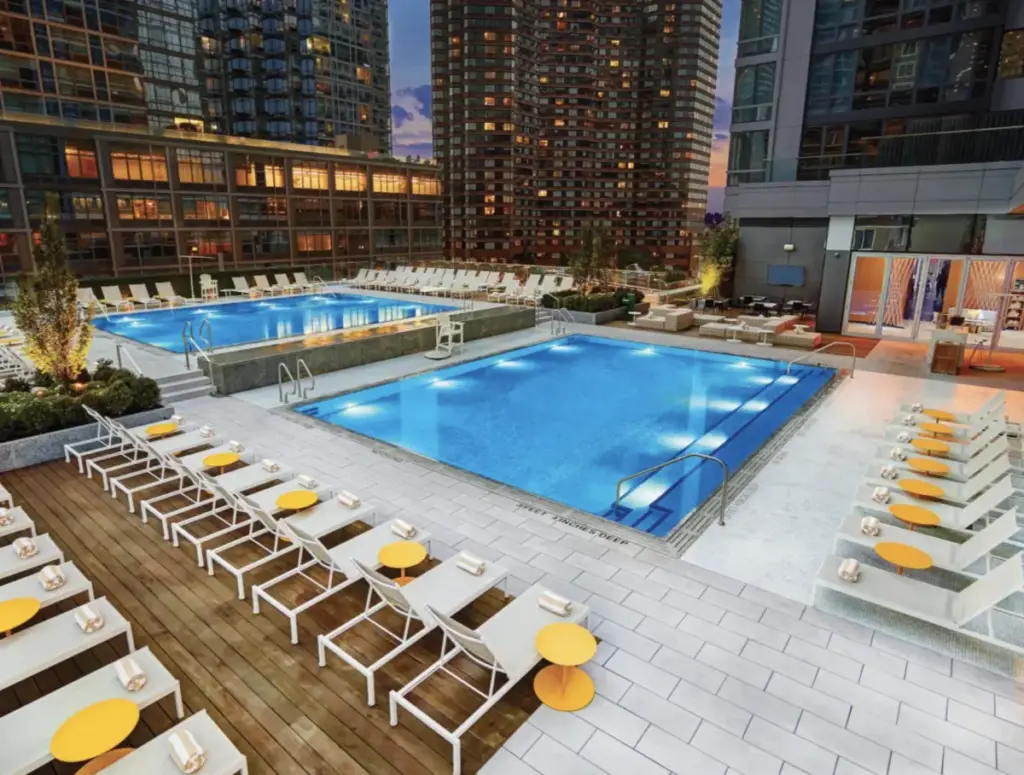
- Saturday Night (Sky Location, Hell’s Kitchen): A rooftop social event featuring celebrity DJ sets, live performances, gourmet food and beverage pairings, red-carpet step-and-repeat photography opportunities, and extended on-site childcare to accommodate working parents.
- Sunday Morning (Recovery Phase): Commencing at 7:00 AM, the programming shifts to a "night after done differently" wellness concept. It features targeted food and beverage offerings, bodywork treatments including massages and mini-facials, and a dedicated recovery lounge hosted in partnership with Hyperice recovery tools.
- Sunday Midday (The Transition): At 11:30 AM, the atmosphere undergoes a deliberate transition from rest and relaxation back to high-energy socialization, culminating in a rooftop pool party.
Economics and Member Access
Significantly, tickets for LT Social events are entirely complimentary for Life Time members and their designated guests, functioning primarily as a high-value customer retention tool. With individual events drawing upwards of 800 participants per market in past tests—and immediate waitlists forming for the NYC rollout—the initiative successfully drives engagement without alienating its core membership base through prohibitive separate ticketing fees. Following New York, the program is slated to expand to Phoenix, with additional national markets to follow.
Future Outlook: The Convergence of Beauty, Fashion, and Fitness
The launch of LT Social is emblematic of a broader commercial convergence taking place across the wellness, beauty, and fashion sectors. As consumers increasingly view wellness as a holistic lifestyle rather than a segmented activity, legacy boundaries between industries are evaporating.
Key Industry Trends to Watch:
- Fashion Brands Embracing Movement: High-end fashion labels and retail concepts are increasingly hosting pop-up Pilates classes, wellness breakfasts, and running clubs to engage consumers organically, recognizing that experiential marketing outperforms traditional advertising.
- The Beauty-to-Entertainment Blueprint: Following successful playbooks established by beauty brands like E.l.f. Beauty and Dr. Squatch—which utilized comedy partnerships, immersive content, and unexpected cross-industry collaborations—fitness operators are adopting entertainment-first marketing strategies.
- The Expansion of Big-Box Hybridization: Traditional big-box gyms are aggressively integrating boutique fitness concepts, social lounges, and co-working amenities under one roof to cater to consumers who demand multi-purpose lifestyle destinations.
As Michelle Duffy Smith summarized: "Wellness is how you feel, both inside and out, and so I think this explosion within the industry is on a really great trajectory to continue. People are looking to build connections, to laugh and have fun… This is just the start."
As LT Social rolls out nationwide through the remainder of 2025 and beyond, it will serve as a bellwether for the fitness industry. If successful, it will permanently establish that the future of physical wellness lies not just in how much weight an individual can lift, but in how deeply they can connect with a community.