Executive Overview
In the rapidly evolving landscape of digital media, few success stories have shone as brightly as Good Good. Boasting a massive following of 2.1 million subscribers on YouTube and pulling in roughly 15 million views a month, the channel was the undisputed heavyweight of online golf entertainment. More than just a digital-native brand, Good Good had successfully breached the fortress of legacy golf institutions, forging partnerships with major tournament organizers and mainstream television networks.
However, a single promotional misstep has brought this multi-million-dollar empire to its knees.
What was intended to be a cinematic product launch for an official co-branded driver with equipment giant Callaway instead ignited a firestorm of controversy. The advertisement—featuring Good Good co-founder Garrett Clark aggressively shoving former pro golfer and influencer Alexis Miestowski to the ground—was universally condemned as promoting violence against women.
The subsequent fallout was swift, cascading, and catastrophic. Within days, Callaway dissolved its lucrative three-year partnership; retail golf shops pulled Good Good merchandise from their shelves; the collective withdrew from a monumental $6 million PGA Tour sponsorship; and the Golf Channel unceremoniously canceled Big Break x Good Good, a fully filmed reality television reboot meant to bridge the gap between digital creators and traditional broadcast media.
In the wake of the crisis, Good Good CEO Matt Kendrick has stepped forward to address the disaster, admitting that he never previewed the advertisement before it went live, confirming that personnel responsible have been terminated, and engaging in a very public war of words with their former corporate partners. This comprehensive report examines the anatomy of the controversy, the staggering business fallout, the cultural friction between internet content creators and traditional sports, and what the future holds for a brand fighting for its survival.
Detailed Chronology: From Concept to Catastrophe
The Genesis of a Misguided Vision
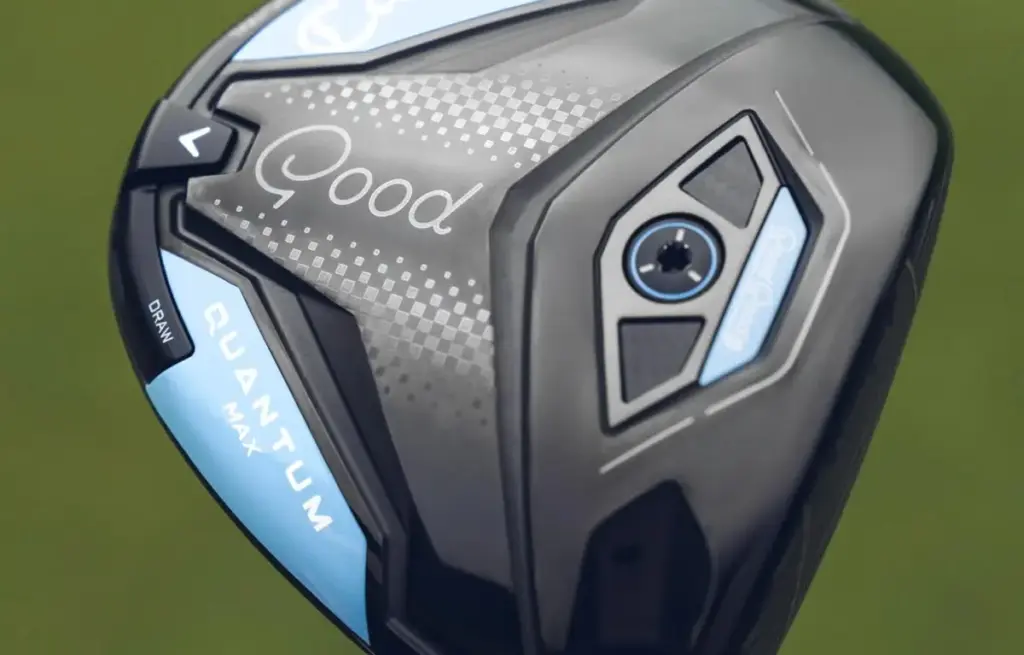
To understand how a promotional campaign could implode so completely, one must examine the creative rationale behind the advertisement. Good Good had partnered with Callaway to manufacture and distribute an official, custom-branded driver—a major milestone for the digital collective, signaling their transition from YouTube entertainers to legitimate golf equipment manufacturers.
To promote the launch, the Good Good production team devised a high-concept commercial. According to co-founder Garrett Clark, the premise was directly inspired by Curry Barker’s blockbuster psychological thriller Obsession. The intended narrative trope was akin to Stephen King’s Christine—a dark, satirical look at how a piece of equipment could possess its owner to an obsessive, fanatical degree, making them fiercely and irrationally protective of the object.
In the execution of this concept, Clark is shown holding the new Callaway driver. Alexis Miestowski, a fellow golfer and influencer, reaches out to touch or examine the club. Without warning, Clark violently shoves Miestowski to the ground, looms over her menacingly, and barks a warning: “Never touch my driver.”
The Backlash and Immediate Deletion
The ad was produced by Good Good and, crucially, formally approved by Callaway’s marketing teams before distribution. Upon its release across social media channels, however, the reception was immediate and unforgiving.
Viewers failed to parse the cinematic reference to Obsession or Christine. Instead, thousands of comments flooded in pointing out a glaring, uncomfortable reality: the ad depicted a male influencer physically assaulting a female athlete and contemporary, using intimidation and physical force to assert dominance. In an era hyper-sensitive to issues of violence against women and workplace safety, the optics were indefensible.
Recognizing the severity of the backlash, Good Good quickly scrubbed the video from all their social media platforms. But the digital footprint proved indelible. Screen recordings and outrage threads had already spread across X (formerly Twitter), Reddit, and sports news outlets, sealing the fate of the campaign before the weekend even began.
The Corporate Fallout and Retaliation
With the ad deleted, the corporate entities involved moved instantly to distance themselves from the PR nightmare.
Callaway, which had originally signed a lucrative three-year partnership with the collective, abruptly terminated the deal. In an attempt to soothe public sentiment, Callaway reportedly launched a massive $1 million consumer giveaway—a move that would later draw the ire of Good Good’s leadership.
The shockwaves quickly rippled through the broader golf ecosystem. Regional brick-and-mortar golf shops and specialty merchants began pulling Good Good-branded apparel and equipment from their retail floors. Recognizing that their brand toxicity had made corporate alignment impossible, Good Good voluntarily pulled out of a splashy, highly anticipated $6 million sponsorship agreement with the PGA Tour.
Perhaps the most devastating professional blow came from the television sector. The Golf Channel officially canceled Big Break x Good Good, a fully produced reality television season that was meant to serve as a modern reboot of the network’s iconic franchise, featuring the Good Good members as the starring cast. Years of production work and television ambitions evaporated in a matter of 72 hours.
Supporting Context & Metrics: The Scale of Good Good
To fully grasp the magnitude of this collapse, one must examine the financial and cultural gravity of Good Good within the sports entertainment industry.
| Metric / Asset | Detail / Valuation | Impact of Controversy |
|---|---|---|
| YouTube Subscribers | 2.1 Million | Retained, but facing engagement trust deficits. |
| Monthly Viewership | ~15 Million Views | Subject to algorithmic and audience volatility. |
| Callaway Partnership | 3-Year Exclusive Deal | Completely Dissolved |
| PGA Tour Sponsorship | $6 Million Valuation | Voluntarily Withdrawn |
| The Golf Channel | Big Break x Good Good Series | Canceled Post-Production |
| Retail Distribution | Nationwide Golf Shops | Merchandise pulled from shelves |
Founded in 2020 by Matt Kendrick, Garrett Clark, Stephen Castaneda, and Matt Scharff, Good Good pioneered the genre of casual, high-production-value golf vlogs. They transformed the traditionally stuffy, hyper-formal sport of golf into an approachable, highly entertaining spectator sport for younger demographics.
Their business model extended far beyond ad revenue. Good Good established a thriving apparel line, equipment partnerships, and direct-to-consumer sales operations. By crossing the chasm from digital screens to legacy institutions—such as teeing up with the PGA Tour and collaborating with multi-national equipment manufacturers like Callaway—they were positioned as the vanguard of modern golf media.
The abrupt termination of these institutional bridges highlights the fragile nature of influencer-corporate partnerships. When creators scale to the point of corporate integration, they are suddenly held to the rigorous compliance, PR management, and risk-aversion standards of publicly traded multi-nationals. When a scandal hits, legacy brands do not weather the storm; they cut the cord.
Official Statements and the War of Words
As the dust began to settle, the key stakeholders broke their silence, revealing deep finger-pointing and starkly contrasting strategies for damage control.
CEO Matt Kendrick Goes "Nuclear" on Social Media
While corporate PR channels usually mandate scripted, sterile apologies, Good Good CEO Matt Kendrick pulled no punches when venting his frustration on X. In a blistering post that shocked industry observers, Kendrick accused Callaway of corporate cowardice:
"Interesting that @CallawayGolf asks us to make an ad then approves it then asks us to take the fall then drops us in a coordinated media blitz and covers it up by giving a million dollars away thinking everyone will be ok with it. 30 for 39 will be legendary."
Kendrick’s core grievance—one echoed by many digital creators dealing with legacy corporations—is that major brands are eager to exploit the edgy, risk-taking, authentic nature of internet influencers when times are good, but instantly throw those creators under the bus the moment public pressure mounts, despite having signed off on the creative content beforehand.
The Barstool Sports Perspective
The controversy also drew commentary from the broader digital media ecosystem. Dan Katz, a prominent personality at Barstool Sports (known widely as "Big Cat"), weighed in on the situation via X, dismissing the backlash as an "outrage fest."
"The sponsors with no backbone pull out and then everyone moves on to the next thing and you guys rebuild and probably come back stronger long term," Katz posted.
Kendrick enthusiastically leaned into this narrative, responding, "I’m with you on that. We’re ready for the next phase."
The Front Office Sports Interview: A Shift to Damage Control
In a subsequent, more polished interview with Front Office Sports, Kendrick adopted a much more conciliatory tone, focusing on accountability and corporate restructuring.
Kendrick dropped a bombshell revelation regarding the production pipeline: he had never seen the advertisement before it was published to social media. For a CEO, admitting to a blind spot of this magnitude highlights significant structural flaws in internal review processes.
To rectify this, Kendrick confirmed that Good Good has officially "removed people responsible" for the disastrous ad campaign, though he declined to explicitly clarify whether co-founder Garrett Clark—the actor in the scene—was among those dismissed.
Furthermore, Kendrick offered a formalized apology:
"At the end of the day, we wanted to make sure that everyone knew that we understood that we made a mistake, and we weren’t going to deny that. That’s what we wanted to have portrayed."
Kendrick also addressed the organizational changes required to ensure such an oversight never happens again:
"This gave us a good opportunity to really reflect on what all it is that we need to do inside of our organization to be successful for the long run. And I think we’re making the right steps to do that… We’ve realized we have to put better processes in place and we’re doing that. We’re looking at the right people in the right places."
Future Outlook: Can YouTube Golf and Legacy Institutions Coexist?
The collapse of the Good Good-Callaway partnership and the cancellation of their media projects leaves a profound question hanging over the sports entertainment industry: What does this mean for the future of creator-led sports media?
1. Increased Corporate Risk Aversion
For years, traditional sports organizations—from the PGA Tour to major broadcast networks like the Golf Channel—have desperately courted internet creators in an effort to capture younger, highly engaged digital audiences. Good Good was the gold standard of this crossover movement.
Following this incident, legacy institutions are almost certain to exercise extreme caution. Legal departments and corporate compliance teams will likely demand unprecedented editorial control over creator-led content, vetting every script, storyboard, and social media post weeks in advance. This friction may stifle the very organic, risk-taking creativity that made these creators popular in the first place.
2. The Resilience of Direct-to-Consumer Digital Brands
While losing a $6 million PGA Tour sponsorship and a Callaway distribution deal is an undeniable financial blow, Good Good’s primary engine remains intact: their core audience of 2.1 million subscribers.
Unlike traditional athletes or Hollywood stars whose livelihoods depend entirely on studio contracts or corporate sponsors, digital creators own their distribution channels. As Barstool Sports’ Dan Katz pointed out, audiences online often have short memories, and digital communities are frequently sympathetic to creators who feel wronged by corporate entities. If Good Good can successfully pivot inward, refocus on their core YouTube vlogs, and rebuild their merchandise operations independently, they may weather the storm.
3. Internal Cultural Reform at Good Good
Ultimately, the crisis exposed the growing pains of a YouTube channel that scaled into a multi-million-dollar corporation faster than its internal infrastructure could handle. A CEO not seeing a major commercial before it drops, combined with a tone-deaf creative pitch that trivialized physical aggression, points to a lack of professional oversight.
Whether Kendrick’s promise of "better processes" and "the right people in the right places" will be enough to restore institutional trust remains to be seen. For now, Good Good has transitioned from the undisputed darling of modern golf to a cautionary tale of what happens when edgy digital humor collides head-on with the unforgiving realities of global corporate PR.