Executive Overview
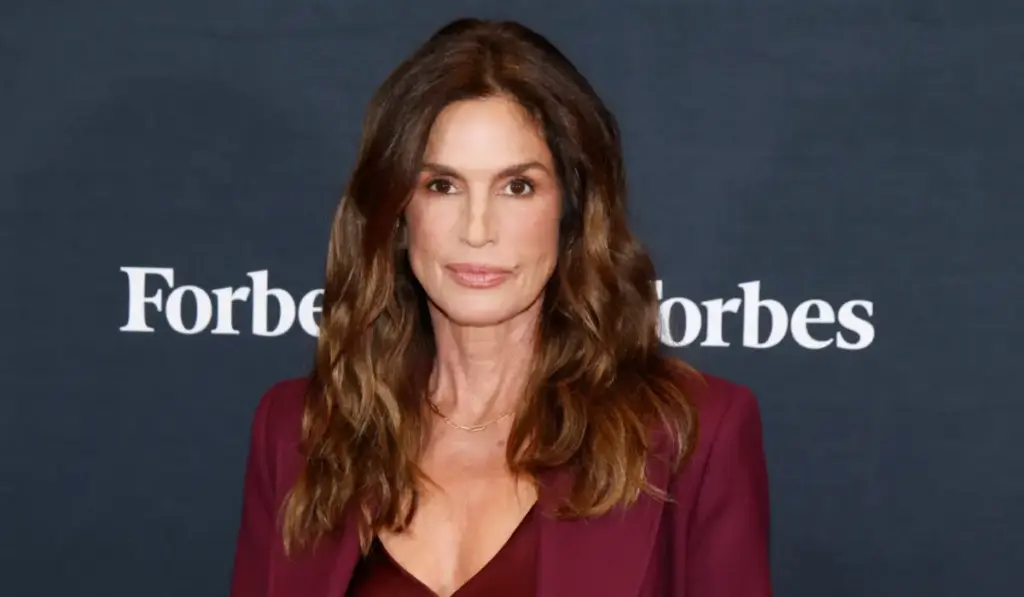
New York Fashion Week (NYFW) has always been a high-octane collision of art, commerce, and relentless pacing, but the arrival of supermodel icon Cindy Crawford invariably anchors the media storm. Amid a whirlwind itinerary that included prominent morning show television appearances and an address at the high-powered Forbes Power Women’s Summit—navigated, true to form, through the gridlock of midtown Manhattan traffic—Crawford carved out space for a deeply personal, intimate conversation.
Rather than focusing exclusively on the ephemeral trends of the runway, Crawford took the stage for a panel discussion representing Upneeq (oxymetazoline hydrochloride ophthalmic solution) 0.1%, the leading prescription eye drop designed for adults dealing with low-lying eyelids, for which she serves as the official brand spokesperson.
The ensuing dialogue went far beyond the parameters of a standard corporate sponsorship. Instead, it blossomed into a masterclass on cultural longevity, ’90s nostalgia, the evolution of the beauty industry, and the radical luxury of personal boundaries. For an industry famously obsessed with youth, Crawford’s reflections offer a refreshing blueprint for aging with intention, defining power not by industry status, but by the ultimate luxury: the freedom of choice.
Detailed Chronology: A Day in the Life of a Supermodel in Motion
To understand Cindy Crawford’s enduring relevance, one must examine the sheer logistical marathon of her week during New York Fashion Week. The modern fashion landscape demands a multifaceted presence that spans broadcast media, digital touchpoints, live experiential events, and high-stakes advocacy.
The Morning Broadcast Circuit
The day commenced at dawn, with call times for national morning news broadcasts. In these segments, Crawford reflected on her decades-long relationship with fashion, discussing how her role has transitioned from a face on the cover to a seasoned entrepreneur and cultural touchstone. Despite decades under the international microscope, her poise remained entirely unruffled, setting a measured tone for what would prove to be an exhaustive day.
Navigating the Midtown Gridlock to the Forbes Summit
Following her broadcast commitments, Crawford transitioned directly into the corporate-philanthropic sphere with an appearance at the Forbes Power Women’s Summit. Transported through the notorious bottleneck of midtown Manhattan traffic—a universal equalizer for even the world’s most recognized faces—she arrived ready to dissect female leadership, economic autonomy, and the shifting paradigms of corporate power.
The Upneeq Intimate Panel
Later in the day, the pace shifted from the macro environment of global summits to a more intimate panel discussion centered around beauty, wellness, and self-care. Serving as the spokesperson for Upneeq, Crawford addressed the nuance of targeted cosmetic interventions that enhance natural beauty without altering identity. The prescription eye drop, which treats acquired blepharoptosis (low-lying eyelids), aligns with Crawford’s broader philosophy: addressing minor, specific frustrations to feel more alert, vibrant, and aligned on the outside with how one feels on the inside.
Supporting Context & Metrics: The Evolution of the Supermodel Icon
The Economic and Cultural Weight of the ’90s Supermodel
Crawford’s reflections on the 1990s—the golden era that cemented her status alongside titans like Naomi Campbell, Christy Turlington, and Linda Evangelista—arrive at a time of profound cultural retrospection. Gen Z and millennial consumers have fueled a massive resurgence in ’90s minimalism, grunge, and supermodel lore. Documentaries, archival runway footage, and vintage campaigns have transformed the era into mythos.
From an economic standpoint, the ’90s supermodel was an enterprise. Crawford was among the first to bridge the gap between high fashion and mass-market commercial viability, paving the way for the influencer economy we see today. Her candid delight in having experienced that decade highlights a unique professional vantage point: she lived through the apex of traditional print media and has successfully navigated the turbulent digital migration of the 21st century.
The Beauty Industry and the 60-Year-Old Consumer
The beauty and wellness sector has undergone a seismic demographic shift. For decades, marketing strategies were hyper-focused on anti-aging narratives targeted exclusively at women in their 20s and 30s trying to stave off the inevitable. Today, brands are recognizing the immense purchasing power and cultural influence of women aged 50, 60, and beyond.
- Market research indicates that women over 50 represent one of the fastest-growing and most economically potent segments of the beauty consumer base.
- Brands that fail to authentically represent mature consumers are increasingly losing market share to agile, inclusive lines—such as Crawford’s own Meaningful Beauty—that celebrate proactive, holistic skincare rather than panicked correction.
Crawford’s observations on this shift underscore a fundamental business reality: inclusivity is no longer just a buzzword; it is a commercial necessity. When magazines and luxury houses design campaigns that mirror a 60-year-old consumer base, they tap into an audience characterized by disposable income, brand loyalty, and refined aesthetic standards.
Official Statements & Personal Philosophies
Crawford’s panel remarks provided rare, unvarnished insight into her current mindset. Below are the core pillars of her philosophy as articulated during her New York engagements:
On the Golden Era of the ’90s
"I am so lucky I got to experience the ’90s! I love it! It was one of the golden times. And now, of course, the young people are obsessed with that time."
Crawford acknowledges the unique alchemy of the decade—a period defined by supermodel ubiquity, major artistic collaborations among photographers like Herb Ritts and Peter Lindbergh, and a palpable cultural optimism. Rather than viewing the current generation’s obsession with detachment, she embraces it as a testament to the enduring impact of that era’s creative output.
On Aging Without Apology
"The more I try to be authentic and true to myself, the better I feel. I’m not trying to be 60 looking 30—if I could, maybe I would, but I am all about embracing who I am. I think magazines and brands have also realized their audience is 60-year-old women. When we talk about exclusivity, that’s all part of it."
In an industry obsessed with halting the clock, Crawford’s pragmatism is revolutionary. She rejects the exhausting performative anxiety of trying to recapture her twenties. Instead, she anchors her self-worth in authenticity, accepting the physical evolution of her body and face while maintaining rigorous self-care practices.
On Redefining Power at 60
"Power now for me is about having choices. That is the big flex. The more I can set up my life where I have the choice to spend time with the people I want to and do the things I want to—that is what gives me power at 60."
This statement marks a stark departure from how power is conventionally defined in corporate or celebrity circles. For Crawford, power is no longer about maintaining dominance on a magazine cover or securing a multi-million-dollar global campaign; it is about absolute sovereignty over her calendar, her energy, and her boundaries.
On the Sacred Boundaries of Her Morning Routine
To understand Crawford’s outward equilibrium is to examine her fiercely guarded morning rituals. Long before the demands of New York Fashion Week or corporate partnerships intrude, Crawford establishes a strict buffer between her internal world and external chaos.
"I have a very intentional routine. I do not look at any texts or any emails when I first wake up. I have to be intentional with that, and I control the incoming for the first 30 minutes of my day. I do a Bible app, my Meaningful Beauty gua sha and oil, I do red light for my hair, I walk outside, I go on the grass. I spend the first half hour feeding myself. Only once I have my cup of coffee do I start allowing the outside in. I take care of myself before I let any of that in."
This regimen serves as a physical and mental grounding technique. By utilizing targeted wellness tools—such as facial massage with a gua sha tool, targeted red-light therapy for hair health, and tactile connection with nature by walking barefoot on the grass—she centers her nervous system before engaging with the relentless demands of the digital age.
Future Outlook: The Next Chapter for Cindy Crawford
As Cindy Crawford looks toward the future, her trajectory serves as a blueprint for modern longevity. The traditional trajectory for a fashion model once involved an inevitable fading into obscurity once youth waned. Crawford, alongside contemporaries like Cindy, Naomi, and Christy, shattered that paradigm decades ago by transforming their names into enduring global brands.
However, her current phase goes beyond mere business empire-building. It is an exploration of grace, autonomy, and intentional living. By lending her voice to products like Upneeq and continuing to innovate within her own beauty lines, she demonstrates that self-care in later life is not about turning back the clock, but about optimizing one’s daily experience of comfort and confidence.
As the fashion industry continues to grapple with its inclusivity metrics and ageism, leaders like Crawford are forcing a permanent cultural recalibration. The message from midtown Manhattan this Fashion Week was clear: the ultimate status symbol isn’t a front-row seat or a vintage archive look—it is the unwavering power of choice, protected by boundaries and anchored in self-respect.