In the season-three premiere of Euphoria, an exhausted Rue (played by Zendaya) accepts a mug of raw cow’s milk on a southwestern ranch, slurping it down and declaring it the “best f*cking milk I’ve ever had.” The moment is transformative. The milk is so rich and comforting that Rue momentarily romanticizes the agrarian lifestyle, brushing past the community’s traditionalist aesthetic and ideological isolationism. It is a cinematic illustration of a cultural truth: a fresh, cold glass of milk can evoke strength, ground a person in a lost sense of peace, and manufacture nostalgia for a simpler existence.
Now, the beauty and wellness industries are asking a parallel question: Can a milky perfume do the exact same thing?
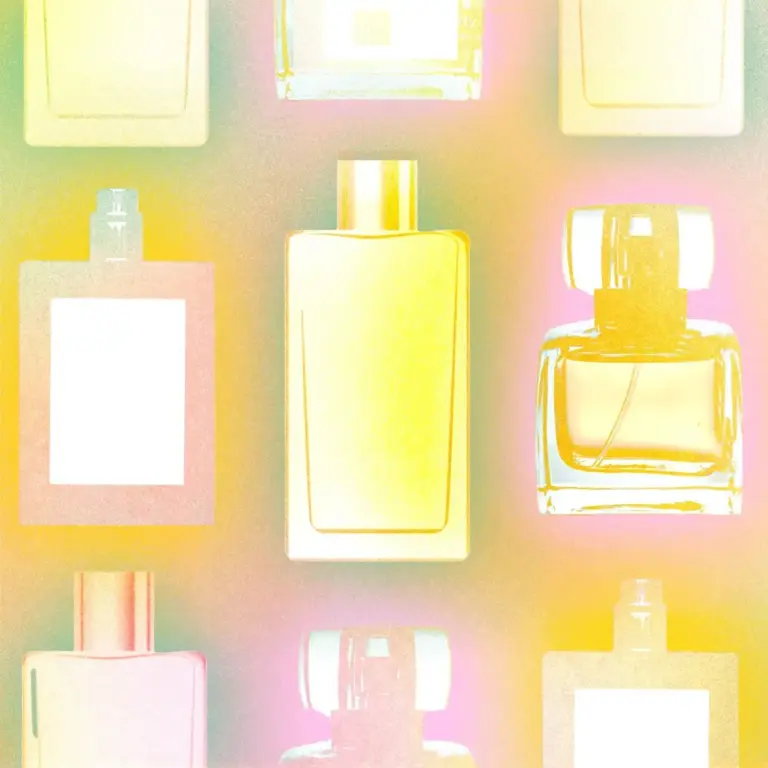
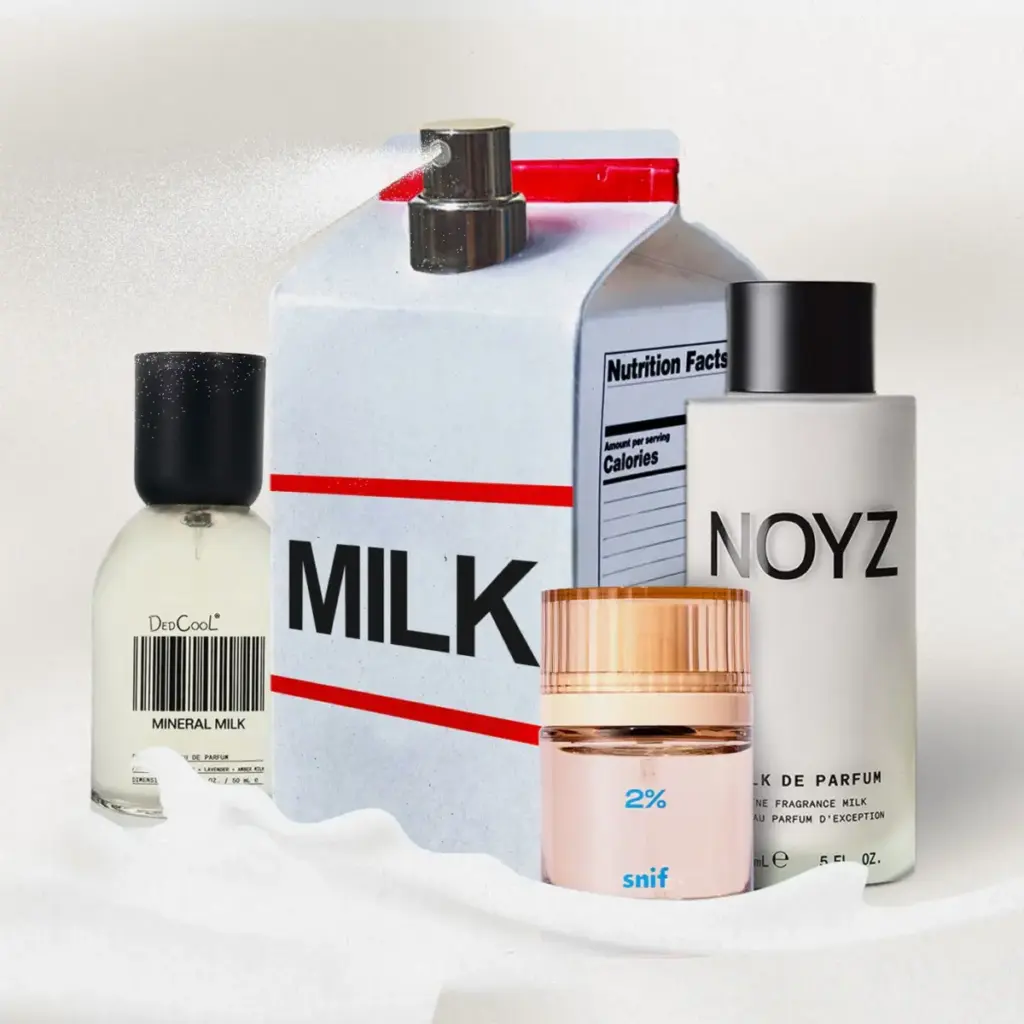
Over the past decade, milk has transitioned from a dietary staple to a ubiquitous beauty and lifestyle motif. From skincare lines and trending hair treatments to a booming category of lactonic fragrances, the dairy-inspired aesthetic has captured the collective imagination. Brands like DedCool, Commodity, Snif, and Noyz have built empires—or expanded their portfolios—on the backs of notes that evoke skin, cream, and cereal bowls.
Yet, this explosion of milk-themed products does not exist in a vacuum. It arrives precisely at the intersection of a complex cultural zeitgeist defined by "proteinmaxxing," the widespread adoption of GLP-1 weight-loss medications, a renewed socio-political fascination with "tradwife" aesthetics, and a deep-seated craving for comfort amid global economic and political uncertainty. Whether consumers are looking for unpasteurized products championed by political figures or seeking tactile, micro-luxury comfort through an eau de parfum, "milk" has become the defining conceptual metaphor of the modern wellness space.
Detailed Chronology: The Evolution of the Milk Trend
To understand how milk conquered the fragrance counter, one must trace its steady creep into the broader beauty market over the past ten years.
2016–2020: The Skincare Foundation
The modern obsession with milk in beauty traces its roots back to 2016, a watershed year that saw the simultaneous debuts of Glossier’s cult-favorite Milky Jelly Cleanser and Milk Makeup. These brands tapped into a minimalist ethos, utilizing "milk" as a linguistic shorthand for hydration, gentleness, and a dewy, non-processed look. Soon, the market was flooded with hair milks, milky toners, and hydrating mists, setting a tactile precedent for consumers. By the time the COVID-19 pandemic hit in early 2020, beauty routines shifted inward. As lipstick sales plummeted due to mask mandates and lockdowns, fragrance and skincare categories surged. Consumers sought tactile comforts and psychological escapes, creating a fertile environment for innovation.
2020: DedCool and the Fragrance Shift
In 2020, DedCool launched its signature "Milk" perfume. Conceptualized years prior as a passion project by founder Carina Chaz, the scent was designed to sit intimately against the skin. It arrived at the exact moment the perfume boom took off, capitalizing on a growing consumer appetite for skin scents—fragrances that blur the line between personal chemistry and synthetic notes. When the initial batch of a thousand units sold out instantly, it proved that the market was hungry for something soft, non-invasive, and universally wearable.
2024–2026: The Lactonic Explosion
The years 2024 through 2026 marked an inflection point for the milk trend across multiple industries. In the fragrance sector, a wave of competitors rushed to claim territory. Commodity expanded its line with Milk and Milk Orchid; The Nue Co. introduced First Milk; Snif debuted 2%, a sweet cereal-milk fragrance styled after iconic ’90s marketing tropes; and indie labels like Noyz introduced Mylk de Parfum formats that combined liquid skin scents with hydrating visual concepts. Concurrently, the dairy industry experienced a historic cultural resurgence, marked by a rise in whole-milk consumption and a fierce political and social fixation on raw milk, protein diets, and traditional homesteading aesthetics.
Supporting Context & Metrics: Dairy, Proteinmaxxing, and the Wellness Paradox
The milky perfume boom is mirrored by significant shifts in the agricultural and dietary landscapes. We are living through an era dominated by "proteinmaxxing"—the obsessive pursuit of high protein intake relative to calorie consumption. Simultaneously, the rise of GLP-1 receptor agonists (such as Ozempic and Wegovy) has fundamentally altered dietary habits. By 2025, an estimated 12% of U.S. adults were taking GLP-1 medications for weight loss or diabetes management. Nutritionists frequently emphasize high-protein diets, healthy fats, and minimal processing to maximize the efficacy of these treatments, pushing consumers back toward traditional, nutrient-dense foods.
This nutritional pivot has breathed new life into the U.S. dairy industry. After decades of declining market share in the face of plant-based milk alternatives (oat, almond, soy), 2024 recorded the first significant increase in whole-milk consumption in years—only the second such increase since the 1970s, according to The New York Times.
Paradoxically, this embrace of dairy coexists with intense political and cultural polarization. Raw milk has become a flashpoint for anti-establishment wellness movements and the Make America Healthy Again (MAHA) initiative, famously championed by figures like Robert F. Kennedy Jr., who publicly endorsed unpasteurized dairy. Despite FDA and CDC warnings regarding food safety and foodborne illnesses, raw milk sales surged 17.6% in 2024. Even as viral homesteading accounts like Ballerina Farm temporarily paused raw milk sales due to health regulation hurdles, the cultural cachet of the farm-to-table aesthetic remains remarkably potent.
In the beauty market, this manifests as a paradox: consumers crave products that feel "natural," "real," and "unprocessed," yet they consume them via hyper-manufactured, luxury formats like a $95 designer bottle of lactonic eau de parfum.
Official Statements and Industry Insights
Industry veterans and perfumers view the milk trend not through the lens of agriculture, but through human psychology. Lorna McKay, a veteran perfumer and co-founder of The Perfume Society, points out that "milky" is fundamentally a conceptual framework rather than a raw material.
"Milky is not a material or an ingredient; it’s a concept and a feeling," McKay explains. "You’ll get things like tonka, vanilla, sandalwood, and all these softening elements that will make the milky fragrance in the end. But a perfumer will make a milky fragrance—they’ll call it lactonic or all sorts of things—but there’s not a milky ingredient. It’s the feeling that the people get when they wear these ingredients."
This emotional resonance is echoed by Rachel Kyllo, Chief Marketing Officer for Dairy Brands at Dairy Farmers of America, who has spent nearly four decades in the milk business.
"I think as people are looking for a beverage that harkens back to a simpler time, and also a product that isn’t ultra-processed, it just takes them to milk," Kyllo notes. "It’s just a simple, real, farm-to-table nostalgic kind of beverage, and then you couple that with the nutrition that folks are looking for today."
As global uncertainties—ranging from persistent inflation to geopolitical instability—weigh on the collective consciousness, consumers naturally retreat into tactile comforts. Kara Kowalski, Director of Fragrance and Formula Development at Snif, emphasizes the psychological driving forces behind the gourmand and milk fragrance boom.
"When the world is uncertain and we don’t know what to do, we want to go back to our creature comforts," says Kowalski. "I know in perfumery, we say that’s why gourmands are trending, because they’re comfortable. I think, in some way, milk does that too."
Malena Higuera, CEO of Noyz, highlights how modern consumers view these purchases as accessible acts of self-care amid economic strain:
"It’s so much for us, too, about how if we feel good on the outside, we actually feel good on the inside. [We’re] flipping that script about self-care in a way that it is about the micro luxuries that are within reach."
Carina Chaz, founder of DedCool, notes that the aesthetic appeal of milk lies in its ultimate versatility:
"We’re seeing a lot of milk, and it’s not only in fragrance; it’s in so many different categories in beauty. I think it makes sense. It’s something you can interpret in any way."
Future Outlook: Where is the Milk Trend Headed?
As we look toward the future of beauty and wellness, the milk motif shows no sign of curdling. What began as a niche experiment in skin scents has metastasized into a sprawling cross-category phenomenon encompassing eau de toilettes, body mists, laundry detergents, and heavy-lather body cleansers.
The longevity of the trend points to a deeper generational shift. Younger consumers are steering away from rigid, hyper-gendered, or aggressive "loud" fragrances in favor of soft, intimate, gender-neutral profiles that adapt to individual body chemistry. Milk scents function as a blank canvas—a vehicle for layering vanilla, amber, musk, and woods into something entirely personalized.
Whether driven by a subconscious longing for the safety of childhood, a dietary obsession with protein and wellness optimization, or simply the desire for an affordable micro-luxury at the end of a long day, milk has secured its place in the modern vanity. It offers an aromatic retreat from a chaotic world—proving that sometimes, the most radical thing a fragrance can do is offer a safe, warm glass of comfort.


.jpg)