For decades, retinol has held an undisputed crown as the gold standard of anti-aging dermatology. Revered for its ability to accelerate cell turnover, stimulate collagen production, and smooth fine lines, this powerhouse vitamin A derivative has filled the medicine cabinets of millions. Yet, retinol’s undeniable efficacy has always come with a notorious asterisk: irritation, redness, flaking, dryness, and a frustratingly steep acclimation curve that causes many sensitive-skinned individuals to give up entirely.
Enter bakuchiol (pronounced bah-koo-chee-all), a botanical extract derived from the seeds of the Psoralea corylifolia plant. Long revered in Ayurvedic and traditional Chinese medicine, this plant-derived powerhouse has officially sparked a quiet revolution in the beauty and cosmetic chemistry industries. Clinical studies and dermatological research have increasingly shown that bakuchiol can match many of retinol’s age-defying benefits—improving skin elasticity, reducing hyperpigmentation, and smoothing texture—without triggering the inflammation typically associated with vitamin A.
As consumer demand shifts toward clean, gentle, and highly effective formulations, cosmetic laboratories are pushing the boundaries of what botanical skincare can achieve. From luxury serums infused with melatonin and vitamin C to budget-friendly oils designed to lock in deep hydration, the market has expanded dramatically. This in-depth report explores the scientific evolution of bakuchiol, examines the top-performing products currently dominating the market, and provides an authoritative guide on how this plant-powered ingredient is redefining the future of dermatological care.
Detailed Chronology: From Ancient Ayurvedic Remedy to Modern Derm-Favorite
To understand how bakuchiol became a fixture in modern vanity tables, it is necessary to trace its journey from traditional botanical pharmacopeias to cutting-edge clinical laboratories.
Ancient Beginnings: For centuries, practitioners of Ayurveda and traditional Chinese medicine utilized the seeds and leaves of the Psoralea corylifolia plant (known as Bavari or Babchi in Sanskrit) to treat various skin conditions, ranging from vitiligo to general inflammation and wounds. While ancient healers did not understand molecular collagen synthesis or free-radical damage, they recognized the plant’s remarkable ability to soothe and restore compromised skin.
The Scientific Discovery (2007): The modern scientific chapter of bakuchiol began when researchers first isolated and analyzed the chemical structure of the compound from the Psoralea corylifolia seeds. Although chemically distinct from retinoids, subsequent analysis revealed that it shares a remarkably similar functional gene-expression profile, meaning it interacts with skin cells in ways that mimic retinol without identical structural pathways.
The 2018 Clinical Breakthrough: A landmark study published in the International Journal of Cosmetic Science compared the effects of 0.5% bakuchiol cream to 0.5% retinol cream applied over a 12-week period. The results sent ripples through the dermatology community: both compounds significantly reduced wrinkle surface area and hyperpigmentation, but the bakuchiol group experienced significantly less facial scaling, stinging, redness, and dryness.
The Mainstream Explosion (2020–Present): Armed with clinical validation, beauty brands ranging from indie cult-favorites to multinational pharmaceutical giants began formulating with bakuchiol. Capitalizing on the "clean beauty" movement and the growing consumer desire for pregnancy-safe, non-irritating anti-aging treatments, bakuchiol transitioned from a niche alternative to a dominant global skincare category.
Supporting Context & Metrics: The Science of Smooth Skin
Why has bakuchiol captured the attention of both hardcore cosmetic chemists and everyday consumers? The answer lies in its unique pharmacological profile and its synergy with other skincare actives.
How Bakuchiol Works on a Cellular Level
Unlike traditional retinoids, which can bind to retinoid receptors in the skin and occasionally trigger an inflammatory response while the skin builds tolerance, bakuchiol operates via a gentler pathway. It stimulates collagen I, III, and IV production while inhibiting enzymes that break down the skin’s structural matrix. Furthermore, it acts as a potent antioxidant, neutralizing free radicals caused by UV exposure and environmental pollution before they can degrade cellular DNA.
Market Adoption and Consumer Metrics
According to recent cosmetic industry analyses, the global bakuchiol market has experienced explosive double-digit compound annual growth rates (CAGR). Key drivers include:
The Sensitivity Factor: An estimated 50% to 70% of consumers self-identify as having sensitive skin, making traditional retinol difficult or impossible to use consistently. Bakuchiol captures this massive underserved demographic.
The Pregnancy Market: Because high-dose retinoids are strictly contraindicated during pregnancy and breastfeeding due to potential fetal risks, pregnant individuals actively seek out pregnancy-safe alternatives like bakuchiol to maintain their anti-aging routines.
Synergistic Formulation: Modern cosmetic chemistry has moved past single-ingredient solutions. Formulators frequently pair bakuchiol with complementary ingredients—such as hyaluronic acid for moisture retention, peptides for structural support, and vitamin C for brightening—creating comprehensive multi-tasking treatments.
Market Landscape: The Top Bakuchiol Formulations Reviewed
Evaluating the vast array of products available can be daunting. Industry experts and beauty editors have tested and analyzed the top-performing bakuchiol treatments on the market today, categorizing them by formulation, skin type suitability, and target concerns.
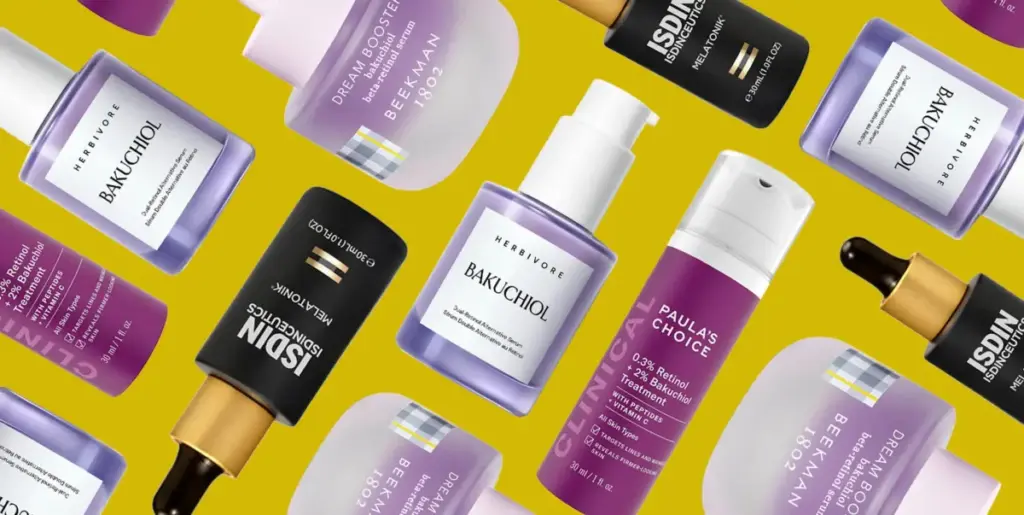
1. The Ultimate Multi-Tasker: ISDIN Melatonik Overnight Serum-in-Oil
Key Ingredients: Bakuchiol, Vitamin C, Melatonin, Vitamin E
Best For: All skin types seeking comprehensive nighttime repair and brightening.
Price Point: ~$175 (1 oz.)
Why It Stands Out:
You might think a serum loaded with multiple heavy-hitting actives would overwhelm the skin barrier. Yet, this potent overnight blend of bakuchiol, vitamin C, and melatonin revs up your complexion’s natural ability to repair itself while you sleep. The lightweight serum-in-oil restores elasticity and boosts collagen production while simultaneously combating free-radical damage.
“This luxe serum is the epitome of a multitasker. Vitamin C helps address dark spots and promotes an even skin tone, and when combined with melatonin, they aid the skin in recovering overnight. Then, bakuchiol stimulates collagen production, so you don’t need to apply a multitude of different skincare steps. And I don’t typically love a face oil, but this one doesn’t irritate my acne-prone skin, and I even use it alongside a gua sha for optimal sculpting.” — Jasmine Hyman, Assistant Beauty Editor
2. The Glass-Skin Specialist: Herbivore Bakuchiol Dual-Retinol Alternative Anti-Aging Serum
Key Ingredients: Two forms of Bakuchiol, Chios Mastic Tree Resin
Best For: Smoothing rough, uneven texture and imparting a luminous glow.
Price Point: ~$68 (1 oz.)
Why It Stands Out:
Housed inside an aesthetically striking purple bottle, this formulation delivers a double dose of bakuchiol that works overtime to refine skin tone and texture without any of the harsh flaking typically associated with traditional retinoids. Additionally, Chios mastic tree resin—harvested from Aegean trees in Greece—floods the skin with deep moisture while subtly boosting firmness.
“I got this because it looked so good in my vanity, but it’s the results that make it a staple. While powerful, this bakuchiol serum doesn’t cause any irritation, and my complexion is pretty much smooth as glass now.” — Mary Honkus, Contributing Beauty Editor
Best For: Refining pores and providing lightweight nourishment for all skin types.
Price Point: ~$29 (0.5 oz.)
Why It Stands Out:
There is nothing inherently wrong with having visible pores, but if your goal is to refine their appearance, this purple-tinged booster is an exceptional tool. Smooth a few drops onto clean skin before bed, and let the bakuchiol smooth your texture overnight. The formula is rounded out by lightweight botanical oils, including sunflower and jojoba, ensuring a glass-like finish without feeling heavy.
“Beekman 1802 is completely slept on! Every time I try a product I’m always pleasantly surprised by how well it works. This serum feels lightweight yet extra nourishing, and I can see it working for all skin types.” — MH
Best For: Experienced retinol users looking to amplify their anti-aging results.
Price Point: ~$52 (1 oz.)
Why It Stands Out:
While bakuchiol is often framed as a standalone alternative to retinol, what happens when you combine the two? You get a high-performance, triple-action serum that aggressively increases collagen production, minimizes deep wrinkles, and enhances firmness. Because it contains active retinol alongside a high percentage of bakuchiol, it is moderate to high in strength and is best suited for individuals who have already acclimated their skin to vitamin A derivatives.
“Despite being so powerful, this lotion feels cushiony soft and beautifully evens out my skin tone. I started using it two years after I first introduced retinol into my routine and have had zero issues.” — MH
5. The Pregnancy-Friendly Powerhouse: Medik8 Bakuchiol Peptides Serum
Best For: Expecting mothers and those targeting uneven skin tone and elasticity.
Price Point: ~$58 (1 oz.)
Why It Stands Out:
Pairing bakuchiol with targeted peptide precursors creates a dynamic duo for stimulating collagen production and repairing compromised skin barriers. This formula is exceptionally soothing, deeply hydrating, and completely pregnancy-safe, making it a go-to recommendation for dermatologists treating prenatal patients who refuse to compromise on their anti-aging regimens.
6. The Budget-Friendly Essential: Good Molecules Bakuchiol Oil Blend
Why It Stands Out:
Even plant-based alternatives can occasionally cause mild dryness in ultra-sensitive or parched complexions. Good Molecules solved this by formulating a minimalist, highly affordable oil blend. Featuring just three primary ingredients—bakuchiol paired with deeply hydrating chia seed and rosehip oils—it binds moisture directly to the skin barrier for an accessible price point of under $10.
Expert Insights & Official Perspectives
Dermatologists and cosmetic scientists agree that bakuchiol represents a permanent shift in how topical treatments are engineered. No longer must consumers choose between experiencing harsh retinization side effects or forgoing active anti-aging care altogether.
Dr. Hadley King, a board-certified dermatologist, notes in clinical commentary that "bakuchiol offers a scientifically robust option for patients who want the collagen-boosting and pigment-fading benefits of retinoids without the inflammatory trade-offs. Its antioxidant properties provide an added layer of defense that makes it exceptionally well-suited for daytime or nighttime use."
Furthermore, cosmetic chemists emphasize that the stability of bakuchiol gives it a distinct manufacturing advantage. Unlike pure retinol, which degrades rapidly upon exposure to light and air, bakuchiol is notoriously stable, allowing for simpler packaging and a longer shelf life without sacrificing potency.
Future Outlook: Where Plant-Based Skincare is Headed Next
As consumer sophistication deepens and green chemistry advances, the horizon for botanical actives looks exceptionally bright. Industry analysts project several key trends for the coming decade:
Advanced Delivery Systems: Future formulations will increasingly utilize microencapsulation and liposomal delivery technologies to drive bakuchiol deeper into the dermis, maximizing cellular turnover and collagen synthesis without increasing concentration levels.
Personalized Botanical Blends: As direct-to-consumer genetic and skin-microbiome testing becomes more mainstream, brands will likely offer customized serums that combine bakuchiol with precise ratios of peptides, ceramides, and adaptogens tailored to an individual’s unique skin barrier needs.
Sustainable Sourcing and Biotechnology: With the surge in demand for Psoralea corylifolia, sustainable harvesting and lab-grown bio-fermentation methods will become paramount to ensure environmental preservation while meeting global production scales.
Ultimately, the bakuchiol revolution is much more than a fleeting beauty trend. It marks a maturation of the skincare industry—proving that nature and science are not mutually exclusive, but rather the most powerful partners when formulated with precision and backed by rigorous clinical science.