Executive Overview
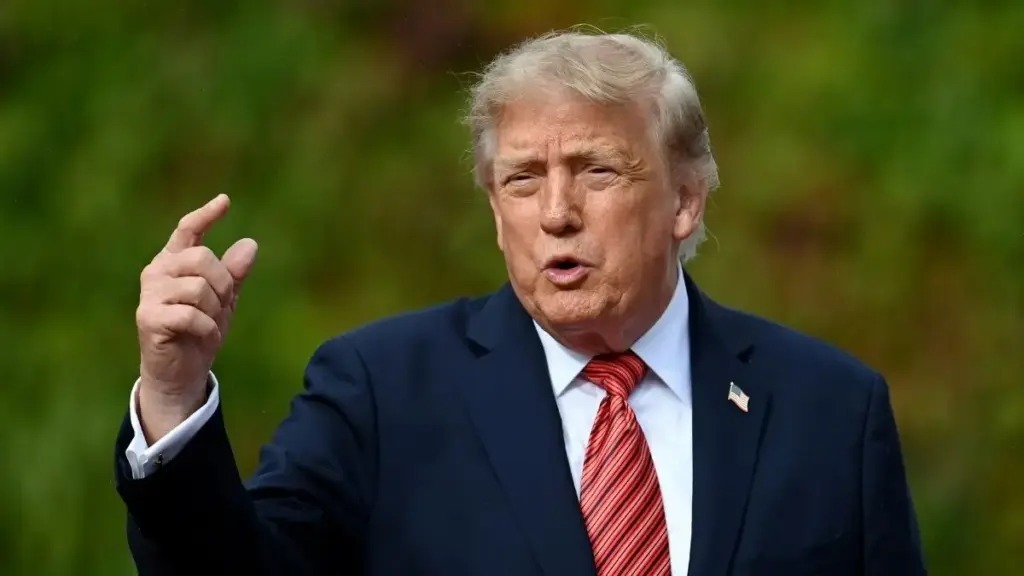
On September 17, during an official White House event in the Rose Garden, President Donald Trump delivered remarks that quickly transcended their policy-focused agenda to spark a nationwide debate on the nature and boundaries of executive power. While gathered with conservationists, industry leaders, and outdoor enthusiasts to celebrate the signing of a major executive order aimed at expanding recreational fishing and hunting access on public lands, Trump departed from his prepared script. In an off-the-cuff monologue, he joked about using the unilateral authority of his office to ban fishing entirely, specifically noting how such an action could instantly decimate the business of billionaire Johnny Morris, the founder and CEO of Bass Pro Shops.
The remarks, captured on video and widely shared across social media platforms, ignited immediate controversy. To his supporters, the comments were classic "Trumpian" humor—a lighthearted, hyperbolic jest shared with a prominent business figure who was present at the event. To his critics, however, the statements represented a deeper, more concerning subtext: a casual disregard for the constitutional limits of the presidency and an ongoing fascination with the unchecked exercise of executive power.
This investigative report provides a detailed chronology of the event, examines the economic and regulatory context of the executive order in question, analyzes the legal boundaries of presidential authority regarding domestic commerce and natural resources, and explores the broader political fallout of governing through rhetorical provocation.
Detailed Chronology
The Context of the Rose Garden Assembly
The gathering in the Rose Garden on September 17 was orchestrated to highlight the administration’s commitments to conservation, outdoor sportsmanship, and the domestic seafood industry. The primary legislative and administrative centerpiece of the event was the promotion of an executive order designed to bolster American saltwater fishing, support coastal economies, and expand access to public lands for hunters and anglers.
The event brought together a diverse coalition of stakeholders, including representatives from the U.S. Department of Commerce, coastal governors, recreational fishing advocates, and corporate leaders from the outdoor retail sector. Among the notable attendees was Johnny Morris, the 80-year-old billionaire founder of Bass Pro Shops and a prominent figure in American conservation philanthropy.
The Policy Announcements
Before the controversial remarks were made, the presentation focused heavily on policy achievements:
- Support for Coastal Economies: The executive order aimed to streamline federal regulations governing saltwater recreational fishing, aligning federal oversight more closely with state-level management systems.
- The Make America Beautiful Again (MABA) Commission: The administration highlighted the ongoing efforts of this initiative, which seeks to promote public-private partnerships to restore public lands, clean waterways, and expand recreational access for everyday Americans.
- Seafood Competitiveness: Portions of the order directed federal agencies to take action to strengthen the domestic seafood supply chain, reducing reliance on imported seafood and countering foreign subsidies.
The Unscripted Detour
As President Trump addressed the crowd, celebrating the expansion of public land access, his speech shifted from structured policy achievements to personal anecdotes. It was during this transition that he addressed Johnny Morris directly, leading to the following statement:
"I’ll tell you what. The power of this office is crazy. I could have banned fishing and driven Johnny right the hell out of business. Okay. I think I’m going to do that. Just maybe just a quick order, just for a day or two, till he calls me and he says, ‘Please, President, please, you’re putting me out of business, sir.’"
The audience in the Rose Garden responded with a mix of laughter and applause, recognizing the comment as a direct, albeit highly unusual, reference to Morris’s massive retail footprint.
The Digital Aftermath
Within minutes of the remarks being delivered, clips of the speech were uploaded to social media, most notably by the political monitoring account Acyn on X (formerly Twitter). The video quickly went viral, accumulating millions of views and triggering a wave of polarized commentary.
Timeline of Events (September 17)
│
├── 1:00 PM - Rose Garden Event Begins: Policy briefings on saltwater fishing and public land access.
│
├── 1:30 PM - Trump Delivers Address: Signs the Executive Order; introduces the MABA Commission goals.
│
├── 1:42 PM - The "Fishing Ban" Comment: Trump makes the off-the-cuff joke regarding Johnny Morris and Bass Pro Shops.
│
└── 2:15 PM - Viral Spread: Clip uploaded to X; major news outlets and political commentators begin dissecting the remarks.
Supporting Context & Metrics
To understand the weight of the President’s comments, it is necessary to examine both the economic scale of the industries involved and the actual legal mechanisms of the executive branch.
The Economic Footprint of U.S. Recreational Fishing
Recreational fishing is not merely a leisure activity; it is a massive driver of the American economy, particularly in coastal and rural regions.
| Economic Metric | Annual Value / Impact |
|---|---|
| Total Economic Output | $129 Billion |
| Jobs Supported | Over 800,000 nationwide |
| Angler Contributions to Conservation | $1.6 Billion annually (via licenses & excise taxes) |
| Federal and State Tax Revenue | $17 Billion generated annually |
Source: American Sportfishing Association & NOAA Fisheries
Given these metrics, even a temporary disruption to the fishing sector would have catastrophic cascading effects on local tourism, manufacturing, retail, and state-level conservation funding.
The Scale of Bass Pro Shops and Johnny Morris
Johnny Morris founded Bass Pro Shops in 1972 behind his father’s liquor store in Springfield, Missouri. Today, the company is a colossus in the outdoor retail sector:
- Acquisition of Cabela’s: In 2017, Bass Pro Shops acquired its chief competitor, Cabela’s, for $5.5 billion, establishing a near-monopoly on mega-scale outdoor retail in North America.
- Employment: The combined entity employs more than 40,000 people across nearly 180 retail locations in the United States and Canada.
- Net Worth: Johnny Morris’s net worth is estimated to be between $6 billion and $8 billion, making him one of the most influential private landowners and conservation donors in the country.
The Legal Limits of Executive Authority
While Trump remarked that the "power of this office is crazy" and asserted he "could have banned fishing," legal scholars and constitutional experts point out that a unilateral presidential ban on fishing is highly implausible under current U.S. administrative law.
                    ┌────────────────────────────────────────┐
                    │      Can a President Ban Fishing?      │
                    └───────────────────┬────────────────────┘
                                        │
                ┌───────────────────────┴───────────────────────┐
                ▼                                               ▼
     [ FEDERAL WATERS (EEZ) ]                       [ STATE-CONTROLLED WATERS ]
  Controlled by NOAA & Magnuson-Stevens Act.     Managed by State Wildlife Agencies.
  Requires public comment & scientific basis.     President has ZERO direct authority.
President cannot ban via unilateral decree. Any federal overreach would face injunctions.- Federal vs. State Jurisdiction: The federal government only has jurisdiction over waters in the Exclusive Economic Zone (EEZ), which extends from 3 to 200 nautical miles offshore. Inland lakes, rivers, and nearshore coastal waters are managed exclusively by state fish and wildlife agencies. A president has no constitutional or statutory authority to regulate or ban fishing within state borders.
- Statutory Limitations: Even within federal waters, fishing regulations are governed by the Magnuson-Stevens Fishery Conservation and Management Act. Any closures or bans must be based on rigorous scientific data regarding overfishing and must pass through a lengthy public comment and administrative rulemaking process. A unilateral executive order bypassing these steps would be immediately struck down by federal courts as "arbitrary and capricious" under the Administrative Procedure Act (APA).
- Judicial Review and Chevron Deference: In the current judicial climate, the Supreme Court’s curtailment of administrative agency power (notably through the overturning of Chevron deference in the Loper Bright decision) makes sweeping, unscientific executive actions even more vulnerable to immediate legal challenges.
Official Statements and Public Reaction
The contrast between the administration’s stated policy goals and the President’s rhetorical delivery created a highly polarized public response.
The Online Backlash
Critics on social media and within political commentary circles seized on the comments as evidence of an authoritarian mindset, arguing that joking about using state power to target specific private citizens or businesses is inappropriate for a head of state.
One widely circulated comment on X by user Christo7884249 noted:
"He could ban it, and everyone would say piss off. The power of the office is ultimately determined by people’s willingness to go along. Most of us have had more than enough of him."
Another user, Uka1961, lamented the normalization of such rhetoric within the modern Republican Party:
"Not that anyone takes him seriously anymore. But I hope that someone keeps a tab and tracks all these dumb things he says to go into history, psychology, law books, and encyclopedias. And remind everyone that the GOP allowed this under the excuse, ‘Trump is being Trump.’"
Industry and Supporter Defenses
Conversely, defenders of the President argued that the comments were being deliberately misinterpreted by political opponents who lack an understanding of Trump’s communication style. Supporters pointed out that:
- Johnny Morris himself was smiling and laughing during the exchange, indicating he understood the remarks as a friendly, lighthearted ribbing.
- The actual policy being signed was overwhelmingly pro-fishing, making the accusation that Trump wanted to ban the sport illogical.
- Trump has a long-standing history of using hyperbole to illustrate the vastness of federal power, often doing so to argue against overregulation rather than in favor of it.
Future Outlook
The Rose Garden incident serves as a microcosm of a broader, ongoing shift in American governance and political communication. As the country looks toward future election cycles and administrative transitions, several key trends emerge from this intersection of rhetoric and policy:
The Normalization of "Governing by Provocation"
The use of highly provocative, hypothetical scenarios to dominate the news cycle remains a core strategy of the populist political playbook. By framing policy announcements within controversial personal anecdotes, leaders ensure maximum media coverage. While this keeps base voters engaged, it also deepens partisan polarization and complicates the efforts of agency officials who must implement actual, structured policies behind the scenes.
The Future of Executive Orders in Conservation
Despite the rhetorical distractions, the use of executive orders to shape environmental and recreational policy will continue to accelerate. Because passing comprehensive environmental legislation through a divided Congress remains incredibly difficult, future administrations of both parties are expected to rely heavily on unilateral actions. This reliance, however, guarantees that conservation policies will remain highly volatile, shifting dramatically from one administration to the next.
Increased Judicial Scrutiny
As presidents continue to test the limits of executive orders—whether in jest or in earnest—the federal judiciary will play an increasingly active role in policing the boundaries of the executive branch. The transition of public lands management from a matter of legislative consensus to one of judicial arbitration is likely to intensify, leaving industries like outdoor retail and commercial fishing in a state of perpetual regulatory uncertainty.