Executive Overview
Netflix’s The Gentlemen concluded its stellar second season with a masterclass in tension, betrayal, and psychological deconstruction. For ten episodes, audiences were led down a labyrinthine path of international drug syndicates, warring factions, and aristocratic desperation. The primary narrative engine of the finale—the targeted attack on Duke Eddie Horniman’s family, the near-fatal kidnapping of baby Tarquin, and the tragic murder of Bella—seemed at first glance to be the work of external geopolitical forces. Prime suspects ranged from ruthless cartel figures to treacherous corporate consiglieres.
However, as directed by Eran Creevy from a script by Guy Ritchie and Matthew Read, the Season 2 finale strips away the red herrings to reveal an internal, domestic betrayal far more chilling than any mob hit. The mastermind behind the palace coup was none other than Freddy Horniman, Eddie’s erratic, debt-plagued older brother, operating in tandem with the ultra-religious Liverpool drug lord, Gospel John.
This deep-dive retrospective examines the cascading events of the finale, the thematic evolution of Duke Eddie Horniman from reluctant aristocrat to cold-blooded sovereign, and the broader implications of The Gentlemen‘s sophomore outing. By expanding past the stylized violence that defines the franchise, Season 2 cements the series not merely as a fun British gangster romp, but as high-tier television drama.
Detailed Chronology: Anatomy of a Betrayal
Phase I: The Collapse of Intelligence and the Perils of Coercion
The finale opens with high-stakes paranoia. Armed with bad intelligence extracted via brutal torture—specifically, a car battery applied to a captured mercenary’s testicles by Eddie and Geoff—Duke Eddie prepares to execute a preemptive strike against his criminal partner, Bobby Glass.
This sequence deserves critical applause for subverting a tired television trope. While most fiction treats torture as a reliable narrative shortcut to the truth, The Gentlemen highlights its inherent uselessness. The bad intel nearly leads to catastrophe when Eddie, convinced of Bobby’s betrayal, stations his one-legged ex-army sniper mate, Andy, in the fields outside Halstead Manor with crosshairs locked on Susie Glass.
Only last-minute intervention by Susie—cleared to speak by weed botanist Jimmy’s sage advice ("The Duke will always have time for you, Su-Su, trust")—halts the assassination. Susie’s choked-up defense establishes her innocence: Bobby did not order the hit on the Hornimans.
Phase II: Financial Revelations and Theological Lessons
As is so often the case in the criminal underworld, money illuminates the truth. Eddie discovers that on the day of his wedding, Bobby Glass quietly invested in the future of the Horniman estate by purchasing Eddie’s debilitating £100 million debt from Mr. Johnston. Glass may be ruthless, but he is not irrational enough to financially sabotage his own operational lifeline by wiping out the Duke.
Mr. Johnston confirms this financial transaction with his signature theatricality, treating Eddie to a heavy-handed yet effective theological lesson regarding the three temptations of Christ in the desert. Johnston frames this crisis as the final crucible Eddie must endure to ascend to the status of a true sovereign.
Yet, before Eddie can claim absolute power, he must identify the architect of the assault on his family. His bloodlust is palpable, driving him toward fantasies of urban warfare in London. While Nanny attempts to evacuate the remaining Horniman family from the ancestral home, Eddie firmly puts his foot down: no one walks out of Halstead.
Phase III: Unraveling the Thread
The mystery is ultimately unlocked by Sabrina. She recalls a suspiciously timed phone call from Freddy, who had phoned from his rehab facility under the guise of reporting a disturbing dream to check on family safety.
Crucially, this call coincided precisely with the moment the captured mercenary’s attempt to contact his employer was rejected via an obscene text message. The killer’s handler knew the operation had failed, despite the mercenary’s claims of success. The leak was internal. Freddy had tipped off the enemy.
Phase IV: The Airport Trap and Gospel John
With the identity of the traitor confirmed, Eddie forms an alliance of convenience with Susie to neutralize Freddy’s operational muscle: Gospel John, the zealot drug lord fixated on avenging his brother’s death (the catalyst for the entire series’ events).
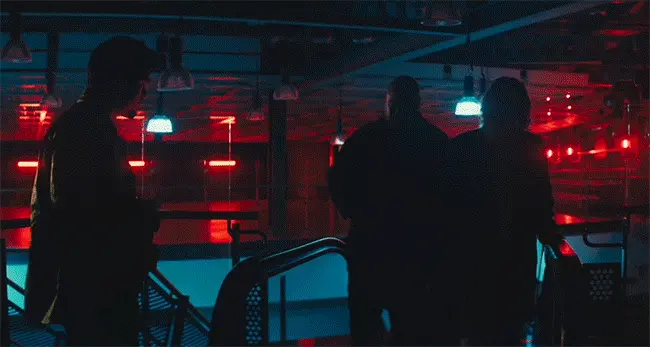
Utilizing a favor owed by the Peruvian kingpin Vargas—whose internal rat was exposed earlier by Eddie and Susie—they lure John into a meticulously lit airport warehouse. In a swift, brutal operation, Eddie’s forces annihilate John’s crew while sparing the bearded preacher himself.
Phase V: The Climax at the Rehab Center
When Eddie arrives at Freddy’s rehab facility, he brings terrifying cargo. Susie’s black van rolls up carrying a bound-and-gagged Gospel John—alongside a roaring chainsaw.
What follows is a masterclass in psychological brutality. Obeying his mother’s implicit wishes not to commit fratricide, Eddie spares his brother’s life, but inflicts a fate far worse. Beating Freddy mercilessly, Eddie forces him to execute Gospel John with the chainsaw.
The murder occurs off-screen, registered entirely through audio and the horrified expressions of those outside, amplifying the dread. When the van doors finally open, Freddy steps out clutching John’s severed head. Physically and spiritually broken, Freddy has fundamentally lost his mind, having been forced to become the monster he never had the stomach to be.
Supporting Context & Thematic Metrics
To fully appreciate the narrative weight of The Gentlemen‘s second season, one must analyze the structural mechanics driving the characters’ arcs:
- The Scepter and the Orb: Mr. Johnston’s ongoing allegorical lessons frame Eddie not merely as a criminal mastermind, but as an absolute monarch. By sparing Freddy while weaponizing him, Eddie wields both judgment and mercy.
- The Death of Innocence: Season 1 Eddie was defined by his hesitation, his empathy for collateral damage (such as the accountant), and his discomfort with aristocratic decay. Season 2 Eddie is entirely cauterized of such sentimentality. He informs Bobby Glass that a £100 million debt no longer grants Glass dominion over him.
- The Domestic Threat: By positioning Freddy as the primary antagonist of the arc, the series pivots away from standard drug-war tropes. The most dangerous knife is the one hidden at the family dinner table.
Official Statements and Production Insights
Speaking on the conceptual evolution of the series, co-creators Guy Ritchie and Matthew Read engineered Season 2 to be a darker, more expansive exploration of aristocratic criminality.
"We wanted to test the structural integrity of the Horniman family," production insiders noted regarding the psychological toll placed on the characters. "If Season 1 was about an outsider learning the rules of the underworld, Season 2 is about that same man rewriting the rules to suit his own absolute survival."
Director Eran Creevy’s visual language throughout the finale—emphasizing cold, architectural symmetry in locations like the airport warehouse and the sterile confines of the rehab clinic—reinforces the emotional isolation of the characters. Every frame is saturated with high-contrast shadows, isolating the actors within compositions that feel both regal and claustrophobic.
Future Outlook: What Next for the King of Halstead?
As the credits roll on Season 2, The Gentlemen leaves its universe permanently altered.
- The Power Dynamics with Bobby Glass: With Eddie asserting financial and psychological independence, the uneasy partnership between Halstead Manor and the Glass syndicate faces unprecedented volatility. Glass respects power, but Eddie has proven himself dangerously autonomous.
- Freddy’s Trajectory: Having been psychologically shattered and forced into parricidal-level violence, Freddy’s character arc has reached a point of no return. Whether he remains a broken puppet at Halstead or becomes an unpredictable liability is the premier question heading into a prospective third season.
- The Expansion of the Empire: With Gospel John eliminated and rival factions neutralized, Eddie Horniman sits unopposed atop the British criminal-aristocratic hierarchy.
The Gentlemen has successfully transitioned from an entertaining spin-off of Ritchie’s 2019 film universe into an authoritative, prestige crime drama in its own right. Season 2 proves that beneath the sharp suits, snappy dialogue, and stylized violence, the series possesses genuine narrative ambition—and a cold, beating heart of pure iron.