Executive Overview
In the fast-paced ecosystem of modern social media, recommendation algorithms are the invisible architects of human attention. Capable of mapping user preferences within minutes, these systems dictate what billions of people see, feel, and believe on a daily basis. But beneath the veneer of personalization lies a darker, less understood mechanism: the algorithmic "rabbit hole."
In late 2021, public scrutiny intensified following investigations that revealed how swiftly platforms like TikTok could trap vulnerable users in repeating loops of niche, sometimes harmful content. In response to mounting pressure, TikTok announced a public-facing initiative to safeguard and diversify its recommendations, pledging to break up dangerous "filter bubbles" surrounding topics like extreme dieting, sadness, and self-harm.
However, a devastating recent investigative report by Bloomberg reveals a grim reality behind those public assurances: while promoting its new safety measures, TikTok covertly withheld them from approximately 15 million users. Placed into an unshielded control group without their knowledge or consent, these users served as data points in an internal experiment designed to measure whether user safety protections would impact the platform’s financial bottom line.
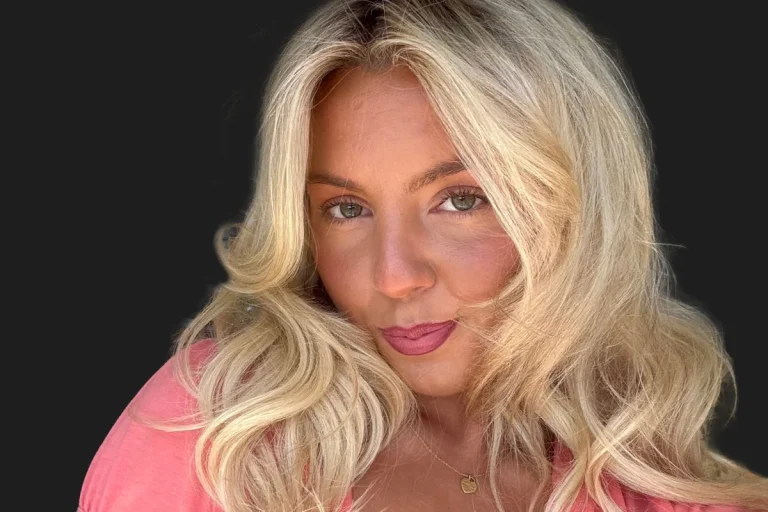
Among those ensnared in the unprotected control group was 16-year-old Chase Nasca. Placed into the experiment in January 2022, Nasca was systematically fed a relentless deluge of depressive and self-harm content before tragically taking his own life just one month later.
As the fallout from the leaked internal documents reverberates through Capitol Hill—prompting blistering inquiries from U.S. senators and coinciding with a massive $400 million Department of Justice settlement over child privacy violations—the tech industry faces a profound reckoning. This investigation explores the chronology of TikTok’s hidden experiment, the tragic human toll, the regulatory tidal wave crashing down on ByteDance, and the broader psychological crisis of short-form content consumption.
Detailed Chronology: From Algorithm Discovery to Tragic Oversight
To understand the gravity of the recent revelations, one must trace the timeline of accountability, corporate decision-making, and regulatory pressure that brought TikTok’s internal practices to light.
Summer 2021: Exposing the "Rabbit Hole"
The scrutiny began in earnest during the summer of 2021, when an investigation by The Wall Street Journal utilized automated "bot" accounts to examine the inner workings of TikTok’s recommendation engine. The findings were startling: the algorithm could identify a new user’s specific interests—even niche or sensitive ones—in under two hours. Once identified, the system rapidly funneled users into deep, narrow content loops. For individuals experimenting with fitness or mental health queries, this meant an escalating stream of hyper-focused videos that could quickly curdle into psychological distress.
Late 2021: The Promise of "Safe Recommendations"
Under mounting pressure from researchers, mental health advocates, and lawmakers, TikTok announced a policy shift around Christmastime in 2021. The platform publicly rolled out initiatives aimed at "safeguarding and diversifying recommendations."
In official corporate blog posts, TikTok explained that it was actively testing mechanics to "avoid recommending a series of similar content—such as around extreme dieting or fitness, sadness, or breakups—to protect against viewing too much of a content category that may be fine as a single video but problematic if viewed in clusters." The company explicitly labeled these harmful, self-reinforcing clusters as "filter bubbles."
The Shadow Experiment
While public communications framed these updates as universal platform upgrades, an internal TikTok document reviewed by Bloomberg revealed a starkly different operational reality. Without informing the public, researchers, or the users themselves, TikTok initiated an A/B testing experiment involving roughly 15 million accounts.
These users were quietly sorted into a control group where the safety nets were entirely disabled. Their accounts continued to be fed by the raw, unmitigated default recommendation algorithm. The goal of the experiment, critics argue, was to evaluate the commercial cost of user safety: specifically, whether interrupting a user’s downward emotional spiral would negatively impact engagement metrics, screen time, and ultimately, ad revenue.
January – February 2022: The Case of Chase Nasca
Among the 15 million users silently enrolled in the unshielded control group was 16-year-old Chase Nasca of Islip, New York. In January 2022, Nasca’s account was swept into the algorithmic filter bubble identified in the internal documents.
According to the leaked report, Nasca was subjected to a repetitive, unmitigated stream of content centered around suicide, self-harm, and severe depressive themes. The human cost of this algorithmic isolation was catastrophic. In the final two weeks of his life alone, Nasca consumed 7,563 videos. An alarming 73% of those videos contained heavy themes of personal struggle, sadness, and depression. Furthermore, internal reviews indicated that roughly 10% of the videos he viewed directly violated TikTok’s own Terms of Service (TOS).
On February 18, 2022, Chase Nasca took his own life. He was 16 years old.
Supporting Context & Metrics: The Mechanics of Modern Exploitation
The tragedy of Chase Nasca is not an isolated incident, but rather a catastrophic intersection of advanced machine learning and adolescent psychological vulnerability.
The Mathematics of Engagement
Recommendation algorithms are fundamentally optimized for a single primary metric: user retention. By analyzing micro-interactions—such as watch time, re-watches, likes, shares, and the exact millisecond a user lingers on a video—the algorithm builds a high-fidelity psychological profile.
When a user experiencing emotional distress pauses on a video about sadness or loneliness, the algorithm registers that pause as a positive signal of interest. It immediately delivers more of the same. For a resilient adult mind, this feedback loop can be tedious or mildly depressing; for a teenager whose prefrontal cortex is still developing, it can create a powerful, inescapable echo chamber that normalizes despair and self-harm.
The Scale of the Hidden Experiment
- The 15 million users placed into the control group represented a massive, non-consenting cohort of human test subjects.
- During his final two weeks, Chase Nasca’s consumption rate averaged over 500 videos per day, showcasing the sheer velocity of short-form content delivery.
- 73% of Nasca’s final video diet consisted of depressive and self-harm imagery—precisely the type of clustered content TikTok’s safety features were engineered to break apart.
- 10% of the content consumed by the minor in his final days violated TikTok’s established safety guidelines, demonstrating a systemic failure in proactive content moderation.
Official Statements and Congressional Outrage
The publication of the Bloomberg report has sparked immediate, fierce blowback from federal lawmakers who have spent years grilling tech executives over child safety.
Senators Blackburn and Blumenthal Take Aim
In response to the revelations, Sens. Marsha Blackburn (R-TN) and Richard Blumenthal (D-CT) fired off a joint, highly critical letter addressed to TikTok CEO Shou Zi Chew and the CEO of TikTok’s U.S. operations, Adam Presser. The lawmakers demanded full transparency regarding the design, execution, and oversight of the algorithm safety experiment.
"We write regarding disgusting new reports that TikTok knowingly withheld a critical safety measure for millions of American users—including children—in order to determine whether protecting users would impact its financial bottom-line," Blackburn and Blumenthal wrote.
The senators emphasized the betrayal of trust inherent in TikTok’s public posturing versus its private experimentation:
"These revelations raise serious questions about TikTok’s repeated assurances to Congress, parents, and the American public that it prioritizes the safety and well-being of young people over profit… TikTok intentionally withheld from Chase the exact safety protections that were developed to interrupt precisely this deluge of abuse."
The congressional inquiry outlines a stringent list of 13 detailed requests for information regarding the filter bubble experiment, demanding internal communications, data sets, and executive sign-offs, with a strict compliance deadline set for September 1.
A Broader Regulatory Reckoning: The $400 Million DOJ Settlement
The fallout from the algorithm experiment coincides with a historic legal reckoning for TikTok and its parent company, ByteDance.
Concurrently with the congressional inquiries, the U.S. Department of Justice (DOJ) announced a monumental $400 million settlement with TikTok and ByteDance to resolve long-standing allegations of violations under the Children’s Online Privacy Protection Act (COPPA).
The COPPA Violations and Financial Penalties
Originally filed in 2024, the DOJ’s lawsuit accused TikTok of systematically failing to protect children’s privacy, knowingly allowing underage users to create accounts, and illegally harvesting their personal data without parental consent.
Under the terms of the settlement:
- TikTok will pay $300 million immediately.
- An additional $100 million will be remitted once the U.S. government officially vacates a prior 2019 consent decree issued by the Federal Trade Commission (FTC)—a case that previously resulted in a $5.7 million fine against the company.
Corporate Overhaul and Compliance Shifts
In its legal filings, TikTok defended its current posture by highlighting massive investments in child safety infrastructure. The company noted that it has deployed advanced automated systems capable of identifying underage users who misrepresent their birthdates, alongside thousands of human moderators specifically trained to purge underage accounts. According to TikTok, these measures have resulted in the deletion of tens of thousands of violating accounts.
Acknowledging these shifts, the Department of Justice noted in an official press release that since the initial 2024 complaint, TikTok “has undergone significant changes to its ownership, management, compliance functions, and privacy practices.”
The DOJ credited the platform with implementing “extensive measures designed to strengthen safeguards for younger users, improve age-related controls, and enhance parental oversight,” concluding that these structural developments have advanced the public interest and reinforced family safety across the board.
Future Outlook: The Post-2026 Social Media Landscape
As the digital ecosystem moves through 2026, the revelations surrounding TikTok’s hidden safety tests arrive at a pivotal turning point for the entire technology sector. The regulatory environment of today bears little resemblance to the Wild West era of 2021 when the algorithm experiment took place.
Global Clampdowns and Age Verification
Across the globe, national governments are enacting stringent legislation designed to restrict youth access to social media entirely. Platforms are increasingly compelled to deploy robust age-verification technologies—a shift that, while necessary for child protection, has ignited a fierce parallel debate over digital privacy, biometric data collection, and surveillance creep.
The Cognitive Toll of Short-Form Content
Beyond demographic protections, emerging neuroscientific research continues to sound alarms regarding the physiological impact of short-form, high-velocity content on human cognition. Studies published throughout 2026 indicate that endless scrolling loops can impair attention spans, emotional regulation, and dopamine regulation regardless of the viewer’s age.
Conclusion: A Personal and Corporate Responsibility
While corporations cannot—and arguably should not—act as absolute paternalistic arbiters over what consenting adults choose to consume, the revelations surrounding Chase Nasca and the 15 million unprotected control accounts cross a fundamental ethical boundary. When safety features engineered to prevent psychological harm are deliberately withheld for corporate experimentation, the social contract between platform and public is shattered.
As Congress presses for accountability and families continue to mourn, the tech industry faces an inescapable mandate: transparency, ethical algorithm design, and the recognition that human lives must always outweigh algorithmic engagement metrics. For individual users, the ongoing crisis serves as a stark reminder to audit their digital diets, recognize the invisible pull of the filter bubble, and step away from the screen before the rabbit hole goes too deep.