Executive Overview
For decades, retinol has held an undisputed, almost mythical status in the dermatology and beauty industries. Hailed as the gold standard of anti-aging, vitamin A derivatives have long promised—and largely delivered—cellular turnover, collagen stimulation, and wrinkle reduction. Yet, this powerhouse ingredient has always carried a notorious caveat: the dreaded "retinol uglies." Flaking skin, persistent redness, stinging irritation, and heightened photosensitivity have forced many consumers—especially those with sensitive, reactive, or dry skin types—to abandon their anti-aging routines entirely.
Enter bakuchiol. Derived from the seeds and leaves of the Psoralea corylifolia (babchi) plant, this botanical extract has surged to the forefront of dermatological science and cosmetic formulation. Operating as a functional analog to retinoids, bakuchiol delivers many of the same coveted skin-rejuvenating benefits without triggering the inflammatory pathways associated with traditional vitamin A.
As the clean beauty movement matures and consumer demand shifts toward high-efficacy, low-irritation formulations, the beauty market is experiencing a profound paradigm shift. No longer must achieving a radiant, firm, and evenly toned complexion come at the cost of compromised skin barriers. Backed by clinical studies, enthusiastic editorial endorsements, and sophisticated multi-ingredient blends, bakuchiol has transitioned from a niche natural alternative to a mainstream powerhouse. This in-depth report explores the scientific mechanics of bakuchiol, examines the leading market innovations driving its adoption, and evaluates how this botanical marvel is reshaping the future of cosmetic dermatology.

Detailed Chronology: From Ancient Botanicals to Modern Lab Bench
The journey of bakuchiol from traditional Eastern medicine to the shelves of high-end beauty boutiques is a testament to the intersection of ancestral wisdom and modern biochemical analysis.
Roots in Traditional Medicine
Long before cosmetic chemists isolated its active compounds, the Psoralea corylifolia plant played a foundational role in Ayurvedic and traditional Chinese medicine. For centuries, practitioners utilized extracts from the seeds and leaves of the babchi plant to treat a myriad of dermatological conditions, ranging from vitiligo to inflammatory skin disorders. The plant’s natural antimicrobial, antioxidant, and healing properties made it a staple in herbal pharmacopeias, though its precise molecular mechanisms remained unmapped by historical practitioners.
The Scientific Discovery
The modern era of bakuchiol began in the late 1960s and early 1970s, when researchers first successfully isolated and identified bakuchiol as a meroterpene phenol compound within the Psoralea corylifolia plant. For decades, however, its applications remained largely confined to botanical research. It wasn’t until the early 2000s that cosmetic scientists, searching for stable, plant-based alternatives to unstable and irritating retinoids, began screening the compound for topical skin benefits.

The Clinical Breakthrough
A critical turning point occurred in 2018 with the publication of a landmark study in the British Journal of Dermatology. The clinical trial directly compared the effects of a 0.5% bakuchiol cream applied twice daily against a 0.5% retinol cream applied once daily over a 12-week period. The results sent ripples through the dermatology community: both compounds demonstrated significant, statistically equivalent improvements in reducing hyperpigmentation and wrinkle surface area. However, the bakuchiol group experienced significantly less scaling, stinging, dryness, and overall irritation. This pivotal study provided the empirical foundation that cosmetic brands needed to formulate high-performance, retinol-alternative products with confidence.
Mainstream Market Adoption
Following the 2018 clinical validation, the ingredient experienced an exponential rise in commercial adoption. Independent clean beauty brands and legacy luxury houses alike rushed to incorporate the ingredient into serums, facial oils, and advanced night treatments. Today, bakuchiol is no longer viewed as a mere "compromise" for those who cannot tolerate retinol; rather, it is celebrated as an advanced, multi-tasking active in its own right—frequently paired with peptides, vitamin C, and hyaluronic acid to maximize efficacy.
Supporting Context & Metrics: The Science of Tolerance and Efficacy
To understand why bakuchiol has captured the attention of both clinical dermatologists and everyday consumers, one must examine its biochemical profile and how it compares to traditional retinoids.

Mechanism of Action: How Bakuchiol Works
Despite lacking any structural resemblance to vitamin A (retinol), bakuchiol functionally mimics retinoids at the cellular level. When applied topically, bakuchiol interacts with cellular receptors to stimulate collagen production (specifically types I, III, and IV) and enhance extracellular matrix turnover. This process helps restore dermal elasticity, smooth fine lines, and firm sagging skin.
Simultaneously, bakuchiol exhibits potent antioxidant and anti-inflammatory properties. By neutralizing free-radical damage induced by environmental stressors such as UV radiation and urban pollution, it prevents the degradation of existing collagen and elastin. Furthermore, its natural antibacterial properties make it exceptionally well-suited for acne-prone skin, helping to regulate sebum oxidation and reduce inflammatory breakouts without causing the purging often triggered by retinoids.
Skin Compatibility Across Demographics
One of bakuchiol’s most compelling market metrics is its universal compatibility profile across diverse skin types and physiological states:

- Sensitive & Reactive Skin: Because it does not cause the severe upregulation of inflammatory cytokines typical of retinoids, individuals with rosacea, eczema, and chronic sensitivity can frequently incorporate bakuchiol into their daily regimens.
- Dry & Compromised Barriers: Unlike retinoids, which often strip the skin’s natural lipid barrier and exacerbate transepidermal water loss (TEWL), bakuchiol is frequently formulated in nourishing oil bases that reinforce moisture retention.
- Pregnancy and Lactation: Retinoids are strictly contraindicated during pregnancy due to theoretical systemic risks associated with vitamin A excess. Because bakuchiol operates via an entirely different chemical pathway while delivering comparable anti-aging benefits, it has become the premier gold-standard alternative for expectant and nursing mothers.
Spotlight on Leading Formulations & Expert Analysis
The modern skincare market boasts a sophisticated array of bakuchiol-infused treatments. Beauty editors and cosmetic chemists have curated specific formulations that highlight the ingredient’s versatility, pairing it with complementary actives to elevate performance.
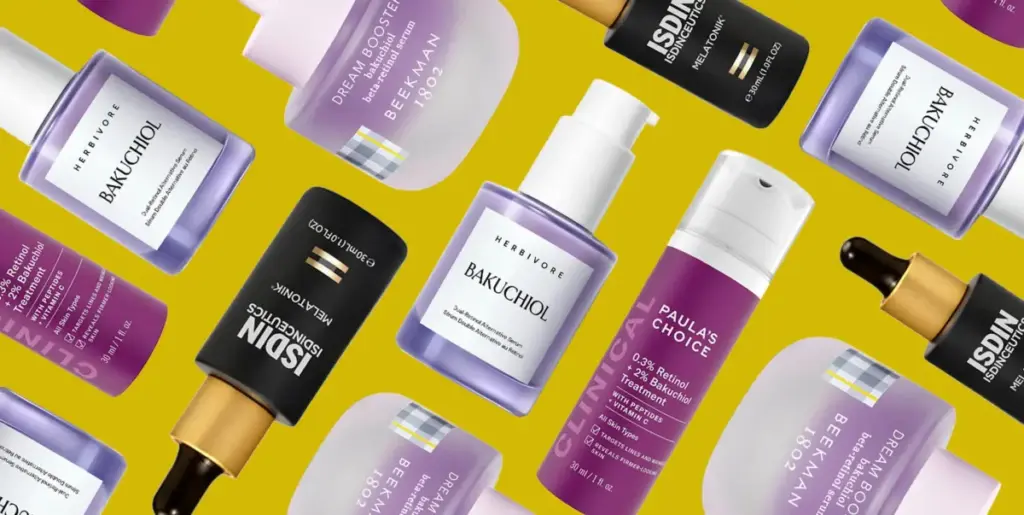
1. ISDIN Melatonik Overnight Serum-in-Oil
- Key Ingredients: Bakuchiol, Vitamin C, Melatonin, Vitamin E
- Price Point: $175.00 (1 oz.)
- The Formulation: This luxury serum-in-oil leverages the skin’s circadian rhythm, supercharging the complexion’s nocturnal repair mechanisms. While melatonin fights free-radical damage accumulated throughout the day, vitamin C brightens dark spots and unifies skin tone, and bakuchiol restores elasticity and boosts collagen synthesis.
- Editor’s Perspective: Jasmine Hyman, Assistant Beauty Editor, notes: "This luxe serum is the epitome of a multitasker. Vitamin C helps address dark spots and promotes an even skin tone, and when combined with melatonin, they aid the skin in recovering overnight. Then, bakuchiol stimulates collagen production, so you don’t need to apply a multitude of different skincare steps. And I don’t typically love a face oil, but this one doesn’t irritate my acne-prone skin, and I even use it alongside a gua sha for optimal sculpting."
2. Herbivore Bakuchiol Dual-Retinol Alternative Anti-Aging Serum
- Key Ingredients: Double dose of Bakuchiol, Chios Mastic Tree Resin
- Price Point: $68.00 (1 oz.)
- The Formulation: Housed in a striking violet glass bottle, this treatment features a dual-formulation of bakuchiol designed to aggressively smooth rough, uneven skin texture without triggering irritation. The inclusion of Chios mastic tree resin—harvested exclusively from Aegean trees in Greece—infuses the skin with deep moisture while offering a subtle, immediate firming effect.
- Editor’s Perspective: Mary Honkus, Contributing Beauty Editor, shares: "I got this because it looked so good in my vanity, but it’s the results that make it a staple. While powerful, this bakuchiol serum doesn’t cause any irritation, and my complexion is pretty much smooth as glass now."
3. Beekman 1802 Dream Booster Bakuchiol Beta-Retinol Serum
- Key Ingredients: Bakuchiol, Sunflower Seed Oil, Jojoba Oil
- Price Point: $29.00 (0.5 oz.)
- The Formulation: Targeted toward those looking to refine pore appearance and smooth skin texture, this purple-hued booster combines bakuchiol with lightweight, nourishing plant oils. The result is a glass-like finish that delivers intense hydration without heavy residue or pore congestion.
- Editor’s Perspective: Mary Honkus notes: "Beekman 1802 is completely slept on! Every time I try a product I’m always pleasantly surprised by how well it works. This serum feels lightweight yet extra nourishing, and I can see it working for all skin types."
4. Paula’s Choice 0.3% Retinol + 2% Bakuchiol Treatment
- Key Ingredients: Bakuchiol (2%), Retinol (0.3%), Ceramides, Hyaluronic Acid
- Price Point: $52.01 (1 oz.)
- The Formulation: Rather than choosing between traditional retinoids and bakuchiol, this advanced treatment combines them. The inclusion of 2% bakuchiol stabilizes and enhances the 0.3% retinol, creating a synergistic effect that supercharges collagen production and minimizes wrinkles. Coupled with barrier-repairing ceramides and hydrating hyaluronic acid, it bridges the gap between botanical gentleness and clinical potency. (Note: Due to its moderate strength, it requires a gradual acclimation period).
- Editor’s Perspective: Mary Honkus shares: "Despite being so powerful, this lotion feels cushiony soft and beautifully evens out my skin tone. I started using it two years after I first introduced retinol into my routine and have had zero issues."
5. Medik8 Bakuchiol Peptides Retinol Alternative Serum
- Key Ingredients: Bakuchiol, Peptide Precursors, Inka Omega Oil
- Price Point: $58.00 (1 oz.)
- The Formulation: Maximizing the synergistic power of cellular communicators, this lightweight serum pairs bakuchiol with advanced peptide precursors. This dual-action approach targets stubborn uneven skin texture and hyperpigmentation while remaining fully pregnancy-safe and non-sensitizing.
6. Good Molecules Bakuchiol Oil Blend for Dry Skin
- Key Ingredients: Bakuchiol, Chia Seed Oil, Rosehip Seed Oil
- Price Point: $10.00 (0.4 oz.)
- The Formulation: Proving that high-performance skincare does not require luxury price tags, this ultra-accessible oil blend is specifically engineered for dry, flake-prone skin types who struggle with traditional active serums. Featuring a streamlined, three-ingredient INCI list, it anchors bakuchiol in deeply conditioning chia seed and rosehip oils to lock in moisture.
Official Statements & Industry Perspectives
The rapid ascent of bakuchiol has prompted commentary from leading dermatological researchers, cosmetic chemists, and industry executives.
Dr. Elizabeth Mitchell, a board-certified dermatologist specializing in cosmetic chemistry, emphasizes the paradigm shift occurring in clinical practices: "For decades, our primary challenge in anti-aging treatments has been patient compliance. We could prescribe the most potent retinoid available, but if the patient’s skin barrier became compromised, they would discontinue use within two weeks. Bakuchiol changes the compliance equation entirely. We are now able to secure long-term collagen synthesis and cellular renewal without inducing chronic low-grade inflammation."

Meanwhile, major cosmetic conglomerates have echoed these sentiments in corporate sustainability and innovation reports. As consumer demand for sustainably sourced, cruelty-free, and plant-derived ingredients reaches an all-time high, R&D budgets are increasingly pivoting away from synthetic retinoid analogs toward high-purity botanical extracts. Industry analysts note that the global bakuchiol market is projected to expand significantly over the next decade, driven largely by clean beauty advocates and demographic shifts toward preventative skincare among younger consumers.
Future Outlook: Where Goes Bakuchiol?
As we look toward the future of cosmetic science, bakuchiol is poised to transition from a trendy alternative to a permanent cornerstone of dermatological formulations.
1. Advanced Encapsulation and Delivery Systems
While bakuchiol is inherently more stable than pure retinol (which degrades rapidly when exposed to light and air), upcoming formulation technologies are focusing on advanced delivery systems. Liposomal encapsulation and micro-fluidic dispersion will allow bakuchiol to penetrate deeper into the stratum corneum, maximizing its bioavailability and ensuring sustained, time-released efficacy throughout the night.

2. Synergistic Hybrid Formulations
The future of anti-aging skincare lies not in single-ingredient reliance, but in intelligent, multi-pathway formulation. As demonstrated by products combining bakuchiol with peptides, ceramides, melatonin, and even low-dose retinoids, formulators are moving away from the "more is more" harshness of the past. Instead, they are crafting harmonious botanical cocktails that support the skin microbiome while delivering targeted clinical results.
3. Personalization and Customization
With the rise of direct-to-consumer diagnostics and AI-driven skin analysis, consumers are increasingly seeking tailored skincare regimens. Bakuchiol’s exceptional safety profile makes it an ideal candidate for customized serums, allowing dermatologists and estheticians to fine-tune active concentrations for highly specific skin concerns without risking adverse reactions.
Conclusion
The bakuchiol revolution represents a maturation of the modern beauty consumer. No longer willing to endure irritation, flaking, and discomfort in the pursuit of youthfulness, consumers are demanding high-performance efficacy coupled with barrier-respecting gentleness. Backed by robust clinical data, championed by leading beauty editors, and elevated by innovative formulation science, bakuchiol has firmly established itself as a botanical titan—proving that nature and advanced science can unite to redefine the very meaning of beauty sleep.