Executive Overview
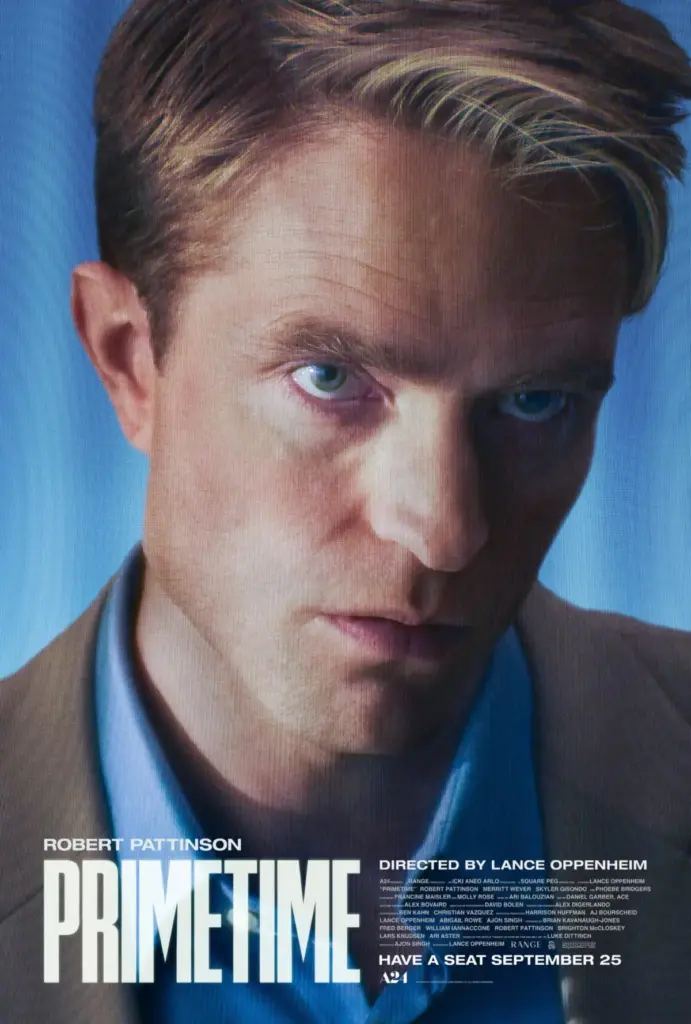
Robert Pattinson is currently enjoying one of the most daring, unpredictable, and uncompromising hot streaks in modern cinema. Following a string of intensely physical and psychologically frayed roles—ranging from an anxious live wire in The Drama to a cruel, snarling fop in The Odyssey—Pattinson has delivered perhaps his most transfixing and bizarre transformation yet. In Lance Oppenheim’s narrative feature debut, Primetime, the British actor embodies Chris Hansen, the iconic and idiosyncratic host of the notorious 2000s television phenomenon To Catch a Predator.
Premiering to considerable buzz at the Venice Film Festival, Primetime offers a bombastic showcase for Pattinson’s unique brand of character acting. The performance is defined by an eerie, strained vocal cadence, unnerving physical stoicism, and a multi-layered portrayal of a man slipping between public crusader and private pragmatist. Yet, despite Pattinson’s magnetic and hypnotic central turn, the film itself struggles to match the towering weight of its lead performance or the inherently chaotic, morally complex nature of its real-life subject matter.
This analytical review breaks down Primetime across structural, narrative, and performance-based dimensions, assessing how Oppenheim’s transition from documentary to narrative filmmaking fares against cinematic history, examining the stellar supporting cast—including Phoebe Bridgers and Merritt Wever—and contextualizing where this project sits within Pattinson’s rapidly expanding horizon of eccentric cinematic choices.

Detailed Chronology: From Dateline NBC to the Venice Red Carpet
To understand the world that Primetime seeks to recreate, one must look back at the cultural landscape of American television in the mid-2000s. Between 2004 and 2007, the Dateline NBC segment To Catch a Predator gripped the United States. Conceived as a series of journalistic sting operations, the show was designed to expose adult men who traveled to suburban homes under the assumption that they were meeting minors for illicit encounters.
The formula was as morally murky as it was addictive:
- The Sting Setup: Decoys—often adult actors posing as minors—lured targets through online chat transcripts.
- The Encounter: Grainy hidden cameras captured the arrival of the perpetrators inside suburban living rooms.
- The Confrontation: Chris Hansen would emerge from the shadows, delivering his signature, deadpan interrogatory line: "Why don’t you have a seat right over there?"
- The Resolution: As suspects panicked, tried to flee, or broke down in tears, local law enforcement would swoop in to tackle and arrest them.
The show operated as a form of sanctioned, high-stakes vigilante justice wrapped in the veneer of public service journalism. It offered American television audiences a potent, albeit deeply uncomfortable, cocktail of moral outrage and catharsis.

When Primetime opens, this media apparatus is shown reaching a fever pitch. Hansen and his long-suffering producer (played by Merritt Wever) are on the cusp of a major career milestone: the network is promoting the program to the prestigious, high-stakes 9:00 PM time slot. This promotion brings unprecedented visibility, higher advertising revenues, and a crushing internal pressure to deliver increasingly salacious, headline-grabbing stings that can feed the beast of prime-time television ratings.
Supporting Cast and Behind-the-Lens Dynamics
While Robert Pattinson anchors the film with his uncanny mimicry of Hansen’s stoic rigidity, Primetime boasts an eclectic and ambitious supporting ensemble that mirrors the chaotic ecosystem of 2000s reality television production.
The Decoys and the Danger
Central to the operational engine of the show are its decoys—young actors thrust into high-tension environments where they are utilized as bait for erratic, potentially dangerous individuals. Musician Phoebe Bridgers, riding the wave of her critical and commercial music career, makes her formal feature acting debut here. She portrays one of the baby-faced decoys whose sweet demeanor draws unsuspecting predators into the web.

Alongside Bridgers is Skyler Gisondo (Booksmart, Licorice Pizza), who plays a nervous new recruit. Gisondo’s character is entirely unprepared for the renegade, loose-cannon ethos of the production crew. As he is dangled in front of volatile characters, his psychological armor begins to crack. In stark contrast, Pattinson’s Hansen remains entirely unmoved, laser-focused on metrics, ratings, and institutional success.
The Underutilized Ensemble
Despite strong individual components, Primetime stumbles in its handling of its broader narrative tapestry. Anna Faris appears as Hansen’s long-suffering wife, but her role is ultimately sidelined by a script that fails to give her character sufficient narrative oxygen. Similarly, Merritt Wever—an actress of immense talent—anchors a compelling subplot regarding the ethical rot behind the scenes of the production, only for the narrative to abandon the thread prematurely.
Director Lance Oppenheim, celebrated for his deeply atmospheric and character-driven documentary work on HBO’s Ren Faire, brings a distinct visual grammar to his fiction debut. However, the film frequently relies on unnecessary dramatic visualizations and stylized reenactments that bog down the pacing, creating a noticeable narrative sag as the picture transitions into its final act.

Supporting Context & Metrics: The Documentary Shadow
Primetime arrives in a crowded media ecosystem that has spent considerable energy re-evaluating the ethics of 2000s tabloid journalism and vigilante television. Notably, David Osit’s acclaimed 2025 documentary Predators offered a comprehensive, non-fiction deep dive into the exact same phenomenon, exploring the long-term psychological fallout, institutional failures, and media sensationalism surrounding the original broadcasts.
When evaluating Primetime against real-world documentation, critics and audiences alike are left questioning whether fiction can truly outpace the bizarre realities of the era. The actual history of To Catch a Predator—characterized by chaotic local police jurisdictions, legal controversies, and the ultimate, unceremonious cancellation of the program—provides a ready-made dramatic arc.
Yet, Primetime seems hesitant to fully interrogate the dark underbelly of what it depicts. While the denouement is undeniably tense, the final sequence wraps up with startling abruptness, landing on an anti-climactic note that feels at odds with the chaotic energy of the preceding two hours. The film possesses an abundance of rich, real-world historical material, yet occasionally stumbles in determining how to synthesize those riches into a cohesive, definitive statement.

Future Outlook: Robert Pattinson’s Unstoppable Momentum
Flaws in the surrounding script aside, Primetime succeeds resoundingly as a masterclass in modern character work. It serves as yet another monument to Robert Pattinson’s career trajectory—one defined by a conscious rejection of conventional leading-man expectations in favor of strange, transgressive, and deeply committed performances.
By taking on the mantle of Chris Hansen, Pattinson proves once again that he is willing to lean into the uncanny, the uncomfortable, and the deeply weird. As film critics dissect his choices in Venice, the industry’s attention is already pivoting toward his next major cinematic reinvention: a bizarre, white-haired, villainous turn in Denis Villeneuve’s highly anticipated Dune: Part Three.
Whether Primetime achieves long-term status as a misunderstood satire or remains a minor misstep in an otherwise stellar directorial debut, one thing remains certain: Robert Pattinson’s relentless pursuit of cinematic strangeness shows no signs of slowing down, ensuring that whatever project he touches next will remain essential viewing for cinephiles worldwide.