By Noora Mykkanen
Senior Live News Reporter
Published September 16, 2026 | Updated September 16, 2026
Executive Overview
Bonnie Greer, the trailblazing American-British playwright, author, critic, and prominent cultural commentator, has passed away at the age of 77. Her husband, David Hutchins, confirmed that Greer died following a brief illness.
A towering figure in contemporary British and international arts, Greer left an indelible mark across multiple mediums, including theatre, literature, broadcast media, and political discourse. Born on the West Side of Chicago and later relocating to the United Kingdom in 1986, she carved out a distinctive space as a fierce intellectual whose work persistently interrogated power dynamics, race, gender, and societal structures.
Best known for acclaimed theatrical and literary works such as Obama Music and Hanging by Her Teeth, Greer’s contributions to the public sphere extended far beyond the stage and page. She was a ubiquitous, incisive voice in British media, a staunch advocate for representation, and a mentor to generations of writers and artists. Recognized for her profound impact on the cultural fabric of the United Kingdom, she was appointed an Officer of the Order of the British Empire (OBE) in 2010 and became a Fellow of the Royal Society of Literature in 2022.
Her passing marks the end of a prolific life dedicated to artistic excellence, fearless debate, and the bridging of cultures across the Atlantic.
Detailed Chronology: A Life in Letters and Performance
Early Roots and the Shift from Law to Literature
Born on the West Side of Chicago as the eldest of seven children, Bonnie Greer grew up in a vibrant, bustling household that would later heavily inform her observational and narrative sensibilities. Initially, her ambitions were anchored in the legal profession; she envisioned a career within the courtroom where she could advocate for justice and systemic change.
However, a passion for storytelling—which had ignited when she was just nine years old—ultimately diverted her path. Writing proved to be a more expansive, powerful vehicle for exploring the complexities of human nature and societal injustice. She immersed herself in literature, studying at the renowned Chicago-based institutions that shaped her early creative worldview before eventually making the pivotal decision to relocate.

The Transatlantic Move and Creative Explosion
In 1986, Greer made the momentous move across the Atlantic to the United Kingdom, a nation that would become her permanent home and the primary canvas for her public and artistic endeavors. Transitioning into the British cultural landscape, she quickly established herself as a formidable talent.
Her artistic output spanned an astonishing array of formats. She penned provocative plays, short stories, feature films, documentaries, musicals, and radio dramas. Among her most celebrated theatrical and literary creations were Hanging by Her Teeth and Obama Music. Her work consistently challenged audiences, tackling thorny themes regarding the socio-political realities of Black people and women, dismantling stereotypes, and demanding a more inclusive cultural canon.
Beyond traditional theater, Greer expanded her creative footprint into the operatic and institutional worlds. She created Yes for the Royal Opera House and wrote acclaimed stage productions such as Munda Negra and Jitterbug. Her facility with radio drama further demonstrated her versatility as a writer capable of intimate, deeply atmospheric storytelling across diverse audio platforms.
Public Intellectualism and Cultural Leadership
As her reputation as a playwright and author solidified, Greer emerged as one of the most recognizable and trusted cultural commentators in the UK. With her trademark intellect, sharp wit, and unyielding courage, she became a fixture on television and radio debate panels, offering nuanced perspectives on everything from domestic British politics to international affairs and the arts.
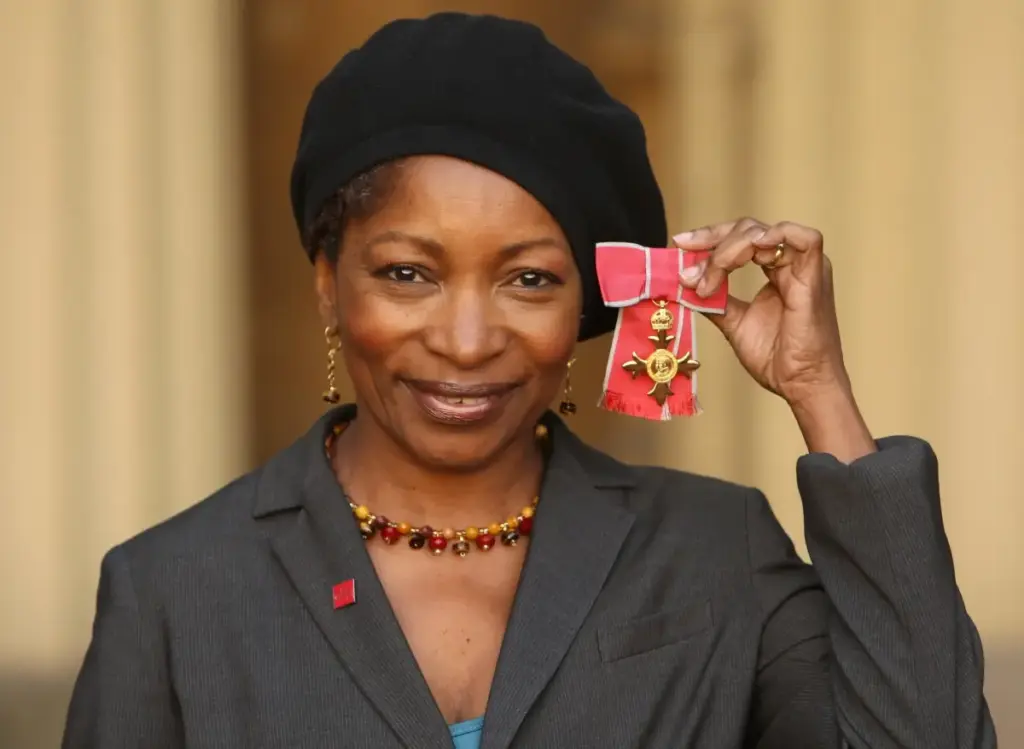
Her institutional influence grew correspondingly. In 2010, her immense contributions to the arts were officially recognized when she was invested as an Officer of the Order of the British Empire (OBE) by the then-Prince Charles (now King Charles III). Twelve years later, in July 2022, she achieved another major milestone when she was appointed a Fellow of the Royal Society of Literature in London, cementing her status among the literary elite of the nation she had adopted decades prior.
Supporting Context & Metrics: The Scale of Greer’s Impact
To fully appreciate Bonnie Greer’s legacy, one must examine the quantitative and qualitative dimensions of her career within the broader ecosystem of British and American arts.
Artistic Output Across Media
- Theatrical Productions: Greer wrote dozens of stage plays, musicals, and operas, performed in major venues across the UK, the US, and internationally. Her works like Obama Music were lauded for capturing the zeitgeist of the early 21st-century political landscape.
- Broadcast and Print Journalism: Over a career spanning more than four decades, Greer contributed to major newspapers, literary magazines, and broadcast networks, including regular appearances on the BBC, Sky News, and various cultural commentary programs.
- Audio and Opera Contributions: Her work with the Royal Opera House (Yes) and multiple BBC Radio drama commissions highlight an ability to bridge high art with accessible public broadcasting.
Honors and Milestones
- 1986: Relocated from Chicago to the United Kingdom, beginning her pivotal transatlantic cultural journey.
- 2010: Awarded the OBE for services to the arts, recognizing her vital role in shaping contemporary British theatre and public discourse.
- July 2022: Appointed a Fellow of the Royal Society of Literature, joining an esteemed cohort of Britain’s most distinguished authors, poets, and playwrights.
- September 2026: Passed away at age 77 following a brief illness, leaving behind an unmatched archive of cultural critique and dramatic literature.
Official Statements and Tributes
The literary, theatrical, and journalistic communities have poured forth expressions of grief, admiration, and respect following the announcement of Greer’s passing.

A Husband’s Loving Tribute
David Hutchins released an emotional statement confirming his wife’s passing and celebrating her extraordinary life:
"It is with profound sadness that I announce that my beloved wife, Bonnie Greer, has died aged 77 after a brief illness.
Bonnie was an acclaimed playwright, author, critic, cultural and political commentator whose intelligence, courage and distinctive voice made an enduring contribution to British cultural and public life.
To me, she was my partner, confidante and inspiration, and I feel profoundly privileged to have shared my life with her.
Those closest to Bonnie will remember her warmth, humour, generosity and extraordinary ability to bring people together.
At this immensely difficult time, we ask that our family’s privacy be respected. She will be deeply missed."
Broader Cultural Impact
Colleagues, actors, directors, and politicians have taken to public platforms to honor Greer’s memory. Many highlighted her fierce advocacy for diversity in the arts, recalling how she frequently challenged commissioning editors and theatrical institutions to look beyond tokenism and embrace genuine, multifaceted storytelling.

As a critic, Greer was known for her rigorous intellect and profound fairness. She did not merely review art; she contextualized it within historical and sociopolitical frameworks, elevating the discourse around every production she evaluated. Her ability to synthesize complex political theories with accessible, human-centered narratives made her an invaluable bridge between academia, mainstream media, and everyday audiences.
Future Outlook: Preserving a Transatlantic Legacy
As the artistic community mourns the loss of Bonnie Greer, attention inevitably turns toward the preservation and celebration of her extensive body of work.
Her plays, essays, and critiques serve as a masterclass in how artists can engage directly with the sociopolitical tensions of their time without sacrificing narrative grace or artistic integrity. Academic institutions and literary trusts are expected to initiate retrospectives, archiving her papers, scripts, and broadcast appearances to ensure that future generations of writers, students, and scholars can study her methodologies.
Greer’s journey—from the West Side of Chicago to the pinnacle of British cultural life—stands as a powerful testament to the transformative power of the written word. By fearlessly asking difficult questions about race, power, gender, and identity, she challenged Britain and the wider world to examine themselves more honestly.
While her physical presence is deeply missed by her husband, family, friends, and legions of admirers, Bonnie Greer’s voice remains permanently woven into the cultural tapestry of our time. Through Obama Music, Hanging by Her Teeth, and a lifetime of fearless commentary, her legacy will continue to resonate, inspire, and provoke debate for decades to come.