Published: September 7, 2026
Author: Global Affairs Desk
Category: International Law, Politics, and Human Rights
Executive Overview
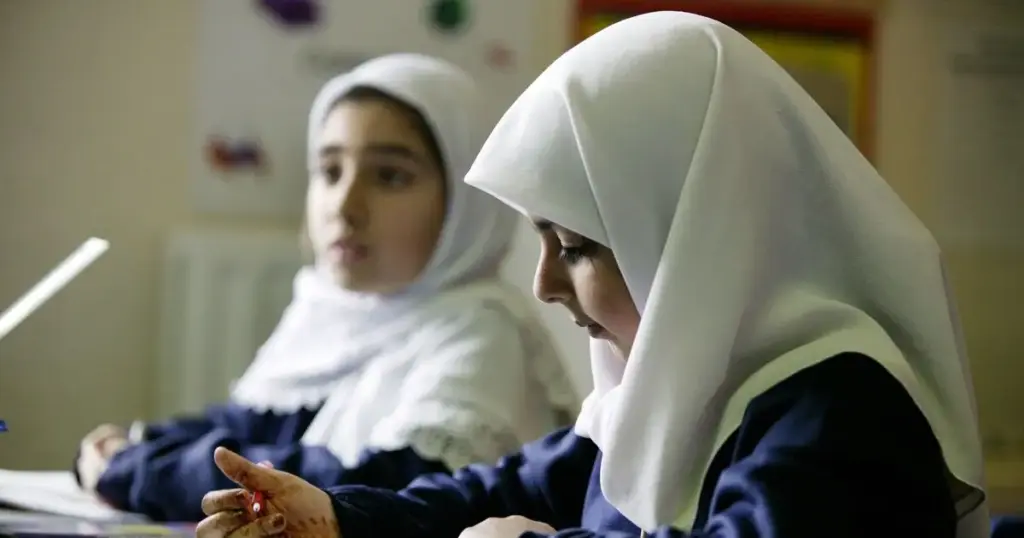
The debate surrounding secularism, religious expression, and state oversight in public institutions has taken a definitive legislative turn in Central Europe. Authorities in Austria have officially implemented a comprehensive ban targeting "traditional Muslim" clothing, restricting girls under the age of 14 from wearing garments such as hijabs, burkas, and other traditional head coverings within school environments. Spearheaded by the conservative People’s Party (ÖVP), the legislation is framed by its proponents as a necessary safeguard against early childhood indoctrination and patriarchal control. However, the policy has ignited a fierce ideological and legal firestorm, with critics arguing that the mandate directly infringes upon foundational human rights, specifically the freedom of religion and expression.
This legislative development in Austria does not occur in a vacuum. Across the European continent and the broader Western world, the intersection of public policy, secular education, and religious pluralism remains deeply contentious. While nations like Austria pursue restrictive measures in the name of integration and social protection, other nations—such as the United Kingdom—maintain a starkly different constitutional approach, explicitly rejecting blanket prohibitions on religious attire in favor of legal protections safeguarding personal expression.
This report provides an in-depth examination of the newly enacted Austrian legislation, the political landscape facilitating its passage, international comparative perspectives—including recent policy debates in the UK—and the broader implications for human rights jurisprudence in the 21st century.
Detailed Chronology: The Road to the Austrian School Ban
The journey toward Austria’s current legislative framework regarding religious attire in schools has been marked by years of political maneuvering, judicial challenges, and shifting coalition dynamics.
Early Legislative Precedents
Efforts to regulate clothing in Austrian educational institutions are not entirely new. Over the past decade, conservative factions within the Austrian parliament have periodically introduced initiatives aimed at curbing visible religious symbols in public spaces. In 2019, the Austrian parliament passed a law specifically banning headscarves in primary schools for children up to the age of 10. At the time, proponents argued that the measure was designed to promote equality among children and protect young girls from societal pressures.
However, that initial iteration of the law faced significant hurdles. In late 2020, Austria’s Constitutional Court (Verfassungsgerichtshof) struck down the 2019 headscarf ban for primary schools. The court ruled that the legislation was unconstitutional, determining that it violated the principle of equality before the law regarding freedom of religion and belief, and specifically noting that it appeared to disproportionately target Muslim female students, thereby constituting unequal treatment.
The Resurgence of the Policy Under the 2026 Coalition
Undeterred by previous judicial setbacks, proponents of the restriction regrouped as political coalitions evolved. By 2026, the Austrian government—operating under a complex three-party coalition comprising the conservative People’s Party (ÖVP), the Social Democrats (SPÖ), and the liberal NEos—faced renewed pressure from conservative lawmakers to address what they termed "parallel societies" and the influence of conservative religious interpretations on minors.
The newly enacted framework lowers the regulatory threshold and expands the scope. Under the current rules, girls under 14 years old in Austrian schools are strictly prohibited from wearing traditional Muslim head coverings. The ÖVP aggressively championed the measure, utilizing robust public messaging that framed the ban not as an attack on religious freedom, but as an emancipatory tool.
According to statements released by ÖVP representatives, traditional Muslim headscarves were characterized explicitly as "a sign of oppression and a means of controlling girls from the earliest childhood." By targeting students under 14—a threshold aligning closely with the age of religious majority in several European contexts—the coalition sought to construct a legally defensible argument centered on the welfare, protection, and autonomous development of minors.
Supporting Context & Metrics: The European Landscape
Austria’s legislative action reflects a broader, highly polarized European conversation concerning immigration, integration, multiculturalism, and the public visibility of religious traditions. Across Western Europe, individual nations have charted vastly divergent paths in handling religious garments, ranging from total bans in public spaces to robust constitutional protections.
Comparative European Policies
- France: Known for its strict adherence to laïcité (state secularism), France maintains some of the most stringent restrictions in the world regarding religious symbols. Since 2004, conspicuous religious signs and symbols—including large crosses, Jewish kippahs, and Islamic headscarves—have been banned in public primary and secondary schools. In 2010, France extended these restrictions to the public sphere by banning the full-face veil (burka and niqab) in all public spaces. More recently, French authorities have expanded bans to encompass specific garments like the abaya in schools, citing the preservation of secular public education.
- Belgium: Following the French model, Belgium enacted a ban in 2011 prohibiting any clothing that obscures the face in public places, backed by fines and potential brief jail sentences. Several municipal and regional educational bodies in Belgium have similarly implemented localized bans on headscarves for students and teachers.
- Germany: Germany has approached the issue through a patchwork of state-level (Land) regulations rather than a singular federal mandate. Several German states have implemented bans on headscarves for teachers and public servants, while student regulations vary significantly depending on local governance and court rulings, which have generally protected students’ fundamental rights more robustly than those of state employees.
Public Sentiment and Petitions
The friction between state-mandated secularism and personal religious freedom is equally palpable outside of continental Europe. In the United Kingdom, public discourse frequently intersects with these themes. A prominent example occurred via a public petition submitted in 2025 calling for the prohibition of full-face coverings in public spaces across the UK, including niqabs, burqas, balaclavas, and ski masks.

The online petition garnered significant public traction, collecting a total of 71,144 signatures before closing. The text of the petition encapsulated arguments frequently utilized by proponents of restrictions:
"We believe face coverings hinder social cohesion, alienate communities and discourage integration. We believe they undermine British values of openness and interaction while also posing security risks."
Despite the numerical backing of tens of thousands of citizens, the UK Government officially rejected the premise of the petition, declining to introduce restrictive legislation and reaffirming the country’s distinct legal philosophy regarding personal liberties.
Official Statements and Jurisprudential Frameworks
The divergence between nations implementing bans, such as Austria, and those refusing them, such as the United Kingdom, highlights fundamentally different interpretations of human rights law and state responsibilities.
The UK Government’s Stance on Religious Freedom
In response to the 2025 public petition, British government officials issued a comprehensive defense of existing legislation, emphasizing the nation’s historical commitment to pluralism and tolerance:
"It is not government policy to ban the burka or other face coverings in public. Britain has a proud tradition of religious tolerance within the law. The government is committed to creating a strong and integrated society in which hatred and prejudice are not tolerated and in which all people are free to express their religious identity without fear of it resulting in harassment, discrimination or attack."
Furthermore, the UK administration highlighted the vital contributions of faith communities to public life and explicitly cited foundational domestic and international human rights frameworks. Central to the British legal defense is the Human Rights Act 1998, which incorporates the European Convention on Human Rights (ECHR) into UK domestic law:
- Article 9 (Freedom of Thought, Conscience, and Religion): Guarantees everyone the legal right to freedom of religion, including the freedom to manifest religion or belief in worship, teaching, practice, and observance. This encompasses the right to wear religious attire, subject only to limitations prescribed by law that are necessary in a democratic society for public safety, public order, health, or morals, or for the protection of the rights and freedoms of others.
- Article 10 (Freedom of Expression): Protects the right to hold opinions and to receive and impart information and ideas. Non-religious face coverings and forms of personal or cultural expression similarly find protection under this provision.
The UK government maintained that any restrictions placed on religious or cultural attire must be "carefully justified" and asserted that current conditions do not warrant altering long-standing legislative approaches.
Critics and Counter-Arguments in Austria
Conversely, opponents of Austria’s new ban argue that the state is overstepping its bounds by dictating personal choices under the guise of liberation. Human rights advocates, civil liberties organizations, and minority community leaders have pointed out several core flaws in the Austrian legislation:
- Infringement on Personal Liberty: Critics contend that forcing young girls to remove religious garments does not empower them; rather, it strips them of their autonomy and forces conformity to state-mandated dress codes.
- Exclusion and Alienation: Legal scholars have argued that barring young Muslim girls from schools or forcing them to alter their religious practices creates a hostile environment that fosters institutional alienation rather than genuine social integration.
- Targeted Discrimination: Similar to the arguments raised successfully against Austria’s 2019 law, opponents argue that general prohibitions framed neutrally often carry discriminatory intent and disproportionately impact specific religious minorities, violating principles of equal protection under European law.
Future Outlook
As Austria enforces its newly minted restrictions on traditional Muslim attire for girls under 14, the broader European legal and political landscape braces for ongoing friction. The policy serves as a bellwether for the ongoing ideological struggle defining 21st-century liberal democracies: the tension between collective integration models championed by nationalist and conservative political parties, and individual rights frameworks championed by human rights organizations and pluralistic legal traditions.
Legal analysts anticipate that the 2026 Austrian law will face rigorous challenges in domestic courts and potentially reach the European Court of Human Rights (ECHR). Because the ECHR has historically granted individual member states a wide "margin of appreciation" when balancing state secularism against religious freedom—particularly in educational settings—the ultimate judicial fate of Austria’s ban remains uncertain.
What is clear, however, is that the debate over what citizens, particularly minors, are permitted to wear in public institutions is far from resolved. As political shifts continue across Europe, policymakers will undoubtedly continue to grapple with the complex equilibrium uniting social cohesion, state secularism, and the fundamental protection of religious expression.