Executive Overview
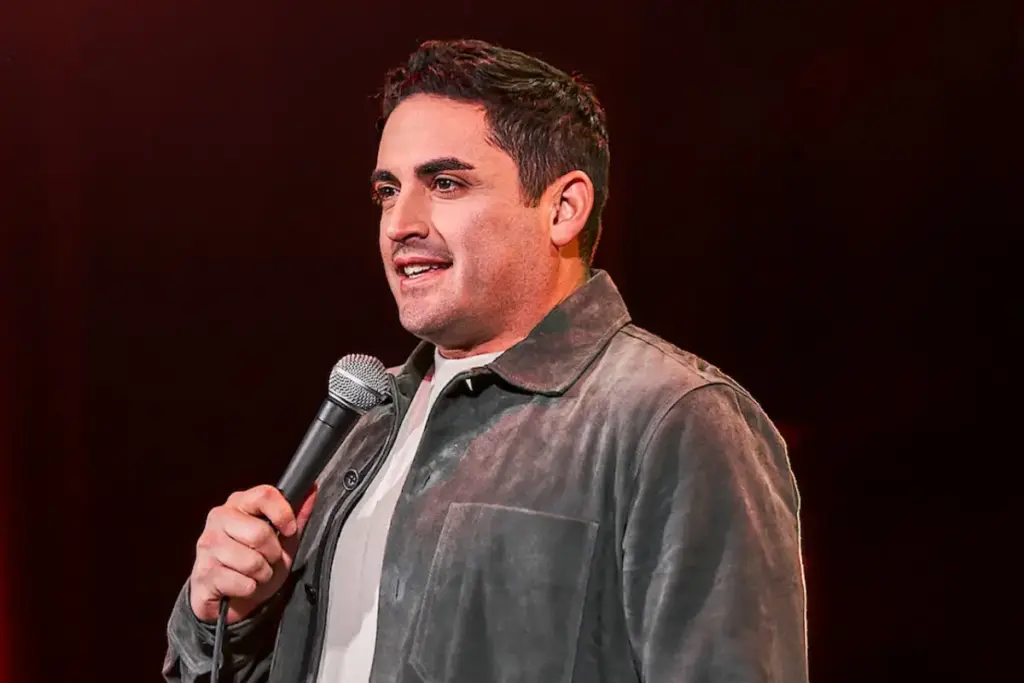
In the contemporary landscape of stand-up comedy, comedians often rely on hyper-stylized observations, political polarization, or exaggerated societal tropes to capture audience attention. However, comic Jared Freid has carved out a distinct niche by anchoring his material in the deeply mundane, yet universally agonizing, realities of late-stage singlehood and aging parents. Following the success of his 2021 Netflix debut, Jared Freid: 37 and Single, the comedian has returned to the streaming giant with his sophomore special, Jared Freid: The Family Plan.
At 39 years old, Freid sits firmly at the cultural crossroads of the Millennial generation—financially constrained by an economy shaped by Baby Boomers, emotionally bruised by parental expectations, and structurally unequipped for traditional milestones like marriage and homeownership. While his previous hour focused heavily on the algorithmic purgatory of modern dating, The Family Plan shifts its narrative gaze inward, dissecting the psychological echoes of his New England upbringing and his enduring, albeit confounding, reliance on his parents.
This review-analysis explores the thematic resonance of Freid’s latest hour, contextualizing his comedy within broader sociological shifts regarding generational divides, the evolution of stand-up confessionalism, and why a 39-year-old comedian refusing to leave his parents’ cellular plan strikes a resonant chord with millions.
Detailed Chronology and Special Progression
From Dating App Purgatory to Familial Entanglement
To understand the comedic evolution represented in The Family Plan, one must trace Freid’s trajectory over the past half-decade. In 37 and Single, Freid established himself as a voice for urban singles navigating the transactional, often dehumanizing mechanics of contemporary dating apps. He diagnosed the exhaustion of modern romance with surgical precision, appealing to an audience weary of the swipe-culture economy.
However, as Freid approached his late thirties, his thematic landscape naturally matured. In the intervening years leading up to The Family Plan, Freid expanded his public profile significantly. He made notable appearances on reality-adjacent cultural touchstones like The Golden Bachelor, alongside mainstream television spots on Watch What Happens Live and The Kelly Clarkson Show. Despite these professional milestones—and the fact that his brother has successfully married and altered the family’s sibling dynamic—Freid remains stubbornly unmarried and unapologetically tethered to his roots.
The Family Plan captures this transitional stagnation. The special’s title is not merely a metaphorical nod to emotional codependency; it is a literal admission: at 39 years old, Jared Freid’s monthly cell phone bill is still paid for by his parents. This central premise sets the tone for an hour that explores how childhood psychological conditioning persists long after biological maturity.
Structural Breakdown of the Hour
Freid’s comedic pacing in The Family Plan relies on extended, highly visual anecdotes punctuated by self-deprecating asides. He opens the set by acknowledging the inherent absurdity of his lifestyle, leaning into audience skepticism before neutralizing it with brutal honesty.
The special is chronologically and topically anchored around a series of domestic set-pieces:
- The Cellular Umbilical Cord: The aforementioned family phone plan, which Freid refuses to alter out of a mixture of laziness and institutionalized fear of administrative adulthood.
- The Parental Dyad: A detailed breakdown of his mother’s formidable debating skills juxtaposed with his father’s modern-day digital consumption—specifically, his father scrolling through TikTok with the wide-eyed innocence of a man whose brain is melting while declaring love for the algorithm in the middle of a Home Goods store.
- The Family Vacation Trauma: An extended sequence involving a trip to the beach, characterized by awkward silences in folding chairs, existential dread, and his mother’s inexplicable compulsion to invite random waitstaff and strangers into intimate family photographs.
- Generational Grievances: A sharp critique of the macroeconomic conditions handed down by Baby Boomers, which left Millennials stranded in financial precarity while enduring psychological terror disguised as parental "tough love."
Supporting Context and Metrics: The Millennial-Boomer Comedy Economy
To evaluate why The Family Plan resonates so deeply, one must examine the broader socio-economic and cultural metrics defining the relationship between the Boomer and Millennial generations.
The Economics of Prolonged Adulthood
Freid’s reliance on his parents for minor logistical support (like a cell phone plan) is far from an isolated comedic bit; it is a statistical reality for a significant portion of the Millennial demographic. According to economic data tracking household formations, delayed milestones—such as purchasing a first home, marrying later, and remaining financially entangled with parents—have become standard operating procedure for those born between 1981 and 1996.
Key metrics highlighting this generational shift include:
- Housing and Cost of Living: Real estate appreciation and wage stagnation have forced millions of adults to rely on familial safety nets well into their thirties and forties.
- The "Failure to Launch" Narrative Shift: What previous generations coded as personal laziness or pathological immaturity is increasingly recognized by sociologists as a rational adaptation to an unstable economic landscape. Freid captures this tension by blaming the Boomer generation not just for economic inflation, but for emotional inflation—where parental expectations remain tethered to an era of prosperity that no longer exists.
Stand-Up as Confessional Sociology
In the broader ecosystem of Netflix’s comedy specials, The Family Plan fits into a lineage of self-deprecating, hyper-observational stand-up that rejects high-concept political commentary in favor of domestic anthropology. Unlike comedians who manufacture "straw men" to make broad, generalized points about society, Freid operates strictly within the confines of his lived experience.
As he notes during the special regarding slick advertising campaigns featuring ageless celebrities like Rob Lowe promoting diet plans: "I only make fun of people I know or hope to meet. The day I meet Rob Lowe… will be the weirdest day of someone else’s life. I don’t create a straw man to make a point."
This commitment to observational authenticity ensures that even when Freid is describing hyper-specific scenarios—such as growing up Jewish in New England or enduring the psychological warfare of a family beach outing—the underlying emotional truth remains universally accessible.
Official Statements and Critical Reception
Industry analysts and comedy critics have responded favorably to Freid’s sophomore Netflix outing, praising his ability to transition from niche dating commentator to a more rounded, observational humorist.
While formal press releases from Netflix regarding streaming numbers for stand-up specials are rarely granular at launch, early critical consensus places The Family Plan as a strong contender in the platform’s comedy catalog. Critics have highlighted the special’s unique tonal balance—oscillating between biting sarcasm and genuine familial affection.
In commentary surrounding the release, cultural analysts have pointed out that Freid’s refusal to project an image of polished, completed adulthood is precisely what drives his appeal. By leaning into his identity as lazy, messy, and hyper-sensitive—while actively pushing back when his mother accuses him of the latter—Freid strips away the performative confidence often demanded by modern social media culture.
Future Outlook: Where Does Freid Go From Here?
As Jared Freid moves past the threshold of his late thirties, The Family Plan marks a critical pivot point in his career. A comedian cannot perpetually build an entire touring identity around being "unmarried at 37," nor can he sustain the "family plan" premise indefinitely without entering the realm of parody.
The Next Frontier for Observational Comedy
The success of The Family Plan suggests several viable pathways for Freid’s future output:
- Deepening Domestic Exploration: Should Freid eventually cross traditional milestones like marriage or fatherhood, his comedic perspective is primed to pivot toward the hypocrisies of modern parenting, applying the same neurotic, hyper-analyzed lens he currently trains on his own parents to the next generation.
- Expanding Media Cross-Pollination: Following his foray into reality television via The Golden Bachelor and daytime talk shows, Freid has demonstrated an ability to cross mediums without losing his distinct comedic voice. Future projects may see him expanding into podcasting extensions, scripted television development, or multi-cam formats that capitalize on his interpersonal dynamic observations.
- The Maturation of Millennial Audiences: As the Millennial generation ages into their forties, the cultural appetite for media that addresses middle-aged anxiety, aging parents, and stalled life trajectories will only expand. Freid is uniquely positioned to serve as the unofficial poet laureate of this demographic’s domestic fatigue.
Conclusion
Jared Freid: The Family Plan is more than just a collection of tightly wound bits about cellular bills and beach chair awkwardness; it is a cultural artifact of a generation caught between the rigid expectations of the past and the economic uncertainties of the present. Whether watched as a late-summer diversion or saved for a dysfunctional family gathering during the holidays, Freid’s latest special proves that honesty—no matter how neurotic, lazy, or messy—remains the highest form of comedy.