Executive Overview
If the spring/summer 2026 ready-to-wear collections were a quiet exercise in anti-algorithm dressing, the subsequent autumn/winter 2026 season took things a step further. Designers abandoned the physical and digital realities of modern-day life, retreating instead into a richly layered fantasy land where storytelling, whimsy, and subversion offer a much-needed escape from the grind of the 2020s.
As Nicolas Ghesquière aptly described it, this season introduced “a new folklore, for the future.” Of course, the immense pressures of managing a luxury fashion brand within an increasingly corporatized landscape still loom heavy. Yet, the new-season offerings proved that creative directors in 2026 still possess the rare, vital space to—whisper it—have a little fun.
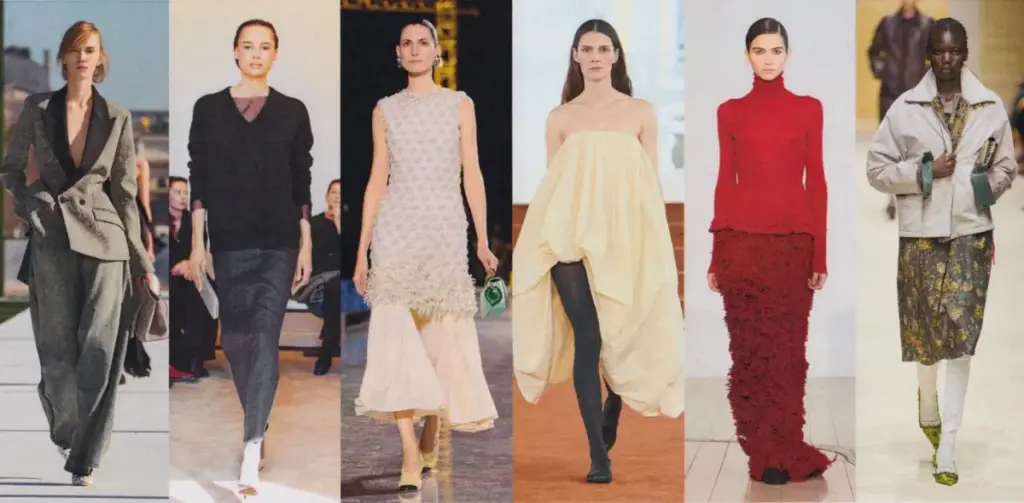
Moving far beyond the recycled 1990s minimalisms and Noughties streetwear revivals that have saturated the digital landscape for the past half-decade, the AW26 runways marked a distinct turning point. By leaning into dark romanticism, avant-garde proportion play, grounded rustic textures, and historic tailoring, the industry has signaled a collective yearning for emotional resonance over frictionless consumerism.

Detailed Chronology: Runway Highlights and Immersive Narratives
Louis Vuitton: The Moss-Covered Neo-Landscape
Ghesquière’s Louis Vuitton show serves as a narrative anchor for the season. Set within the historic summer apartments of Anne d’Autriche, Queen of France, the venue was transformed for one day into a moss-covered "neo-landscape" masterminded by Severance production designer Jeremy Hindle.
The physical space set a fantastical stage for architectural, Turkish kepenek-inspired cloaks that opened the presentation, swiftly followed by eclectic, heterogeneous ensembles. Many of these standout pieces were embellished with striking sheep motifs conceptualized by Ukrainian artist Nazar Strelyaev-Nazarko.
“Ghesquière was asking us to dream, or at least to get out of our sartorial comfort zones,” Vogue’s Nicole Phelps observed. It was a clear rejection of baseline trend-forecasting, inviting wearers to embrace garments as conceptual artifacts.

Loewe: The Joy of Making
At Loewe, Jack McCollough and Lazaro Hernandez established an unapologetically joyful tone from the moment guests arrived, greeted by Cosima von Bonin’s supersized stuffed animals.
“For us, it was really about the joy of making,” McCollough shared with Vogue. There was nothing self-serious or quietly minimalist about the runway; instead, it featured 3D-printed latex dresses in piercing citrus fruit shades, hyper-tactile teddy bear textures, and pumped-up, life jacket-inspired outerwear. Loewe’s collection proved that tactile experimentation and humor can successfully coexist at the pinnacle of luxury.
The Gothic Revival: Darkness and Romance
While playfulness dominated the French houses, a deep, brooding gothic mood gripped the runways of Gabriela Hearst, McQueen, and Givenchy.

Gabriela Hearst sent wind-tussled models down the runway draped in billowing cloaks worthy of the Brothers Grimm. Meanwhile, Sean McGirr stayed fiercely true to Alexander McQueen’s foundational roots with femme fatale corsetry and creeping lace. McQueen alumna Sarah Burton brought an antique, oil-painting-like quality to her eveningwear, utilizing rich botanical embroidery and Art Deco-inspired jewelry—a motif that echoed powerfully at Valentino.
It was an aesthetic tailor-made for a Daphne Du Maurier-worthy heroine navigating the digital age. For those looking to interpret the gothic mood into an everyday wardrobe, experts recommend scouring vintage archives rather than standard thrift stores, seeking out well-worn pieces embellished with hand-stitched needlework or beading that function as wearable art.
Supporting Context & Metrics: Decoding the AW26 Shifts
To fully understand the commercial and cultural impact of the autumn/winter 2026 collections, one must examine the shifting metrics of consumer desire. For years, the market has been dictated by algorithmic uniformity—viral TikTok aesthetics, hyper-curated capsule wardrobes, and predictable logomania.

| Era Reference | Key Silhouette Drivers | Consumer Demographic Focus | Market Trajectory for AW26 |
|---|---|---|---|
| 1990s Minimalism | Slip skirts, fluid tailoring, neutral slips | Gen X & Millennial traditionalists | Plateauing; shifting toward layered styling |
| Noughties Revival | Baggy denim, baby tees, low-rise cuts | Gen Z digital natives | Evolving into proportion play and dropped waists |
| New Folklore / Gothic | Billowing cloaks, heavy brocade, corsetry | Experience-driven luxury consumers | Surging; high search volume for artisanal items |
The Power of Styling Against the Algorithm
The modern internet algorithm naturally churns out homogenous outfit formulas. Even when an ensemble feels unique to an individual user, millions are seeing and sharing the exact same material, leading to a strange paradox of mass conformity.
The ultimate antidote to algorithmic dressing was brilliantly demonstrated by Miuccia Prada and Raf Simons. They sent a cast of 15 models down the runway, each wearing four distinct looks that transformed in real-time. It was undeniable proof that a wardrobe built on versatile, multi-functional pieces outweighs the compulsion to buy something novel for every dressing dilemma.
Consider a tailored midi-skirt that transitions effortlessly from the boardroom to evening drinks, or a low-cut camisole worn solo or layered over a fine-gauge knit. Versatility is the new luxury.

Official Statements and Industry Insights
The philosophical underpinnings of the AW26 season were defined by creative directors seeking emotional authenticity over corporate performance metrics.
“I wanted to create with humanity, with gentleness, with poetry, with romance. Because we are small in the world, but we are enough.”
— Miuccia Prada
This sentiment of human scale and emotional grounding was echoed across design houses. At Alaïa, Pieter Mulier dedicated his final collection for the house entirely to the human form, stripping away extraneous noise.

“It’s just really clothes for real people, not for an image. That’s what I told my team. To reduce, reduce. No bags, no jewellery. Only beauty and clothes and a naked shoe. Because that’s what Azzedine was.”
— Pieter Mulier
By presenting a streamlined succession of body-conscious tank dresses, gossamer-thin maxis, and skintight silhouettes, Mulier provided a stark, beautiful counterweight to the structural, oversized outerwear dominating other fashion capitals.
Future Outlook: Translating AW26 into the Real World
As the physical pieces from the autumn/winter 2026 collections transition from the runway to the retail floor, consumers face the challenge of translating high-concept fantasy into functional daily wardrobes.

1. Embracing the New-Era "Ladylike"
The term "ladylike" has historically been burdened by rigid stereotypes: prim top-handle bags, restrictive gloves, and hyper-demure tailoring. In 2026, the archetype has been radically updated. While the structural blueprint remains impeccably elegant—such as Jonathan Anderson’s reimagined Dior Bar jackets and Matthieu Blazy’s boxy Chanel skirt suits—the attitude is completely modernized. Pairing a historic Bar jacket with slouchy, unstructured denim or styling bouclé separates with untucked longline shirts strips away the "costume" feel, making high-heritage tailoring viable for everyday life.
2. Investing in Art Deco and Artisan Eveningwear
The century-old fascination with the 1920s has returned via Art Deco-inspired eveningwear. Intricate beaded embroidery, flapper-coded fringing, and tactile lace (as seen at Lanvin, Prada, and Bode) offer a welcome departure from the clinical "quiet luxury" of previous years. Moving forward, investing in heirloom-quality outerwear and embellished separates will define sophisticated evening dressing.
3. Proportion Play and the Body
Whether experimenting with dropped waists (as championed by Matthieu Blazy at Chanel), cinched peplums, or second-skin jersey pieces (such as those from Alaïa and Flore Flore), the silhouette for late 2026 and beyond is all about intentional manipulation. Consumers are encouraged to move away from head-to-toe oversized styling and instead balance volume with anatomical precision.

Ultimately, autumn/winter 2026 proves that fashion does not need to retreat from reality to be magical; rather, it can use fantasy as a tool to navigate the complexities of modern existence with humor, humanity, and unmatched craftsmanship.