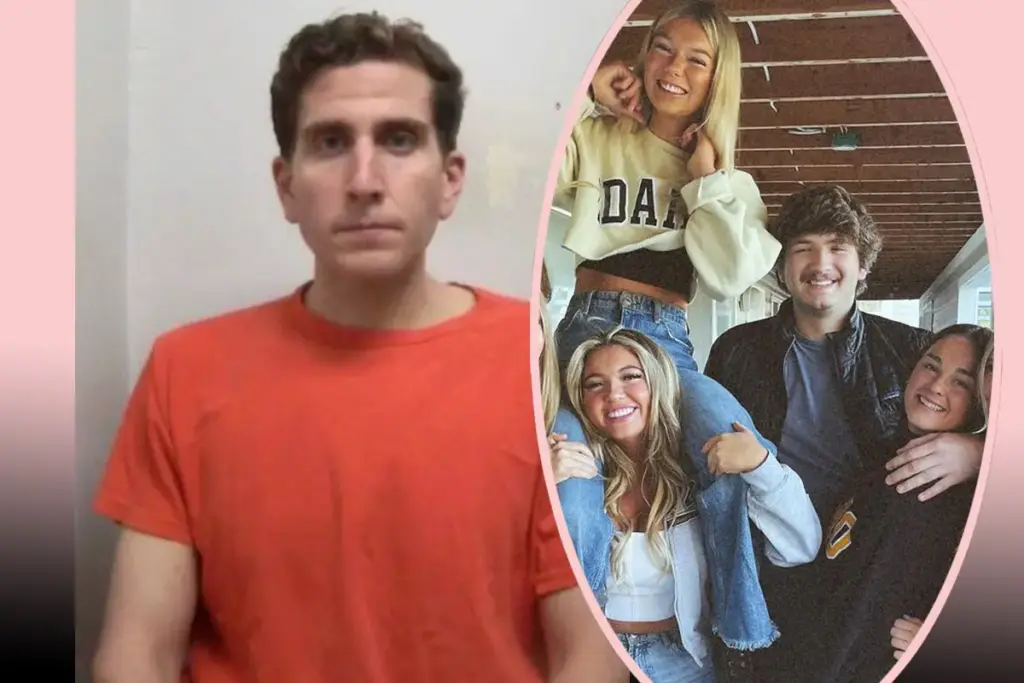
In a significant post-conviction development following one of the most widely followed criminal cases in modern American history, an Idaho district court judge has agreed to hear a formal petition from Bryan Kohberger seeking to withdraw his guilty plea. Kohberger was convicted for the brutal murders of four University of Idaho undergraduate students—Kaylee Goncalves, Madison Mogen, Xana Kernodle, and Ethan Chapin.
One year after entering a formal guilty plea that spared him from a potential death sentence in exchange for four consecutive life terms in prison, Kohberger is seeking post-conviction relief in Idaho’s Ada County District Court. Represented by a newly appointed defense attorney, Richard Rauch, Kohberger maintains that his original confession was coerced through misinformation and unfulfilled promises by legal authorities.
The court has scheduled a post-conviction relief hearing for June 2027. If Kohberger’s defense team successfully argues that his plea was fundamentally compromised, the court could vacate his conviction and grant a new trial. The announcement has reignited intense grief and outrage among the victims’ families, who view the petition as a calculated maneuver to maintain public attention and disrupt the finality of the court’s prior judgment.
Detailed Chronology of the Case and Legal Maneuvers
The legal trajectory of the University of Idaho homicide investigation has shifted from a complex capital murder prosecution to an extended post-conviction legal battle.
+-----------------------------------------------------------------------------------+
|                                  CASE TIMELINE                                    |
+-----------------------------------------------------------------------------------+
| Nov 2022  | Four University of Idaho students murdered in Moscow, Idaho.          |
| 2023–2024 | Two-year pre-trial discovery phase; Kohberger represented by defense. |
| 2025      | Kohberger enters guilty plea; sentenced to four consecutive life terms.|
| Aug 2026  | Kohberger files for post-conviction relief in Ada County; interview  |
|           | published by The New York Times claiming "actual innocence."          |
| June 2027 | Scheduled hearing in Ada County District Court on plea withdrawal.    |
+-----------------------------------------------------------------------------------+
The Initial Offense and Guilty Plea
Following an extensive, multi-agency law enforcement investigation into the November 2022 homicides at an off-campus residential home in Moscow, Idaho, Kohberger was arrested and charged with four counts of first-degree murder. Over the course of nearly two years, the defense team reviewed voluminous discovery materials provided by state prosecutors.
Faced with a capital prosecution in which the state intended to seek the death penalty, Kohberger entered a formal guilty plea. Under the terms of the plea agreement:
Kohberger admitted to the underlying criminal acts.
The state agreed to remove the death penalty as a sentencing option.
Kohberger received four consecutive life sentences without the possibility of parole.
The plea agreement did not require Kohberger to articulate a motive or provide a detailed narrative of the crimes.
During his allocution and plea colloquy before the court, Kohberger was accompanied by a team of four defense attorneys. When directly questioned by the presiding judge regarding his factual guilt, Kohberger unequivocally responded, "Yes."
The Post-Conviction Petition and New Counsel
Approximately one year after his sentencing, Kohberger initiated proceedings to undo his plea agreement. Securing new legal representation under attorney Richard Rauch, Kohberger filed a petition for post-conviction relief in Ada County District Court.
In public statements accompanying the legal filing, including an interview published by The New York Times, Kohberger publicly repudiated his conviction, alleging that his previous plea was entered under duress, faulty guidance, and misleading information from officials.
Upon reviewing the initial filings, the Ada County District Court determined that the petition met the statutory threshold required to warrant an evidentiary hearing, scheduling the formal proceedings for June 2027.
Supporting Context, Evidentiary Mechanics, and Case Metrics
Post-conviction relief petitions that seek to invalidate a voluntary guilty plea face a high legal bar. Under Idaho criminal jurisprudence, a defendant seeking to withdraw a plea post-sentencing must demonstrate a "manifest injustice"—a strict standard designed to preserve the finality of criminal judgments.
+-----------------------------------------------------------------------------------+
|                        SUMMARY OF KEY LEGAL METRICS                               |
+-----------------------------------------------------------------------------------+
| Primary Defendant      | Bryan Kohberger                                          |
| Victims                | Kaylee Goncalves, Madison Mogen,                         |
|                        | Xana Kernodle, Ethan Chapin                              |
| Original Sentence      | Four (4) Consecutive Life Terms (No Parole)             |
| Current Legal Filing   | Petition for Post-Conviction Relief                      |
| Presiding Jurisdiction | Ada County District Court, Idaho                         |
| Lead Defense Counsel   | Richard Rauch (Post-Conviction)                          |
| Scheduled Proceeding   | Evidentiary Hearing – June 2027                          |
+-----------------------------------------------------------------------------------+
Allegations of Coercion and Misinformation
In his statements to The New York Times, Kohberger alleged that his guilty plea was not a voluntary admission of guilt, but rather the product of institutional pressure and deceptive practices during pre-trial negotiations.
"My actual innocence is my truth, and the plea, hinged on by false promises and blatant disinformation, MUST be withdrawn."
— Bryan Kohberger, in an interview with The New York Times
Despite asserting that his plea was compromised by "false promises," Kohberger did not publicly detail the specific nature of those promises, nor did he explain why he failed to raise these concerns during his formal plea colloquy. Furthermore, Kohberger asserted that "justice was not served" and claimed that "unanswered questions seem to multiply with each piece of discovery unsealed."
Legal Burden in Post-Conviction Relief
To succeed at the scheduled June 2027 hearing, Kohberger and defense attorney Richard Rauch must present clear evidence demonstrating that:
His prior trial counsel provided constitutionally ineffective assistance under the Sixth Amendment; or
Prosecutorial authorities engaged in misconduct or misrepresentation that rendered his plea involuntary; or
Newly discovered evidence fundamentally undermines the validity of the original conviction.
If the Ada County District Court rules in Kohberger’s favor, his four life sentences will be vacated, his original guilty plea will be struck from the record, and the case will revert to a pre-trial posture—exposing Kohberger once again to a full trial where prosecutors could potentially re-instantiate capital punishment charges depending on the terms of the original plea recision.
Official Statements and Victims’ Reactions
The announcement of the upcoming post-conviction hearing has elicited sharp responses from the victims’ families, who previously delivered powerful victim impact statements during the original sentencing proceedings.
The Goncalves Family Statement
Following the court’s decision to grant a hearing, the family of victim Kaylee Goncalves issued a comprehensive statement criticizing the post-conviction proceedings. The family expressed frustration over what they characterize as an abuse of the judicial system by a convicted perpetrator seeking publicity.
"He appeared in court for a hearing before a judge, accompanied by his four lawyers. He chose not to leave his fate—or the facts of the case—to a jury. He never cried foul, never claimed he was uninformed or pressured, and never suggested there were problems with the discovery materials he and his counsel had reviewed for two years that should have been challenged. He admitted his guilt. When asked whether he was actually guilty, he answered, ‘Yes.’
We would have preferred a death-penalty trial; we believe fully in the evidence. Instead, BK received exactly what he asked for: a deal that spared his life. Know this—he hates that life. He wants another chance to roll the dice. There will almost certainly be a hearing; that is how the legal process works. The defendant will get another day in court—a welcome break from solitary confinement: a ride, perhaps different food, photos taken, and the spotlight once again fixed on him and his supposed ‘innocent.’
The real tragedy is this: if even a fraction of the energy spent trying to free a guilty man were directed toward honoring the victims, there would be statues of them on every corner, parks bearing their names, and days set aside to remember the lives they lost at the hands of a narcissist."
— The Family of Kaylee Goncalves, Official Media Statement
The family, whose members—including Kaylee’s sister, Alivea Goncalves—previously delivered impactful testimony during court proceedings, characterized Kohberger’s ongoing legal motions as "the mosquito you just can’t seem to swat."
Future Legal Outlook and Procedural Horizon
As Ada County District Court prepares for the scheduled June 2027 evidentiary hearing, both the defense and state prosecution will undergo an extensive period of pre-hearing discovery and motion practice.
+-----------------------------------------------------------------------------------+
|                     POST-CONVICTION PROCEDURAL PATHWAY                            |
+-----------------------------------------------------------------------------------+
|                                  JUNE 2027                                        |
|                         Ada County Evidentiary Hearing                            |
|                                      |                                            |
|                 +--------------------+--------------------+                       |
|                 |                                         |                       |
|        [PETITION GRANTED]                        [PETITION DENIED]                |
|                 |                                         |                       |
|   - Guilty Plea Vacated                   - Original Conviction Maintained        |
|   - Sentence Rescinded                    - Four Life Sentences Stand             |
|   - Case Remanded for Trial               - Appellate Appeal to Idaho Supreme Ct  |
+-----------------------------------------------------------------------------------+
Anticipated Defense Strategy
Attorney Richard Rauch is expected to focus heavily on the administrative and procedural circumstances surrounding Kohberger’s original plea agreement. Key elements of the defense argument may include:
Subpoenaing trial counsel to examine internal communications prior to the plea entry.
Investigating claims of withheld evidence or prosecutorial misrepresentation.
Establishing that Kohberger’s psychological state or understanding of the law was compromised at the time of the plea.
Prospective Prosecution Counter-Arguments
State prosecutors are expected to present the extensive record of the original plea hearing as conclusive evidence of voluntariness. The state will likely argue that:
Kohberger was thoroughly advised of his constitutional rights by multiple experienced defense counsel.
The defendant affirmed his guilt under oath in open court without reservation.
The post-conviction petition represents buyer’s remorse rather than a legitimate legal defect in the proceedings.
Should the Ada County court deny Kohberger’s petition in 2027, the defense maintains the right to appeal the decision to the Idaho Supreme Court. Conversely, if the court grants the petition, state prosecutors will decide whether to negotiate a new plea agreement or proceed to a full trial, where the death penalty could once again become a central element of the judicial calculus.