Executive Overview
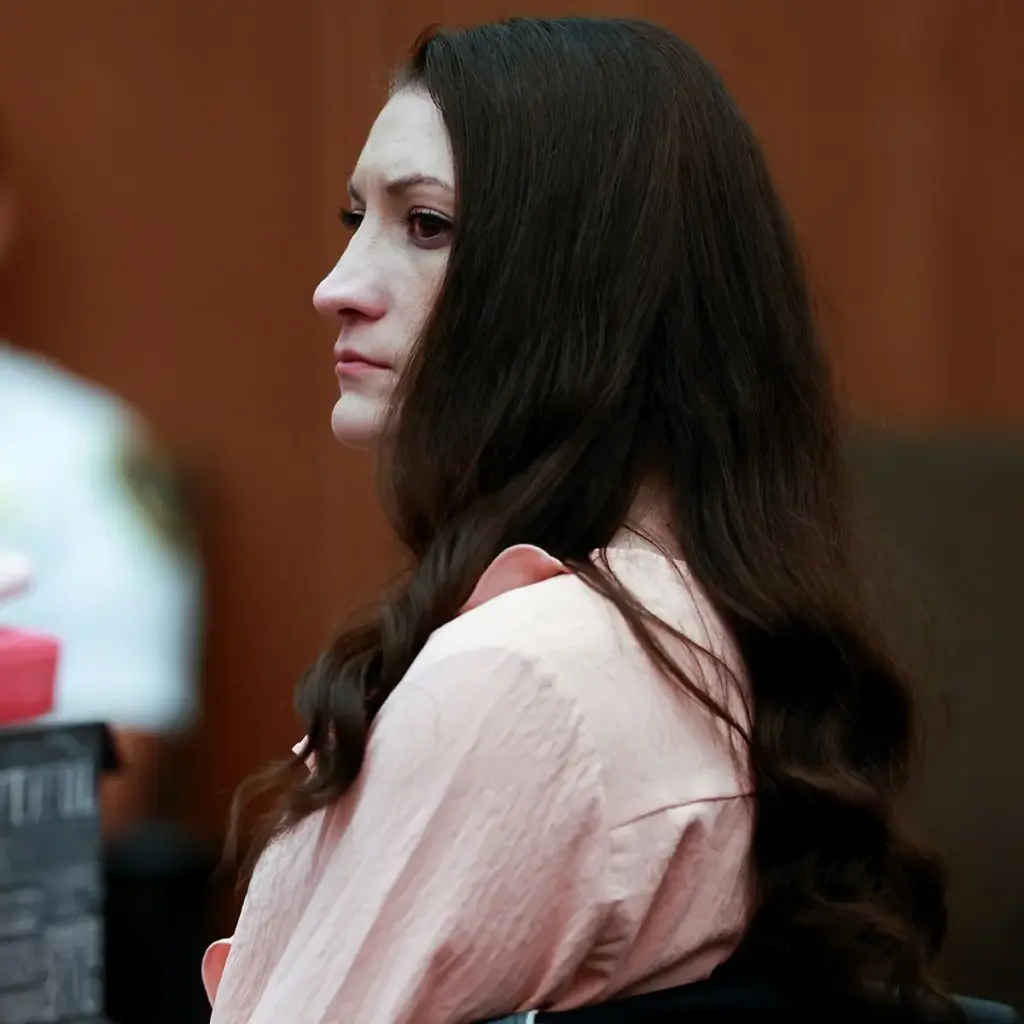
The murder trial of Lindsay Clancy ended not with a definitive verdict, but with a deeply fractured jury room and a declared mistrial on September 4, leaving a scarred community and a stunned legal landscape in its wake. Clancy, a 36-year-old former labor-and-delivery nurse, faced capital-level scrutiny for the tragic January 2023 killings of her three young children: 5-year-old Cora, 3-year-old Dawson, and 8-month-old Callan.
While the defense readily conceded that Clancy committed the physical acts, the trial hinged entirely on a single, profoundly complex legal and medical question: Was Clancy suffering from severe postpartum psychosis at the time, rendering her legally insane and incapable of understanding the wrongfulness of her actions?
After a grueling seven days of jury deliberations following weeks of intense testimony in Plymouth Superior Court, the panel remained deadlocked. Eleven jurors were reportedly prepared to return a verdict of not guilty by reason of insanity, while a single holdout—identified as Michael P. Desronvil—refused to yield. Desronvil’s steadfast stance against his peers ignited a public war of words weeks after the gavel fell, exposing profound friction within the jury room, accusations of arrogance, and sharp disagreements over how to interpret complex medical evidence.
This deep dive examines the anatomy of the trial, the harrowing testimony from Clancy’s husband and medical experts, the digital forensics that captivated the court, and the dramatic breakdown of jury deliberations that ultimately forced Judge William Sullivan to declare a mistrial.
Detailed Chronology: The Path to Tragedy and Trial
The Spiral of Mental Health Struggles
The roots of the tragedy trace back through months of escalating psychiatric distress. According to testimony from Clancy’s husband, Patrick Clancy, Lindsay had previously experienced mild mental health hurdles following the 2019 birth of their son Dawson, though those difficulties had resolved relatively quickly.
However, the birth of their youngest son, Callan, in May 2023 marked the beginning of a terrifying descent. In late 2023, after cycling through numerous psychiatric medications prescribed since September, Lindsay experienced what Patrick described as a "big spiral." She began vocalizing intrusive thoughts about harming herself and her children. Despite these alarming admissions, Patrick testified that he felt no immediate physical danger, believing she lacked any actual intent to act on the thoughts.
By December 31, 2023, the situation escalated to the point where Lindsay sought emergency psychiatric intervention at Massachusetts General Hospital, subsequently transferring to an affiliated inpatient facility. Upon her discharge on January 5, 2024, family members and Patrick felt a brief wave of relief; she appeared calmer and more functional. Just weeks before the tragedy, on January 24, Patrick recalled a day that felt remarkably hopeful, with Lindsay building a snowman and playing cheerfully with the children.
The Fatal Afternoon
That fleeting hope shattered on January 24, 2023. Prosecutors contend that Lindsay meticulously engineered a scenario to get Patrick out of the house, sending him on errands to pick up dinner and medication.
While he was gone, prosecutors argue, Lindsay used exercise bands to strangle her three children. During the trial, haunting text messages revealed the mundane backdrop of the horrific moments unfolding at home—Lindsay texting about takeout options from a local restaurant ("Any chance you want to do take out from ThreeV… I didn’t cook anything. It’s been a long day") while quietly carrying out the murders.
When Patrick returned home, he discovered his wife lying injured outside after an apparent suicide attempt and his children unresponsive in the basement. His agonizing, seven-minute 911 call, played in open court, captured the raw horror of the discovery as he screamed to the dispatcher, "She killed the kids!"
Supporting Context & Metrics: Testimony, Digital Forensics, and Medical Evidence
Toxicological Findings and Medication Debate
The intersection of pharmacology and mental illness formed the bedrock of the defense’s strategy. Forensic toxicologist Justin Brower testified that post-incident blood panels detected mirtazapine, lamotrigine, trazodone, and quetiapine in Clancy’s system. While quetiapine levels were slightly elevated, Brower noted they did not reach toxic or suicidal thresholds.
Defense attorney Kevin Reddington argued that Clancy suffered from undiagnosed or mismanaged bipolar disorder, and that a rapid succession of psychiatric medications severely worsened her psychological state. Reddington claimed that on the day of the killings, auditory hallucinations commanded her: "This is your last chance. Kill the children so you can kill yourself."
Conversely, the prosecution painted a picture of calculated premeditation. Digital forensics expert Ian Whiffin presented chilling search history data retrieved from Clancy’s devices. In the days leading up to the tragedy, Clancy queried topics such as "how quickly does wellbutrin work for depression," "ketamine for suicidal ideation," and information specifically regarding postpartum psychosis. Apple Watch and iPhone health data further corroborated her movements, showing physical activity, including climbing two flights of stairs, during the critical operational windows of the afternoon.
The Human Cost: Witnesses on the Stand
Throughout the trial, jurors heard conflicting human portraits of the defendant. Elaine Rossi, the family’s nanny, described Clancy as a deeply loving, attentive mother who constantly prioritized her children’s safety and well-being. Andrea Hennigan, a former coworker at Massachusetts General Hospital, recalled lunch conversations where Clancy voiced deep concerns over insomnia, "brain fog," and a complete inability to cope, leading to her decision not to return to labor-and-delivery nursing.
Yet, the emotional weight of the courtroom reached a fever pitch when prosecutors displayed autopsy photographs of 8-month-old Callan. Clancy sobbed openly, prompting a brief recess and a subsequent legal skirmish when the defense alleged a prosecutor was caught on a "hot mic" whispering an insensitive remark—a claim the prosecution countered as a misheard instruction to "shut off" the display screens.
Official Statements and Jury Room Fallout
The most explosive developments occurred after the jury was excused. Following seven days of grueling deliberations, the panel’s internal divisions spilled into the public sphere through dueling media appearances by the jurors themselves.
The Holdout’s Defense
Michael P. Desronvil, the lone male juror who refused to sign off on a not guilty by reason of insanity verdict, broke his silence in mid-September. Speaking to NewsNation, Desronvil maintained that his convictions were unwavering.
"I didn’t have any doubts," Desronvil stated. "As I tried to explain different possible theories during deliberation, I kept getting cut off as if I had doubts based on the evidence present. Based on all the physical evidence, key witnesses, and what the prosecution presents, I thought it was enough proof that [Clancy] knew exactly what she was doing and planned."
Counter-Accusations from the Majority
Desronvil’s position, however, was met with sharp condemnation from his fellow jurors. In interviews with regional outlets like NBC10 Boston, jurors Roni Carlson, Kellie Farina, and Paula Devlin painted a starkly different picture of the deliberation room, characterizing Desronvil as entrenched and unwilling to engage constructively.
- Paula Devlin described Desronvil as "very arrogant," asserting that he dismissed input from peers and refused to seriously weigh medical reports or hospital evaluations.
- Kellie Farina noted that the rest of the jury repeatedly read and reviewed the legal definition of reasonable doubt for his benefit.
- Roni Carlson recalled a moment of near-breakthrough: "He admitted he had reasonable doubt and I started filling out the forms, I was so excited… [but then] he said he was still not going to say that she’s not guilty by reason of insanity."
The friction became so severe that the defense formally requested Desronvil’s removal, arguing he was outright refusing to follow judicial instructions regarding reasonable doubt. Judge Sullivan, however, declined the motion, citing the extreme legal sensitivity and risk of error involved in dismissing a deliberating juror. Ultimately, with the panel hopelessly deadlocked, the judge declared a mistrial on September 4.
Future Outlook
The declaration of a mistrial leaves the legal system and the Clancy family in a state of agonizing limbo. Legally, the prosecution retains the right to retry the case, meaning Lindsay Clancy could face a brand-new trial, a fresh jury, and another grueling re-examination of the intersection between severe postpartum mental illness and criminal culpability.
The public debate catalyzed by the trial—touching on the stigma of postpartum psychosis, the oversight of psychiatric medication regimens, and the sheer unpredictability of jury dynamics in high-profile insanity pleas—will undoubtedly resonate for years to come. As legal teams weigh their next steps, the fundamental question remains unresolved: Can a justice system designed around traditional concepts of mens rea (guilty mind) fairly evaluate a mind allegedly hijacked by the darkest recesses of postpartum psychiatric illness? For now, the courts, the legal experts, and a deeply divided public await the next chapter.