Executive Overview
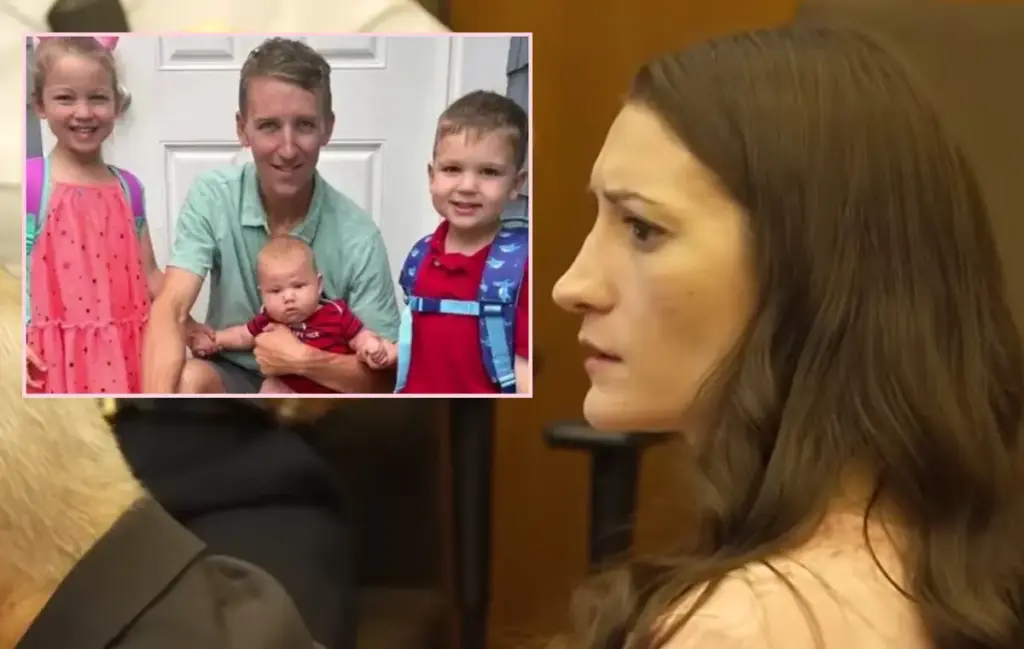
In a dramatic conclusion to one of the most closely watched capital-level proceedings in recent New England history, the trial of Lindsay Clancy ended without a verdict after a Plymouth County jury reported an irreversible impasse. Clancy, a 33-year-old former labor and delivery nurse from Duxbury, Massachusetts, was tried on murder charges stemming from the January 2023 strangulation deaths of her three young children—five-year-old Cora, three-year-old Dawson, and seven-month-old Callan.
After five weeks of exhaustive testimony featuring more than 80 witnesses and complex forensic psychiatric evidence, the jury informed Superior Court Judge William Sullivan that it was hopelessly deadlocked. Despite last-minute procedural efforts by defense counsel Kevin Reddington to challenge jury dynamics and secure an emergency stay from the Massachusetts Supreme Judicial Court (SJC), a single justice of the state’s high court officially denied the emergency petition, solidifying Judge Sullivan’s declaration of a mistrial.
The case has captured national media attention, highlighting intense debates surrounding criminal responsibility, severe postpartum mental illness, overmedication, and the statutory limits of the insanity defense under Massachusetts law. With no unanimous resolution reached, the Plymouth County District Attorney’s Office faces a crucial strategic decision regarding whether to retry Clancy, whose defense maintains she was suffering from severe postpartum psychosis at the time of the killings.
Detailed Chronology
[January 24, 2023] ---------------> [Winter 2023 - Fall 2024] -------> [Late 2024] ---------------> [Final 48 Hours]
Tragic Incident in Duxbury;        Pre-Trial Motions, Psychiatric      5-Week Trial Begins;         Jury Deadlock, Motion
Clancy Hospitalized & Paralyzed    Evaluations & Medication Audits     80+ Witnesses Testify        Denied, Mistrial Declared
Phase I: The Incident at Duxbury (January 24, 2023)
On the evening of January 24, 2023, Lindsay Clancy’s husband, Patrick Clancy, briefly left the family’s suburban home in Duxbury to pick up a medication prescription and takeout dinner. Upon his return roughly 25 minutes later, he discovered a horrific scene. Lindsay Clancy had jumped from a second-story window in an apparent suicide attempt.
Emergency responders subsequently discovered the three young children in the basement, bound and strangled with exercise bands. Cora and Dawson were pronounced dead shortly after arrival at the hospital, while infant Callan succumbed to his injuries days later. The fall left Lindsay Clancy permanently paralyzed from the waist down due to severe spinal trauma.
Phase II: Pre-Trial Proceedings and Psychiatric Audits (2023–2024)
Following her arrest, Clancy was hospitalized under continuous psychiatric and medical care. The pre-trial phase was marked by legal battles over access to Clancy’s medical records, prescription history, and digital communications.
Defense counsel Kevin Reddington submitted documentation establishing that in the months leading up to the tragedy, Clancy had been prescribed an extraordinary cocktail of up to 13 different psychiatric medications—including mood stabilizers, anti-anxiety agents, and antidepressants—to treat severe anxiety and postpartum depression. The defense alleged that these medications exacerbated her mental deterioration, leading to severe psychiatric decompensation and auditory hallucinations.
Phase III: The Five-Week Trial (Late 2024)
The trial commenced in Plymouth County Superior Court, lasting five weeks and featuring expansive testimony from first responders, family members, treating physicians, and world-renowned forensic psychiatrists:
- Prosecution Strategy: Prosecutors argued that Clancy acted with deliberate premeditation, presenting evidence of calculated timing, web searches regarding home delivery routes, and a seemingly lucid phone conversation with her husband shortly before the incident.
- Defense Strategy: The defense contended that Clancy met the statutory threshold for legal insanity, arguing she was in the grips of acute postpartum psychosis (PPP) and acted under command auditory hallucinations—specifically claiming she heard a "male voice" commanding her to kill her children.
Phase IV: The Final Deliberations and Mistrial (The Final 48 Hours)
Jury deliberations proved volatile, marked by rapid shifts and procedural disputes:
- Thursday: Jurors sent a preliminary note to Judge Sullivan indicating they were deadlocked. The communication implied that a single holdout juror acknowledged reasonable doubt but refused to alter their position or align with the majority. Defense attorney Reddington moved to have the juror removed for refusing to deliberate properly. Judge Sullivan denied the motion, ruling that the note did not prove the juror was refusing to follow the law.
- Friday Morning: The jury submitted its final written communication, stating: "With a heavy heart, we report we are unable to come to a unanimous decision. We will not be able to."
- Friday Afternoon: Judge Sullivan formally declared a mistrial, stating he had no procedural alternative. At the defense’s request, the judge granted a one-hour stay to petition the Massachusetts Supreme Judicial Court.
- 2:31 p.m. ET Update: An SJC single justice officially denied the emergency petition to halt the mistrial, leaving the declaration intact and resetting the legal proceedings.
Supporting Context & Metrics
The Legal Framework: The McHoul Standard
To succeed with a defense of lack of criminal responsibility in Massachusetts, a defendant must satisfy the legal standard established in Commonwealth v. McHoul (1967). Under this standard, a person is not criminally responsible if, as a result of mental disease or defect at the time of the conduct, they lacked substantial capacity to either:
- Appreciate the criminality (or wrongfulness) of their conduct; or
- Conform their conduct to the requirements of the law.
The central point of contention for the jury was whether Clancy’s documented psychiatric distress rendered her incapable of conforming her conduct to the law, or whether her actions demonstrated sufficient planning to prove legal sanity.
Trial Metrics and Operational Scope
| Metric / Parameter | Value / Detail |
|---|---|
| Trial Duration | 5 Weeks |
| Witnesses Called | 80+ (First Responders, Forensic Experts, Medical Staff) |
| Victims | Cora Clancy (5), Dawson Clancy (3), Callan Clancy (7 months) |
| Primary Method of Incapacitation | Exercise Resistance Bands |
| Key Psychiatric Defense Focus | Postpartum Psychosis (PPP) & Severe Overmedication |
| Core Prosecution Focus | Premeditation, Temporal Awareness, Digital Evidence |
| Prescribed Medication Burden | 13 Different Psychiatric Drugs over 4 Months |
| Judicial Body | Plymouth County Superior Court (Judge William Sullivan) |
| Appellate Intervention | Emergency Appeal Denied by SJC Single Justice |
Medical Context: Postpartum Psychosis vs. Postpartum Depression
Postpartum Psychosis (PPP) is a rare, severe psychiatric condition affecting approximately 1 to 2 per 1,000 mothers post-childbirth. Unlike Postpartum Depression (PPD), PPP is characterized by a dramatic loss of reality, delusionary thinking, extreme paranoia, and auditory or visual hallucinations. Clinical research underscores that the onset is often sudden and can lead to rapid catastrophic decompensation, particularly when coupled with drastic adjustments to complex drug regimens.
Official Statements
The Jury’s Final Communication
In their final note delivered to the bench on Friday, the jury expressed their inability to reach consensus:
"With a heavy heart, we report we are unable to come to a unanimous decision. We will not be able to."
Judicial Rulings by Judge William Sullivan
Responding to the jury’s final note, Judge Sullivan ruled:
"I have no choice but to declare a mistrial."
Addressing the defense’s earlier motion on Thursday regarding a potential holdout juror, Judge Sullivan clarified the court’s legal standard for juror removal:
"The note indicates that the juror has acknowledged doubt but refuses to apply it. That note does not indicate that the juror refuses to follow the law."
Statements from Defense and Prosecution Camps
- Defense Counsel (Kevin Reddington): Throughout the trial, Reddington argued that Lindsay Clancy was trapped in an uncontrollable psychiatric spiral:
"This was not a deliberate act of violence by a cold-blooded killer; this was the tragic consequence of a broken mind, overwhelmed by a severe, psychosis-induced crisis and an incredible cocktail of prescribed medication."
- Prosecution (Plymouth County District Attorney’s Office): Prosecutors maintained that Clancy understood the wrongfulness of her actions and sought accountability:
"The evidence demonstrated a degree of planning, execution, and immediate awareness of consequences that contradicts a total lack of criminal responsibility."
- Public Statement by Patrick Clancy: Shortly after the incident in 2023, Patrick Clancy publicly called for grace and understanding regarding his wife’s mental state:
"I want to ask all of you to find it deep within yourselves to forgive Lindsay, as I have. The real Lindsay was generously loving and caring toward everyone… All I wish for her now is peace."
Future Outlook
Prospects of a Retrial
With a mistrial officially on the record, the legal process resets. The Plymouth County District Attorney’s Office must now decide whether to schedule a new trial date, offer a plea agreement, or reassess the charges.
- Prosecutorial Strategy: Retrying a high-profile case involving complex psychiatric testimony requires substantial resources. The DA’s office will evaluate juror feedback to identify where their arguments failed to persuade the full panel.
- Defense Motions: Defense attorney Kevin Reddington is expected to file post-mistrial motions, including potential applications for bail or bail modification, given Clancy’s complete paralysis and ongoing physical and psychiatric medical needs.
- Jury Selection Challenges: Finding an impartial jury panel for a second trial will prove challenging due to extensive local and national media coverage.
Medical-Legal Reforms and Policy Impact
The Lindsay Clancy case has catalyzed intense legislative and medical discussions regarding perinatal mental health awareness, mandatory medical screening protocols, and the management of psychiatric drug combinations for postpartum patients. Healthcare advocacy groups are citing the case to argue for expanded access to specialized, immediate-intervention mother-infant inpatient psychiatric facilities across the United States.
For now, Lindsay Clancy remains in state custody under medical supervision, awaiting the District Attorney’s decision on whether to proceed with a second murder trial.