Executive Overview
London’s historic transportation network is preparing for one of its most ambitious modern engineering feats. Transport for London (TfL), in partnership with infrastructure specialist Costain, property developer Native Land, and TfL’s wholly owned property company Places for London, is officially launching a massive £1.2 billion regeneration project at South Kensington Underground station.
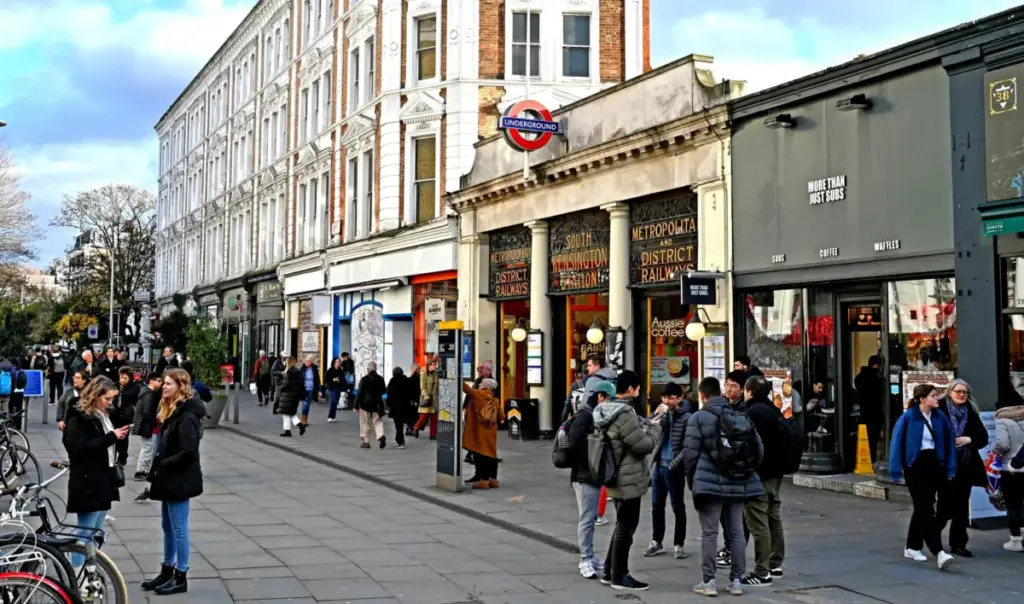
First opened on Christmas Eve in 1868, South Kensington stands as the second-oldest underground station in the world, serving as a critical artery for millions of commuters, tourists, and students. Today, it acts as a vital subterranean gateway to some of the United Kingdom’s most treasured cultural institutions, including the Victoria and Albert (V&A) Museum, the Natural History Museum, and the Science Museum, as well as Imperial College London and several specialized hospitals.
However, beneath its Victorian charm lies an infrastructure struggling to cope with 21st-century passenger volumes. Chronic congestion, a lack of step-free access, and antiquated passenger facilities have long plagued the site. The upcoming modernization project seeks to fundamentally reshape the station experience.
Key elements of the overhaul include the long-awaited introduction of step-free access across all platforms, the reopening of the disused Platform 1 for District and Circle line services, extensive heritage restorations, and a sweeping commercial and residential development above and around the station footprint. Construction is scheduled to kick off this year, with a targeted completion date of 2031—a milestone year that will coincide with the 150th anniversary of the neighbouring Natural History Museum.

Detailed Chronology and Scope of the Redevelopment
To understand the magnitude of the South Kensington project, one must examine both its deep historical roots and the complex timeline of engineering milestones required to bring it into the modern era.
A Rich Victorian Heritage
The station’s origins trace back to December 24, 1868, when it opened as part of the Metropolitan Railway and the District Railway—the pioneer predecessors of today’s Metropolitan and District lines. Designed to handle the burgeoning transit needs of late-19th-century London, the station was later expanded to accommodate the Circle and Piccadilly lines, cementing its status as an indispensable multi-line interchange.
Over the decades, the surrounding district evolved into an international hub for science, art, and education. Yet, the station infrastructure remained largely bound by its Victorian constraints. Decades of piecemeal additions left a disjointed layout featuring narrow tunnels, convoluted pathways, and a complete absence of modern accessibility features.
The Path to Modernization: Planning and Procurement
Plans to overhaul South Kensington have been in gestation for years, navigating complex planning permissions, historic conservation requirements, and funding negotiations. The turning point arrived when TfL awarded infrastructure solutions firm Costain the contract to lead the delivery of the upgrade.

Working alongside Native Land and Places for London, Costain will orchestrate a multi-faceted construction program that blends heavy civil engineering with sensitive architectural restoration. The multi-billion-pound regeneration is not merely a transit upgrade; it is an exercise in urban placemaking that touches every corner of the station precinct—from deep-level platforms to surface-level real estate.
Architectural and Platform Transformations
When commuters return to a fully modernized South Kensington in 2031, the transformation will be palpable across several key areas:
- Platform 1 Reopening: Perhaps the most operationally significant change is the reactivation of the currently disused Platform 1. Re-serving the District and Circle lines, this platform will dramatically alleviate chronic platform congestion during peak hours, smoothing passenger flows and reducing dwell times.
- Universal Step-Free Access: For the first time in its 163-year history, South Kensington will offer comprehensive step-free access. New lifts will connect the street level, ticket halls, subway tunnels, and platforms, making the station fully accessible to wheelchair users, parents with pushchairs, and travellers with heavy luggage.
- Heritage Restoration: The project places a strong emphasis on preserving the station’s historic character. Original Victorian architectural features across all platforms will be painstakingly restored. Concurrently, modern clutter will be reduced; advertising panels will be streamlined, and low-maintenance planting will be introduced within the station’s revetment arches to soften the subterranean environment.
- Aesthetic and Functional Upgrades: Outdated lighting and public address systems will be replaced with modern, energy-efficient equivalents. New TfL roundels and clean, cohesive signage will improve station wayfinding.
Surface-Level Real Estate and Public Realm Enhancements
The regeneration extends far beyond the subterranean rail network. On the surface, the project introduces significant residential and commercial developments designed to revitalize the immediate urban fabric:
- New Housing on Pelham Street: Approximately 50 new homes will be constructed near the station, incorporating provisions for much-needed affordable housing in the Royal Borough of Kensington and Chelsea.
- The Bullnose Building: A striking new four-storey architectural addition, provisionally dubbed "The Bullnose," will anchor the front of the station. This multi-use structure will house modern office spaces, cafes, and restaurants, creating a vibrant destination point for visitors and locals alike.
- Cromwell Place and Thurloe Street Entrances: The iconic Grade II-listed entrance on Cromwell Place and the Thurloe Street station entrance will undergo comprehensive restoration and maintenance, ensuring that the station’s historic street-level profile is preserved and enhanced.
Supporting Context and Metrics: The Transport Ecosystem
London’s transport network is a living, breathing organism that constantly adapts to the demographic and economic shifts of the capital. To appreciate the necessity of the South Kensington investment, it is essential to contextualize the station within the broader framework of TfL’s capital improvement initiatives.

Passenger Demographics and Footfall
South Kensington is unique among London Underground stations. While many inner-city stations experience sharp peaks driven exclusively by corporate commuters, South Kensington operates on a sustained, high-volume rhythm. On weekdays, it handles waves of students heading to Imperial College London and patients visiting nearby specialist medical facilities.
On weekends and throughout the summer tourist seasons, the station absorbs massive influxes of visitors making their way to Exhibition Road’s cultural cluster. Millions of annual journeys pass through its turnstiles, creating severe bottlenecks in the narrow Victorian pedestrian tunnels connecting the Piccadilly line to the District and Circle lines. The addition of Platform 1 and the widened concourse spaces are direct engineering responses to these volume pressures.
Broader Capital Upgrades across London
The South Kensington revamp is part of a broader, continuous cycle of modernization across London’s rail and underground networks. As TfL navigates complex financial landscapes, strategic partnerships with private developers—such as the collaboration with Native Land and Places for London—have become a blueprint for funding capital-intensive infrastructure. By unlocking air rights and surplus land for commercial and residential real estate (such as the Pelham Street housing and The Bullnose development), TfL can generate vital non-fare revenue to help subsidize public transport enhancements.
Official Statements and Industry Perspectives
The formal commencement of the project has drawn praise from senior figures across the engineering, municipal, and transport sectors, highlighting the collaborative nature of the enterprise.

Alistair Geddes, Rail Sector Director for Costain, emphasized the engineering rigor and collaborative planning that went into securing the contract:
"Since being selected to Transport for London’s Infrastructure Improvement Framework, we’ve worked hard to support early-stage planning and mobilisation for the planned major infrastructure upgrades across the capital, bringing our engineering-led solutions to the table to ensure predictable delivery.
In close collaboration with TfL and our supply partners, we’re ready to deliver upgrades to the internationally important South Kensington station that will improve London’s transport network and enhance the passenger experience for decades to come."
Echoing this sentiment, Transport for London Commissioner Andy Lord highlighted the transformational impact the project will have on everyday passengers and the local economy:

"I’m delighted that our plans to transform the internationally important South Kensington station are fully progressing.
Awarding that contract to Costain means that, working closely with Native Land and Places for London – our wholly-owned property company – we can deliver step-free access here for the first time, as well as provide improved space for businesses."
The fusion of public sector transit management with private sector commercial expertise is viewed by industry analysts as a model for future urban regeneration projects across the United Kingdom.
Future Outlook: The Road to 2031
As construction gets underway this year, passengers and local residents should prepare for a period of localized disruption. Delivering a £1.2 billion engineering project within the tight confines of a heavily utilized, heritage-protected Victorian station requires meticulous logistical planning. TfL and Costain have pledged to minimize service disruptions where possible, communicating phased closures and station adaptations well in advance.

Looking ahead to the completion date in 2031, the transformation of South Kensington will serve as a landmark achievement in modern urban engineering. By successfully marrying 19th-century architectural heritage with 21st-century accessibility, operational capacity, and sustainable urban design, the project will ensure that this iconic station remains a functional and aesthetic cornerstone of London’s global transport network for generations to come.