Executive Overview
The high-profile murder trial of Lindsay Clancy—a Massachusetts nurse accused of killing her three young children—ended in a dramatic mistrial after seven days of intense jury deliberations. The case, which has drawn national attention, sits at the turbulent intersection of criminal justice, legal standards of sanity, and severe maternal mental health crises.
Clancy faced murder charges following the January 2023 deaths of her children: five-year-old Cora, three-year-old Dawson, and eight-month-old Callan. The defense argued that Clancy was suffering from severe postpartum psychosis, rendering her incapable of appreciating the wrongfulness of her acts or conforming her conduct to the law. Conversely, the prosecution maintained that the killings were planned and intentional, demanding a conviction for first-degree murder.
       [ Lindsay Clancy Trial Outcome ]
                     │
         7 Days of Deliberation
                     │
         11 - 1 Jury Split (NGRI)
                     │
      ┌──────────────┴──────────────┐
      │                             │
11 Jurors:                   1 Holdout:
Not Guilty by Reason         Refused NGRI despite
of Insanity (NGRI)           admitting Reasonable Doubt
      │                             │
      └──────────────┬──────────────┘
                     │
             MISTRIAL DECLARED
                     │
   ┌─────────────────┴─────────────────┐
   │                                   │
Option A: Retrial           Option B: Negotiated Plea /
with New Jury               State Psychiatric Commitment
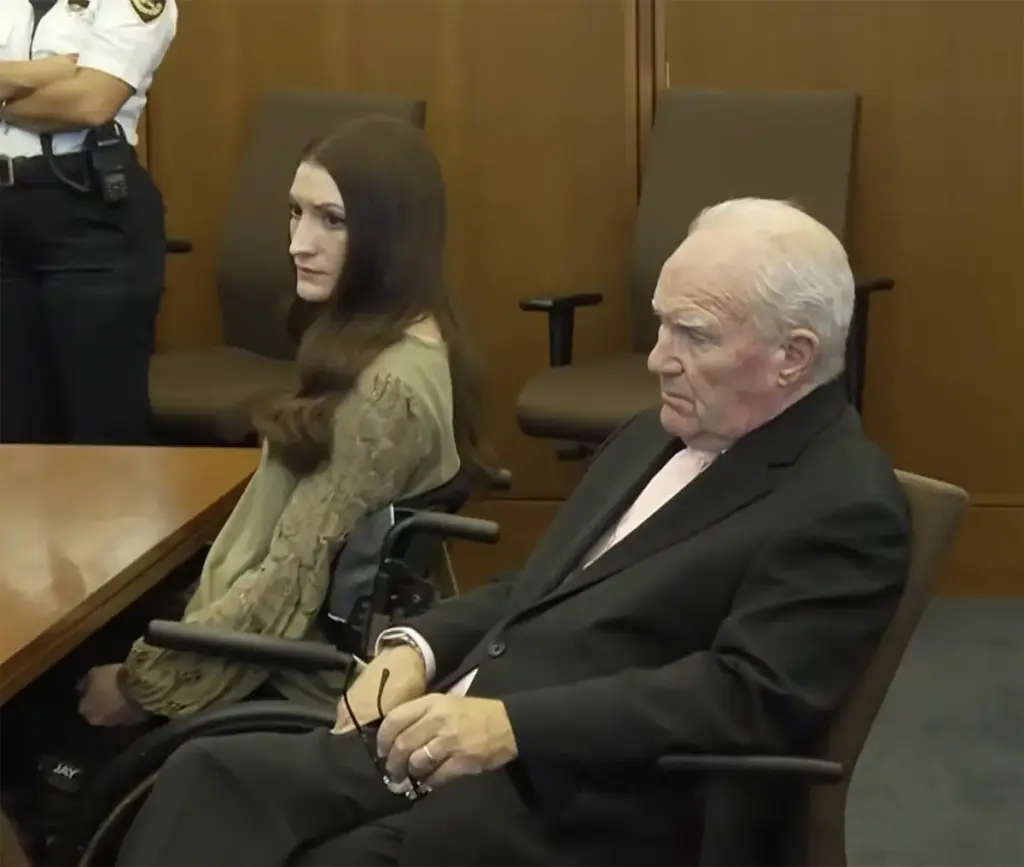
Following exhaustive deliberations, the panel of nine women and three men reached an insurmountable deadlock. It was subsequently revealed that eleven of the twelve jurors were prepared to return a verdict of Not Guilty by Reason of Insanity (NGRI)—a disposition that would have committed Clancy to a high-security state psychiatric hospital rather than a state prison. However, a single holdout juror refused to sign the acquittal forms, forcing Presiding Judge William Sullivan to declare a mistrial.
The outcome leaves the case unresolved, resetting legal proceedings and forcing both the defense and prosecution to re-evaluate their strategies ahead of a potential retrial or negotiated disposition.
Detailed Chronology
[Jan 2023]      Tragic deaths of Cora, Dawson, & Callan Clancy in Duxbury, MA.
   │
[Pre-Trial]     Indictment; Defense asserts Postpartum Psychosis defense.
   │
[Trial]         State presents premeditation claims; Defense presents medical/psychiatric evidence.
   │
[Deliberation]  Jury deliberates for 7 days (9 women, 3 men).
   │
[Day 5-6]       Foreperson submits note: Deadlocked 11-1; holdout accused of ignoring legal instructions.
   │
[Motion]        Defense moves to replace holdout juror; Judge Sullivan denies motion.
   │
[Final Day]     Mistrial declared due to permanent deadlock.
   │
[Post-Trial]    Jurors reveal 11-1 split in favor of NGRI during NBC10 Boston interview.
The Inciting Event and Legal Strategy
In January 2023, emergency responders arrived at the Clancy family home in Duxbury, Massachusetts, discovering a scene of profound tragedy. Lindsay Clancy had inflicted fatal injuries upon her three children before jumping from a second-story window in an apparent suicide attempt, an act that left her permanently paralyzed.
From the indictment’s outset, Defense Attorney Kevin Reddington constructed a defense centered on acute psychiatric decompensation. Reddington argued that Clancy was enduring severe postpartum psychosis—a rare, emergency psychiatric condition characterized by delusions, hallucinations, and a loss of contact with reality—exacerbated by a complex regimen of prescribed psychiatric medications.
The prosecution countered by presenting evidence of premeditation, highlighting internet searches, daily routines, and moments of apparent clarity on the day of the incident to argue that Clancy acted with deliberate malice and a sound mind.
The Deliberation Breakdown
After closing arguments, the case was handed to a jury composed of nine women and three men. The jury was charged with weighing two distinct legal paths:
- Guilty of Murder: Requiring the prosecution to prove beyond a reasonable doubt that Clancy possessed criminal intent (mens rea) and was legally sane at the time of the acts.
- Not Guilty by Reason of Insanity (NGRI): Requiring the jury to find that a reasonable doubt existed regarding her sanity due to a profound mental disease or defect (psychosis).
Deliberations stretched over seven days. Tensions within the jury room escalated as eleven panel members aligned behind an NGRI verdict. The foreperson sent a formal note to Judge William Sullivan informing the court that the jury was deadlocked at 11–1. The note explicitly raised concerns that one juror was refusing to apply the court’s legal instructions regarding reasonable doubt.
In response, Judge Sullivan issued an supplemental instruction urging the panel to break the impasse through continued deliberation. Reddington filed a formal motion requesting the removal and replacement of the holdout juror with an alternate. Judge Sullivan denied the motion, citing legal precedents that protect jury autonomy during deliberations.
Unable to achieve unanimity, the jury confirmed it had reached a permanent standstill, prompting Judge Sullivan to officially declare a mistrial.
Supporting Context & Metrics
Legal Standards: The Insanity Defense in Massachusetts
Under Massachusetts law, the burden of proof in criminal trials involving an insanity defense rests on the prosecution. Once a defendant introduces credible evidence of a mental disease or defect, the Commonwealth must prove beyond a reasonable doubt that the defendant was legally sane at the time of the offense.
| Legal Outcome | Requirement for Verdict | Consequence |
|---|---|---|
| Guilty Verdict | Commonwealth proves beyond a reasonable doubt that the defendant intentionally committed the act while legally sane. | Incarceration in state prison (up to life without parole). |
| Not Guilty by Reason of Insanity (NGRI) | Commonwealth fails to prove sanity beyond a reasonable doubt; jury finds actions were driven by mental disease/defect. | Involuntary commitment to a secure state psychiatric facility (e.g., Bridgewater State Hospital) subject to periodic judicial review. |
| Mistrial | Jury fails to reach a unanimous decision on either standard. | Legal status resets; prosecution may retry the case or negotiate a plea agreement. |
Clinical Context: Postpartum Psychosis (PPP) vs. Postpartum Depression (PPD)
The trial brought significant public focus to perinatal mental health conditions. Medical literature differentiates standard postpartum depression from postpartum psychosis, the latter being a psychiatric emergency.
PERINATAL MENTAL HEALTH CONTINUUM

[ Baby Blues ] ──────────────────────────────────────────► Common (50%-80% of mothers)
  • Mild mood swings, anxiety, tearfulness
  • Resolves spontaneously within 2 weeks

[ Postpartum Depression (PPD) ] ─────────────────────────► Moderate (10%-15% of births)
  • Severe sadness, fatigue, persistent anxiety
  • Requires clinical therapy / medication

[ Postpartum Psychosis (PPP) ] ──────────────────────────► Severe / Rare (0.1%-0.2% of births)
  • Visual/auditory hallucinations, delusions, loss of reality
• Acute medical emergency requiring immediate hospitalization- Incidence Rate: Postpartum psychosis occurs in approximately 1 to 2 per 1,000 deliveries (0.1%–0.2%).
- Symptom Onset: Typically sudden, often within the first two to four weeks post-delivery.
- Clinical Manifestations: Severe cognitive disorganization, depersonalization, command hallucinations, and irrational delusions often focused on the infant.
- Clinical Risk: Without immediate medical intervention, PPP carries a high risk of suicide or infanticide due to the total impairment of reality testing.
Official Statements and Juror Revelations
Following the discharge of the jury, three jurors—including the panel’s foreperson—agreed to speak with NBC10 Boston to provide insight into the seven-day deliberation process and the origin of the deadlock.
Post-Trial Juror Interviews
The foreperson disclosed that the pivotal evidence for the majority was a recorded police interview of Clancy conducted shortly after the event, which eleven jurors viewed as definitive proof of acute psychosis. According to the foreperson, the lone holdout juror acknowledged the presence of reasonable doubt regarding her sanity but nonetheless refused to endorse an NGRI verdict.
"He had reasonable doubt. After we watched that video of the interview, I believe that’s when it was, he admitted he had reasonable doubt. There were three forms I had to fill out and I started filling them out, I wrote my signature on each one but then he said, ‘But I’m still not going to say she’s not guilty by reason of insanity.’"
— Jury Foreperson, speaking to NBC10 Boston
Another juror described the atmosphere inside the room as increasingly strained, noting that the holdout disengaged from collective analysis of the evidence and legal definitions provided by the court:
"Every one of us in the hours of our frustration would get up and walk the room because you just couldn’t sit anymore. And we would all go to the cart with the exhibits. He, I think, got up to the cart once very briefly and went back to his seat. He would not interact with us and try to understand. We read to him, on numerous occasions, the definition of reasonable doubt from Judge [William] Sullivan’s instruction. But he had the hardest time getting over the fact that Lindsay viciously killed her children."
— Participating Juror, NBC10 Boston Interview
Defense Counsel Position
Defense Attorney Kevin Reddington expressed deep frustration over the mistrial, arguing that the 11–1 split demonstrated that the vast majority of citizens evaluating the evidence recognized the severe psychiatric context of the case. Reddington confirmed that the defense will seek discussions with the prosecution to explore potential resolutions that avoid a second trial.
       [ DEFENSE LEGAL STRATEGY POST-MISTRIAL ]
                          │
         ┌────────────────┴────────────────┐
         ▼                                 ▼
[ Primary Pursuit ]               [ Alternative Track ]
Negotiate Structured Disposition  Prepare for Full Retrial
• Civil commitment to high-       • Select new jury panel
  security psychiatric facility   • Re-present expert medical
• Avoid second criminal trial       testimony and video evidence
Future Outlook
The declaration of a mistrial restores the case to its pre-trial status, placing the decision on how to proceed squarely on the district attorney’s office.
                           [ CASE HORIZON ]
                                  │
         ┌────────────────────────┴────────────────────────┐
         ▼                                                 ▼
[ Scenario 1: Retrial ]                          [ Scenario 2: Negotiated Resolution ]
• Selection of a new 12-member jury              • Commonwealth and Defense reach plea agreement
• Re-litigation of all evidence and experts      • Court-ordered civil commitment to psychiatric hospital
• Substantial financial & emotional costs        • Avoids lengthy, high-profile secondary trial
Potential Avenues of Resolution
- Retrial with a New Jury: The Commonwealth retains the legal right to retry Clancy on all counts. However, re-litigating a complex, high-profile case carries significant state resources and subjects the families involved to renewed distress. Prosecutors must weigh whether an 11–1 jury split in favor of the defense indicates a low probability of obtaining a unanimous guilty verdict in a second proceeding.
- Negotiated Plea Agreement: The prosecution and defense may enter negotiations for a disposition that reflects the majority of the jury’s findings. This could involve Clancy pleading to modified charges or agreeing to long-term civil commitment in a secure state psychiatric hospital without proceeding to a second trial.
Broader Societal and Legal Impact
The outcome of the Lindsay Clancy trial has catalyzed national dialogue regarding how the United States medico-legal system processes infanticide cases involving severe perinatal mental illness. Medical advocacy groups continue to urge public policy reform, advocating for enhanced screening protocols for postpartum disorders and clearer legal frameworks that distinguish intentional criminal acts from severe psychiatric illness.