Executive Overview
In the modern digital economy, the traditional marketing funnel—built upon months of measured anticipation, staggered rollouts, and distant brand messaging—is rapidly giving way to a culture of instant gratification and compressed consumer intent. No brand has demonstrated a more acute mastery of this paradigm shift than Maybelline New York. Following two successful seasons aligning with Peacock’s mega-hit reality phenomenon, Love Island USA, the L’Oréal-owned beauty giant expanded its footprint for the summer 2024 season, resulting in staggering commercial success and a masterclass in modern experiential commerce.
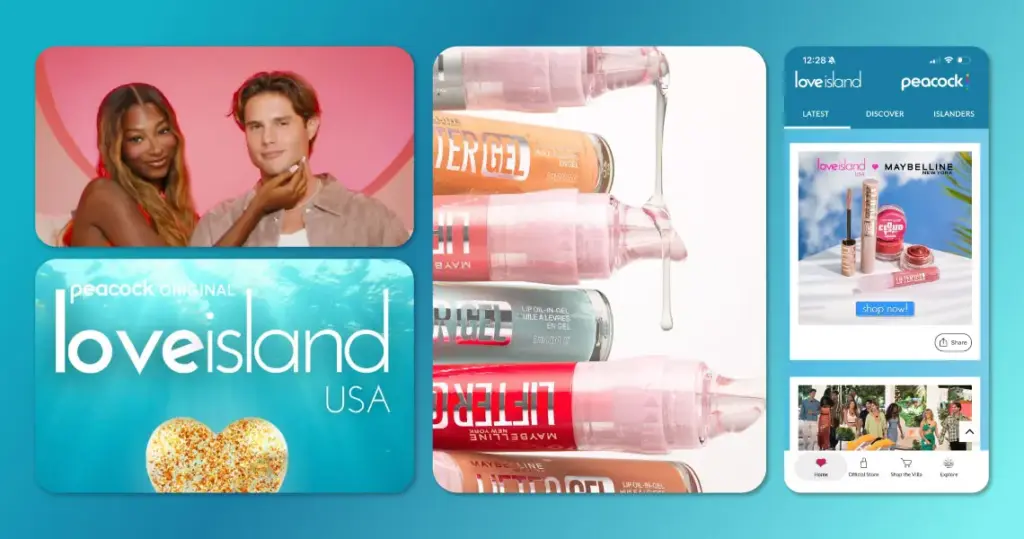
At the center of this triumph was the introduction and strategic saturation of Maybelline’s Lifter Gel Lip Oil-in-Gel, a major franchise expansion of its six-year-old cult-favorite Lifter Gloss. Priced at under $10 and positioned strategically across physical mass retailers—including Target, CVS, and Walmart—as well as digital powerhouses like Amazon, TikTok Shop, and the official Love Island app, the product became an overnight viral sensation.
According to data from commerce intelligence platform Daash Intelligence, weekly sales for the Lifter Gel multiplied tenfold between the June 2 premiere and the July 12 finale. Even more impressively, the gloss surged from representing under 5% of Maybelline’s total lip business by unit volume in May to capturing more than 30% by July.
This deep dive examines how Maybelline transcended traditional product placement. By executing a prescient pre-season product drop, integrating directly into the show’s digital ecosystem, capitalizing on organic cast moments through real-time agile marketing, and turning everyday viewers into brand advocates, Maybelline and Love Island USA have successfully redefined what it means to bridge entertainment and e-commerce.
Detailed Chronology: From Launch Pad to Finale Triumph
The explosive trajectory of Maybelline’s summer campaign cannot be understood without tracing its precise chronology. The campaign’s success hinged on aggressive timing, synchronized retail distribution, and continuous, reactive engagement throughout the summer broadcast window.
Phase 1: The Pre-Premiere Ambush (May 2024)
Traditionally, beauty brands build anticipation for months, teasing new formulations well in advance of a major retail launch. Maybelline broke this mold entirely. Four weeks before the Love Island USA season premiere on June 2, the brand dropped the Lifter Gel Lip Oil-in-Gel across nationwide retailers and digital storefronts.
This bold move was designed to align with a fundamental shift in modern consumer behavior. By ensuring that the product was already sitting on shelves and available for online checkout before viewers even saw it on screen, Maybelline eliminated the perilous friction gap between discovery and purchase.
Phase 2: Opening Weeks and the Rise of the "Love Island Lip Gloss" (June 2 – June 20)
As the Islanders stepped into the villa on June 2, viewers were immediately greeted by the familiar gleam of Maybelline products integrated into the villa’s glam room routines. Rather than forcing a stiff, traditional advertisement, Maybelline utilized interactive challenges—such as makeup-centric games among the contestants—to organically showcase the new Lifter Gel.
Consumers watching the show didn’t just see a gloss; they saw their favorite contestants wearing it in real-time high-definition. Social media platforms, particularly TikTok and X (formerly Twitter), quickly lit up with discussions dubbing the item the unofficial "Love Island lip gloss." The product’s distinct shine and accessible price point ($10 and under) transformed it into an attainable luxury for Gen Z and Millennial viewers.
Phase 3: Mid-Season Acceleration and Digital Ecosystem Integration (June 21 – July 5)
By mid-season, the partnership extended far beyond the television screen. Recognizing that modern fans consume media across multiple devices simultaneously, Maybelline integrated itself directly into the official Love Island mobile app.
The app served as a central hub where fans voted on couple outcomes and engaged with the community. Maybelline claimed digital real estate within this ecosystem by virtualizing the villa’s glam room experience, offering interactive shade-matching tools, and directly funneling engaged fans to immediate e-commerce checkout paths. This omnichannel siege ensured that whether a fan was watching on Peacock, scrolling TikTok, or voting on the app, Maybelline was structurally embedded in the experience.
Phase 4: Viral Peak and Finale (July 6 – July 12)
As the season built toward its July 12 finale, Maybelline’s agile marketing machine went into overdrive. Capitalizing on an organic moment from the show where contestant Bryce Alakai was challenged to do fellow Islander Trinity Tatum’s makeup, Maybelline’s internal team acted with lightning speed.
The brand tapped season winners Trinity Tatum and Bryce Alakai for an exclusive TikTok content series and a curated TikTok Shop product bundle. By recreating Trinity’s signature looks with Bryce acting as the "makeup coach," Maybelline turned a fleeting television moment into a viral e-commerce powerhouse.
Phase 5: Post-Season Sustainability and Reunion Activation (July 13 – August 31)
Unlike traditional campaigns that end abruptly with the final credits, Maybelline sustained momentum throughout the post-season doldrums, culminating in targeted activations for the post-season Love Island reunion special on August 31. This sustained presence cemented the Lifter Gel not just as a seasonal trend, but as a dominant fixture in Maybelline’s permanent product portfolio.
Supporting Context & Metrics: The Numbers Behind the Glow
To appreciate the scale of Maybelline’s achievement, one must examine the hard data behind the campaign. Commerce intelligence platform Daash Intelligence tracked the meteoric rise of the Lifter Gel Lip Oil-in-Gel, revealing metrics that highlight the extraordinary velocity of modern trend adoption.
Key Performance Indicators
- 10x Growth: Weekly sales for the Lifter Gel multiplied tenfold between the June 2 premiere and the July 12 finale.
- Category Dominance: The gloss surged from accounting for under 5% of Maybelline’s total lip business by unit volume in May to capturing more than 30% by July.
- Pricing Accessibility: Launching with eight distinct shades at a price point under $10 ensured minimal financial barrier to entry for the core demographic across Target, CVS, Walmart, and Amazon.
- Channel Diversification: Alongside traditional brick-and-mortar retail and major e-commerce platforms, the brand captured lightning-in-a-bottle sales via digital-first storefronts like TikTok Shop and the proprietary Love Island app.
The Death of the Traditional Playbook
Melissa Munnerlyn, co-founder and CMO of Daash Intelligence, emphasized the fundamental shift in consumer psychology that made this campaign possible.
"There used to be more of a playbook around building anticipation before a product becomes available, but now, because people move so quickly, the window between discovery and purchase really has compressed," Munnerlyn explained to Glossy. "If someone sees something on ‘Love Island,’ they search for it, and it’s not available yet, then you really risk losing that demand."
By synchronizing the product’s retail availability with the cultural zeitgeist of the show’s premiere, Maybelline successfully captured high-intent consumer traffic at the exact moment of peak attention.
Official Statements & Industry Perspectives
Leadership from both Maybelline New York and Daash Intelligence have offered deep insights into the strategic architecture that made this partnership a historic success.
Yasmin Dastmalchi on Scaling Beyond Basic Integration
Yasmin Dastmalchi, President of Maybelline New York, stressed that the brand’s multi-year evolution with the franchise was rooted in authenticity and deep cultural integration rather than passive product placement.
"We’ve scaled our involvement over the years by making sure it’s more than just a product integration," Dastmalchi told Glossy. "For example, this year, we created a challenge around our newest innovation called Lifter Gel, and what we found is that a lot of people were talking about the product [online] like it was a ‘Love Island lip gloss,’ […] which allows us to really embed our products in those conversations in unique ways."
Dastmalchi also highlighted the strategic importance of meeting fans inside the show’s proprietary digital properties:
"The app was created by the ‘Love Island’ team for a place for fans to really be present, to be part of the winning outcomes of some of the couples. [We were part of the app] by recreating the glam room [and] helping [viewers] with shade-matching — just really finding different ways to engage with not only our consumers, but also the fans of the show."
Cultivating Internal Brand Agility
A crucial element of Maybelline’s success was the composition of its internal marketing team. Rather than relying solely on external agency timelines, Dastmalchi insisted on building an internal task force composed of genuine franchise enthusiasts.
"I want to make sure that the team leading this initiative is also as connected to the show, and, truly, we have real fans on the team," Dastmalchi noted.
This cultural fluency allowed the brand to pivot instantly when organic moments—such as Bryce and Trinity’s makeup challenge—arose in the villa. Instead of waiting weeks to approve a partnership, the internal team recognized the viral potential immediately and contracted the winners for custom content before the season even concluded.
Future Outlook: The New Standard for Entertainment-Beauty Synergy
The overwhelming success of Maybelline’s summer 2024 campaign establishes a new benchmark for how beauty brands must operate in an entertainment-saturated media landscape. As television viewing habits continue to fracture and pivot toward streaming platforms with highly engaged, interactive fan bases, the boundaries between content creation, community engagement, and commerce will continue to dissolve.
Key Takeaways for the Beauty Industry
- Compression of the Funnel: Brands can no longer afford long lead times between product reveals and retail availability. When a cultural moment strikes, consumers expect immediate access to purchase.
- Ecosystem Saturation: True partnerships extend far beyond screen time. Integrating into companion apps, social commerce features (like TikTok Shop), and digital community hubs is essential for capturing fractionalized consumer attention.
- Empowering Agile Internal Teams: Agility beats bureaucracy. Brands that empower internal teams with cultural fluency and rapid decision-making capabilities will consistently outperform those bound by rigid, traditional marketing calendars.
- Authentic Co-Creation: Capitalizing on organic moments—such as user-generated challenges within a show—creates a bridge of authenticity that traditional advertising simply cannot replicate.
As Maybelline looks beyond its summer triumph and prepares for future seasons and franchise integrations, the brand has proven that when you combine product innovation with cultural timing and digital ubiquity, makeup ceases to be just a cosmetic product—it becomes an active participant in the cultural conversation.