The intersection of sports and high fashion has officially evolved from an occasional crossover into an entrenched cultural phenomenon. For decades, tunnel walks have served as makeshift runways for professional athletes in the National Basketball Association and Formula 1 racing, eventually spilling over into the National Football League. Stars like Travis Kelce, Jalen Hurts, and Odell Beckham Jr. have proven that modern athletes are as much style icons as they are elite competitors. Today, however, that sartorial evolution is no longer exclusive to seasoned professionals with dedicated glam squads and industry stylists.
The next frontier of athletic fashion is being charted by the collegiate ranks.
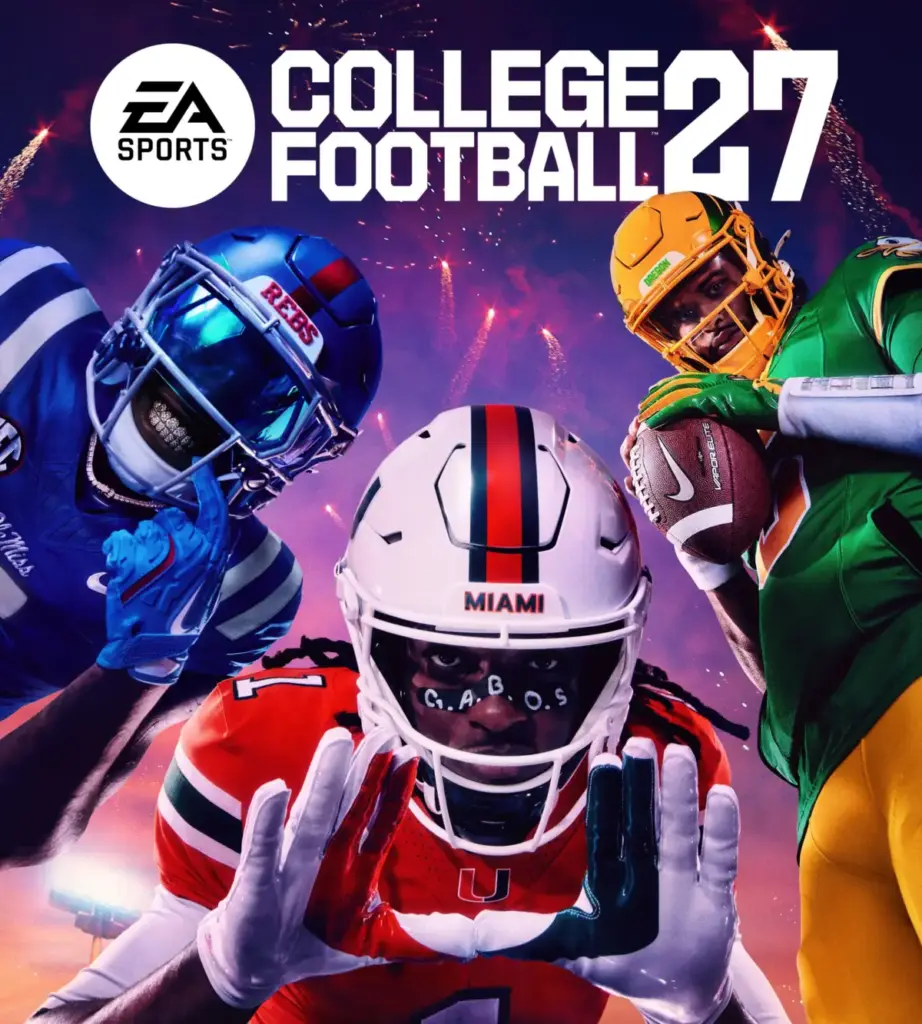
This cultural shift is captured on the cover of EA Sports College Football 27, a landmark video game release that features three breakout college football stars: Miami Hurricanes wide receiver Malachi Toney, Oregon Ducks quarterback Dante Moore, and Ole Miss Rebels running back Kewan Lacy. Rather than utilizing generic avatars or standard promotional imagery, the cover highlights each player’s distinct personality, grooming habits, and personal aesthetic. From Toney’s signature nose strip emblazoned with his life mantra to Lacy’s diamond-studded grillz and Moore’s effortless cool, these rising athletes represent a generation that refuses to conform to rigid sports conventions.
As NIL (Name, Image, and Likeness) policies continue to reshape the collegiate sports landscape, young athletes are gaining unprecedented agency over their personal brands. Style has become an extension of their performance on the gridiron—a fluid, authentic expression of identity. This comprehensive report examines how Malachi Toney, Dante Moore, and Kewan Lacy are spearheading a new era of football fashion, exploring the intersection of streetwear, regional identity, and the heavy mental fortitude required to carry the sport’s future.
Detailed Chronology
The journey of sports fashion from a uniform-dependent subculture to a multi-million-dollar lifestyle movement has accelerated rapidly over the last ten years, culminating in the monumental cover reveal for EA Sports College Football 27.
The Evolution of the Tunnel Walk
Early 2010s: Pre-game tunnel arrivals begin drawing independent media attention, predominantly in the NBA, where players leverage pre-game walks to showcase bespoke tailoring and avant-garde streetwear.
Late 2010s: The trend permeates the NFL. Quarterbacks and wide receivers begin treating game days as high-fashion showcases, leading to mainstream media coverage dedicated exclusively to pre-game outfits.
The 2020s: High-fashion houses take notice. NFL stars secure front-row seats at Milan and Paris Fashion Weeks, walk international runways (such as Saquon Barkley for Hermès), and attend the Met Gala. Concurrently, players like Chicago Bears quarterback Caleb Williams challenge conventional gender norms by painting their nails, a look he proudly wore on the cover of Madden NFL 27.
The Rise of College Football’s New Guard
The 2022 Collegiate Season: Miami freshman wide receiver Malachi Toney scores a viral, electrifying 75-yard touchdown against North Carolina State University, instantly cementing his name in college football lore and inspiring a custom gold "75" chain that becomes a staple of his personal wardrobe.
January 2026: High-stakes postseason play brings future stars to the national spotlight, including the College Football Playoff matchups where players like Kewan Lacy showcase their uninhibited personalities on the grandest stages.
Mid-2026: EA Sports orchestrates the official cover reveal event for College Football 27 in Chicago. The event serves as a public coming-out party for the game’s cover trio—Toney, Moore, and Lacy—who command the room not just as athletes, but as distinct fashion figures representing divergent regional styles and personal philosophies.
July 2, 2026: Early gameplay access for EA Sports College Football 27 rolls out for MVP+ Membership subscribers, marking the official commercial integration of these modern collegiate icons into digital pop culture.
Supporting Context & Metrics: The Business and Culture of Athletic Style
The integration of fashion into football is underpinned by massive cultural shifts, demographic changes, and economic empowerment through NIL legislation.
The Economics of Athletic Branding
Modern college athletes are arriving on campus equipped with a sophisticated understanding of personal branding. Unlike previous generations who relied solely on team-issued gear and traditional media outlets, today’s student-athletes utilize social media platforms like Instagram and TikTok to curate their identities.
The NIL Factor: With college athletes now able to monetize their Name, Image, and Likeness, fashion partnerships have become lucrative revenue streams. High-end streetwear brands and luxury fashion houses actively seek out collegiate phenoms who possess authentic cultural capital.
The Digital Immortality of Video Games: Being featured on the cover of a franchise like EA Sports College Football is no longer just a digital accolade; it is a major fashion endorsement. The cover acts as a virtual billboard, projecting the athletes’ personal style choices to millions of active gamers worldwide.
Regionalism in Collegiate Fashion
Style among the new generation of football players is heavily influenced by geography, reflecting the stark contrasts between different regions of the United States:
Southern Flair & Casual Boldness: Effortless mix of classic comfort, statement outerwear, and high-impact accessories.
Supreme, custom jewelry, grillz
This regional divide highlights a broader truth about modern youth culture: style is no longer dictated by a single coastal epicenter. Instead, it is decentralized, allowing players to pull inspiration from their immediate environments while maintaining a global outlook via social media.
Official Statements & Perspectives
The athletes gracing the EA Sports College Football 27 cover offer a refreshing perspective on fashion, pressure, and authenticity. Far from relying on professional stylists to manufacture their images, their approach to style is deeply personal and unscripted.
Malachi Toney on Authenticity and "Gatekeeping"
Malachi Toney’s visual identity on the video game cover is anchored by a nose strip bearing the acronym G.A.B.O.S.—short for Game Ain’t Based on Sympathy. For Toney, the phrase is more than a catchy slogan; it is a lifestyle and a blueprint for his approach to both competition and style.
"I feel like I have my own style," Toney tells Teen Vogue. "I wouldn’t look at anybody else—like, ‘Oh, he’s putting on [this brand], so I gotta put this on, too,’ or that I have to meet the same standard they’re at. I just want to be myself, for real."
True to his independent streak, Toney admits to guarding his favorite clothing lines closely to avoid mainstream over-saturation:
"I don’t want to say the brands. I like gatekeeping because people are going to start wearing them," Toney laughs. "But alright: I’m a fan of Paly, ERD, Chrome Hearts, and Better With Age. All the expensive stuff."
Dante Moore on Comfort and Embracing Pressure
Representing the Pacific Northwest, Dante Moore approaches his wardrobe with an emphasis on ease, translating his laid-back demeanor on the football field into his everyday attire.
"I like to be comfortable when it comes to my style and just being who I am," Moore explains. "That’s the same approach I take to the field and staying loose. My personal style lets me express the way I feel."
Describing the dress culture at the University of Oregon in Eugene, Moore notes:
"In my everyday life, I’m wearing pajamas or something along those lines. You’ll most likely find people wearing Nike or Dr. Martens. Nothing too crazy. We don’t really dress up as much [in Oregon]."
When confronted with the immense weight of expectations as a collegiate superstar, Moore embraces the spotlight with an iron-clad mindset:
"Pressure is a privilege. So you’ve got to enjoy and embrace it."
Kewan Lacy on Individualism and Organic Style
Ole Miss running back Kewan Lacy complements his dazzling on-field performances with an equally vibrant aesthetic, characterized by his signature diamond grillz and effortless streetwear. Lacy rejects the notion that athletes must force a high-fashion persona.
"Usually, I wear whatever unless there’s an event. That’s when I have to dress up," Lacy says. "I feel like there’s no pressure to dress up. I’m not trying to impress anybody. I wear whatever catches my eye. I try to get pieces I like, and over time, they just come together for me."
On handling the mental demands of his rising career, Lacy maintains a grounded, day-by-day philosophy centered on family motivation:
"I just take everything day by day. I don’t feel like there are any expectations from anybody. I try to make [my mom] proud the best I can. I try to be as successful as possible by not making the wrong decisions."
Future Outlook
As the boundaries between athletics, gaming, and high fashion continue to blur, the influence of players like Malachi Toney, Dante Moore, and Kewan Lacy will undoubtedly shape the future of sports culture. The modern football player is no longer confined to the traditional archetype of the stoic, uniform-bound jock. Instead, they are multi-dimensional cultural curators who use fashion as a tool for storytelling and self-preservation.
The release of EA Sports College Football 27—with early gameplay access launching on July 2, 2026, for MVP+ Membership subscribers—serves as a cultural milestone. It signals to the sports industry that youth culture, personal aesthetics, and athletic excellence are inextricably linked.
Looking ahead, the next generation of professional football prospects will enter the league with an unprecedented level of media savvy and brand autonomy. Supported by a changing landscape that values individual expression over corporate conformity, these athletes are proving that style is not a distraction from the game, but a core component of it. Whether through Toney’s luxury streetwear curation, Moore’s relaxed Pacific Northwest practicality, or Lacy’s unapologetic Southern boldness, the future of football is vibrant, diverse, and entirely on its own terms.