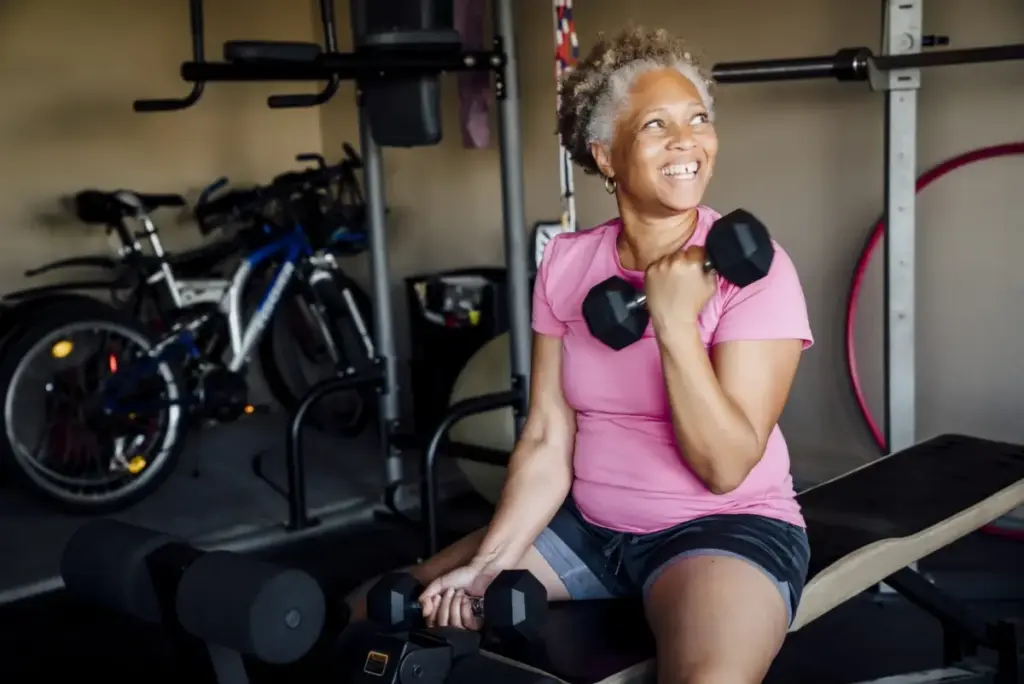
Executive Overview
For decades, the prevailing narrative surrounding physical fitness has been dominated by the pursuit of cardiovascular endurance. Running, cycling, and swimming have long been heralded as the gold standards for health and longevity. However, a profound paradigm shift is underway in the medical and fitness communities. Strength training—once pigeonholed as the domain of bodybuilders and elite athletes—has emerged as a vital, non-negotiable pillar of lifelong health.
Far beyond the immediate gratification of feeling energized, boosting your metabolism, or achieving a temporary "pump," lifting weights acts as a powerful pharmaceutical intervention against the inevitable wear and tear of aging. Engaging in resistance exercises is no longer merely about aesthetics or physical prowess; it is an essential strategy for "future-proofing" the human body.
From mitigating the risk of chronic metabolic conditions to safeguarding cardiovascular health, enhancing bone density, and alleviating psychological distress, the science is clear: building muscle is synonymous with building resilience. Best of all, this protective medicine is democratized. You do not require a lavish, high-end gym membership or an intimidating array of machinery to reap the rewards. Armed with little more than your body weight, a single resistance band, or a modest pair of dumbbells, individuals of all ages and fitness backgrounds can fundamentally alter their long-term health trajectories. This comprehensive investigation explores the seven profound, scientifically backed benefits of incorporating strength training into your life, illustrating why lifting heavy things is one of the smartest investments you can make in your future self.
Detailed Chronology & Scientific Evolution: How Strength Training Grew Up
To understand the current consensus on strength training, we must look at how exercise science has evolved over the past half-century.
The Cardio Era and the Resistance Revolution
In the latter half of the 20th century, public health campaigns heavily emphasized aerobic exercise. The cardiovascular benefits of running and cycling overshadowed resistance training, which was often viewed with suspicion due to unfounded fears of injury, hyper-muscularity, and elevated blood pressure.
As we crossed into the 21st century, longitudinal health studies began to challenge these orthodoxies. Researchers tracking aging populations noticed a distinct correlation between loss of muscle mass (sarcopenia) and declining health outcomes. It became increasingly clear that aerobic fitness alone could not prevent age-related bone density loss or metabolic deceleration.
The Turning Point: 2010s to Present
A wave of clinical trials over the last fifteen years upended traditional medical advice. Studies from institutions such as Iowa State University, alongside extensive meta-analyses published in medical journals like Mayo Clinic Proceedings and PLOS ONE, began isolating strength training as an independent variable.
Researchers discovered that lifting weights protected against cardiovascular events, improved insulin sensitivity independently of weight loss, and directly stimulated osteogenesis (bone growth). Major public health bodies, including the UK’s National Health Service (NHS) and the American Heart Association, subsequently rewrote their physical activity guidelines. They formally integrated recommendations for muscle-strengthening activities at least twice a week for all adults, signaling a historic evolution in preventative medicine.
Supporting Context & Metrics: The Seven Pillars of Long-Term Health
When we subject our muscles to progressive overload, we trigger a micro-trauma response. The body repairs these tiny tears by weaving muscle fibers back together stronger and denser than before. This mechanical stress does far more than sculpt a physique; it initiates cascading systemic changes that protect the body on a cellular level. Here are the seven critical health benefits backed by empirical research:
1. Drastically Lowers the Risk of Type 2 Diabetes
Type 2 diabetes arises when the body develops insulin resistance—a state where cells fail to respond effectively to the hormone insulin, leaving glucose to accumulate dangerously in the bloodstream. Unchecked, this hyperglycemia can cause catastrophic complications, ranging from strokes and nerve damage to kidney failure and blindness.
A landmark study tracking 35,754 women investigated the incidence of type 2 diabetes and cardiovascular disease relative to weight-lifting habits. The findings were staggering: women who incorporated strength training into their routines reduced their risk of developing type 2 diabetes by an impressive 30%, while simultaneously lowering their cardiovascular disease risk by 17%. By increasing lean muscle mass—the body’s primary sink for glucose disposal—resistance training acts as a powerful regulator of blood sugar.
2. Safeguards Heart Health (In Under an Hour a Week)
Cardiovascular health is traditionally associated with jogging or cycling, but a revolutionary 2018 study from Iowa State University proved that lifting weights is uniquely potent for the heart.
Researchers concluded that engaging in strength training for less than one hour a week could reduce the risk of a heart attack or stroke by an astonishing 70%. Crucially, these benefits were realized independently of running or any other aerobic activity. As Dr. DC Lee, associate professor of kinesiology and co-author of the study, noted: "People may think they need to spend a lot of time lifting weights, but just two sets of bench presses that take less than five minutes could be effective."
3. Alleviates Joint Pain and Manages Arthritis
For individuals living with chronic joint pain or arthritis, the instinct is often to wrap the body in cotton wool and avoid movement entirely. However, exercise physiologists and rheumatologists emphasize that physical inactivity is the true enemy.

According to the charity Arthritis Action, regular exercise is essential because it strengthens the stabilizing muscles that protect and support compromised joints. When muscles atrophy due to disuse, joints lose structural stability, translating directly into pain upon movement. Resistance training and weight-bearing exercises break this vicious cycle, fortifying the musculoskeletal framework and significantly reducing discomfort.
4. Fortifies Bones Against Osteoporosis
Bone is living, dynamic tissue that responds to physical stress by becoming denser. From the age of 35 onward, humans experience a natural, age-related decline in bone mineral density. While this affects all genders, post-menopausal women are disproportionately susceptible to osteoporosis—a debilitating condition characterized by fragile, fracture-prone bones.
Dr. Sarah Jarvis highlights that performing regular weight-bearing exercise—which encompasses virtually every movement except swimming and cycling—is vital for preserving skeletal integrity. To combat natural bone loss, the NHS explicitly recommends that adults over 35 engage in muscle-strengthening activities at least two days a week, identifying free weights and resistance bands as premier bone-loving tools.
5. Mitigates Symptoms of Depression and Enhances Mental Health
The intersection of physical strength and psychological well-being is profound. Poor mental health and chronic conditions like depression often manifest as feelings of helplessness, lethargy, and powerlessness.
London-based psychotherapist and BACP member William Pullen notes that strength training serves as an "alternative, bite-sized and effective route to confidence" that directly counteracts internal narratives of frailty. These clinical observations are supported by hard data: a meta-analysis of 33 clinical trials involving 1,877 participants concluded that resistance training significantly reduces depressive symptoms among adults. Notably, individuals engaging in low-to-moderate intensity strength training experiencing mild-to-moderate depression reaped the most pronounced psychological dividends.
6. Balances Hormones and Alleviates PCOS Symptoms
Polycystic Ovarian Syndrome (PCOS) is a complex endocrine disorder affecting up to one in five women. Driven by hormonal imbalances, it can cause irregular menstrual cycles, stubborn fat gain, acne, and fertility challenges.
While conventional medical approaches often lean toward pharmaceutical interventions or strict dieting, clinical research points to strength training as an exceptional therapeutic tool. A 2015 study demonstrated that high-intensity interval resistance training improved insulin resistance in women with PCOS even without weight loss. Furthermore, a 16-week strength training program involving women with PCOS revealed a significant decrease in circulating testosterone levels. Even in women without PCOS, equivalent routines yielded substantial improvements in mood regulation, sleep quality, and mental health.
7. Protects Against Obesity via the "After-Burn" Effect
In modern wellness spaces, the conversation around weight management is frequently toxic, prioritizing rapid cosmetic changes over systemic health. However, clinical obesity is a severe, systemic condition that elevates the risk of heart disease, hypertension, and aggressive malignancies. Strength training plays a vital role in preventing obesity by radically optimizing metabolic health.
When we lift weights, our musculature demands a surge of energy, breaking down fats and carbohydrates with the help of oxygen. Crucially, this metabolic furnace does not switch off when you drop the dumbbells. Due to a phenomenon known as Excess Post-Exercise Oxygen Consumption (EPOC)—popularly called the "after-burn effect"—your body continues to consume elevated levels of oxygen long after your workout concludes as it repairs muscle fibers and restores homeostasis.
Official Statements & Expert Perspectives
The medical establishment has systematically shifted its posture toward resistance training over the past decade, moving from cautious skepticism to active prescription.
- Dr. DC Lee (Iowa State University): Emphasizing the time-efficiency of heart-protective weightlifting, Dr. Lee notes, "People may think they need to spend a lot of time lifting weights, but just two sets of bench presses that take less than five minutes could be effective."
- William Pullen (BACP Psychotherapist): Highlighting the psychological mechanics of physical exertion, Pullen observes that strength training "not only makes you feel physically stronger but serves as an alternative, bite-sized and effective route to confidence" for individuals grappling with the powerlessness of depression.
- The NHS and National Health Guidelines: Emphasizing preventative longevity, official health guidelines continually underscore that adults must engage in muscle-strengthening exercises weekly to counteract age-related musculoskeletal decline, preserve metabolic function, and stave off chronic disability.
Future Outlook: The Next Frontier of Longevity Medicine
As we look toward the future of healthcare and wellness, the integration of strength training into mainstream longevity medicine is accelerating. Researchers are increasingly viewing muscle mass not merely as a motor organ, but as an endocrine organ that secretes myokines—signaling proteins that communicate with the brain, liver, and immune system to suppress inflammation and enhance tissue repair.
In the coming years, we can anticipate a radical transformation in geriatric care, where resistance training is prescribed with the exactitude of a pharmaceutical dose. Doctors will likely utilize "grip strength" and "muscle mass index" as primary vital signs, tracking biological aging with far greater accuracy than chronological age alone.
Actionable Next Steps: Your Movement Prescription
You do not need to wait for institutional policy shifts to begin future-proofing your body. The barrier to entry is remarkably low. The next time you find yourself sedentary at your desk or winding down on the sofa, consider incorporating foundational compound movements into your day:
- The Sumo Squat: A supreme compound exercise that engages your body’s largest muscle groups while conditioning the knee and ankle joints.
- Load and Slow: If available, hold a pair of dumbbells or kettlebells. If not, utilize your body weight, but focus on executing the eccentric (descending and rising) phase of the movement with deliberate, agonizing slowness. This time-under-tension technique delivers the ultimate muscle-loving burn.
By making strength training a non-negotiable weekly ritual, you are not just building muscle—you are forging an enduring armor that will keep you lunging, lifting, and thriving for decades to come.