Executive Overview
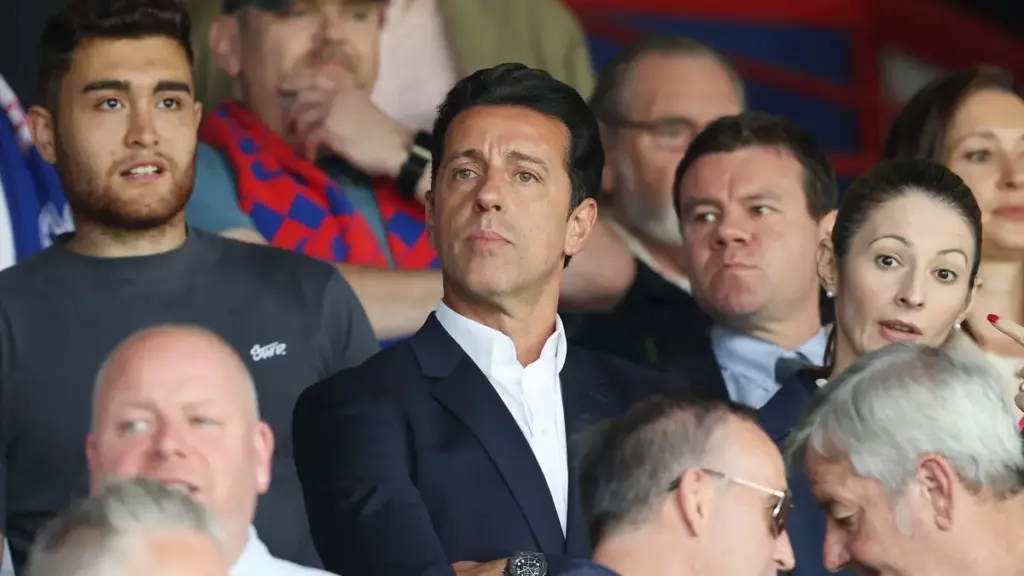
The abrupt departure of Edu Gaspar from Nottingham Forest marks a dramatic and humbling chapter in the career of one of football’s most sought-after executive architects. Just two years after walking away from Arsenal—where his reputation was at an all-time high following a transformative partnership with Mikel Arteta—the Brazilian’s high-stakes gamble to assume a broader remit under Evangelos Marinakis has officially come to an end.
Reports confirm that Edu’s contract as Nottingham Forest’s Global Head of Football has been terminated. The writing had been on the wall for months. The 48-year-old had been effectively sidelined since February, absent from matchdays and completely detached from the City Ground and the club’s training facilities since early March.
What was envisioned as an ambitious step toward managing a multi-club model—encompassing Forest, Olympiacos, and Rio Ave—devolved into a stark mismatch of expectations, fractured internal relationships, and a turbulent transfer strategy. Far from propelling his career upward, the ill-fated stint at Nottingham Forest has left a noticeable scar on Edu’s once-spotless executive resume. As Oliver Glasner now steers the club forward, the football world is left to dissect how a masterclass in modern sporting direction unravelled so rapidly in the East Midlands.
Detailed Chronology: From Promise to Isolation
The Honeymoon Phase and the Multi-Club Vision
When Edu stunned the Premier League by resigning from his post at Arsenal in late 2024, he did so with the conviction that he needed a fresh, expansive challenge. Having guided the Gunners from the shadows of mid-table obscurity back into genuine title contenders, the allure of Marinakis’ multi-club project proved irresistible.
The promise was intoxicating: a role that extended far beyond traditional club boundaries, offering oversight of recruitment, football operations, and strategic synergy across England, Greece, and Portugal. For Marinakis, hiring the man who built modern Arsenal was seen as a massive coup—a statement of intent that Nottingham Forest was ready to cement itself as a permanent fixture in the upper echelons of English football after finishing seventh and qualifying for Europe in 2025.
The Breakdown of Internal Relations
However, the reality on the ground quickly diverged from the executive prospectus. According to sources close to the club, the day-to-day responsibilities assigned to Edu bore little resemblance to what he had envisaged when he signed on the dotted line.
Compounding the structural misalignment was a critical failure in diplomacy and cultural integration. Edu himself has privately acknowledged that he struggled to foster cohesive, productive relationships with key members of Marinakis’ entrenched inner circle. In an industry where boardroom alignment is just as vital as tactical harmony on the pitch, these friction points proved fatal to his tenure.
Crucially, the deterioration of his working relationship with then-manager Nuno Espirito Santo became a glaring public symptom of deep-seated internal dysfunction. The strain between the executive office and the dugout catalyzed a catastrophic chain reaction.
The Managerial Carousel and Complete Sidelining
The collapse of cohesion at the top filtered directly down to the squad, triggering one of the most chaotic managerial cycles in recent Premier League history. Last season descended into a relegation-threatened disaster zone that saw Forest hemorrhage stability through four separate managerial appointments:
- Nuno Espirito Santo (departed amid tension with the hierarchy)
- Ange Postecoglou (brief, unsuccessful stint)
- Sean Dyche (brought in for firefighting duties)
- Vitor Pereira (short-lived interim/permanent phase)
Through it all, Forest narrowly averted the drop, but the collateral damage to Edu’s authority was absolute. By February, he was entirely frozen out of matchday operations. By March, he had been barred from the training ground. While Oliver Glasner was eventually brought in to restore order and lead the team into the current campaign, Forest’s summer transfer business was conducted entirely by other figures within the hierarchy, signaling that Edu’s exile was irreversible long before the official termination was rubber-stamped.
Supporting Context & Metrics: Evaluating the Transfers
A sporting director lives and dies by their recruitment record. While Edu’s legacy at Arsenal was cemented by masterstrokes that transformed the squad, his time at Nottingham Forest was characterized by high-profile gambles that failed to yield dividends.
The Recruitment Balance Sheet
Following their seventh-place finish and European qualification in 2025, Forest needed precision reinforcements to bridge the gap to the elite. Instead, the club stumbled through a series of expensive missteps:

- Igor Jesus: Edu led a high-profile pursuit to bring the striker over from Brazilian club Botafogo, but the forward struggled to adapt to the relentless pace and physicality of the Premier League.
- Omari Hutchinson: Arrived in a blockbuster £37.5 million deal intended to inject explosive creativity into the final third. While immense potential remains, Hutchinson’s development was severely hampered by the constant managerial upheaval.
- The Loan Contingent: Moves for experienced operators like Douglas Luiz and Oleksandr Zinchenko were heavily influenced by Edu’s extensive network. Yet, of the major incoming transfers tied to his tenure, only a fraction of the players remain at the club, highlighting a lack of long-term squad planning.
- James McAtee: The acquisition of the young midfielder from Manchester City was universally hailed as a genuine coup. Unfortunately, like many of his peers, McAtee found his progression stalled by the relentless cycle of managerial sackings, unable to find a stable tactical identity under four different bosses in a single campaign.
The Contrast: Arsenal’s Continued Ascent
To fully grasp the magnitude of Edu’s missteps at Forest, one only needs to look back at the empire he left behind in north London. During his tenure as Arsenal’s Sporting Director, Edu was the chief architect behind the squad that ended up winning the Premier League title.
His resume at the Emirates includes the shrewd acquisitions of:
- Martin Ødegaard (club captain and tactical linchpin)
- Ben White (defensive stalwart and tactical chameleon)
- Gabriel Magalhães (defensive rock)
- Declan Rice (club-record capture who redefined Arsenal’s midfield ceiling)
Since Edu’s departure, Arsenal’s recruitment wheel has continued to spin with ruthless efficiency under Andrea Berta. Bolstered by further star-studded additions, the Gunners currently possess arguably the best squad in the Premier League by some distance. The contrast between Arsenal’s harmonious, meticulously planned upward trajectory and Forest’s chaotic free-fall only magnifies the sting of Edu’s failed East Midlands venture.
Official Statements and Industry Reactions
The formal announcement of Edu’s departure has sent shockwaves through the football executive community. While neither Nottingham Forest nor Edu has released a blistering public post-mortem, leaks to outlets like The Telegraph paint a picture of mutual exhaustion.
Industry insiders note that Edu’s departure highlights the perils of transitioning from a traditional, singular club structure—where he worked in sublime synergy with Mikel Arteta—to a sprawling, multi-club model dictated by an autocratic owner.
When Edu originally stepped down from Arsenal, he released a carefully worded statement reflecting the weight of his choice:
"This was an incredibly hard decision to make. Arsenal has given me the opportunity to work with amazing people and a special football club… Now it is time to pursue a different challenge."
That "different challenge" has ultimately concluded in professional exile and contract termination. Analysts suggest that the episode will force a re-evaluation of how elite sporting directors assess multi-club ownership models, where strategic autonomy is frequently compromised by corporate entanglement and volatile ownership styles.
Future Outlook: What Next for Edu and Forest?
Nottingham Forest Under Oliver Glasner
For Nottingham Forest, the departure of Edu draws a definitive line under a painful transitional era. With Oliver Glasner now firmly at the helm, the club is looking to rebuild its operational stability. Freed from the internal friction that characterized the past eighteen months, Forest’s recruitment team can now operate with a unified vision, supporting a manager known for a clear, uncompromising tactical identity. The immediate objective is to steady the ship, integrate the remaining summer acquisitions properly, and re-establish the competitive edge that saw them gatecrash the European places in 2025.
Edu’s Career Crossroads
For Edu Gaspar, the road ahead requires careful reputation management. At 48 years old, his status as an elite football executive has unquestionably taken a bruising hit. The narrative of an infallible sporting director, forged in the fires of Arsenal’s resurgence, has been complicated by the systemic failure at the City Ground.
However, football has a notoriously short memory. The foundational work he did at Arsenal—assembling a title-winning machine—remains part of the historical record. Whether Edu chooses to take a sabbatical to re-evaluate his executive philosophy, or jumps straight back into the cauldron of elite club football, his next move will be heavily scrutinized.
One thing is certain: the Brazilian executive has learned a harsh lesson about the fragility of football projects, the necessity of boardroom chemistry, and the high-stakes gamble of stepping out of a comfort zone that once looked destined for eternal success.