Executive Overview
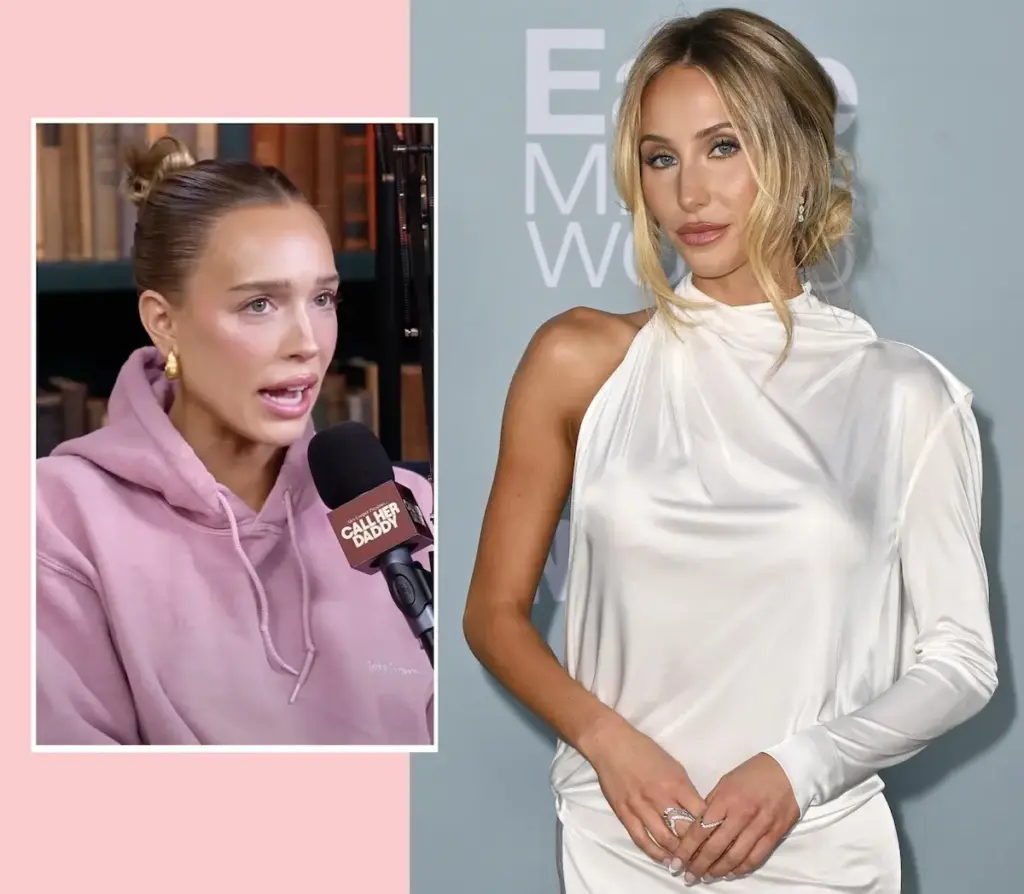
The digital media landscape is experiencing a watershed moment as a high-profile feud between two of its most lucrative figures transitions from online speculation to explicit public record. Social media powerhouse Alix Earle has publicly detailed the systematic breakdown of her business and personal relationship with podcast mogul Alex Cooper, host of Call Her Daddy and founder of the Unwell Network.
What was initially marketed in 2023 as a synergistic partnership between an established industry giant and a rising viral talent has devolved into a multi-layered dispute involving allegations of breach of promise, coercive power dynamics, editorial exploitation, and abrupt contractual termination. Speaking on her reality television series Earle Meets World, Earle—alongside her father and business advisor, Thomas "TJ" Earle—offered an unfiltered account of her tenure at Unwell. The disclosures provide a rare, critical look into the mechanics of creator-led digital networks, exposing the friction that can emerge when influencer mentorship models intersect with aggressive corporate scaling and high-stakes personal branding.
Detailed Chronology of the Dispute
  2023: Earle joins Unwell Network; launches 'Hot Mess' podcast.
   │
  2023–2024: Mounting operational friction over production resources & mentorship.
   │
  Late 2024: Contract re-signed under alleged pressure; subsequent operational isolation.
   │
  Early 2025: Unwell drops 'Hot Mess'; Earle allegedly learns via media outlets.
   │
  Mid 2025: TikTok 'Grim Reaper' repost signals escalating public fallout.
   │
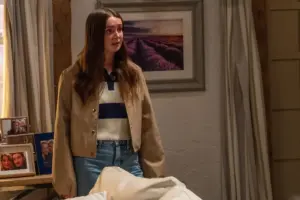
  Late 2025: 'Earle Meets World' airs, detailing explicit allegations against Cooper.
The Inception and Strategic Promise (2023)
In 2023, Alix Earle was rapidly establishing herself as one of TikTok’s most influential personalities. Seeking to capitalize on her viral momentum and transition into long-form audio-visual media, Earle signed a deal with Alex Cooper’s newly formed Unwell Network—a subsidiary designed to incubate top-tier digital talent. Earle launched her flagship podcast, Hot Mess, under the network’s umbrella.
According to the Earle family, the decision to sign with Unwell over competing media houses was driven primarily by two factors: Earle’s deep professional admiration for Cooper and the explicit promise of hands-on mentorship within the podcasting ecosystem.
Operational Friction and Strategic Isolation (2023–2024)
Despite early promotional success, internal tension quickly mounted. Earle and her management team contend that the network failed to deliver the foundational infrastructure promised during negotiations. Operational responsibilities—ranging from equipment transport to technical production—increasingly fell on Earle herself.
As the original contract approached its end, Earle claims she felt intense institutional pressure to renew her agreement. However, following the re-signing, Earle alleges that Unwell systematically disengaged from her brand, stripping away administrative support, excluding her from corporate events, and cutting off executive communication.
Contractual Termination and Public Escalation (2025)
By early 2025, the partnership formally concluded when Hot Mess was dropped from the Unwell Network. Earle disclosed that she was not notified directly by network leadership, but instead discovered the termination through public media reports.
In the months following the split, online speculation regarding a rift intensified. The tension reached a tipping point when Earle reposted a viral TikTok video referring to Cooper as the "Grim Reaper" of creator careers. When Cooper publicly prompted Earle to explain the underlying issue, Earle issued a brief response—"OK on it!!"—foreshadowing the detailed account that would eventually air on her reality series, Earle Meets World.
Operational Breakdown: Production Shortfalls and Financial Dynamics
A central component of Earle’s account centers on the discrepancy between the operational support promised by the Unwell Network and the reality of the production environment.
The Illusion of Turnkey Infrastructure
In an extended appearance on Earle Meets World, Thomas "TJ" Earle outlined the operational expectations that governed their decision to align with Cooper’s venture:
"One of the primary reasons that we ultimately ended up going with Unwell for Alix’s podcast was one, because she looked up to Alex Cooper and two, Alex Cooper would be able to mentor Alix in the business, in the podcasting business. And show her how to put together a show and give her all the resources to produce and develop a great show."
However, TJ Earle alleged that the production standard delivered by Unwell fell drastically short of industry norms for top-tier talent:
"We knew what they promised us and then when they came in way below what they promised us, we were kind of like, ‘I guess this is how you produce a podcast.’ You sit on your bed with a camera that they sent you and you film it yourself. There’s no production crew, there’s nothing… We come to find out, because Alix has other friends that do podcasts, that they are actually given real resources to produce a show. They have a producer. They have people that are helping them film and set up lighting and things like that. Alix had none of that, she was doing all of this by herself. Traveling around with suitcases full of cameras and then setting ’em all up by herself."
PROPOSED vs. ACTUAL OPERATIONAL FRAMEWORK

Promised Framework (Unwell Network):
├── Dedicated Executive Mentorship (Alex Cooper)
├── Professional On-Site Production Crew & Lighting
├── Full Administrative & Scheduling Overhead
└── Integrated Network Cross-Promotion & Event Inclusion

Delivered Reality (As Alleged by Earle):
├── Zero On-Site Technical Crew (Self-Filmed / Portable Kits)
├── Minimal Executive Guidance / Communication Breakdown
├── Operational Expenses Deducted from Gross Revenue Split
└── Exclusion from Network Strategy Meetings & Brand Events
Financial Models and Expense Deductions
Beyond logistical hurdles, the Earle family raised serious questions regarding the network’s accounting and revenue-sharing structures. In standard network distribution deals, net profits are divided after deducting valid production overhead. According to TJ Earle, Unwell applied standard expense deductions against the podcast’s gross revenue despite providing minimal physical production infrastructure:
"So there were no expenses because they had Alix doing everything."
For Alix Earle, the financial disputes were secondary to what she described as institutional abandonment and psychological strain:
"I don’t even care about the money or the contracts… Then once we worked with them again—because I felt pressured into signing with them again, so I did—they said, ‘OK, hire your own people for the show. We are taking everyone off.’ They didn’t invite me to events. They didn’t talk to me. They didn’t come up to meetings anymore. I’m like, ‘Why am I paying you to do something I’m not even happy doing and you’re not even giving me any support and I feel scared of you?’"
Editorial Integrity, Power Asymmetry, and Personal Impact
The allegations extend beyond administrative and operational grievances into serious questions regarding editorial boundaries, power dynamics, and the ethical treatment of emerging talent.
The Call Her Daddy Interview and Editorial Sovereignty
Earle highlighted an early turning point in her relationship with Cooper: an appearance on Cooper’s flagship show, Call Her Daddy. Earle, who was a college student when her digital career exploded, admitted that her personal admiration for Cooper blurred her professional boundaries during the taping.
Earle claimed that after consuming alcohol during the interview, the line of questioning turned excessively explicit. While initially attempting to adapt to the show’s notoriously provocative format, Earle later recognized that boundaries had been crossed regarding her personal life and family history.
| Dimension | Alleged Event / Operational Impact |
|---|---|
| Editorial Control | Earle requested post-interview edits for sensitive personal content; Cooper allegedly declined, stating, "Oh I think it’s so funny." |
| Familial Impact | Personal family matters discussed during the interview caused significant emotional distress and lingering personal fallout. |
| Power Dynamics | Earle alleges Cooper leveraged Earle’s fan admiration to elicit sensitive disclosures for commercial gain. |
| Institutional Leverage | Alleged explicit warnings from Cooper regarding public disputes: "You don’t want to go to war with me." |
Reflecting on the interview during her reality show, Earle expressed deep regret over the lasting digital footprint of the episode:
"Part of that was stuff I had asked to be taken out after the interview. And she was like, ‘Oh I think it’s so funny.’ And it’s stuff that I didn’t necessarily want to live on the internet forever. So that definitely hurt me. Or, it hurts now. In the moment, I just was like, ‘She’s looking out for me.’"
The broader emotional toll became evident as Earle discussed the impact on her family:
"My kids are going to see that and it took a toll on all of us. After that interview when we talked about our family experience, I cried to her. I was like, ‘Thanks this meant so much to me. I really looked up to you and I’m so happy I got to share this story.’ It just makes me feel like a f**king loser. I was so excited and happy and I thought I was doing something so good and I did something so hurtful to all of us."
Allegations of Coercive Influence and Retaliatory Fear
A central theme in Earle’s account is the asymmetric power dynamic between an established media mogul and an emerging creator. Earle disclosed that her initial reluctance to address the situation publicly was driven by explicit warnings regarding Cooper’s influence within the industry.
Detailing a conversation with her father, Earle recalled a direct warning allegedly issued by Cooper:
"I just get scared because everyone tells me not to fight with her. Because they always win and they always come out on top. She even said to me, ‘You don’t want to go to war with me.’"
Earle acknowledged the risk of speaking out, expressing anxiety over potential public retaliation or media manipulation:
"I know no matter what I’ll say, people will have a problem with this. She’s probably going to have a problem with this and attack me after or twist and manipulate whatever she wants to say about me. That’s scary… I’m just intimidated. I don’t know what she’s going to do or how she’s going to twist things."
Supporting Context & Metrics: The Mechanics of Creator-Led Networks
The friction between Alix Earle and the Unwell Network reflects broader structural tensions within the rapidly expanding creator economy. As top-tier digital personalities transition into media executives, the traditional Multi-Channel Network (MCN) model is being reinvented under the banner of "creator-led talent incubators."
      TRADITIONAL MEDIA NETWORK                 CREATOR-LED INCUBATOR (e.g., Unwell)
┌──────────────────────────────────────┐     ┌──────────────────────────────────────┐
│ • Corporate Executive Management     │     │ • Headed by Active Top-Tier Creator  │
│ • Standardized Guild/Union Contracts │     │ • Mentorship-Driven Talent Pitch     │
│ • Dedicated In-House Production Crew │  vs │ • Lean, Decentralized Operations     │
│ • Clear Division of Talent/Executive │     │ • Blurred Personal/Professional Lines│
│ • Formal HR & Grievance Infrastructure│     │ • High Reputational Asymmetry        │
└──────────────────────────────────────┘     └──────────────────────────────────────┘
The Pitfalls of Creator-Led Incubators
Creator-led networks hold immense pitch appeal for rising stars: the promise of direct access to an idol who successfully navigated the algorithm to achieve mainstream media power. However, industry analysis highlights inherent risks in this structure:
- Conflict of Interest in Attention Economics: In digital media, audience attention is inherently zero-sum. A network founder who remains an active primary talent may face structural conflicts when allocating network resources, cross-promotional opportunities, and top-tier ad deals between their own flagship show and rostered signees.
- Blurred Professional Boundaries: Traditional broadcast networks operate under strict human resources frameworks and standardized production union guidelines. In creator-led startups, professional relationships often overlap with social circles, increasing the risk of boundary violations during filming and negotiation.
- Resource Discrepancies in Digital Podcasting: While high-profile podcast deals fetch tens of millions of dollars in distribution rights, network production teams often remain surprisingly lean. When networks fail to provide dedicated technical crews, creators are left managing logistical overhead while still forfeiting significant equity or revenue splits.
Future Outlook and Industry Implications
The public rift between Alix Earle and Alex Cooper marks a pivotal moment in the maturity of the creator economy. As Earle utilizes her platform on Earle Meets World to document her experiences, the disclosures are likely to influence how digital talent approaches network affiliations, contract negotiations, and editorial autonomy moving forward.
Potential Trajectories for Key Parties
- Alix Earle: By detaching from Unwell and documenting the breakdown on her own television series, Earle is positioning herself as an independent media entity. Operating outside a creator network allows Earle full operational control, unencumbered monetization rights, and total sovereignty over her editorial direction. However, taking on established industry figures carries potential long-term risks regarding cross-network collaborations and executive distribution deals.
- Alex Cooper & Unwell Network: The allegations present a direct challenge to the fundamental premise of the Unwell Network: that it serves as an artist-friendly safe haven built by a creator for creators. Cooper and Unwell executive leadership now face critical choices regarding their crisis communications strategy. Maintaining silence risks allowing Earle’s narrative to define the network’s public reputation, which could impact future talent acquisition and corporate sponsorship deals. Conversely, a public retaliation could exacerbate scrutiny around Unwell’s internal operations and corporate culture.
Broader Market Impact
The dispute serves as a cautionary case study for emerging digital influencers. As top creators continue to build media empires, future talent will likely demand far greater operational specificity in their contracts—including explicit guarantees regarding dedicated production crews, clear editorial approval rights, strict non-retaliation clauses, and defined metrics for executive mentorship.
Ultimately, the fallout between Earle and Cooper demonstrates that while viral stardom can be generated quickly, building a sustainable, fair, and scalable media enterprise requires institutional infrastructure that goes far beyond brand star-power.