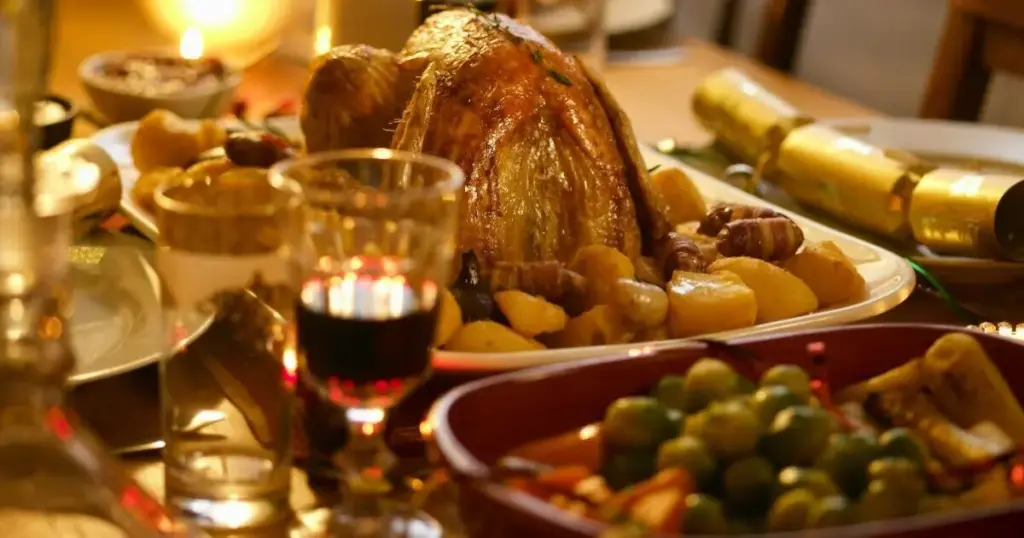
As families across the United Kingdom begin to look ahead to the festive season—anticipating the traditional warmth, gathering, and culinary centrepieces of December—a quiet agricultural crisis is unfolding in the fields of Oxfordshire. According to seasoned organic farmers, this year’s Christmas dinner may look distinctly different, with a notable absence of the traditional large, plump Brussels sprouts that have anchored holiday plates for generations.
Intense and prolonged summer heatwaves, paired with persistent periods of drought, have generated a catastrophic combination of environmental stress for crops and ideal breeding conditions for agricultural pests. At the epicentre of this crisis is the flea beetle—a microscopic yet devastating pest that has run rampant across British brassica farms. While consumers might expect minor seasonal fluctuations in fresh produce, experts warn that the sheer scale of the damage this year threatens not just the aesthetic quality of our vegetables, but the economic viability of organic brassica farming in a rapidly warming climate.
The implications extend far beyond a single farm. Across the UK, agricultural specialists are reassessing how traditional crops can survive increasingly volatile weather patterns. For Oxfordshire’s Sandy Lane Farm and similar operations, the 2026 growing season has served as an alarming indicator of what the future holds for domestic food production if adaptation strategies cannot keep pace with shifting climate norms.
Detailed Chronology: How the 2026 Heatwave Unleashed a Pest Epidemic
To understand how a staple Christmas vegetable has been brought to the brink of failure, one must trace the timeline of the 2026 growing season, which deviated sharply from historical meteorological averages.
Spring to Early Summer: The Catalyst of Drought
The trouble began not in the depths of winter, but during the critical planting and establishment phases in late spring and early summer. British agriculture has experienced a noticeable trend toward drier, hotter summers, but the intensity experienced in 2026 proved exceptional. With little to no rainfall to speak of for weeks on end, young brassica plants—including kale, cabbage, and crucially, Brussels sprouts—were forced to contend with parched soils.
Without sufficient moisture, the plants entered a state of profound physiological stress. Their growth rates slowed dramatically, leaving their stems stunted and their root systems struggling to extract necessary nutrients from hardened, sun-baked earth. This lack of water fundamentally compromised the plants’ natural defenses, turning what would normally be resilient, robust crops into fragile targets.
Mid-Summer: The Unprecedented Surge of the Flea Beetle
Under normal climatic conditions, flea beetles emerge at the onset of summer and pose a fleeting threat. Typically active for roughly four weeks, these tiny pests inflict manageable levels of damage before natural predators and changing weather cycles drive them back.

However, the prolonged heatwave of 2026 completely disrupted this ecological balance. Instead of disappearing after a month, the flea beetles thrived, maintaining their destructive lifecycle across an unprecedented span of nearly 12 weeks.
George Bennett, a prominent farmer at Sandy Lane Farm in Oxfordshire, has witnessed the devastation firsthand. Explaining the mechanics of the infestation, Bennett notes that adult flea beetles lay their eggs in the soil beneath vulnerable plants. Once hatched, the ravenous larvae and adult beetles swarm the foliage, chewing characteristic "shot-holes" through the leaves of brassica plants.
"Because it’s been a very hot, dry summer, our brassica plants have all been stunted and stressed," Bennett explains. "They haven’t had enough moisture to get going, and it’s made them very vulnerable to flea beetle."
Normally, a healthy plant can easily outgrow minor pest damage through vigorous photosynthesis. But the combination of extreme heat, water deprivation, and a staggering 70% leaf-destruction rate stripped the plants of their photosynthetic capabilities. Deprived of energy and nutrients, the crops could neither grow nor mature according to their standard biological schedules.
Late Summer to Early Autumn: The Struggle for Recovery
As autumn approached, farmers attempted last-ditch containment efforts, including covering crops to shield them from airborne pests. However, this intervention created an unintended ecological trade-off. While physical netting helped deter certain threats, it simultaneously protected other pests—such as aphids and caterpillars—from their natural predators, including birds and wasps. Shielded beneath the covers, these secondary pests multiplied, compounding the damage inflicted by the flea beetles.
By September, the cumulative impact of the prolonged heatwave and multi-front pest attacks meant that the developmental timeline for Christmas sprouts had been severely compromised.
Supporting Context & Metrics: The Anatomy of a Harvest Failure
To fully grasp the gravity of the situation, it is necessary to examine the physiological requirements of the humble Brussels sprout (Brassica oleracea var. gemmifera) and the specific metrics governing this year’s agricultural shortfall.

The Biology of the Sprout
Many consumers remain unaware of how Brussels sprouts actually grow. Unlike root vegetables or ground crops, sprouts develop as dense, edible buds (often referred to as "buttons") that sprout directly off a thick, vertical central stalk resembling a miniature tree. For these buttons to swell to a marketable size, the plant requires a robust, tall stalk, extensive leaf cover to harness solar energy, and a steady supply of soil moisture throughout the late summer and early autumn.
In 2026, those foundational requirements were unmet:
- Stalk Height: Stalks measured across affected fields are currently reported to be roughly half their expected height.
- Leaf Cover: With up to 70% of leaf tissue consumed or damaged by flea beetles, plants lacked the solar surface area required to fuel the development of the buds.
- Button Maturation: Instead of large, uniform spheres that easily snap off the stalk for straightforward preparation in the kitchen, this year’s emerging buttons are severely underdeveloped.
Economic and Yield Metrics
While total crop failure has been narrowly averted—meaning British supermarkets will not be entirely devoid of sprouts this Christmas—the qualitative and quantitative yields have plummeted.
- Size Reduction: Consumers can expect a marketplace dominated by micro-sprouts. The traditional large, easy-to-peel varieties will be exceptionally rare.
- Overall Yield: Total tonnage per acre of organic brassicas is projected to drop significantly across regions impacted by the intense summer drought.
- Pest Longevity: The flea beetle season extended to 12 weeks—three times its historical duration—shattering previous pest-management timelines.
Official Statements and Industry Perspectives
Agricultural experts, independent organic farmers, and trade bodies have increasingly spoken out about the systemic vulnerabilities exposed by the 2026 growing season.
George Bennett, speaking on the compounding pressures faced by sustainable growers, emphasized that modern farming methods must evolve to meet the challenges of an erratic climate. "We are definitely thinking about how we’re going to change our practices so that we’re more successful for next year," Bennett noted in an interview. "Certain crops will be very difficult—particularly the brassica family, as it needs a long time to mature over the summer months. That’s the critical time for them to really get up to size."
Agronomists and entomologists monitoring the situation point out that chemical interventions are often limited, particularly for organic farms like Sandy Lane that eschew synthetic pesticides. When organic growers rely on physical barriers, they must navigate complex ecological dynamics where solving one pest problem can inadvertently create another.
At the same time, food security analysts are urging the public to temper expectations regarding the visual perfection of holiday produce. In years defined by severe environmental extremes, agricultural output cannot adhere to strict aesthetic standards without incurring massive food waste. Accepting smaller, cosmetically imperfect vegetables may become an inevitable reality for shoppers seeking locally and organically grown festive produce.

Future Outlook: Adapting British Agriculture to a Warming Climate
While the outlook for this year’s Brussels sprout harvest is undeniably challenging, the broader picture of British farming presents a nuanced tale of resilience and adaptation.
Silver Linings in the Harvest
It is important to note that the very weather conditions that battered the brassica family proved immensely beneficial for other crops. At Sandy Lane Farm and similar agricultural holdings across Oxfordshire and the wider UK, warmer summer temperatures created an idyllic environment for heat-loving and drought-tolerant produce.
Crops such as squash, pumpkins, potatoes, leeks, onions, carrots, and beetroots have reported "fantastically well" yields, offsetting some of the financial and operational losses sustained by struggling winter greens.
Shifting Crop Varieties and Diversification
In response to the recurring disruptions caused by extreme heatwaves and prolonged pest seasons, agricultural economists predict a widespread shift in farming strategies:
- Crop Diversification: Farmers are expected to broaden the range of produce they cultivate, reducing their reliance on vulnerable traditional staples like brassicas in favor of more climate-resilient varieties.
- Advanced Irrigation Infrastructure: Investment in sophisticated, water-conserving irrigation systems will likely accelerate, helping protect sensitive crops from the immediate impacts of summer droughts.
- Integrated Pest Management (IPM): Growers are actively researching new biological controls and resilient planting schedules to outmaneuver pests whose lifecycles have been prolonged by warmer global temperatures.
As consumers prepare for the upcoming holiday season, the story of the 2026 Christmas sprout serves as a vivid reminder of the intricate relationship between our climate, our food supply, and the dedicated farmers working tirelessly to stock our tables against mounting odds.